


You might think a crockpot can’t make truly great carnivore meals on its own — but that’s worth testing. Toss a well-marbled roast, a pinch of salt, and a knob of tallow in the slow cooker, walk away, and come back to silky meat and rich broth.
It’s easy, forgiving, and oddly satisfying; stick around and I’ll show you the plays that make it nearly foolproof.
Why Crockpot Meals Work for the Carnivore Diet

Because you want simple, hands-off meals that still taste like effort, crockpot cooking fits the carnivore diet almost perfectly.
You set meat, salt, and fat in the pot, leave, and come back to deep flavor and melt-in-your-mouth texture.
Low-and-slow breaks down collagen, so cheaper cuts behave like indulgence. You’ll appreciate predictable timing, minimal babysitting, and fewer dishes—ideal for busy days or when you don’t feel like thinking.
It preserves nutrients better than high-heat blasts and lets you control ingredients, avoiding carbs or additives.
Cozy, efficient, and forgiving, it makes strict eating feel surprisingly effortless.
Try simple “dump and go” recipes like roasts or shredded beef that require almost no prep and cook themselves into tender meals with minimal effort, perfect for busy days.
Quick-Start Template: Foolproof 4‑Hour Beef Roast

Grab a chuck roast, salt it well, tuck it fat-side up into the crockpot, and set a 4-hour timer — that’s the whole premise: a predictably tender, beefy centerpiece with almost no fiddling.
You’ll want high heat, patience, and nothing fussy.
Throw in a pat of butter or a spoon of tallow if you like richness, then resist checking obsessively.
When the timer dings, shred gently with forks; you’ll see it fall apart without drama.
Spoon juices over meat, taste for salt, and portion for meals.
It’s comfort cooking for days, reliably unfussy and very satisfying.
This straightforward method works well for beginners following the carnivore approach because it emphasizes simple, meat-forward cooking with minimal ingredients and effort, reflecting the ridiculously easy meals many people start with.
Stock Your Kitchen: Meats, Fat, and Broths for Carnivores
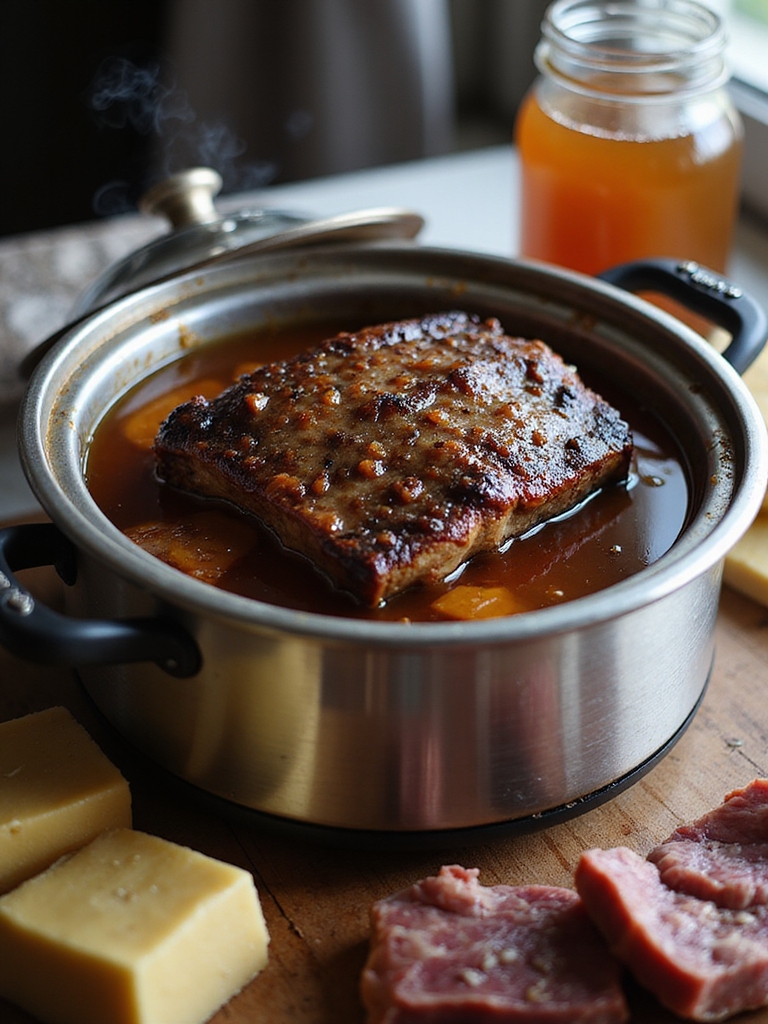
Stock your fridge and freezer with fatty cuts like chuck, brisket, and lamb shoulder so your crockpot meals stay rich and tender without fuss.
Keep jars or cartons of beef and bone broth on hand for quick braises and to boost flavor and nutrition.
Don’t forget a handful of organ meats—their iron and fat make tiny additions that punch up both taste and health.
Carnivore kitchens are easiest to maintain when you have a core list of staples like meats, fat, and broths ready to go; consider keeping an inventory of pantry staples to streamline meal prep.
Choose Fatty Cuts
A few good fatty cuts will change how your crockpot meals taste and feel — they give you richness, mouthfeel, and the calories you’ll rely on when you’re eating mostly meat.
You’ll want chuck roast, pork shoulder, and lamb neck for long, slow braises that melt into silk.
Pick marbling over leanness; fat equals flavor and gives the broth body without anything fussy.
Trim sparingly, save trimmings for bone broth, and let the crockpot do its gentle work while you relax.
- Comfort in every forkful
- Slow warmth that soothes
- Satisfaction that sticks with you
Stock your kitchen with staples like meats, fat, and broths to make crockpot cooking effortless and well-supported.
Essential Broths Ready
You’ve picked the right fatty cuts, now think about the pots that pull their flavor together: rich bone and meat broths that you’ll keep on hand like liquid gold.
You simmer marrow bones, knuckles, and trimmed necks low and long, skimming occasionally, until gelatin and deep color settle in.
Strain, cool, and portion into jars or ice trays for effortless defrosting.
Use broth as a base for crockpot stews, to braise tougher cuts, or sip warm for comfort.
Salt to taste, and freeze fat separately for frying.
You’ll wonder how you ever cooked without this ready flavor.
Keep a stash of homemade broths and rendered fat to simplify weeknight crockpot cooking and enhance satisfying soups.
Stocking Organ Meats
When hunting for nutrient-dense cuts, don’t skip the organ shelf—liver, heart, kidneys, and sweetbreads bring the kind of flavor and micronutrients that muscles can’t match.
You’ll want a rotation: a slab of liver for iron and vitamins, a couple hearts for muscle-supporting taurine, and small portions of kidneys or sweetbreads to vary texture.
Freeze in meal-sized packs, label dates, and tuck fatty trimmings nearby for richness. Treat organs like pantry gems: use sparingly, respect their punch, and your crockpot meals will sing.
Here’s what to keep close:
- Deep, savory liver for bold nourishment
- Dense heart for steady, meaty comfort
- Delicate sweetbreads or kidneys for contrast
Start with familiar cuts and gradually add organ rotations to your meals to avoid palate fatigue and ensure nutritional balance, especially including starter foods from common carnivore lists.
Choose Slow-Cook Cuts: Chuck, Shoulder, Shank, Brisket

When you’re picking cuts for the crockpot, choose well-marbled pieces like chuck or shoulder so the fat keeps everything tender and flavorful.
Whenever possible grab bone-in shank or brisket — the marrow and collagen boost richness and make a better broth.
And size portions to fit the slow cooker snugly so they cook evenly without drying out.
I also rely on budget-friendly ground beef recipes from the Budget Carnivore collection to stretch meals without sacrificing flavor.
Pick Well-Marbled Cuts
Reach for well-marbled cuts—those streaks of fat are your slow-cooker’s best friend because they melt into rich, unctuous juices instead of drying out.
You want cuts that forgive long, lazy cooking: chuck, shoulder, shank, brisket. They break down into tender, forkable bliss while the fat keeps everything silky.
Season lightly, let time do the work, and you’ll be rewarded with deep flavor without fuss.
Pull apart meat that practically sighs.
Serve simply, savor slowly.
- Anticipation of that first forkful
- Comfort in warm, fatty richness
- Quiet pride in effortless cooking
Ground beef is an affordable option that can also be adapted for slow-cooking if you choose well-marbled cuts.
Look For Bone-In Pieces
Because bones add flavor and structure, pick bone-in pieces for the slow cooker—you’ll get deeper broth, richer mouthfeel, and meat that holds together as it falls apart.
Choose chuck, shoulder, shank, or brisket; they’re forgiving and reward low, slow heat. The marrow and connective tissue melt into gelatin, giving you spoonable juices that feel like luxury without fuss.
You’ll find the bones also anchor the cut so slices stay intact while shredding becomes effortless.
Don’t overthink seasoning—salt, maybe pepper—then let time do the work. It’s cozy, simple, and reliably satisfying every winter night.
Size For Slow Cooking
Think about how big your cuts need to be to fit both the crockpot and your patience—you want pieces that fill the cooker without crowding it, so heat circulates and connective tissue breaks down evenly.
You choose chuck, shoulder, shank, or brisket because they reward time with deep, unhurried flavor.
Cut too small and they dry; too large and they cook unevenly. Aim for chunks that nestle together but let steam roam.
Low and slow turns collagen into silk; you relax with a glass while the crockpot does its quiet alchemy.
- Warm, gelatinous comfort
- Proud, hearty aroma
- Satisfaction that sighs
Crockpot Settings & Timing (Carnivore Proteins)

Dial in the crockpot like it’s the simplest tool in your kitchen — low for tough, collagen-rich cuts, high for quicker meals, and keep the timer handy for precise finishing.
You’ll want low-and-slow for brisket, chuck, oxtail: eight to ten hours yields fall-apart meat and glossy fat.
Use high for lean steaks or diced sirloin when you’ve only got three to four hours.
Poultry prefers seven to eight on low for tender, shreddable results without drying.
Always preheat if starting cold, avoid lifting the lid, and rest meat briefly before serving so juices redistribute.
Make & Store Bone Broth: Easy Batch Methods
Steeping bones for hours turns your crockpot into a quiet, flavor-making machine, and you’ll get more usable nutrition and taste out of a single batch than from any store jug.
You’ll toss marrow-rich femurs or knuckles in, cover with water, add a splash of vinegar to draw minerals, and set low for 12–24 hours.
Strain, cool, skim fat if you like, then portion into jars or silicone trays.
Freeze extras flat for easy stacking.
Reheat gently; sip or use as a base.
It’s simple, comforting, and wastes nothing.
- Warmth that feels like home
- Quiet pride in thrift
- Small daily luxury
Simple Seasoning Rules That Stay Strictly Carnivore
Usually you’ll keep it simple: salt, heat, and time do most of the work, so you’ll season with just a pinch of sea or kosher salt before cooking and maybe a little at the table. You’ll trust the meat’s own flavors, resist herb blends, and skip sugar, peppers, and vinegars.
Fat is your friend—use butter, tallow, or marrow to finish and carry flavor. If you crave variety, swap salt types, add a whisper of smoked salt, or finish with rendered drippings.
Taste as you go, adjust sparingly, and enjoy how minimal seasoning highlights real, meaty comfort.
Classic Beef Pot Roast : No Extras Required
If you like keeping seasonings spare, a classic beef pot roast is the kind of meal that rewards that restraint—just salt, slow heat, and good fat will do the heavy lifting. You set the roast, forget it, and return to a house smelling like patience paid off.
Slice it against the grain; the meat will pull apart with smug ease. You’ll feel glad you chose simple over fussy.
- Warmth that settles you like a familiar chair
- Quiet pride in feeding yourself well with little fuss
- Comfort that tastes like home, not effort
Tender Pulled Pork Shoulder in the Crockpot
You’ll want to pick a pork shoulder with good marbling and enough fat to stay juicy through the long cook.
Keep seasoning simple—salt, a touch of pepper, and maybe a smoked paprika or garlic powder if you’re feeling frisky—so the meat’s flavor stays front and center.
Set the crockpot low and slow, and you’ll end up pulling tender strands that practically beg for a napkin.
Choosing The Right Cut
Pick a pork shoulder with a good balance of fat and connective tissue—this is what turns into those tender, shreddable strands after hours in the crockpot.
You want a cut that’ll give you rich mouthfeel without feeling greasy; look for marbling and a bit of exterior fat to baste the meat as it melts.
Trim excess silver skin but leave enough to nourish the slow-cook.
A bone-in roast adds flavor and keeps things honest.
You’ll thank yourself when you pull apart steaming ribbons that practically sigh.
- Comfort that smells like home
- Joy in effortless, meaty reward
- Pride in simple mastery
Slow-Cook Seasoning Tips
When you coat that pork shoulder with just the right salt, fat, and a few choice spices, the crockpot does the rest—turning simple ingredients into something deeply comforting.
Salt is your baseline; don’t be shy. Rub liberally, let it sit a bit to penetrate. Use rendered pork fat or butter to carry flavor and keep edges luscious.
A whisper of black pepper and smoked paprika adds warmth without breaking carnivore purity. Skip sugar and herb mixes that muddle meat.
Brown the exterior if you like crust, then low and slow. You’ll shred tender, savory pork that needs almost nothing else.
Slow-Cooked Lamb Shanks: Just Salt and Time
If you let lamb shanks sit low and slow in the crockpot with nothing more than a generous sprinkle of salt, you’ll get meat that falls off the bone and tastes like patience paid off.
You don’t fuss, you don’t crowd flavors, you let time work.
Pop shanks in, season, set low, and forget—check for that soft nudge that tells you it’s done.
Serve simply, maybe with rendered juices spooned over.
It feels humble, rich, and almost indulgent.
- Quiet satisfaction of something truly simple
- Comfort that warms without pretense
- Small ritual that rewards patience
Whole Chicken & Thighs: Foolproof Low-and-Slow Methods
Tuck a whole chicken or a pile of thighs into the crockpot, salt them confidently, and let low heat do the heavy lifting—you’re aiming for skin that gives way and meat that needs no coaxing.
You’ll forget it and come back to effortless pull-apart comfort. Brown first if you like crisp edges, or skip to save time; either way low-and-slow keeps juices locked in.
Rest before carving so juices settle. Serve plain or with rendered fat spooned over. Simple, forgiving, and quietly luxurious—this is crockpot chicken done right.
| Step | Tip |
|---|---|
| Prep | Salt well |
| Option | Brown first |
| Time | Low 6–8h |
| Finish | Rest 15m |
Quick Organ-Meat Stews for Nutrient Density
Because organ meats cook fast and pack a punch, you can have a nutrient-dense stew on the table with minimal fuss—just toss chopped liver, heart, or kidneys into the crockpot with a bit of bone broth, salt, and aromatics, and let low heat mellow their flavor.
You’ll learn to balance boldness with comfort: a splash of vinegar brightens, rendered fat softens, and herbs whisper instead of shout.
You’ll feel proud serving something ancestral and efficient. Let this be your cozy weekday win—serious nutrition without drama.
- Warmth that reminds you of home
- Quiet bravery on a plate
- Simple, nourishing satisfaction
Prevent Dryness and Overcooking
After you’ve enjoyed those rich organ stews, you’ll want the same tenderness in every cut you put in the crockpot—no one likes chewy, dried-out meat.
You control moisture by choosing fattier cuts, trimming sparingly, and adding a splash of bone broth or tallow.
Cook low and slow; resist the urge to crank heat.
Use a probe thermometer so you stop cooking at the right moment.
If some pieces finish early, lift them onto a warm plate and keep the lid on to rest.
Rotate larger pieces midway for even heat.
Little attention up front saves you from leathery dinners.
Batch-Cook, Freeze, and Reheat Carnivore Meals Safely
If you’re cooking up a batch of crockpot roasts, you’ll want a simple system for cooling and portioning so nothing sits warm long enough to go risky.
Freeze in meal-sized packs and label dates so reheats are fast and predictable, and don’t overstuff your freezer — air circulation matters.
When it’s time to eat, reheat gently to safe temps so texture and flavor don’t take a hit.
Safe Cooling Practices
When you batch-cook a week’s worth of carnivore crockpot meals, plan for rapid cooling so flavor and safety both survive the freezer stint; leaving large roasts or big batches to languish at room temp invites bacterial growth and soggy texture.
You’ll move hot meat into shallow pans, separate into smaller containers, and chill promptly — don’t dawdle.
Use an ice bath for big pots, and leave lids slightly ajar until the steam eases. Label with dates. Trust a thermometer; cool to 40°F (4°C) within two hours. That small effort keeps dinners tasty and the whole process oddly comforting.
- Relief: knowing you did it right
- Pride: meals that still sing
- Calm: freezer confidence
Freezing And Portioning
Planning your portions before the meat’s even cool will save time and headaches later — you’ll decide serving sizes, pick the right containers, and map reheating needs so nothing gets overcooked or wasted.
Scoop into single-meal portions while still slightly warm to avoid giant ice clumps, label with date and contents, and flatten in freezer bags for quick stacking.
Reserve family packs for weekends. Use airtight silicone containers or vacuum sealers to prevent freezer burn and flavor bleed.
Thaw in the fridge overnight for best texture and food safety. Keep a running inventory so surprises don’t eat your meal plan.
Reheating Without Compromise
With a few smart habits, you can batch-cook, freeze, and reheat carnivore crockpot meals without sacrificing texture or taste.
You’ll cool portions quickly, label clearly, and freeze flat for even thawing. Reheat gently: low oven or simmering pot keeps juices, while brief high-heat sears revive crusts.
Don’t overcook — you want tender, not tired. Rotate stock in the freezer so nothing lingers too long.
- Comfort: imagine steak warming your hands on a chilly evening.
- Relief: no last-minute scrambling, just ready-made satisfaction.
- Pride: you crafted convenience that still tastes homemade.
Minimal Tools & Cleanup Hacks Plus Troubleshooting
A few smart tools can keep your crockpot nights delightfully low-fuss: a silicone liner, a good pair of tongs, and a small skillet for browning are often all you need.
You’ll love liners for near-instant cleanup; scrape, toss, wipe.
Use tongs to flip meats without piercing juices.
A skillet gives caramelized flavor fast.
For stubborn stuck bits, soak the insert with hot water and a drop of dish soap; wait, then scrub gently.
If your stew’s salty or greasy, add unsalted broth or chill and skim.
If it’s undercooked, extend on low; overcooked, shred and repurpose.
You’ve got the basics down: toss well-marbled chuck or pork shoulder, salt, and tallow into the crockpot, set it low, and let time do the work.
Like a slow, reliable clock, the cooker turns collagen into silk and flavor into comfort. Prep once, portion, freeze, and you’ve got graceful, no-fuss dinners for the week.
Cozy, efficient, and forgiving—this method makes carnivore cooking feel like an easy, dependable ritual.


