

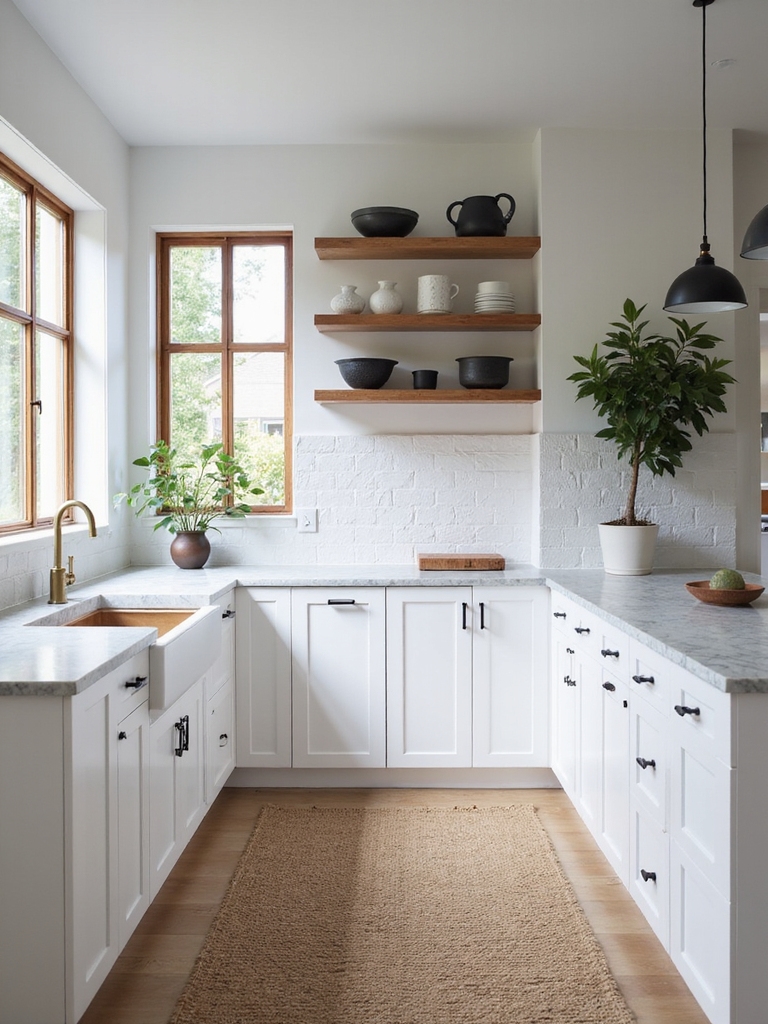
I’ll help you make a crisp white kitchen feel cozy and lived-in without losing its modern lines: pick warm vs cool whites by testing swatches in morning and evening light, layer tones across paint, cabinets, and countertops, and anchor the room with warm wood floors, open oak shelves, or a stained island.
Add textured tile, warm brass hardware, woven textiles, and herbs for instant soul — keep going and you’ll find lots more practical, budget-friendly ideas.
Quick Wins to Warm a White Kitchen

Brighten a white kitchen without losing its clean feel by adding a few simple, warm touches I love: think open wooden shelves, a woven rug, and brass hardware that ages beautifully over time.
I also mix in wood cutting boards, potted herbs, and soft linen towels. These small swaps create texture, warmth, and lived-in charm without cluttering the minimalist base.
Modern white kitchens stay timeless when balanced with natural materials and wood accents that add depth and character.
Choosing Warm vs Cool Whites

I like to think about whites the way I think about sunlight — some feel warm and creamy, others crisp and blue-tinged.
I’ll show you how those undertones change the mood of a room and which woods, metals, and stone they pair best with.
Pick the undertone first, and the materials will fall into place to keep the kitchen cozy or clean-lined.
Designing a timeless white kitchen relies on a few golden rules that ensure durability and lasting appeal.
Warm Vs Cool Undertones
Though it might seem subtle at first, I always start by deciding whether I want a warm or cool white because that choice sets the room’s mood—warm whites lean creamy and cozy, while cool whites read crisp and airy.
I test swatches in morning and evening light, watch how shadows shift, and trust instinct: warm for comfort, cool for clarity, never forcing a tone.
Timeless schemes often use white as a foundation to add depth and keep designs feeling fresh.
Pairing With Materials
When I’m pairing whites with materials, I let the undertone guide the whole palette so nothing fights for attention.
I choose warm whites for honeyed wood, terracotta, and brass to feel cozy; cool whites suit concrete, steel, and marble for crispness.
I test samples in real light, mix textures, and balance warmth or coolness so the kitchen feels intentional and lived-in.
Earthy brown palettes add layered texture and grounding contrast to brighten and warm the space, especially when paired with organic brown accents.
Layer Whites: Paint, Cabinets, and Countertops
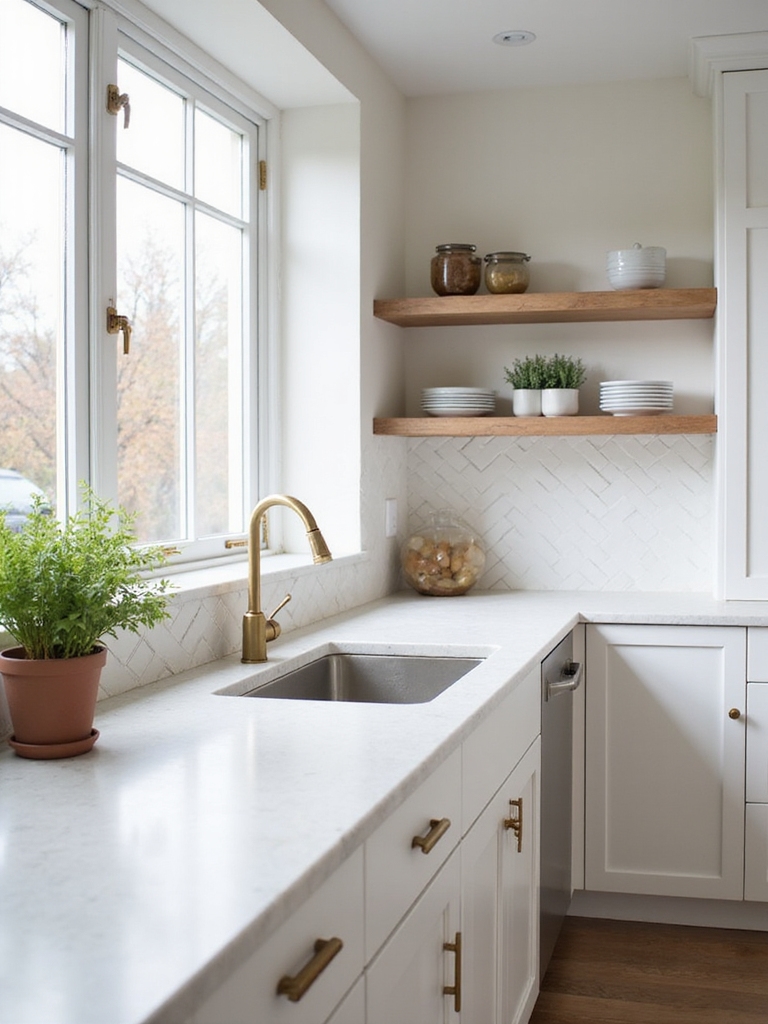
Since I’m going for a cozy, lived-in kitchen rather than a sterile showroom, I layer different whites so each surface can breathe on its own.
I pick a soft warm paint, a crisp off-white cabinet, and a slightly creamy countertop. The subtle shifts catch light, hide wear, and feel intentional—simple, lived, and quietly charming without relying on bold contrasts.
Enduring white kitchen designs often use classic elements like beadboard, subway tile, and shaker cabinets to create a timeless look with lasting appeal, emphasizing timeless elements throughout.
Warm Wood Accents That Ground a White Kitchen

I love how layered whites feel lived-in, but I also want the room to feel rooted—warm wood does that work beautifully.
I bring in oak shelves, a butcher-block island, and walnut accents to balance crisp whites.
The grain and patina add history, soften starkness, and invite touch. These pieces age gracefully, grounding the kitchen with honest, rustic warmth without overpowering the airy palette.
Bringing nature indoors with natural materials like wood helps create a calming, organic atmosphere bringing nature indoors.
Add Texture With Backsplashes and Wall Treatments
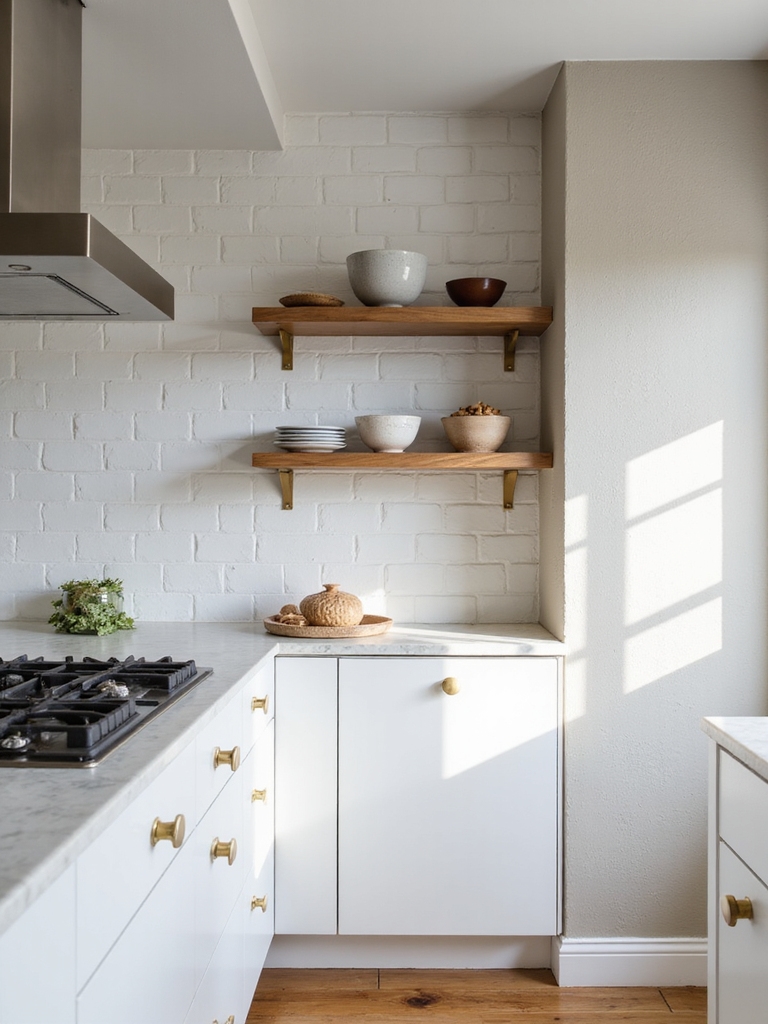
I love how textured tile patterns can bring a quiet rhythm to an all-white kitchen, catching light and adding character without shouting.
A painted accent wall offers the same cozy pause—one warm hue can make the whole room feel rooted and welcoming.
Let’s look at simple, rustic-friendly options for backsplashes and wall treatments that actually work in modern white spaces.
Premium Backsplash Alternatives That Go Beyond Basic Subway Tile elevated backsplashes can introduce depth and visual interest without overwhelming a minimalist palette.
Textured Tile Patterns
Texture brings a kitchen to life, and I love using textured tile patterns to add warmth and character to a modern white space.
I often choose hand‑pressed subway, scalloped ceramics, or raised geometric tiles behind the stove for subtle depth. They catch light, hide minor wear, and feel lived‑in.
Pair them with natural wood and matte fixtures for a cozy, rustic-modern look.
I also recommend considering unique 3D textured tiles like those with a hand‑pressed finish for a striking focal point and tactile surface Unique Textured Tiles.
Painted Accent Walls
A painted accent wall can instantly anchor a modern white kitchen, so I like to use it as a backdrop for textured backsplashes and wall treatments that add depth without clutter.
I choose colors and finishes that feel worn and warm, then pair them with simple accents:
- Matte olive
- Warm terracotta
- Chalky blue-gray
- Soft barnwood white
Mix Finishes: Matte, Satin, and Gloss That Work
You’ll want to balance matte, satin, and gloss so each finish plays up the others without stealing the show.
I like matte on cabinets for a cozy, lived-in feel, satin on walls for soft light bounce, and gloss sparingly on trims or hardware to catch the eye.
Mix them deliberately so texture, not shine, defines your kitchen’s warmth and character.
Add Contrast With Darker Counters and Island Faces
I like grounding a bright, modern-white kitchen with a dark countertop—think honed granite or deep walnut-stained butcher block—to give the space weight and warmth.
You can carry that contrast to the island by using darker panels or a stained face that reads like furniture against the white cabinets.
Let me show you how the right stone or wood and a contrasting island can make the whole room feel intentionally layered and cozy.
Dark Countertop Choices
Think about grounding all that bright white with a slate, charcoal, or deep walnut countertop—I love how a darker surface instantly gives the room weight and makes the white feel intentional, not sterile.
I prefer materials that age beautifully:
- Soapstone for soft patina
- Honed granite for low shine
- Matte quartz for durability
- Reclaimed wood for warmth and texture
Contrasting Island Panels
After grounding the room with a darker countertop, I like to carry that weight down to the island by choosing darker face panels—charcoal shaker doors, stained walnut planks, or even a soapstone-clad front make the island read like a purposeful anchor instead of an afterthought.
I pair warm wood floors and simple white cabinets so the island’s depth feels intentional, cozy, and quietly bold.
Brass and Black Hardware for Instant Character
Add a few brass knobs and matte-black pulls, and you’ll see a white kitchen go from pretty to personality-packed. I love mixing finishes to anchor light cabinetry and warm the room.
Try these simple moves:
- Brass knobs on upper cabinets.
- Black pulls on drawers.
- Mix finishes sparingly.
- Repeat hardware to create rhythm.
Small changes, big charm.
Open Shelving and Displays to Break Up White
I pull back a cabinet door and let open shelving do the talking—it’s one of my favorite ways to break up a sea of white.
I arrange wooden bowls, mismatched ceramics, and a few cookbooks to add texture and soul. These displays feel lived-in, practical, and warm, inviting you to touch, use, and enjoy the kitchen every day.
Patterned Tile and Grout for White Kitchens
I’ll lean into patterned tile and grout to give a white kitchen character and grit—it’s an easy way to make the space feel handmade rather than showroom-perfect.
I choose patterns and warm grout to anchor bright cabinets. I suggest:
- Hex or encaustic motifs
- Soft muted colors
- Warm beige or charcoal grout
- Matte finish for texture
It feels lived-in and cozy.
Lighting for White Kitchens: Create Depth and Warmth
Patterned tile and warm grout set a grounded, handcrafted tone, and lighting is what brings that texture to life—casting shadows, highlighting grain, and giving white surfaces a living warmth.
I layer sources: dimmable pendants over islands, undercabinet strips for task clarity, and soft wall sconces to wash planes. I choose warm bulbs and adjustable fixtures so white reads cozy, textured, and lived-in.
Flooring Options That Warm a White Kitchen
Often I start with the floor when warming a white kitchen, because it’s the single biggest surface that anchors the room and sets the tone for everything else.
I prefer natural, tactile choices that pair with white. My go-tos:
- Reclaimed wide-plank oak
- Warm-toned ceramic tile
- Honeyed bamboo
- Textured stone
Each adds rustic warmth and lived-in charm without competing with bright cabinetry.
Visually Integrating Appliances Into a White Kitchen
I like to tuck appliances into the background so they feel like part of the room, not staring at you from across the kitchen.
I blend finishes—matte stainless, muted black, or panel-ready fronts—to keep lines calm.
I position ranges and fridges within cabinetry runs, hide microwaves in drawers, and choose simple hardware so appliances read as useful, understated neighbors in a cozy white kitchen.
Accessorizing: Textiles, Plants, and Curated Surfaces
Now that appliances sit quietly in the background, I focus on the softer details that make a white kitchen feel lived-in and welcoming.
I layer textures, bring in greenery, and arrange beloved objects with care.
- Linen runners and woven towels
- Potted herbs and trailing vines
- Wooden cutting boards as art
- Hand-placed ceramics and glass jars
These simple touches warm the space.
Budget-Friendly Swaps and Quick Fixes for Sterile White Kitchens
You’ll see how small changes can cheer up a too-sterile white kitchen without breaking the bank. I swap drawer pulls for aged brass, add a woven runner, and paint one shelf a soft sage.
Open glass jars, vintage boards, and a cast-iron skillet bring texture. I hang a simple pendant or switch bulbs to warmer tones—instant soul, minimal cost.
I hope this sparks ideas to make your white kitchen feel like home. Picture sun-warmed pine, a soft wool runner, and a stack of mismatched bowls catching morning light—small changes that add depth and soul.
Try a warm white, layer in wood and texture, and tweak a few accessories; you’ll be surprised how quickly a sterile room becomes a cozy, lived-in space. Tell me what you’re thinking and we’ll refine it together.


