


You start with a ribeye because it forgives mistakes and tastes like a reward. You’ll learn to love ground beef for its speed, chicken thighs for their predictability, and eggs because they bail you out at 3 a.m.
There’s a quiet logic to stocking fatty fish, pork shoulder, and a slab of butter — they do the heavy lifting while you figure things out — and you’ll want to keep going to see which ones actually stick.
Quick Start: What to Eat on Day 1 of Carnivore
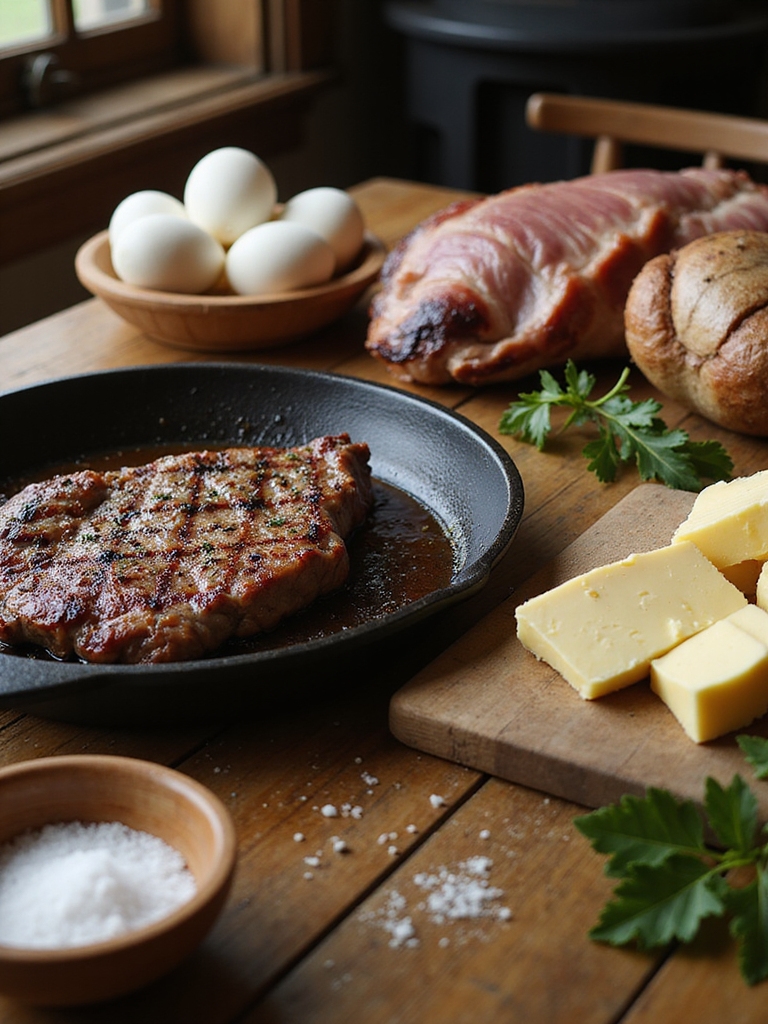
Day one is gloriously simple: eat meat, salt it, and don’t overthink the coffee. You’ll strip breakfast of cereal nostalgia and replace it with something honest—protein that isn’t trying to be clever.
Eat until satisfied, not stuffed; hunger cues matter more than clock time. Keep seasonings minimal so you notice how food actually tastes.
Expect a few odd sensations—energy shifts, quieter stomach noises—and remind yourself that novelty isn’t failure. Hydrate. Rest if you need to.
You’ll learn quickly what feels right; today’s aim is familiarity, not perfection, and resilience over ritual.
Try a few foolproof meals from the Easy Carnivore Meals for Beginners Who Avoid Cooking collection to keep things effortless.
Top 8 Starter Meats for Carnivore Beginners

Start simple: pick a few forgiving cuts—ribeye, ground beef, pork shoulder and chicken thighs—so you won’t be cooking like a surgeon on day one.
Sprinkle in organ meats like liver or heart a couple times a week; they punch way above their price class in nutrition.
You’ll eat better, feel sharper, and probably waste less money on fancy supplements.
You should also stock up on a few essential staples that make the diet easier to follow, like quality cuts and simple proteins for everyday meals Carnivore Diet Shopping List.
Best Beginner Cuts
Think of this list as your carnivore cheat-sheet: eight approachable cuts that won’t scare you off the diet or your butcher.
You’ll stick with familiar textures and flavor so you don’t revolt at dinner.
Start simple, get confident, then experiment.
- Ribeye — forgiving fat, taste that makes kitchens feel worth it.
- New York strip — lean enough to brag about, juicy enough to keep secrets.
- Ground beef — versatile, forgiving, instant comfort.
Then add chicken thighs, pork shoulder, salmon fillets, lamb leg, and brisket.
Buy well, cook simply, and learn what you actually like.
Carnivore Diet for Beginners Meals Literally Anyone Can Make includes easy recipes and tips for getting started with these cuts, including guidance on simple cooking.
Organ Meat Benefits
If you’ve mastered the friendly steaks and ground beef, it’s time to push past the predictable and meet the nutrient-dense parts of the animal most people skip: organs.
You’ll find liver practically screams vitamins—A, B12, iron—so one modest portion fixes many deficiencies without drama.
Heart’s dense with muscle-friendly taurine and collagen, quietly doing the repair work you didn’t know you needed. Kidneys and brains offer micronutrient variety and culinary novelty, if you can get past the idea.
Start small, mix into burgers or pâté, and notice energy, skin, and immunity nudging upward.
Organ courage pays off. Begin with familiar choices like beef liver or heart to ease into the top starter meats and build palate tolerance.
Ground Beef: Easiest Starter Protein

If you’re starting carnivore, ground beef is the no-nonsense entry ticket — it cooks fast, adapts to nearly anything, and forgives mistakes.
You can pick lean for less grease or higher-fat blends if you’re chasing satiety and mouthfeel, and both work in burgers, patties, or skillet scrambles.
It’s the kind of ingredient that makes the whole experiment feel manageable rather than theatrical.
It’s also one of the most affordable staples for the carnivore diet, making it easy to keep costs down while meeting protein and fat needs under budget.
Cooking Versatility
Ground beef steps in like a reliable sidekick—cheap, forgiving, and ready to shapeshift into burgers, meatballs, tacos, or a no-nonsense skillet dinner with zero drama. You throw it in a pan and it obliges, turning whatever mood you’ve got into dinner.
- Sear quickly for a browned crust and instant satisfaction.
- Simmer gently for saucy, uncomplaining ragu.
- Form and chill for neat, compact patties that behave.
You’ll appreciate how it takes spice, salt, and improvisation without complaint. It’s practical theater: minimal fuss, maximum edible charisma, and zero need for culinary bravado.
Ground beef is also a cornerstone of many budget carnivore meals because it’s inexpensive and versatile budget carnivore.
Fat Content Choices
When you’re choosing ground beef as your starter protein, think of fat percentage like the thermostat for flavor and texture: more fat means juicier, tastier results and a higher chance of sizzling glory (and a bit more shrinkage), while lean mixes keep your skillet cleaner and your calories lower but can come out dry if you overcook.
Aim for 80/20 if you want forgiving, flavorful patties and meatballs that don’t beg for sauce. Pick 90/10 when you want to control portions and fat intake, and 70/30 only if you enjoy puddles of bliss and occasional flare-ups.
The carnivore pantry often includes simple staples like beef, pork, and eggs, which makes stocking an easy kitchen straightforward.
Fatty Beef Cuts to Choose: Ribeye, Brisket, Chuck

Think of ribeye, brisket, and chuck as your flavor triptych—each cut brings a different kind of unpretentious decadence to the plate.
You want richness? Ribeye delivers buttery marbling that melts like a small, savory crime. Want slow-burn comfort? Brisket rewards patience with gelatinous, unshowy joy.
Need versatile value? Chuck stands up to braises, grinds, and bold seasoning without whining.
- Ribeye: intense fat, quick sear, unapologetic flavor.
- Brisket: low-and-slow reward, luscious collagen.
- Chuck: adaptable, beefy backbone for many dishes.
Pick by mood, not fashion; fat equals flavor, and you’re here for flavor. The carnivore diet favors animal-based staples like fatty beef cuts as foundational shopping choices.
How to Buy Affordable Steak and Where to Shop

You can save a surprising amount if you know where to shop—farmer’s markets, co-ops, and wholesale clubs all hide decent steaks under different labels.
Buy in bulk when prices drop and portion-and-freeze like a strategic general preparing for winter. You’ll eat better and spend less, if you’re willing to play the long game.
Where To Buy
Start by ditching the idea that good steak has to mean sticker shock; with a little strategy you can get high-quality cuts without paying like it’s a luxury dinner.
You’ll shop smarter, not fancier. Scout local butcher shops for trim control and helpful recommendations. Use apps and flyers for weekly deals. Compare unit prices like you mean it.
- Warehouse stores — good for basics and predictable quality.
- Independent butchers — ask for seconds or day-old specials.
- Ethnic markets — excellent value on whole cuts and lesser-known steaks.
You’ll learn patterns, call ahead, and win at meat math.
Buying In Bulk
Buy in bulk and watch the sticker shock shrink — it’s not magic, it’s math and a little common sense.
You’ll get better per-pound prices when you choose larger cuts: whole brisket, chuck roasts, or primal beef to portion at home.
Shop warehouse stores, local meat lockers, and farmers who’ll sell by the side or half-cow; ask about vacuum sealing and freezing options. Compare per-unit cost, not flashy sale signs.
Don’t ignore less glamorous cuts — slow-cooked shanks and skirt steaks stretch meals and budget.
Bring a cooler, split bulk orders with a friend, and enjoy reliable, affordable steak.
Pork Options: Ground Pork and Pork Chops
Think of pork as the friendly neighbor of the carnivore world: unpretentious, versatile, and happy to show up in both humble ground form and regal chop.
You’ll like ground pork for speed — it browns fast, seasons like a charm, and stuffs into meatballs or burgers without drama. Chops feel fancy but cook like anything else: don’t overthink the sear.
Consider:
- Use fattier ground for juiciness and satiety.
- Brine or rest chops to avoid dryness.
- Season minimally — salt, pepper, maybe garlic.
Pork lets you be efficient and indulgent without apology.
Chicken Choices: Thighs and Drumsticks for Fat and Flavor
If pork’s the friendly neighbor, chicken thighs and drumsticks are the reliable coworkers who bring extra fat and flavor to the potluck—you can count on them to show up well-seasoned and happy to be useful.
You’ll prefer thighs for juiciness and drumsticks for grip-a-bit comfort; both tolerate bold salt, smoke, and patience.
Roast, pan-sear, or slow-braise them until the skin’s a little guilty-looking. They carry sauces without losing identity and rescue sad sides.
You eat with purpose, not apology. Remember: dark meat is your ally, and convenience is a quiet form of kindness.
| Texture | Emotion |
|---|---|
| Crispy skin | Triumph |
| Juicy meat | Comfort |
| Gelatinous bits | Satisfaction |
| Leftovers | Relief |
| Easy prep | Gratitude |
Eggs Every Day: Why and How to Cook Them
You eat eggs every day because they punch above their weight: complete protein, brain-friendly choline, and a fat profile that plays nicely on a carnivore plan.
You’ll also want to master a handful of cooking methods—soft-boiled for silky yolks, fried in butter for crisp edges, and omelets when you need something that behaves like dinner.
Stick to these basics and you’ll get variety without inventing culinary drama.
Nutrition Benefits Explained
Satisfaction comes cheap and comes in a shell: eating an egg every day on a carnivore plan gives you a compact package of protein, fat, vitamins, and minerals that’ll keep hunger and hangry decisions at bay.
You get straightforward nutrition without drama.
- Protein — complete, bioavailable, muscle-friendly; simple math for satiety.
- Fats & choline — brain fuel and cell support, so your mood doesn’t mutiny.
- Micronutrients — B12, D, selenium, zinc in modest, useful doses.
You’ll avoid filler carbs and complicated labels.
Eggs are efficient, reliable, and quietly heroic in a strict animal-food regimen.
Cooking Methods Overview
While everyone else overcomplicates breakfast, you can rely on eggs to deliver consistent nutrition and flavor with minimal fuss—so let’s talk straightforward cooking methods that keep them interesting.
You’ll roast, scramble, fry, or slow-cook depending on patience and mood. Flip for crisp edges, steam for silk, or sous-vide if you’re impressing yourself.
Salt late, butter early. Rotate textures so monotony doesn’t sneak in. Here’s a quick reference to keep things terse and useful.
| Method | Texture | Time |
|---|---|---|
| Scramble | Soft/curdy | 3–5 min |
| Fry | Crisp edges | 2–4 min |
| Boil | Firm yolk options | 6–12 min |
| Poach | Delicate | 3–4 min |
| Bake | Custardy | 10–20 min |
Add Organ Meats: Liver, Heart, Kidney and Why They Matter
Almost always, the meat-eater who sticks to steaks and burgers misses the real nutritional bargains hiding in organ meats—liver, heart, and kidney—which deliver dense packages of vitamins, minerals, and bioavailable nutrients you won’t get from muscle alone.
You should try them because they’re efficient, cheap, and honest.
Start small, mash into pâté, or toss finely chopped into burgers so your palate adjusts without drama.
- Liver: vitamin A, B12, iron — think multivitamin in a bite.
- Heart: muscle nutrients, CoQ10, collagen — durable and savory.
- Kidney: selenium, B vitamins — bold, bracing, useful.
Canned & Smoked Fish: Sardines, Salmon, Mackerel
A few tins of fatty fish will rescue your carnivore rotation on busy nights and travel days: sardines, salmon, and mackerel give you punchy protein plus ready-made omega-3s, vitamin D, and the sort of salty, oily satisfaction that doesn’t pretend to be steak.
You pop one open, fork through bones like a practiced archaeologist, and eat something that’s efficient and honest.
They’re shelf-stable emergency cuisine and gourmet lazy food in one. Pick oil-packed for richness, water-packed for cleaner flavor, and smoked when you want a campfire vibe without building a fire.
They travel, last, and deliver.
Sausages and Cured Meats: Quick Picks Without Hidden Carbs
If you liked the no-fuss convenience of canned fish, sausages and cured meats will feel like its cheekier cousin — same shelf-stable ease, but with a skyline of flavors and textures that don’t pretend to be carb-heavy.
You’ll appreciate quick protein hits that don’t demand cooking drama. Pick brands with minimal additives, read labels for sugars or fillers, and treat spice as character, not disguise.
Consider:
- Dry-cured salami — bites of umami, slice thin.
- Uncured sausages — plain seasoning, grill or eat cold.
- Prosciutto or ham — elegant, countertop-friendly.
They’re convenient, satisfying, and frankly, a little show-offy.
Seafood Starters: Shrimp, Scallops, and White Fish
With a flick of your fork, shrimp, scallops, and white fish make the carnivore lineup feel a little coastal and a lot less same-old steak-and-bacon—think quick-cooking proteins that bring delicate sweetness and briny snap without sneaky carbs.
You’ll sear scallops for a caramelized crust in minutes, sauté shrimp so they pop with snap, and pan-roast cod or haddock for flaky comfort.
They behave well solo or dressed with salt, lemon, or a dab of animal fat.
They’re forgiving, fast, and change the mood of your plate — the marine equivalent of slipping on a sharp blazer.
Dairy on Carnivore: Butter, Cream, Cheese (Who Should Skip)
Don’t write off dairy just yet — butter, cream, and a hard cheese can slick onto your carnivore plate and change the game, but they’re not a universal pass.
You’ll enjoy richness, satiety, and easy flavor boosts if you tolerate lactose and milk proteins. Still, some folks hit bloating, brain fog, or stubborn inflammation.
- Pick cultured, aged cheeses — lower lactose, higher flavor; one slice goes far.
- Use butter and cream for cooking and coffee; they’re mostly fat, fewer triggers.
- Skip dairy if you react to casein, lactose, or notice cravings returning.
Easy Cooking Methods: Pan-Fry, Roast, Slow-Cook
Think of these three methods as your carnivore cookbook’s personality types: pan-fry for quick, sizzling satisfaction; roast for hands-off, flavor-concentrated results; and slow-cook when you want fork-tender, take-it-easy meals.
You’ll sear steaks hot and fast, preserving juices and earning that browned, irresistible crust with minimal fuss.
Roast larger cuts low and slow in the oven, letting fat render and flavor deepen while you pretend you weren’t watching the clock.
Slow-cookers turn cheap cuts into velvet without babysitting; set, forget, and return to carnivore comfort.
Use salt, fat, and confidence — and accept glorious, meaty simplicity.
Sample Day and 7-Day Starter Meal Plan (First-Week Expectations)
If you’re diving into your first week on carnivore, expect a few predictable surprises: your appetite will swing, your palate will recalibrate, and mornings will feel reliably simpler than they used to.
Plan a straightforward sample day: ribeye breakfast, leftover roast for lunch, and seared salmon for dinner.
Over seven days, rotate beef, pork, poultry, and fish, keeping snacks to hard cheeses or bone broth if tolerated.
Track energy and digestion; tweak portions. You’ll feel awkwardly proud of plain meat mastery by day five.
- Repeat favorites.
- Hydrate, salt, adapt.
- Rest when hungry.
You’ll likely start with ground beef, ribeye, eggs and a pat of butter—simple, forgiving, hard to mess up.
Fun fact: over half of new carnivores report cravings drop within a week, so picture your snack drawer going from urgent to politely ignored in seven days.
Expect a few culinary missteps, some heroic breakfasts, and the pleasure of meat that just works. You’ll get sturdier, not stranger.