I’ll help you reclaim every inch of a small kitchen by fitting dining into the flow: a snug banquette with storage, a narrow peninsula that doubles as prep and seating, or a fold-down table for quick meals.
Measure traffic paths, pick flexible furniture, and favor benches or stools to tuck away when not in use. Layer lighting and low-contrast finishes to make the space feel larger and cozy. Keep going and you’ll find practical layouts, materials, and quick upgrades to try.
Measure Your Kitchen and Set a Small-Kitchen Dining Goal

Before we pick a table or sketch a layout, I always measure my kitchen carefully and set a clear small-kitchen dining goal.
I jot dimensions, note traffic paths, and imagine daily rhythms — breakfasts, homework, intimate dinners.
That lets me choose a cozy bench, foldable table, or wall-mounted leaf that fits family life.
Practical choices keep gatherings warm without crowding our space.
I also consider clever layout strategies like open sightlines to make the room feel larger and more connected.
Match Your Dining Zone to Daily Habits

Once I’ve measured the room and set a goal, I look at how we actually live in the kitchen: who eats where, when snacks happen, and whether homework or crafts regularly take over the table.
I pick a dining spot that fits routines, then tweak storage and seating to support daily flow:
- Quick breakfasts
- After-school snacks
- Family dinners
- Homework corner
Expandable tables are a smart choice for flexible layouts and space-saving solutions in small kitchen dining areas.
Quick Decision Guide: Best Layouts by Floor Plan

If your house has an open plan, I’ll usually recommend anchoring the dining zone close to the kitchen island so we keep traffic flowing and kids can grab snacks without bolting through the room.
For narrower galley homes I suggest a slim banquette or drop-leaf table.
In compact cottages try a cozy corner table.
For larger plans, group seating near windows to invite family together.
Peninsula kitchens often benefit from placing seating along the outer edge to create a natural workflow corridor that keeps prep and traffic separate.
Choose an Integrated Layout: Island, Peninsula, or Banquette

Three straightforward options usually cover most homes: an island, a peninsula, or a banquette, and I’ll help you weigh which fits your family’s rhythms.
I favor practical, cozy setups that invite togetherness without crowding. Consider these simple trade-offs:
- Island — central prep, social hub.
- Peninsula — space-saver, side seating.
- Banquette — snug, casual dining.
- Flow — circulation matters most.
High-end kitchens often feature distinctive island designs that serve as focal points while adding practical surface and storage.
Build a Multifunctional Peninsula for Prep and Seating
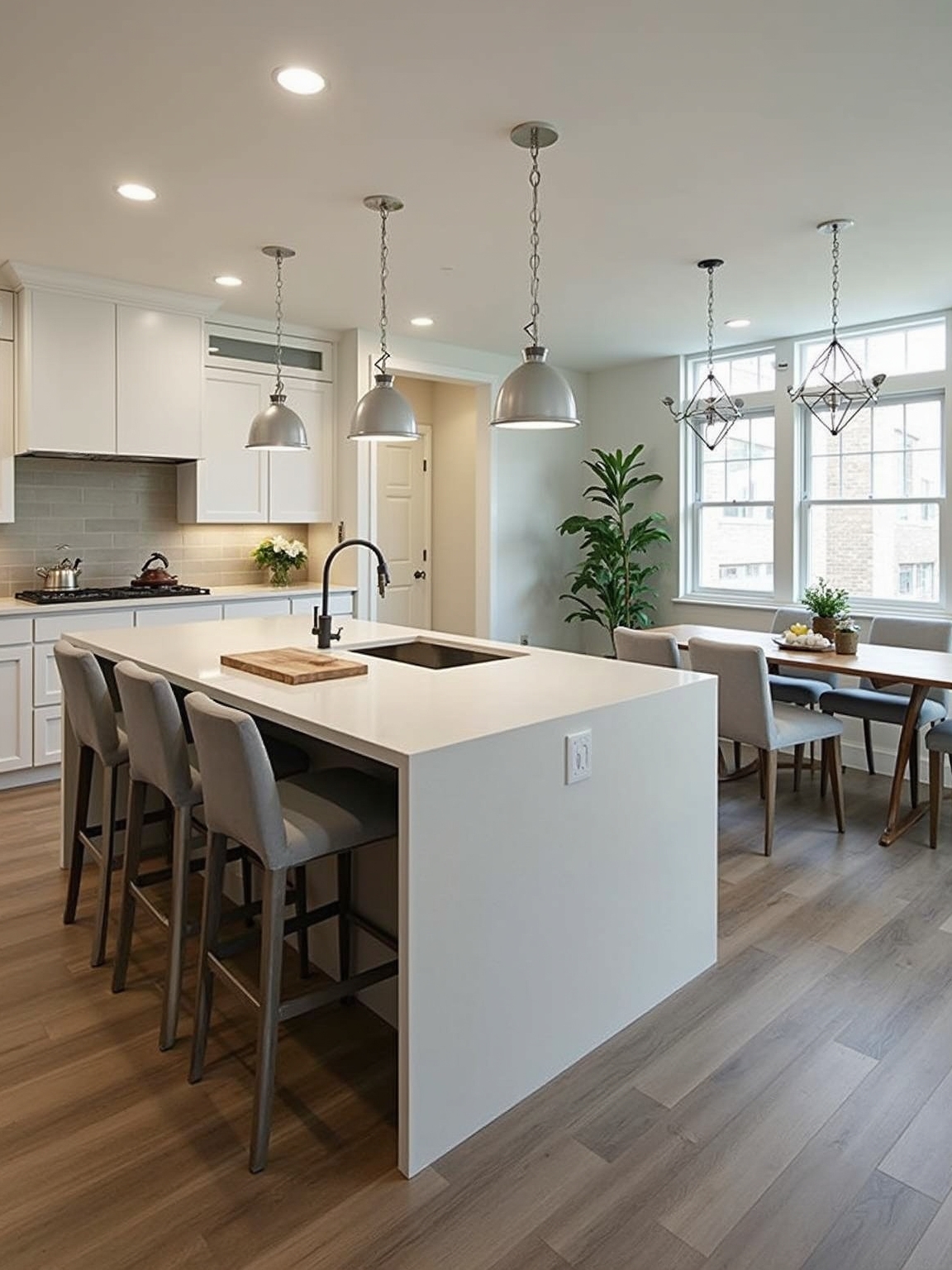
I like to tuck a narrow, sturdy peninsula into tight kitchens so the counter does double duty as a prep area and casual dining spot.
It saves floor space without sacrificing work surface, and our kids can pull up stools for homework while I chop vegetables.
Let’s look at how a dual-purpose seating surface and smart counter design can keep family life flowing.
Multifunctional islands can offer built-in storage and seating options to maximize utility in small kitchens, including clever space-saving solutions that combine prep and dining functions.
Space-Saving Counter Design
Think of a peninsula as the little hero of a busy kitchen: I tuck prep, storage, and seating into one compact stretch so the whole family can gather without crowding.
I favor simple counters that pull double duty—food prep, homework, quick meals. Consider these space-saving ideas:
- Shallow drawers under overhang
- Narrow appliance garage
- Roll-out cutting board
- Vertical spice rack
A well-planned peninsula can also incorporate smart storage to keep countertops consistently clear.
Dual-Purpose Seating Surface
Let’s make the peninsula pull double duty: I design the countertop so one side’s a sturdy prep zone and the other’s a welcoming seating surface where the kids can do homework, guests can linger, and quick meals happen without fuss.
I choose durable wood, overhang seating, and integrated storage beneath. It becomes our family hub — practical, cozy, and ready for everyday life. A well-planned layout can also incorporate casual bar seating to keep the space social without sacrificing workflow.
Install a Banquette With Hidden Storage
I love the way a built-in banquette tucks away clutter—lift the seat and you’ve got roomy storage for kids’ games, seasonal linens, or extra serving dishes.
When we pick materials and finishes, I go for durable woods and stain-resistant upholstery that hold up to spills and still feel warm and homey.
Let’s talk about hinge types, cushion choices, and finishes that make the banquette both practical and inviting.
Built-in seating often doubles as clever storage because of smart compartmentalization and space-saving design that keeps kitchens tidy without extra furniture.
Space-Saving Seat Storage
Often I tuck extra things into everyday spots, so installing a banquette with hidden storage felt like a natural next step for our kitchen.
I lift seats to stash linens, games, and seasonal dishes, keeping clutter out of sight while staying within arm’s reach for family life.
- Linens
- Games
- Dishes
- Kid supplies
Material And Finish Choices
While I wanted the banquette to be cozy and lived-in, I also picked materials that stand up to kids, pets, and daily messes.
I chose durable woven upholstery, washable slipcovers, and a sealed oak seat top that hides storage. Matte, easy-clean paints and rounded edges keep things safe and forgiving. It feels warm, practical, and ready for family life.
Use Fold-Down and Wall-Mounted Tables in Tight Spots
When space gets tight, I turn to fold-down and wall-mounted tables to keep meals and homework from crowding the living room; they give us a sturdy table when we need it and tuck away when we don’t.
I love how simple hardware and solid wood feel homey. They suit busy families who value function without fuss.
- saves floor space
- quick setup
- durable for daily use
- cozy, rustic charm
Pick Slim-Profile Tables and Space-Saving Chairs
I favor slim-profile tables and stackable, tuck-away chairs because they let’s dine together without the room feeling crowded; you get a full table surface with less visual bulk, and chairs that slide neatly under or stack in a closet when you don’t need them.
I choose wood or metal frames—durable, simple lines—and soft cushions so family meals stay cozy yet uncluttered.
Create Flexible Seating With Stools and Benches
I like mixing stools and benches around our table because the different heights and shapes make room for kids, grandparents, and surprise guests without fuss.
A long bench can tuck neatly under the table or act as a cozy banquette, and a storage bench keeps board games and seasonal linens within easy reach.
Let me show you how a few stools and a smart storage bench can make the whole dining area more flexible and family-ready.
Mix Stools And Benches
Although a long dining table can feel formal, I like to soften it by mixing stools and benches so family life can flow around it — kids can spill out, guests can squeeze in, and we can shift seating as needed.
- Stools add quick, movable places.
- Benches welcome cuddles and crowding.
- Different heights create a relaxed look.
- Swap cushions for comfort and character.
Storage Bench Seating
Storage-bench seating is my go-to when I want family-friendly function without sacrificing style, because it tucks clutter away and gives everyone a comfy spot to land.
I choose a sturdy bench with hinged lids to store toys, table linens, and seasonal dishes. Add cushions and mix in stools for flexibility.
It keeps the room tidy, cozy, and ready for meals or homework.
Combine Prep and Dining Surfaces Effectively
When we blend prep and dining surfaces, we’re making the kitchen work harder for family life—so I focus on layouts that let’s chop, chat, and sit without getting in each other’s way.
I pick durable tops, mix seating heights, and keep tools handy.
Simple rules guide me:
- Sturdy countertop
- Comfortable overhang
- Easy-clean materials
- Dedicated prep zone
Improve Traffic Flow and Sightlines Around Dining Areas
I like to keep paths around our table clear so everyone can move without bumping into chairs or carrying plates like a circus act.
I also place seating and storage to preserve unobstructed sightlines so parents can keep an eye on kids and conversations flow across the room.
Little changes—angled chairs, slim benches, a tidy passage—make family mealtimes calmer and more connected.
Clear Walkways
Let’s clear a path so everyone can move around the table without stepping over feet or squeezing past chairs; I like to think of walkways as the room’s circulation arteries.
I keep routes simple, comfy, and safe for kids and grandparents.
- Keep 36–42″ clear paths
- Angle chairs away from walkways
- Use slim benches where space is tight
- Remove clutter daily
Unobstructed Sightlines
Because clear sightlines keep meals relaxed and safe, I arrange seating and furnishings so everyone can see each other and move without surprises; that means keeping low-profile centerpieces, positioning taller pieces against walls, and making sure a child at the end of the table isn’t hidden by a hutch.
I favor bench seating, slim chairs, and open shelving to keep conversation flowing and little feet visible.
Light Your Dining Zone to Feel Larger and Cozier
When I brighten the dining zone, the room instantly feels both bigger and more inviting; a simple shift in lighting changes how we gather, eat, and relax together.
I use layered light to cozy evenings and lively breakfasts, keeping it practical and warm.
- Pendant over table
- Dimmable overhead
- Wall sconces for depth
- Task lamps for homework and crafts
Finishes and Colors That Expand a Small Kitchen Visually
If you want a small kitchen to feel wider and more welcoming, I reach for finishes and colors that bounce light and simplify the eye’s path across the room.
I choose pale, warm neutrals, matte cabinets to hide wear, and glossy backsplashes to reflect daylight.
Natural wood tones ground the space, while consistent trim and minimal contrast keep sightlines calm and family-friendly.
Low-Cost Upgrades to Add Dining Space Fast
Having picked finishes and colors that open the room, I like to pair them with quick, low-cost moves that add real dining function without a full remodel. I’ll share simple, family-friendly tweaks that bring warmth and seating fast.
- Narrow farmhouse table
- Fold-down wall bench
- Bar-height ledge with stools
- Built-in storage bench with cushions
Common Layout Mistakes and How to Fix Them
Although a comfy table and cushions can make a room feel ready for meals, I still see the same layout mistakes that trip families up — furniture too close to traffic paths, seating that ignores sightlines to the kitchen, and islands or benches that block natural flow.
I suggest shifting pieces, trimming oversized tables, angling benches, and carving clear walkways so cooking, chatting, and kids’ comings and goings feel effortless.
I hope these ideas help you turn every inch of your kitchen into a cozy family hub. Remember: homes with open, integrated dining spaces are 34% more likely to be used daily for meals — proof that smart design changes how we live.
Pick one small upgrade, like a multifunctional peninsula or banquette, and let meals, homework and stories happen together.
You’ll be amazed how warmth and function grow from modest changes.