
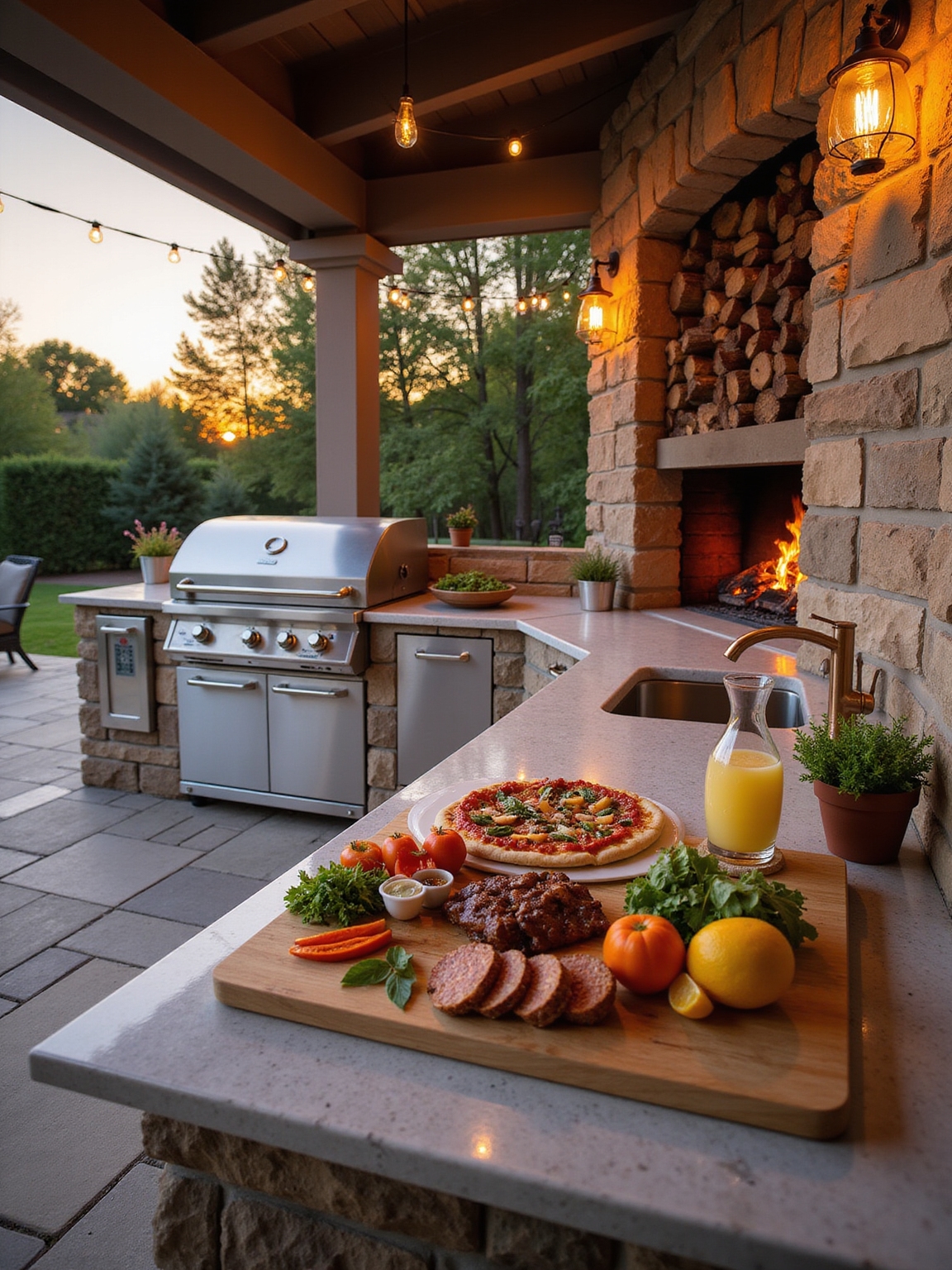
I’ll help you plan a full-equipped outdoor kitchen that makes summer BBQs feel effortless and welcoming. Start by mapping cooking, prep, and dining zones, choose a fuel type that fits your style, and pick weatherproof appliances and durable counters like granite or sealed concrete.
Add a smoker or pizza oven for variety, undercounter fridge and covered seating, and stagger lighting and outlets. Follow a phased build with permits and a 10–15% contingency, and keep going to learn practical layouts and maintenance tips.
Quick 3-Step Outdoor Kitchen Planning Checklist

Before you break ground, I ask you to pause and picture how you’ll actually use the space—because a thoughtful plan saves time, money, and headaches.
I start by mapping zones: cooking, prep, dining.
Then I pick durable, low-maintenance materials that age well outdoors.
Finally, I plan workflow and storage so grilling flows smoothly, guests mingle comfortably, and evenings feel effortlessly welcoming.
A peninsula layout can further boost efficiency by keeping work zones compact and accessible, making it ideal for outdoor kitchens with optimized workflow.
Set a Realistic Outdoor Kitchen Budget and Cost Breakdown

Now that you’ve sketched zones and chosen hardy materials, it’s time I help you pin down the money side so your dream doesn’t outpace your wallet.
I’ll walk you through realistic line items—shell, appliances, plumbing, lighting, labor—and suggest contingency (10–15%). Prioritize essentials, phase upgrades, and get multiple quotes.
Together we’ll craft a budget that’s honest, cozy, and built to last. Contemporary designs often borrow from luxurious modern kitchen trends to blend indoor comforts with outdoor durability.
Choose the Right Outdoor Kitchen Grill for Your Cooking Style

When I choose a grill for my outdoor kitchen, I think about fuel type first — propane, charcoal, or wood each give a different flavor and feel.
I also consider how much cooking space I need for friends and family, plus the heat control features that let me sear, smoke, or slow-roast with confidence.
Let’s match your cooking style to the right grill so every summer meal feels effortless and tasty.
Modern Kitchen Gadgets That Elevate Everyday Cooking introduce next-gen tech that can modernize your outdoor setup and streamline meal prep.
Fuel Type Matters
I like to match my cooking style to the grill’s fuel—charcoal for that deep, smoky sear; gas for quick, controllable heat; and pellets for low-and-slow precision—because each burns and behaves differently and shapes what I can cook outdoors.
I prefer charcoal for steaks, gas for weeknight chores, and pellets when I want tender, slow-smoked ribs. Fuel choice guides every meal.
Investing in high-tech gadgets can enhance temperature control and consistency for any fuel type.
Cooking Space Needs
Picking the right fuel sets the tone, but how much cooking space you build around it will shape every meal you host.
I recommend planning prep zones, warm holding areas, and separate sear and low-and-slow surfaces so I can juggle burgers, veggies, and a roast without crowding. A generous worktop and room for tools keeps service smooth and evenings relaxed.
Consider integrating multifunctional elements like prep zones to maximize efficiency in tight layouts.
Heat Control Features
Because good heat control is where a great grill becomes your trusted kitchen partner, I look for features that let me dial exact temperatures, hold steady for long cooks, and flare up when I want that sear. I favor simple, reliable tools that feel like home.
- Precise thermostats
- Zoned burners
- Quick-sear ignition
Premium Appliance Essentials For The Serious Home Chef — the right selection ensures consistent results and professional-level performance, especially with precise thermostats that help maintain steady temperatures.
Add Secondary Cooking Gear: Smokers, Pizza Ovens, and Side Burners

I like to round out my outdoor kitchen with a few secondary pieces that expand what I can cook — a smoker for low-and-slow flavor, a wood-fired pizza oven for blistered crusts, and a reliable side burner for sauces and sides.
I’ll share quick tips on choosing the right smoker, how a wood-fired oven changes pizza, and how to pick an efficient side burner that fits your layout.
Together they turn a grill into a true outdoor hearth for summer gatherings. A well-designed island can tie all these elements together into a cohesive cooking station with distinct work zones and stylish functionality.
Smoker Selection Tips
A good smoker can turn an ordinary weekend into a slow-smoke ritual, so I’ll help you choose one that fits your cooking style and outdoor space.
I love rustic simplicity; pick what you’ll use. Consider:
- Fuel type—charcoal, pellet, or electric for flavor vs. convenience.
- Size—cooking capacity vs. storage.
- Build quality—insulation and easy cleaning for reliable results.
Also consider adding luxury kitchen gadgets like a dedicated outdoor pizza oven to expand your summer menu.
Wood-Fired Pizza Ovens
If you liked the slow rhythm of smoking, you’ll appreciate how a wood-fired pizza oven brings that same elemental heat to quick, blistered pies and roasted vegetables; I lean toward ovens that marry rustic charm with practical performance.
I build menus around stretchy crusts, charred veggies, and smoky cheeses, teaching guests to toss dough, tend the fire, and savor that communal, ember-warmed flavor.
Efficient Side Burners
Think of side burners as the reliable sous-chef of your outdoor kitchen: I use them to sear quick proteins, simmer sauces, and keep sides hot while the main grill or pizza oven gets all the glory.
I love their rustic, efficient hum. Try these uses:
- Sear steaks fast.
- Simmer barbecue sauce.
- Warm vegetables gently.
Choose Durable Countertops and Cabinet Materials

I recommend starting with materials that can take heat, moisture, and spills without sulking—think granite, porcelain tile, stainless steel, or concrete sealed for outdoor use.
I favor sturdy, low-maintenance cabinets—marine-grade polymer, powder-coated steel, or cedar with proper sealant.
They age gracefully, resist rot and pests, and keep the space feeling warm and rustic while standing up to summer cooking’s messes.
Design Prep and Work Zones for Efficient Cooking Flow
When I lay out an outdoor kitchen, I start by mapping clear work zones—prep, cooking, serving, and cleanup—so everything flows without backtracking or crowding the grill; this keeps meals moving and conversations alive.
I favor simple paths, covered prep near the grill, and a tidy cleanup corner.
- Prep: roomy counters, knife access
- Cook: grill, heat buffer
- Serve: staging, plates ready
Outdoor Kitchen Refrigeration, Ice Bins, and Beverage Centers
Because cold drinks and easy access to ingredients keep a cook relaxed and guests lingering, I plan refrigeration and ice thoughtfully in any outdoor kitchen.
I favor a sturdy undercounter fridge, a lidded ice bin for cocktails and kids’ lemonade, and a cozy beverage center where bottles and cans sit within reach. These choices keep service smooth and evenings unhurried.
Select Sinks, Plumbing, and Outdoor Faucets
Let’s dig into sinks and plumbing that make outdoor cooking feel as effortless as indoor prep; I pick fixtures that are tough enough for weather yet warm in style so they blend with stone, wood, or metal.
I choose durable basins, frost-proof lines, and handy faucets. My top considerations:
- Deep stainless sink
- Pull-down spray faucet
- Insulated shutoff valves
Plan Safe Gas and Electrical Hookups and Lighting
If you want your outdoor kitchen to feel as safe as it’s cozy, I start by mapping gas and electrical lines before the cabinets go in; that keeps everything accessible and up to code.
I stagger outlets safely, choose GFCI protection, and position weatherproof fixtures where shadows won’t fall. Soft, layered lighting highlights prep zones and creates a warm, rustic glow for evening gatherings.
Storage Solutions, Weatherproofing, and Pest Protection
Now that the wiring and gas lines are set where they’ll stay, I turn my attention to storage, weatherproofing, and pest protection to keep meals and gear ready for anything.
I choose sealed cabinets, tight seals, and practical pest barriers for a cozy, usable kitchen.
- Lockable, ventilated cabinetry
- Silicone seals and marine varnish
- Mesh screens and bait stations
Flooring and Roofing Options for Comfort and Safety
Now that our storage and weatherproofing are sorted, I want to talk about the right underfoot and overhead choices to keep your outdoor kitchen safe and cozy. Choosing durable outdoor flooring—like textured stone or composite decking—prevents slips and stands up to spills and weather.
Pair that with a weatherproof roof option, whether a solid pergola, metal awning, or retractable canopy, to shelter cooking and guests without losing the open-air charm.
Durable Outdoor Flooring
I often start my summer cookouts by checking the footing around the grill, because durable outdoor flooring makes a huge difference in comfort and safety.
I prefer materials that feel rustic yet sturdy and easy to clean. Consider these options:
- Stone pavers — timeless, slip-resistant, low maintenance.
- Sealed concrete — affordable, smooth, durable.
- Composite decking — warm, rot-resistant, kid-friendly.
Weatherproof Roof Choices
Choosing the right weatherproof roof for your outdoor kitchen makes evenings usable rain or shine. I prefer a sturdy metal or cedar pergola with tight sealing and clear polycarbonate panels where I want light.
Good drainage, insulated panels, and recessed lighting keep us comfortable. I’ll also add roll-down screens for wind and splatter protection so meals stay cozy and the space feels timeless.
Seating, Dining Layouts, and Entertaining Zones
Often I start by picturing where people will gather, because seating and layout make or break a summer BBQ’s flow.
I arrange zones for cooking, dining, and lounging so guests drift naturally. Consider simple groupings:
- Long farmhouse table for communal meals.
- Cozy sofas around a fire pit for slow conversations.
- Bar-height counter seating for chatty cooks and drinks.
Outdoor-Rated Appliances, TVs, and Sound Systems
While planning an outdoor kitchen, I make sure every appliance and electronic is rated for exterior use so weather and summer dust won’t ruin a party, and I’ll tell you what to look for.
I choose stainless, sealed controls, and UL/ETL outdoor ratings. For TVs and speakers I pick weatherproof enclosures, corrosion-resistant mounts, and easy-to-hide wiring so nights stay cozy and musical.
Maintenance Checklist and Winterizing Tips
Now that the gear’s rated for the elements and your speakers are safely tucked away, I keep a simple maintenance checklist to protect the investment and extend summer fun.
I sweep, seal, and cover with care, then winterize pipes and burners before frost.
My routine:
- Clean/grill and oil components.
- Drain lines; protect fittings.
- Cover furniture; store cushions.
Phase the Build and Hire Contractors Efficiently
I’ll map a simple project phasing plan so we can build in sensible stages without scrambling.
I’ll also share practical contractor coordination tips to keep timelines, permits, and trades moving smoothly.
Together we’ll make the process feel as cozy and manageable as the finished kitchen.
Project Phasing Plan
Because I want your summer kitchen to come together smoothly and without surprise delays, I break the project into clear phases and line up contractors so each step flows into the next.
I guide you through each rustic, cozy stage:
- Site prep and foundation — set the tone.
- Utilities and framing — bones and warmth.
- Finishing and appliances — soul and comfort.
Contractor Coordination Tips
While I’m coordinating the schedule, I’ll keep a simple rhythm so trades arrive just when you need them — not too early, not too late.
I’ll sequence plumbing, electrical, masonry, and finishing to prevent overlap, confirm permits, and set clear milestones.
I’ll vet contractors, communicate expectations plainly, and keep a friendly check-in cadence so your outdoor kitchen rises smoothly, on time and with care.
I can already smell cedar smoke and hear laughter drifting across your backyard as your fully equipped outdoor kitchen becomes the heart of summer. With practical choices, durable materials, and a phased plan, you’ll craft a warm, rustic stage where every steak, pizza, and sunset feels effortless.
Take it step by step, tend it well, and this kitchen will age into a trusted friend—ready for gatherings, quiet mornings, and stories cooked slow over fire.