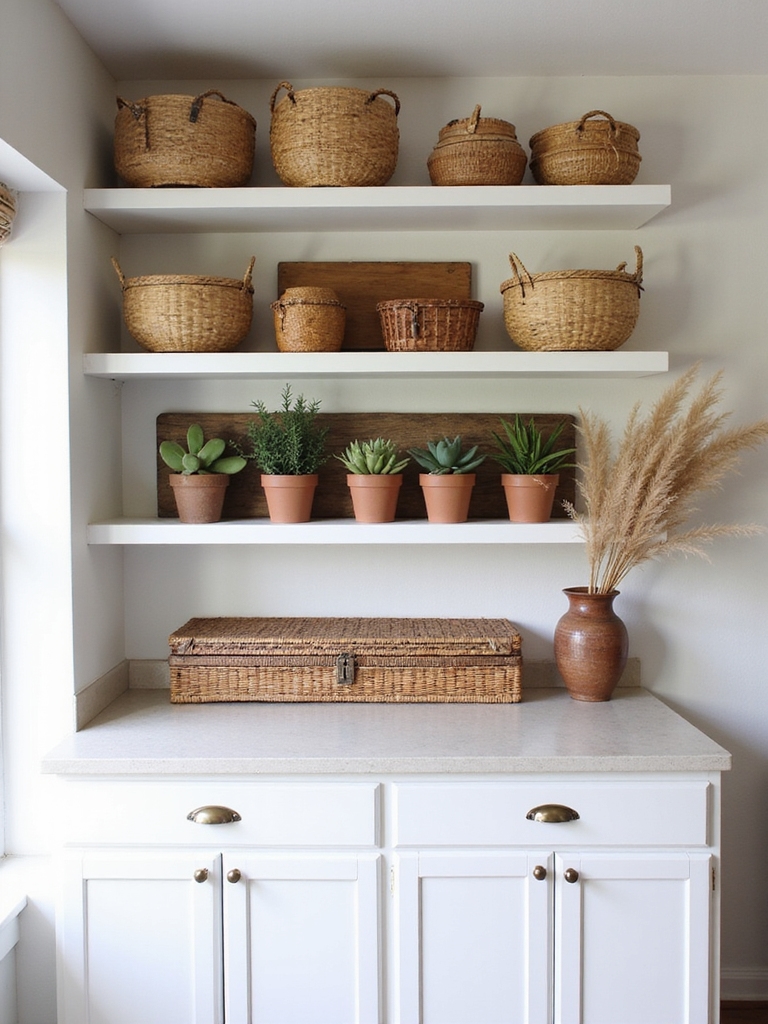


I love floating shelves in open kitchens because they make the space feel lived-in without looking cluttered. I keep three simple rules: limit pieces for breathing room, anchor each vignette with a focal item, and mix heights and textures—think wood, stoneware, and a trailing plant.
I place shelves at eye level, pair them with hidden baskets below, and add warm LED tape for soft light. Keep it cozy and intentional, and I’ll show you how to refine each step.
Quick Start: 3 Rules to Style Floating Shelves Fast
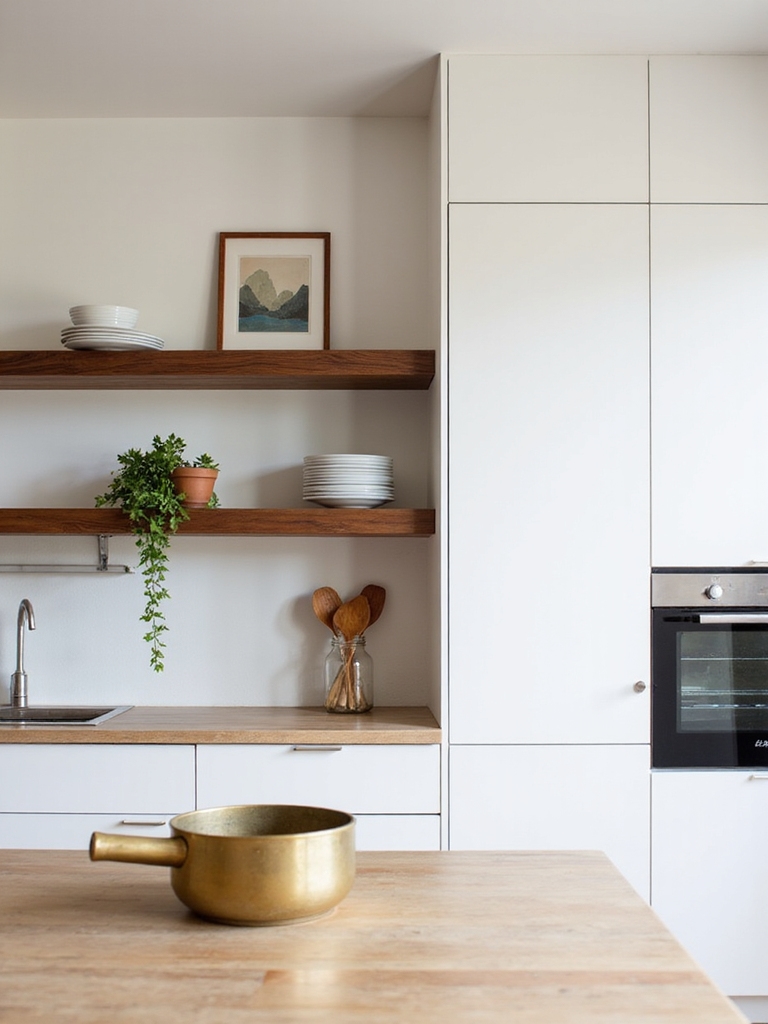
When I’m styling floating shelves quickly, I stick to three simple rules that keep things looking intentional, not cluttered: limit pieces, vary heights and textures, and anchor the arrangement with a focal item.
I choose a few cherished ceramics, a small stack of cookbooks, and a plant for softness. I step back, tweak spacing, and stop when it feels balanced and lived-in.
Elevated Kitchen Shelf Styling offers tips on choosing pieces that create a cohesive, designer look by focusing on scale and composition with curated accents.
Pick One Cohesive Shelf Style (Minimal, Warm, Layered)

I’ll take those quick rules and apply them to a single look so the shelf reads as one calm vignette instead of a jumble.
I pick a warm, rustic approach: wood tones, one neutral ceramic, a small plant, and a stack of two plates.
I keep shapes simple, textures cozy, and spacing even so the shelf feels intentional and lived-in.
This approach echoes key principles of elevated countertop styling for modern urban kitchens, tying the shelf into the rest of the space.
Decide How Many Shelves and Where to Place Them

Because my room has a low ceiling and a cozy, lived-in feel, I usually stick to one or two floating shelves rather than a tall stack; that keeps the space from feeling crowded and lets each vignette breathe.
I place them at eye level or just above counter height, staggered for interest, leaving clear wall space between groups so dishes, plants, and books read like curated moments.
I also layer practical pieces with decorative accents to create functional styling and everyday usefulness.
Pick Durable Floating‑Shelf Materials for Open Kitchens

When I’m choosing shelves for an open kitchen, I lean toward solid-wood alternatives like plywood with a hardwood veneer or engineered lumber for strength without the fuss.
I also pick moisture-resistant finishes—waterproof sealers or oil-based varnishes—to protect against steam and spills.
Those choices keep the rustic look I love while standing up to real kitchen life.
Designers also recommend keeping the area above cabinets clutter-free to maintain a streamlined look and make cleaning easier, with an emphasis on top-of-cabinet styling.
Solid Wood Alternatives
Think about swapping solid wood for sturdier, low-maintenance materials that still feel warm and lived-in in an open kitchen.
I lean toward reclaimed plywood with a natural edge, butcher-block laminate, or metal frames with wood veneers.
They resist warping and show lovely patina.
I’ll choose finishes and textures that echo rustic charm while keeping upkeep simple and practical for daily life.
Designer-approved tips recommend balancing scale and texture for cohesive decor with above-cabinet styling.
Moisture‑Resistant Finishes
I recommend choosing moisture‑resistant finishes for floating shelves in an open kitchen so they stay beautiful and sturdy through steam, splashes, and everyday use.
I prefer satin polyurethane on reclaimed pine, lacquered birch for easy wipes, or oil‑based wax for a hand‑rubbed look.
They age well and feel homey.
- Satin polyurethane
- Lacquered birch
- Oil‑based wax
Consider pairing these finishes with a complementary backsplash material like porcelain, stone, or glass for a cohesive modern look and improved durability with premium backsplash alternatives.
Keep Sightlines Clear: Display vs. Hide

I like keeping the things I use every day out where I can grab them, while tucking clutter behind doors or in baskets so the room breathes.
On floating shelves that means choosing a few pretty, functional pieces to show off and grouping the rest in sightline-friendly containers.
Let me show you simple ways to balance display and concealment so your shelves look lived-in, not crowded.
Shelves work best when you mix visible items with smart storage to eliminate counter clutter and keep the room tidy.
Visible Versus Concealed Items
When I’m styling floating shelves, I always balance what I want on display with what should be tucked away, because clear sightlines make a room feel calmer and more intentional.
I choose a few handcrafted bowls and a wooden cutting board to show character, then hide clutter in baskets. Simple, earthy choices keep the look relaxed and purposeful.
- Open display: ceramics
- Concealed: wicker baskets
- Accent: greenery
Professional Kitchen Counter Decor often emphasizes materials and organization to maintain a clutter-free space with stylish touches like open displays and hidden storage; see counter decor for examples.
Sightline-Friendly Organization
Although I love a shelf packed with personality, I keep sightlines clean by deciding what’s meant to catch the eye and what should quietly recede.
I group a few rustic ceramics, a framed herb sketch, and a single trailing plant as focal points, then tuck jars, cookbooks, and baskets lower or behind. It feels intentional, lived-in, and calm.
Build Balanced Layouts With Odd‑Number Groupings
Three is a little magic number I reach for when I’m arranging shelves; I find odd groups feel more natural and less forced than pairs or even rows.
I balance textures and heights, keeping it cozy and lived‑in without clutter.
- A woven basket, a small plant, a stack of plates.
- Three ceramic jars of varying heights.
- A framed print flanked by two candlesticks.
Layer Height and Depth for Visual Interest
I like to mix shelves with different depths and then layer objects at staggered heights to make the whole display feel lived‑in and interesting.
Placing a shallow frame in front of a deeper vase, or raising a stack of books behind a small plant, creates pockets of space that catch the eye.
Try keeping taller items toward the back and lower pieces in front so each piece gets its moment without looking crowded.
Vary Shelf Depths
When I mix shallow ledges with deeper platforms, the shelf suddenly feels layered and alive; varying depths lets me play with scale, shadow, and the way objects interact without crowding the space.
I tuck ceramics on slim boards and bowls on roomy planks, keeping a cozy, rustic rhythm.
- Narrow ledge: herbs, small jars
- Mid depth: frames, candles
- Deep shelf: mixing bowls, baskets
Staggered Layer Heights
Mixing different shelf depths naturally makes me think about varying the heights of what sits on them — staggered layers bring that same cozy rhythm upward.
I arrange bowls, jars, plants, and framed prints in ascending steps, letting taller pieces anchor one end and shorter ones cluster beside.
It feels lived-in, balanced, and inviting, like a small, curated harvest on display.
Minimal Monochrome Shelf Vignette (How To)
Although I keep things simple, I love how a monochrome shelf vignette brings calm to a room; I’ll walk you through the easy steps I use to create one.
I pick natural shapes, stick to a single color palette, and leave breathing room.
My step-by-step:
- Choose three items with varied heights.
- Keep tones within one color family.
- Arrange with negative space between pieces.
Layered Warm Textures for a Cozy Look
I love layering natural wood pieces with soft textile accents on floating shelves because the contrast instantly warms a space.
I’ll show you how to mix stacked wood frames or bowls with a folded linen or chunky knit to create depth without clutter.
Start small and let the textures do the talking for a cozy, lived-in look.
Natural Wood Layers
Comfort is what I aim for when I layer natural wood tones on floating shelves; I love how varying grains and finishes make a space feel lived-in and cozy.
I mix reclaimed planks with smooth birch, keeping shapes simple. My eye hunts for balance: weight, color, and texture.
- Staggered plank heights
- Contrast grain patterns
- Matte and satin finishes
Soft Textile Accents
Switching from the solidity of wood, I layer soft textiles to soften the edges and invite you in—think woven throws folded neatly, linen napkins draped just so, and a small felted pad beneath a stack of books.
I pick muted tones and nubby textures that age well, tuck fabrics between ceramics for contrast, and rotate pieces seasonally to keep the shelf feeling lived-in and welcoming.
Use Plants to Soften Open‑Plan Edges
Around the edges of an open plan, I like to tuck plants onto floating shelves to soften sightlines and add life where walls used to be. I choose hardy greens, mix textures, and let trailing vines drape.
They warm the space without crowding it.
- Potted fern in a terracotta pot
- Trailing pothos over the shelf edge
- Small rosemary or sage in rustic tins
Showcase Dishes, Glassware, and Cookbooks as Decor
I like to treat open shelves in the kitchen like a small, curated pantry display—layering plates, glassware, and a few well-loved cookbooks so they look lived-in, not staged.
I mix textures: stoneware plates, clear goblets, and dog-eared recipe books.
I arrange by color and height, leave breathing room, and rotate items seasonally so the shelf feels personal, useful, and welcoming.
Add Small Art and Frames Without Cluttering Sightlines
Although I love art that tells a story, I keep pieces small and simple on floating shelves so they enhance the view instead of stealing it.
I tuck slim frames and tiny canvases into corners, lean one at a time, and rotate seasonally.
Here’s a simple visual guide:
- A thin wooden frame with a muted sketch.
- A tiny encaustic panel, propped.
- A mini botanical print, leaning.
Pair Floating Shelves With Closed Storage to Hide Clutter
Keeping art small on the shelves makes the room feel open, but I also like to pair those displays with closed storage so everyday messes stay out of sight.
I tuck bulky appliances, mail, and mismatched items into woven baskets, cabinets, or drawers beneath the shelves.
That mix keeps the kitchen cozy and lived-in while preserving a calm, uncluttered look visitors notice immediately.
Add Lighting for Ambiance and Task Support
When I add lighting to floating shelves, it changes the whole mood of a room and makes the shelves actually useful at night.
I pick warm LED strips or puck lights to highlight pottery and cookbooks, creating a cozy, lived-in feel.
I also layer task lights for chopping and reading recipes.
- Warm LED strips
- Under-shelf pucks
- Adjustable mini-spotlights
Maintain Shelves and Quick Fixes for Common Styling Mistakes
Soft lighting makes shelves feel lived-in, but it also highlights dust, wobbles, and styling flubs—so I make maintenance and quick fixes part of my routine.
I dust weekly, tighten brackets, and swap out overcrowded pieces. If arrangements look heavy, I remove one item or add greenery for balance. Small nails, adhesive pads, and a level keep everything steady and charming.
I hope these floating‑shelf tips help you create a kitchen that’s useful, beautiful, and easy to live in.
Choose one clear style, pick the right materials, and place shelves where they make sense.
Display a few cherished pieces, hide the rest, and add lighting that flatters and functions.
Clean regularly, tweak as you go, and don’t be afraid to edit. Keep it simple, keep it warm, and keep it genuinely yours.