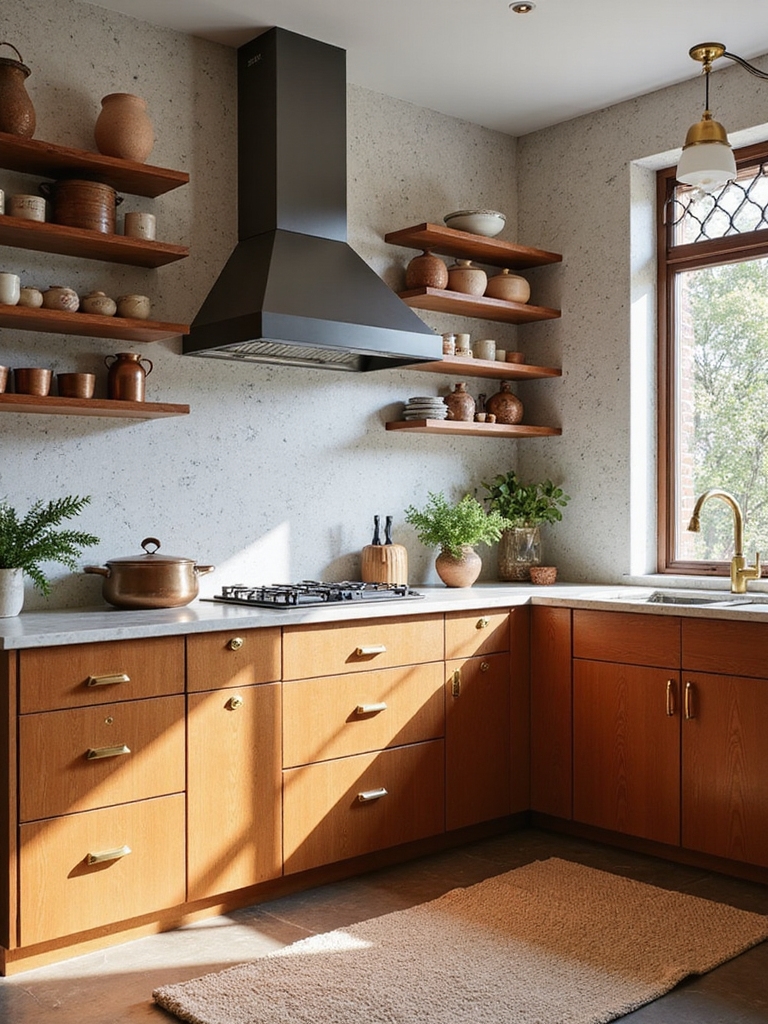


I’ll show you how to blend reclaimed wood, honed stone, and matte metals so your kitchen feels both warm and streamlined. I favor clean flat‑panel cabinets paired with wide‑plank weathered oak, simple honed countertops, and matte black or brushed brass hardware.
I keep sightlines calm, repeat one woven or leather motif, and layer task and ambient lighting. Prioritize real storage and durable surfaces for everyday life — keep going and I’ll share practical layouts, materials, and quick wins.
How This Guide Helps

When I put this guide together, I focused on practical ideas you can actually use—mixing reclaimed wood, clean lines, and simple finishes so your kitchen feels both lived-in and modern.
I walk you through materials, layout tweaks, lighting choices, and budget-friendly swaps.
You’ll get clear steps, sources, and visuals to blend warmth with minimalism without reinventing your whole space.
A few 2026 trends emphasize mixed materials to balance texture and simplicity.
Define Your Modern Rustic Vision
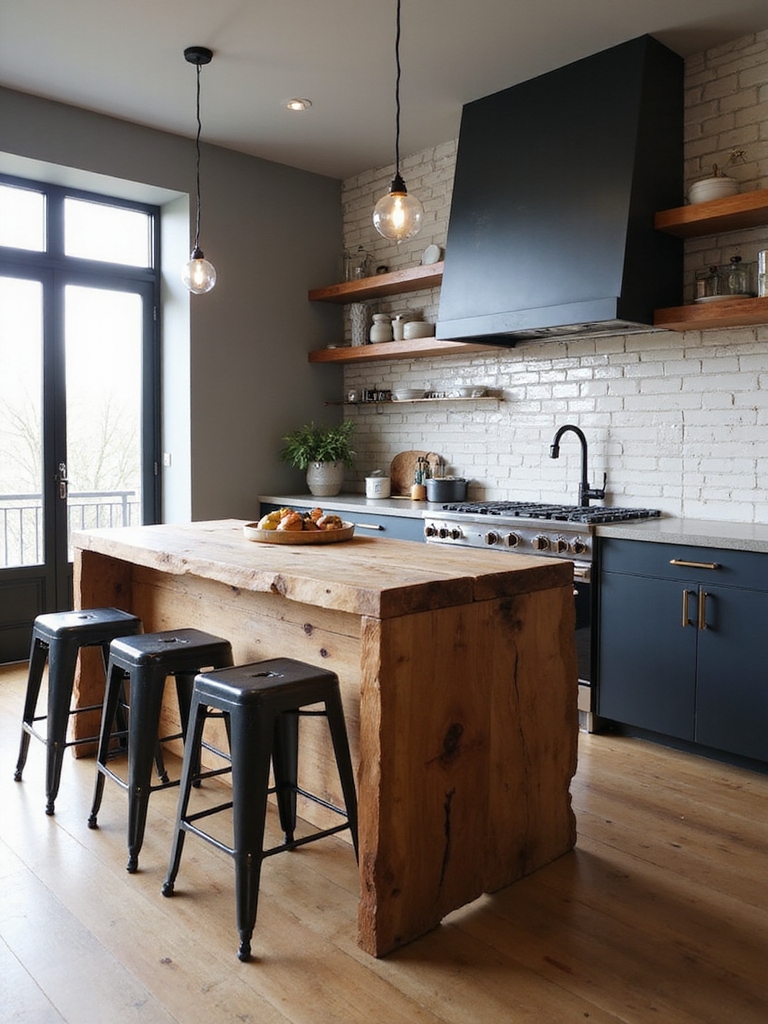
I want to help you find the sweet spot where style meets function so your kitchen looks lived-in but works beautifully.
Together we’ll pick a material palette—think reclaimed wood, matte metal, and warm stone—that feels cohesive and practical.
I’ll show how those choices shape storage, workflow, and the overall mood so your vision comes to life.
Modern farmhouse kitchens often blend rustic textures with clean, contemporary lines to create a balanced, welcoming space.
Style And Function Balance
Because I want a kitchen that feels lived-in but works hard for me, I start by defining what “modern rustic” means in my home — clean lines paired with natural textures, efficient layouts warmed by wood and matte finishes.
I balance style and function by prioritizing practical storage, durable surfaces, and purposeful lighting while keeping a calm, tactile aesthetic that invites daily use and easy care.
I also configure the space to boost workflow in a peninsula layout, arranging zones for prep, cooking, and cleanup to minimize steps and improve efficiency with a work triangle focus.
Material Palette Selection
Now that I’ve balanced form and function, I want the materials to tell the room’s story—what feels worn-in, what stays crisp, and how each surface performs day to day.
I choose reclaimed wood, honed stone, matte metals and soft linens, limiting finishes for cohesion.
Practical patina meets clean lines: durable countertops, textured cabinetry, and simple hardware create warmth without clutter.
I often draw on nature-inspired principles to bring a sense of calm and continuity indoors.
Start With a Simple 3-Step Plan

I’ll keep this simple with a three-step plan to shape your modern rustic kitchen: first, define your core style so the space feels authentically you.
Next, prioritize a functional layout that makes cooking and gathering effortless.
Finally, choose materials and finishes that balance warmth and durability for a timeless look.
Embrace earthy materials like wood, stone, and matte metals to add natural texture and warmth while keeping the overall design clean and modern.
Define Your Core Style
When I’m helping someone define their core style, I start with a simple 3-step plan that keeps decisions focused and calm: pick the mood you want, choose two dominant materials, and decide on a single accent element to repeat.
I guide you to combine raw wood with matte metal, set a cozy neutral palette, and let one motif—like a woven texture—tie everything together.
Warm modern kitchens balance contemporary lines with inviting materials to stay comfortable over time; see how cozy modern kitchens blend warmth and simplicity for lasting appeal.
Prioritize Functional Layout
Start by mapping how you actually move in the kitchen: I watch people cook, grab coffee, and unload groceries to learn the natural flow, then I set up a simple 3-step plan—define the work zones (prep, cook, clean), arrange them for minimal steps between tasks, and size counters and storage for real use.
I prioritize clear sightlines, reachable storage, and comfortable work heights.
Architects often recommend designing around the work triangle to keep movement efficient and intuitive.
Select Materials And Finishes
Choose materials that feel lived-in yet deliberate: I begin with a simple 3-step plan—pick durable surfaces for daily use, layer in warm textures for the rustic touch, and add a few polished accents to keep the look modern.
I choose oak or reclaimed wood, honed stone countertops, matte black hardware, and soft linens.
These choices balance practicality with soulful warmth. Inspired by timeless proportions and refined details in elegant kitchen design, consider how scale and restraint create a timeless elegant aesthetic.
Core Material Palette for Modern Rustic Kitchens
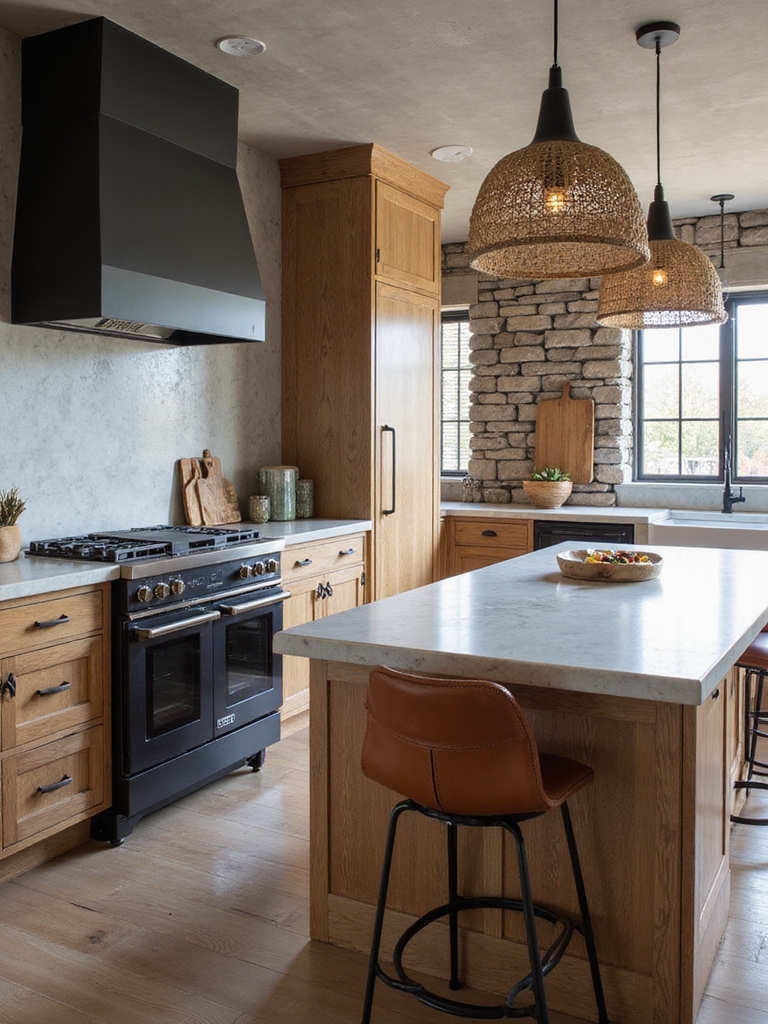
Because I love the way textures and tones interact, I begin with a simple core palette—weathered hardwoods, honed stone, matte metals, and warm neutrals—to anchor a modern rustic kitchen.
I layer in aged brass or black iron accents, creamy plaster or linen walls, and reclaimed wood shelving.
This restrained mix feels grounded, lived-in, and refined without fuss.
How to Mix Rough and Sleek: 5 Texture Rules
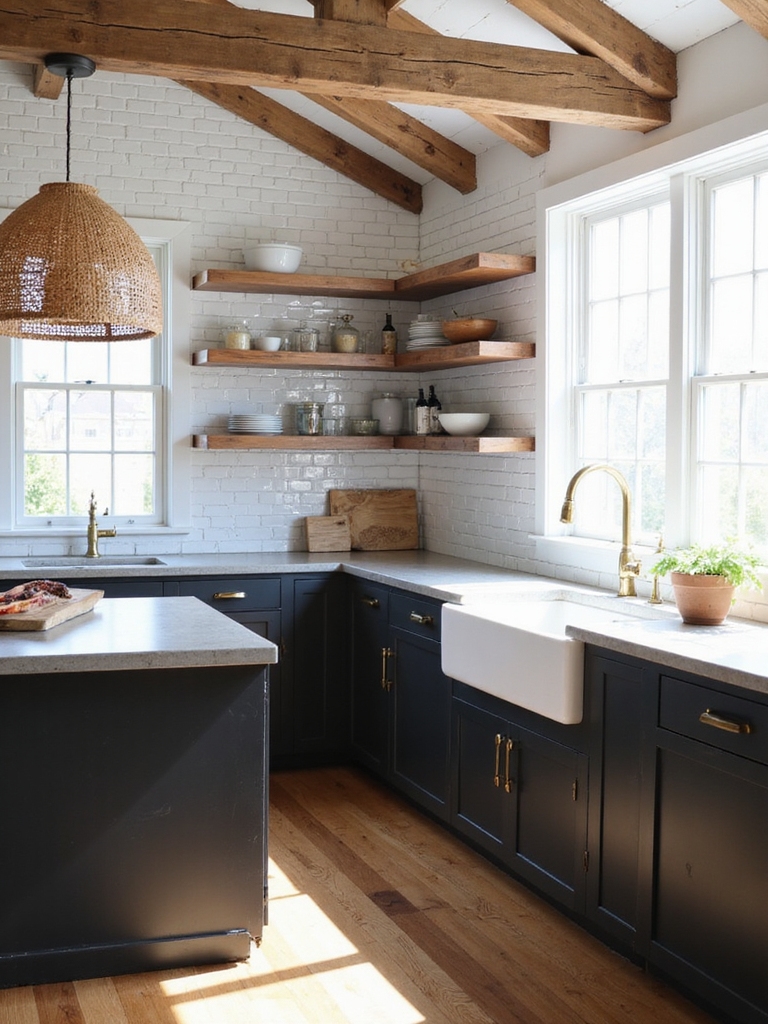
When I mix rough and sleek in a kitchen, I aim for contrast that feels deliberate rather than chaotic, letting each texture play a clear role so the room reads as cohesive.
I balance five rules: limit palette, anchor with a single rough element, layer smooth surfaces, repeat textures, and use warm metals to bridge. Trust restraint; let tactility whisper, not shout.
Choose Cabinetry That’s Modern and Warm
I love pairing warm-toned flat panels with clean lines to keep the kitchen feeling modern yet cozy.
I also mix materials—think matte wood fronts with metal or open shelving—to add texture without clutter. Let’s look at how those choices balance warmth and simplicity.
Warm-Toned Flat Panels
I often reach for warm-toned flat-panel cabinets when I want a kitchen that feels both modern and inviting.
Their smooth faces and natural wood hues simplify the room, letting textured stone, matte metal, or woven accents stand out.
They keep sightlines clean, reflect cozy light, and age gracefully. Choosing warm flats is an easy way to marry minimalist lines with rustic warmth.
Mixed-Material Cabinets
Mixing materials in cabinetry lets me balance modern clean lines with cozy, tactile warmth. I pair matte lacquer fronts with reclaimed oak, metal accents with woven drawer faces, and keep hardware minimal so texture stands out.
These layers feel intentional, grounded, and inviting—perfect for a modern rustic kitchen that’s practical and personal.
- Matte lacquer and reclaimed wood
- Iron trim accents
- Woven drawer fronts
- Open shelving inserts
- Subtle leather pulls
Countertops & Backsplashes for Modern Rustic Kitchens
When I’m choosing countertops and backsplashes for a modern rustic kitchen, I look for surfaces that feel lived-in but still clean and contemporary.
I favor honed stone, warm quartz, or reclaimed wood accents paired with simple grout lines or matte tile.
Contrasting textures—soft veining against smooth metal—bring warmth without clutter, keeping lines crisp and surfaces easy to care for.
Flooring Options That Anchor Rustic Warmth
Having chosen countertops and backsplashes that balance lived-in texture with clean lines, I look to the floor to ground the whole room and set the mood.
I prefer warm wood tones, durable finishes, and tactile contrast that feel timeless yet fresh.
- Wide-plank reclaimed oak
- Hand-scraped hardwood
- Warm-tone porcelain tile
- Natural stone with honed finish
- Chevron-patterned engineered wood
Layered Lighting: Ambient, Task, and Accent
I like to start with a soft ambient layer that sets the warm, lived-in tone of a rustic kitchen.
Then I add task-focused fixtures—pendants over the island and under-cabinet lights—so chopping and prepping feel effortless.
Finally, I use accent lighting to highlight texture and details, like open shelving, reclaimed beams, or a stone backsplash.
Ambient Foundation Lighting
With the right overhead glow, I set the stage for every meal and gathering by making ambient lighting the backbone of a modern rustic kitchen.
I balance soft, warm illumination with texture to unify wood, stone, and metal, creating comfort and clarity without harshness.
- Dimmable recessed LEDs for adjustable mood
- Warm color temperature (2700–3000K)
- Concealed cove lighting
- Even ceiling washes
- Layered zones for flow
Task-Focused Fixtures
Now that the ambient layer sets a soft stage, I focus the light where people actually work and linger.
I choose under-cabinet strips for counters, a pendant over the island for prep and casual meals, and adjustable task lamps near the coffee station.
Fixtures mix matte black and warm brass, giving crisp, shadow-free illumination that feels practical, cozy, and true to rustic-modern form.
Accent Highlighting Details
Draw the eye and deepen the room’s story by using accent lighting to pick out texture, architectural details, and the things you love most.
I layer soft wall washers and directional spots to make reclaimed wood, shelving, and pottery sing, creating cozy drama without clutter.
- Under-cabinet LED strips
- Miniature pendant spots
- Picture-style wall washers
- Integrated toe-kick lights
- Dimmable track heads
Hardware & Fixtures: Matte Metals That Work
I lean into matte metals because they bring a lived-in, modern warmth that feels right at home in a rustic kitchen.
I choose brushed black, soft brass, or muted nickel for pulls, faucets, and light fittings to anchor wood and stone.
Matte finishes read intentionally casual, hide fingerprints, and layer easily—subtle contrast that ties textures together without shouting for attention.
Open Shelving & Storage: Style Without Clutter
Matte metals set a calm stage, so I use open shelving to keep that warmth visible without letting things feel chaotic.
I curate pieces, mix textures, and hide extras nearby so the view stays serene.
- Group ceramics by color
- Stack wooden bowls for texture
- Use baskets for odds and ends
- Reserve closed cabinets for pantry overflow
- Keep countertops mostly clear
Appliances: Integrate Modern Tech With Rustic Finishes
Although modern appliances bring convenience, I like to let rustic finishes do the talking so tech feels like part of the room, not a retrofit.
I choose integrated panels, matte black or warm metal accents, and discreet smart controls.
That way a sleek fridge or induction range blends with reclaimed wood and stone, keeping the kitchen cozy while functioning brilliantly.
Mixing Finishes: Stained Wood, Paint, and Metal
Start by pairing finishes that play off each other’s strengths: stained wood brings warmth and texture, paint adds color and clarity, and metal gives shape and contrast.
I recommend balancing them—let wood anchor, paint define, metal accent.
Here are focused combinations to try:
- Walnut cabinets, matte white walls
- Black steel hardware
- Brushed brass pulls
- Oiled oak shelves
- Satin chrome faucet
Textiles & Accessories That Soften Hard Surfaces
After you’ve chosen strong finishes, I like to soften the kitchen with textiles and accessories that bring comfort and balance to hard surfaces.
I add woven rugs, linen curtains, and hand towels in muted tones, plus leather bar stools and ceramic vases for tactile warmth.
Small greenery and wooden bowls finish the look, creating a lived-in, calm modern-rustic vibe without clutter.
Budgeting & Phased Updates : Quick Wins to Full Remodels
When you’re planning a kitchen that blends modern clean lines with rustic warmth, I always recommend mapping budget tiers and a phased timeline before swinging a hammer; it keeps decisions practical and stress low.
I start with quick wins, then save for structural changes so you enjoy progress without overwhelm.
- Refresh hardware
- Paint or stain cabinets
- Swap lighting
- Add open shelving
- Plan major remodel phases
You’ve got the tools to shape a modern rustic kitchen that feels like home — equal parts cozy and crisp.
Start small, trust your instincts, and layer textures like a song that builds to a chorus: warm wood, sleek metal, soft textiles.
Whether you’re doing quick updates or a full remodel, each choice nudges the room toward harmony. Take your time, enjoy the process, and let the space tell your story.