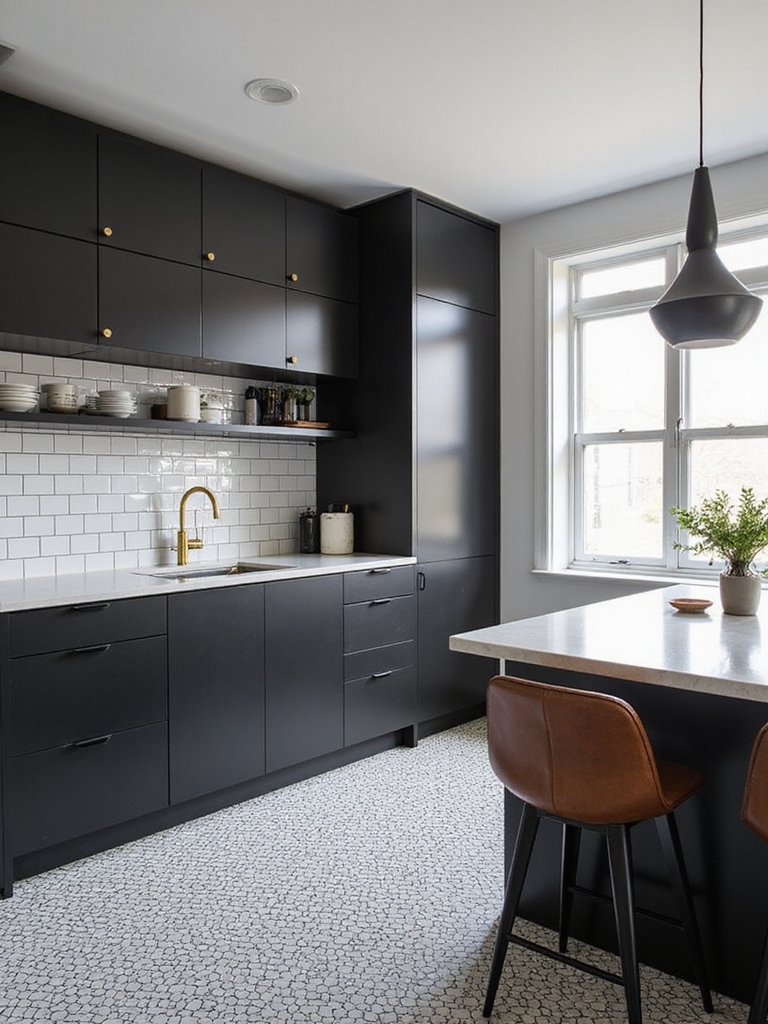


I love how a modern grey kitchen—from deep charcoal anchors to soft dove uppers—feels both sleek and lived-in. I’d pair darker lower cabinets or an island with warm wood at eye level, layer matte metals and textured backsplashes, and use warm pendant and under-cabinet lighting to keep things cozy.
Pick greys by undertone and test samples in your light, then add woven linens and ceramics for soul. Stick around and I’ll show practical palettes, layouts, and care tips.
What “Modern Grey” Kitchens Mean: and Who They Suit

When I think of modern grey kitchens, I picture calm, layered tones that feel both sleek and lived-in—like a favorite wool sweater paired with a clean-lined countertop.
I see versatile palettes that bridge rustic warmth and contemporary minimalism. They suit cooks who value timeless restraint, renters seeking adaptable neutrals, and families wanting durable surfaces with personality rather than loud trends.
A well-chosen grey scheme can create a warm and inviting atmosphere that still reads modern.
How to Choose the Right Grey for Your Kitchen

If you like the calm, lived-in feel I described earlier, picking the right grey becomes about mood and light more than trend.
I’ll ask what atmosphere you want—cozy, crisp, or earthy—then match undertones: warm greys with beige or taupe for comfort; cool greys with steel or blue for clarity; charcoal for depth.
Test samples near your worktops and live with them.
Consider also how your cabinetry, counters, and floors work together to create a unified scheme and refer to color palette planning to balance tones across the space.
How Natural Light and Room Size Affect Grey Choices

Because light and space change how a grey reads, I always look at a room through its daily rhythm before deciding on a shade.
In sunlit, airy kitchens I favor cooler, paler greys to keep things fresh; in small or north-facing rooms I pick warmer, softer greys to add cosiness. Scale and window placement guide contrast and texture choices.
I often balance greys with white and natural wood elements to create a calm, Scandinavian-inspired feel, especially using white and natural wood to soften and warm the palette.
Two-Tone Grey Schemes: Where to Use Light vs. Dark

Although I often lean toward a single colour, I’ve found two-tone grey schemes give kitchens lively depth without fuss; I use lighter greys on upper cabinets and walls to keep the eye moving and darker greys on lower cabinets, islands, or base units to anchor the room.
I pair textured timber, warm brass, and simple ceramics so the contrast feels cozy, lived-in, and honest.
Contemporary kitchens often favour handle-free cabinets to reinforce clean lines and emphasize the two-tone palette.
Small-Kitchen Solutions to Make Grey Feel Larger

When I work with small kitchens, I push grey toward the light—choosing pale, warm greys on walls and uppers and saving deeper tones for a slim island or lower cabinets so the room feels lifted rather than boxed in.
I add open shelving, soft matte finishes, slim hardware and reflective accents like glass or pale stone to keep the space airy, cozy and quietly rustic.
This approach draws on cozy modern principles that balance warmth and simplicity for designs that feel timeless.
Pairing Grey Cabinets With Warm Wood Tones
I love how grey cabinets act like a calm backdrop that lets warm wood tones sing, and I’ll show you how to balance that cool-warm contrast so the room feels cozy, not cold.
Think about where the wood grain sits — open shelving and island faces bring texture at eye level, while flooring and beams ground the space. With a few thoughtful placements you’ll get a rustic warmth that complements modern grey without overwhelming it.
Adding natural materials like stone, rattan, and reclaimed wood helps achieve an earthy, modern feel that ties the palette together.
Balancing Warmth And Cool
I love pairing cool grey cabinets with warm wood tones because the contrast keeps a kitchen from feeling flat — it adds depth and a lived-in comfort that’s both modern and timeless.
I choose finishes that whisper rather than shout, mixing slate paint with honeyed oak for balance.
- Slate grey cabinets
- Honey or walnut accents
- Warm lighting
- Natural textiles
I also lean on neutral decorating secrets to create a chic, timeless kitchen that feels cohesive and inviting.
Wood Grain Placement
Tucking warm wood grain into the places your eye naturally rests makes a grey kitchen feel intentional and homey.
I love anchoring islands, open shelves, and range hoods with oak or walnut to soften cool cabinetry.
I’ll keep wood where hands touch and eyes linger—drawer faces, butcher block tops, floating shelves—so the space reads balanced, lived-in, and quietly rustic without overwhelming the grey.
Pairing these elements with clean lines helps achieve a modern rustic balance that highlights texture without clutter.
Hardware Choices for Grey Kitchens: Brass, Black, and Nickel
Wondering which metal will make your grey kitchen feel most like home? I lean into hardware to set tone — warm brass for vintage charm, matte black for bold contrast, and satin nickel for subtle shine.
I pick finishes that age well and feel right under my hand.
- Brass: cozy, antique warmth
- Black: modern, grounded
- Nickel: soft, versatile
- Mix carefully for balance
Countertops for Grey Kitchens: Quartz, Marble, Concrete
When it comes to countertops in a grey kitchen, I lean toward durable quartz for everyday practicality and low fuss.
If you want a touch of old-world charm, elegant marble alternatives bring soft veins and warmth without feeling precious.
Let’s look at how each performs and pairs with those warm and cool grey tones.
Durable Quartz Options
I’ve always leaned toward quartz for grey kitchens because it’s tough, low-maintenance, and comes in so many warm, natural-looking finishes that pair beautifully with grey cabinets.
I prefer honed, veined, and subtly speckled slabs that feel lived-in without fuss.
Here are my go-to durable quartz picks:
- Honed warm grey with soft veining
- Subtle ivory speckle for contrast
- Deep charcoal with matte finish
- Sandstone-look quartz for rustic warmth
Elegant Marble Alternatives
After leaning on quartz for durability and low fuss, I also look for alternatives that bring marble’s timeless elegance without its high-maintenance demands.
I favor honed porcelain or engineered quartz with soft veining, and sometimes concrete with warm patina.
They give grey kitchens that lived-in, rustic charm while resisting stains and scratches. You get marble’s look with far less worry.
Backsplash Ideas to Add Contrast and Texture
By layering a textured or contrasting backsplash, I give a grey kitchen instant personality and warmth.
I choose materials that feel lived-in yet refined, balancing charcoal cabinets or soft dove walls with tactile surfaces that catch light and invite touch.
- Reclaimed brick for rustic charm
- Matte subway tile with dark grout
- Hand-glazed ceramic for color depth
- Textured metal for subtle shine
Flooring Choices That Anchor a Grey Kitchen
While a textured backsplash draws the eye up, the floor grounds the whole room and sets the tone for how the grey will read.
I prefer wide-plank wood or warm-stone tiles to balance cool greys; reclaimed timber brings rustic soul, matte slate feels grounded.
Pick tones that either contrast gently or blend for continuity, and choose durable finishes for real-life kitchen traffic.
Layer Texture: Shelves, Textiles, and Decorative Accents
I like to keep open shelves simple and practical, arranging dishes and bowls so the eye can rest while still feeling lived-in.
I’ll mix linens — think woven runners, striped towels, and a linen throw on a nearby chair — to add warmth without clutter.
Then I anchor everything with mixed-material accents like matte metal hooks, wooden cutting boards, and a few ceramic pieces for contrast.
Open Shelving Styling
When I style open shelves in a grey kitchen, I aim for a lived-in balance—mixing wood, woven textiles, and a few well-chosen accents so the space feels warm rather than stark.
I layer practical items with charm, keeping colors muted and textures tactile.
- Hand-thrown ceramics and wooden bowls
- Linen napkins folded casually
- Small potted herbs in clay pots
- Vintage glass jars with staples
Layered Textile Mix
I like to build a layered textile mix that softens the coolness of grey—tossing together woven runners, folded linens, and a few draped tea towels so each shelf reads like part of a cozy still life.
I favor muted stripes, nubby textures, and well-worn neutrals, placing ceramics and a small sprig of herbs to punctuate warmth without stealing the quiet, rustic rhythm.
Mixed-Material Accents
Think of mixed-material accents as the handshakes between your shelves, textiles, and decorative pieces—they pull the whole grey scheme into a lived-in story.
I love combining worn wood, hammered metal, soft linen, and stoneware to add warmth and contrast.
Small touches make a kitchen sing:
- Reclaimed wood open shelves with brass brackets
- Linen tea towels and wool poufs
- Hammered metal pendant lights
- Matte stoneware mugs
Lighting for Grey Kitchens: Task, Ambient, and Accent
Although grey can feel cool, I like to warm it up with layered lighting—task, ambient, and accent—so every corner feels purposeful and inviting.
I add warm pendant lights over the island for chopping and chatting, under-cabinet strips for prep clarity, and soft wall or toe-kick lighting to highlight texture.
Together they make a cozy, lived-in kitchen that still reads modern and refined.
Budget-Friendly Upgrades for a Designer Grey Look
Let’s roll up our sleeves and make a grey kitchen look like it came straight from a designer’s portfolio without draining your savings.
I’ll show simple, rustic tweaks that feel intentional and warm.
- Paint lower cabinets in a deep charcoal
- Swap hardware for matte brass pulls
- Add open wood shelving for texture
- Layer textiles: linen towels, woven runner
Care and Maintenance to Keep Grey Finishes Fresh
You can make those charcoal cabinets and brass pulls stay striking with a few simple habits I swear by.
I wipe surfaces weekly with a gentle, pH-neutral cleaner, dry immediately, and oil wooden handles seasonally.
I treat spills fast, use felt pads under cookware, and avoid abrasive scrubs.
Little rituals preserve patina and keep grey tones warm, lived-in, and calm.
Styling Examples: Moody, Coastal, Minimalist, Transitional
I’m excited to show how a moody grey palette can pair with deep charcoals and warm wood to create a cozy, dramatic kitchen.
I’ll also show how coastal looks soften grey with woven textures, driftwood accents, and pale blues for an airy, lived-in feel.
Let’s walk through simple styling tips for these contrasts and how they inspire minimalist and intermediary directions.
Moody Palette Pairings
A few well-chosen shades can make a grey kitchen feel dramatic, breezy, spare, or comfortably lived-in, and I’ll show you how to pair them for four distinct styles.
- Moody: charcoal, black iron, warm walnut for depth.
- Coastal: soft dove, seafoam, bleached oak for lightness.
- Minimalist: cool greys, matte white, concrete accents.
- Hybrid: dove, smoke, brass touches for cozy balance.
Coastal Texture Mixing
With driftwood underfoot and sun-warmed plaster on the walls, I’ll show you how mixing textures can turn a grey kitchen into a coastal refuge.
I layer rough-hewn oak, hand-troweled plaster backsplashes, soft linen curtains and matte charcoal cabinets.
The mix keeps things lived-in yet refined—moody accents, breezy coastal touches, minimalist lines and evolutive warmth working together for a calm, tactile space.
I hope these ideas spark your own cozy, modern grey kitchen — think charcoal cabinets hugging a sunlit nook or dove tones whispering calm at breakfast.
You’ll find the right grey by balancing light, scale, and texture, and a few smart choices will make it feel twice as luxe without breaking the bank.
Tidy care keeps finishes fresh, and styling shifts mood from moody to coastal in a heartbeat — your perfect kitchen awaits.