


No, you won’t miss dessert on a carnivore plan—fat, eggs, and cream do the heavy lifting. You’ll learn how to coax silk from yolks, bake a no-crust cheesecake that doesn’t weep, and sharpen richness with browned butter or crisp pork rind.
These tricks make animal-only sweets feel indulgent, not austere, and they’re easier than you think—so stick around to pick up a few techniques that’ll change how you finish a meal.
Allowed Ingredients for Carnivore Desserts

Think of carnivore desserts as a strict guest list: you’re only inviting animal-based ingredients—meat, eggs, dairy (if you tolerate it), and certain animal fats—while leaving out plants, sugars, grains, and spices derived from plants.
You’ll lean on eggs for structure, heavy cream or butter for richness, collagen or gelatin for chew, and rendered tallow or duck fat for mouthfeel.
Cured or cooked meats can add savory contrast or crumble texture.
Cheese becomes your sweet stand-in when aged varieties and cream meet gentle heat.
You’ll experiment with salt, smoke, and temperature to craft indulgence without botanicals.
Many carnivore starters find simple, satisfying results by focusing on basic phrasings of protein and fat like those in Simple Carnivore Meals.
Quick Carnivore Dessert to Make Tonight

When you want dessert tonight without breaking the carnivore rules, you can whip up a quick carnivore cheesecake that’s mostly cream cheese, eggs, and a whisper of sweetener.
Or try a seared, berry-free custard—silky, caramelized edges and zero plant matter. Both are fast, low-fuss ways to end the day on a savory-sweet note. Many people on the carnivore diet enjoy experimenting with meat-derived fats to enhance richness and mouthfeel.
Quick Carnivore Cheesecake
Whip up a cheesecake tonight that’s all creamy, no crust, and won’t make you miss the sugar—this quick carnivore version uses just cream cheese, eggs, and a touch of salt (and optional beef gelatin for extra set), so you get dessert fast without breaking your diet.
You’ll blitz softened cream cheese until silk, fold in eggs one at a time, season lightly, and bake in a water bath or slow oven until just set.
Chill to firm.
Finish plain or with a sprinkle of crushed pork rinds for texture.
It’s simple, satisfying, and oddly civilized for something meat-diet friendly.
For more no-sugar snack ideas that stay strict to animal products, consider exploring satisfying carnivore snacks to vary your dessert routine.
Seared Berry-Free Custard
Sear a simple custard to silky perfection tonight—even without the berries you’re used to—by using just eggs, cream, a pinch of salt, and a hot pan to get that caramelized top and custardy center. You’ll whisk eggs and cream, strain for smoothness, then pour into a buttered skillet.
Cook low, tilt pan, and spoon gently to coax set edges inward; finish under a brief broiler or flip onto a hot plate for a browned surface.
It’s indulgent, immediate, and purely carnivore-friendly. Serve warm. The contrast of scorch and silk feels decadent without sugar or fruit fuss.
Carnivore desserts can still feel luxurious when they emphasize rich, animal-derived ingredients and texture-focused techniques.
Building Custards: Eggs, Cream, and Butter
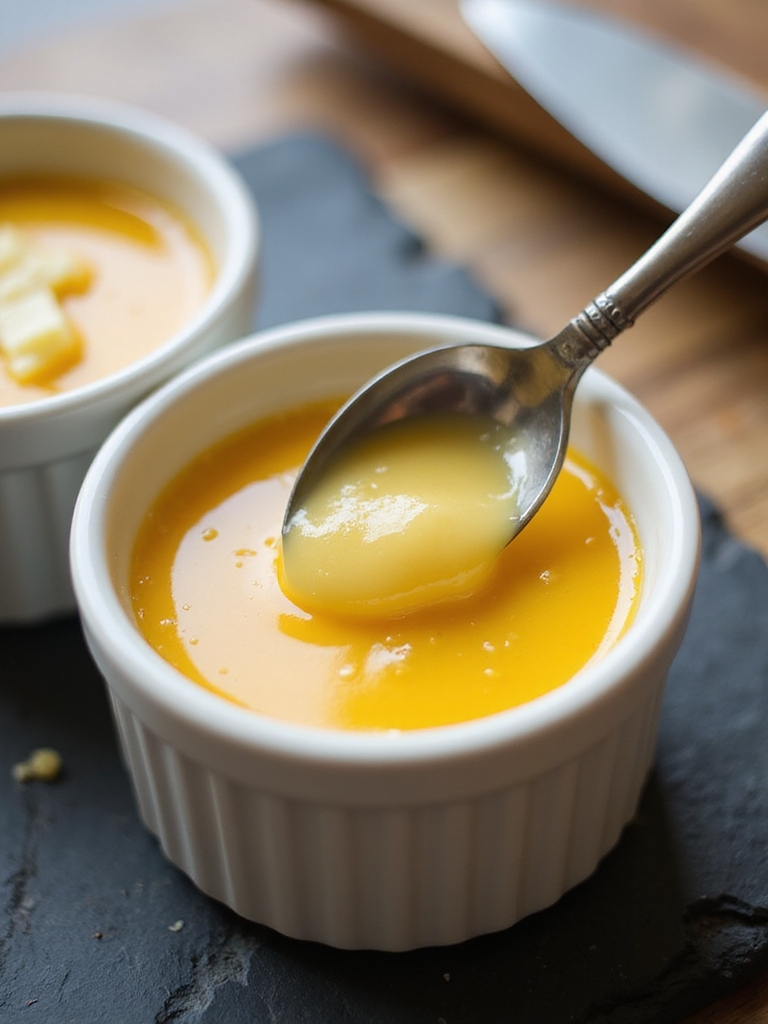
If you want a custard that’s silky rather than grainy, start by respecting three simple allies: eggs for structure, cream for fat and mouthfeel, and butter for gloss and flavor.
You’ll whisk eggs gently, not furiously — overbeating invites curdles — and temper hot cream into them so proteins don’t seize.
Use heavy cream for richness; skimmed alternatives won’t behave the same.
A knob of butter folded in at the end melts into a glossy finish and tames any lingering egginess.
Salt sharpens, and patience wins: low, steady heat yields a custard that feels luxurious, not accidental.
For sensitive stomachs, choose dairy-free or gentle options when needed and focus on high-fat, low-lactose ingredients like Gentle Dairy-Free Carnivore alternatives to reduce digestive upset.
Gelatin-Free Carnivore Puddings (Step‑by‑Step)

You’ll learn how to coax velvet from eggs into creamy puddings that feel indulgent without any gelatin.
Then we’ll turn bone broth into a silky, custard-style treat that actually tastes like something worth spooning slowly.
Finally, I’ll show a slow-cooked liver pudding that surprises you by being smooth, savory, and oddly comforting.
These recipes are designed for cooks who prefer simplicity and quick execution, perfect for easy carnivore meals.
Creamy Egg‑Based Puddings
Often surprisingly rich, creamy egg‑based puddings give you a silky, custard‑like dessert without gelatin or sugar, and they’re dead simple to make with just eggs, cream, salt, and a smidge of heat.
You whisk eggs and warm cream, strain for silkiness, then bake or steam gently until it jiggles but isn’t liquid — think slow, patient cooking, not drama.
Flavor comes from technique: browning butter, a scrape of egg yolk richness, a pinch of flaky salt.
You’ll serve something that feels indulgent yet minimal.
It’s comfort without compromise, and you’ll wonder why you ever overcomplicated dessert.
These custards also pair surprisingly well with unexpected carnivore-friendly sides like roasted bone marrow and seared pork belly, adding a creamy counterpoint to the savory richness of bone marrow.
Custard‑Style Bone Broth Puddings
Think of custard‑style bone broth puddings as the savory cousin to creamy egg custards — rich, silky, and made without gelatin or fuss.
You’ll whisk marrowy bone broth with eggs, a pinch of salt, and optional cream or butter, then strain for an ultra-smooth texture.
Bake in a water bath low and slow until just set; jitter, don’t quake.
Flavor’s unapologetically meaty, so you can finish with browned butter, rendered pork cracklings, or a whisper of smoked salt.
They’re surprisingly elegant, portable, and satisfyingly dense — the carnivore answer when you want dessert that doubles as dinner.
These puddings work especially well when made from marrow-rich broth, which adds depth and silkiness to the custard.
Slow‑Cooked Liver Puddings
Slow‑cook liver until it’s tender and you’ll be surprised how its texture softens into something almost custardy without any gelatin—this is the trick behind these savory puddings.
You’ll blend soft liver with egg yolks, butter, a pinch of salt, and optional cream until silky.
Taste as you go; liver tolerates confidence but not overseasoning.
Steam or sous‑vide keeps color and flavor controlled, while slow oven braising deepens sweetness.
Chill to firm; the result is dense, rich, and oddly comforting.
Serve small, because potency matters.
Embrace the iron‑forward tang—you’re making dessert with muscle and purpose.
No-Sugar Carnivore Cheesecake: Setting Without Crust

Getting a crustless carnivore cheesecake to set is more science than luck, but you don’t need a lab—just the right ratios, chill time, and a few tricks to firm up pure dairy and eggs without sugar or crumbs.
You’ll rely on full‑fat cream cheese, eggs, and cream — no sweeteners — whipped just enough to incorporate air but not collapse.
Bake gently in a water bath to avoid cracks, then cool slowly to room temperature before refrigerating overnight.
If texture seems loose, add a tempered extra egg yolk or a spoonful of gelatin dissolved in warm cream.
Serve chilled, confident.
Frozen Carnivore Treats: Ice Cream & Semifreddo Recipes
If your crustless cheesecake set but left you craving something cold and decadent, ice creams and semifreddos are the next logical step — they let you play with the same rich dairy and egg building blocks while skipping sugar and crumbs altogether.
You’ll churn heavy cream, fold whipped yolks, and temper textures until you get silk that freezes forgivingly.
Salt, vanilla, or a smear of rendered butter become your flavor anchors. Freeze-fast recipes keep air and fat balanced, so bites melt, not ice. Use the table to decide technique and mood.
| Technique | Mood |
|---|---|
| Churned ice cream | Smooth, familiar |
| No-churn custard | Lazy luxe |
| Semifreddo | Airy elegance |
| Foolproof freezer log | Portable feast |
Use Cured Meats for Savory‑Sweet Contrast
Play with salty, fatty cured meats to give your carnivore desserts a cheeky, savory-sweet contrast that wakes up the palate.
You’ll learn to pair intense textures and flavors—think crisp prosciutto, sticky pork crackling, or paper-thin bresaola—so a rich custard or whipped bone marrow feels balanced, not cloying.
Don’t overcomplicate: let one cured element sing. Try temperature and crunch against creamy richness, and you’ll find tiny amounts go a long way to elevate dessert into something sly and memorable.
- Crisp prosciutto shards over warm custard
- Bresaola ribbons with cream cheese dollops
- Pork crackling bits in semifreddo
- Salami dusted on frozen mousse
Use Animal Fats to Carry Flavor
Lean into animal fats — they’re the secret courier for flavor in carnivore desserts. You’ll find butter, tallow, schmaltz, or duck fat don’t just add richness; they ferry and amplify savory notes, smooth textures, and lingering aftertastes.
Use warm fat to bloom spices or dissolve shaved cured meat into a sauce. Chill-set creams with clarified butter for glossy slices. Rendered fat in crusts gives snap and mouthfeel that sugarless sweets crave.
Taste as you go — fats vary in intensity — and pair boldly: a whisper of bacon fat contrasts with creamy tallow, making each bite feel intentionally indulgent.
Flavor Without Cocoa or Fruit: Animal‑Based Seasonings & Aging
Think beyond cocoa and candied citrus: you can build deep, dessert-worthy profiles using only animal ingredients and time.
You’ll coax umami, smoke, and sweet-butter notes from aging, cured fats, and concentrated broths—no fruit or chocolate required. Be curious, patient, and precise.
- Age thinly sliced suet or tallow briefly to concentrate savory, nutty aromas.
- Cure or torch pork belly edges for caramelized, smoky top notes.
- Reduce bone broth to a glossy glaze that adds richness and subtle sweetness.
- Infuse rendered fat with toasted marrow or dried fish flakes for unexpected complexity.
Taste as you go; restraint pays.
Texture Fixes for Silky Mouthfeel
Often you’ll find that the difference between “good” and “wow” desserts on an animal-only plan comes down to mouthfeel: silk versus grainy, slick versus greasy. You want velvet, not chewing sand.
Choose high-fat cuts, rendered gently, or superfine leaf lard to cut prickle. Strain custards through a fine sieve and chill with a plastic wrap pressed to the surface to prevent skin.
Cold butter or cream gives a smoother glide; warm fat can feel oily. Use minimal salts for balance.
Taste as you go—tiny tweaks in fat type and temperature transform texture from meh to magnificent.
How to Whip, Simmer, Bake, or Chill for Best Results
You’re going to whip cream or rendered tallow until it’s cloud-light for contrast against richer bites. Let bones, broths, or reduced cream simmer low and slow to pull out the deep, savory notes that make a dessert feel grown-up.
Then chill confidently—firmness is half the texture battle, and a proper set will make every spoonful sing.
Whip To Fluffy Perfection
Usually, whipping to fluffy perfection is less mystical than it looks—you just need the right temperature, technique, and timing.
You’ll use chilled bowls, cold cream or chilled egg whites, steady speed, and patience.
Don’t overbeat; you’ll get grainy butter instead of clouds. Taste as you go; add salt or a touch of sweetener sparingly. Finish gently folding any additions so air stays put.
- Chill equipment and ingredients thoroughly.
- Start slow, increase speed to medium-high.
- Stop at soft or firm peaks—don’t guess.
- Fold in flavors gently, serve immediately or chill briefly.
Simmer For Deep Flavor
When coaxing bold, meaty depth from a simple stock or sauce, simmering is where patience pays off—low and steady keeps flavors concentrating without turning fats greasy or proteins tough.
You’ll want a gentle bubble, occasional skim, and an eye on reduction: too fast robs nuance, too slow wastes time. Use a heavy pot for even heat, keep the lid partly off to control evaporation, and season late—salt sharpens as liquids shrink.
If you’re infusing marrow, bone, or cream, taste periodically; subtle adjustments make the difference between bland broth and something that feels decadently intentional.
Chill For Firm Texture
Chilling is the unglamorous magic trick that turns silky creams and warm custards into something sliceable and selfie-ready, and getting it right is mostly about patience and temperature control.
You’ll learn to steady textures without turning them grainy or icy. Cool hot mixtures gradually, cover to prevent skin, and don’t rush firming with blast freezes unless you want frost instead of silk.
Whip chilled creams, not warm ones, for stable peaks.
Taste as you go; salt and time make subtle differences.
- Cool to room temp before fridge.
- Chill 4–8 hours for density.
- Use shallow pans.
- Cover tightly.
Dairy‑Free Variations: Tallow, Bone Marrow, and Marrow Ice Cream
For a dessert that skips dairy without sacrificing richness, you’ll turn to animal fats like tallow and bone marrow—ingredients that sound austere until you taste them.
You’ll render tallow gently, strain it, then whip chilled fat with egg yolks and a touch of salt for a silky custard base.
Bone marrow melts into a savory-sweet note; roast, scoop, and blend it into warm creamless custard for depth. Freeze with occasional scraping to aerate — marrow ice cream surprises with umami richness and clean finish. Serve small scoops; the impact’s intense, so a little goes a long way.
Pantry Checklist: Tools and Animal‑Based Staples
You don’t need a Michelin kitchen to make carnivore desserts, but a few solid tools—heavy skillet, digital thermometer, sturdy blender—will save you grief.
Stock shelf-stable animal fats like tallow and rendered lard for frying, emulsifying, and flavoring, and keep a rotation of frozen and fresh meats for texture experiments and broths.
With those basics on hand you’ll turn simple ingredients into surprisingly decadent, all-animal treats.
Essential Cooking Tools
Think of your carnivore pantry like a minimalist workshop: a few sharp tools and dependable animal‑based staples will get you farther than a closet full of gimmicky gadgets.
You’ll rely on precision and heat control to coax richness from pure animal ingredients, so choose gear that’s simple, sturdy, and easy to clean.
- Heavy cast‑iron skillet — even sear, forgiving heat.
- Digital instant‑read thermometer — avoid guesswork; nail doneness.
- Sharp chef’s knife and carving knife — clean cuts, less waste.
- Small immersion blender or whisk — emulsify sauces, smooth custards.
You’ll thank yourself at dessert time.
Shelf-Stable Animal Fats
After you’ve sharpened your knives and mastered heat control, the quiet heroes of a carnivore pantry are the shelf‑stable fats that keep desserts rich and reliable.
You’ll want rendered tallow, shelf‑stable duck fat, and clarified beef or pork schmaltz — jars that sit patiently until you need silkiness or a toasty mouthfeel.
They don’t need refrigeration for short stretches, travel well, and rescue dry mixes or overtly eggy custards.
Rotate stocks, label dates, and buy small from trustworthy sources.
Use them boldly: spoon into batter, whisk into ganache, or crisp toppings for contrast.
They make indulgence pragmatic, not precious.
Frozen And Fresh Meats
Stock your freezer with intention: reliable cuts and whole birds turn spontaneous dessert ideas into reality when you need richness, texture, or a dramatic show-stopping component.
You’ll want bone-in pieces for marrow custards, fatty brisket for butterlike sauces, and liver for mousse that surprises.
Rotate stock so nothing freezer-burns into regret. Thaw smart: slow in the fridge, pat dry, and sear for flavor.
Treat fresh meat like produce—buy peak quality, use promptly, and respect smell and color.
These habits keep desserts decadent and safe, letting you push carnivore creativity without drama.
- Beef marrow bones
- Brisket flat
- Chicken whole or thighs
- Beef liver
Portioning and Fasting: Desserts With Macros in Mind
When you’re tailoring carnivore desserts to fit your daily macros, portion control becomes less about punishment and more about precision—you can still enjoy a rich bite without blowing your protein or fat targets.
You’ll weigh spoons of rendered tallow, scoop measured egg yolks, and count a sliver of cured bacon as deliberate decadence.
Pair small servings with planned fasting windows so dessert satisfies hunger without adding grazing calories.
Track macros honestly, adjust fat-to-protein ratios, and treat dessert as a calculated treat, not an afterthought.
That discipline keeps indulgence sustainable, pleasurable, and aligned with your goals.
Troubleshooting: Curdling, Grainy Texture, and Over‑Firming
If your custard splits, your mousse feels gritty, or your gelatin bites back like a rubber band, don’t toss the whole batch—these problems have clear fixes and predictable causes. You can rescue texture without surrendering taste.
Work cooler, slower, and with patience: temper eggs, strain curds, and avoid rapid temp swings.
Use fresh gelatin and measured bloom times. Fat balance matters—too little fat makes grit; too much makes greasy clumps.
Here’s a quick checklist to troubleshoot and salvage:
- Temper eggs slowly and cook low to prevent curdling.
- Strain mixtures to remove tiny cooked bits.
- Bloom gelatin precisely, hydrate fully.
- Adjust fat ratio for silkiness.
You’ve learned how to coax silk from eggs, cream, and rendered fat so dessert on carnivore isn’t a mournful slab of jerky. Want a finale that’s luxurious but honest—no sugar, no crumbs, just technique and a single salty garnish to sing?
Try a tiny, slow‑cooled custard or semifreddo studded with crisp crackling. Keep temperatures gentle, strain obsessively, and portion with fasting goals in mind—treats that satisfy without derailing.


