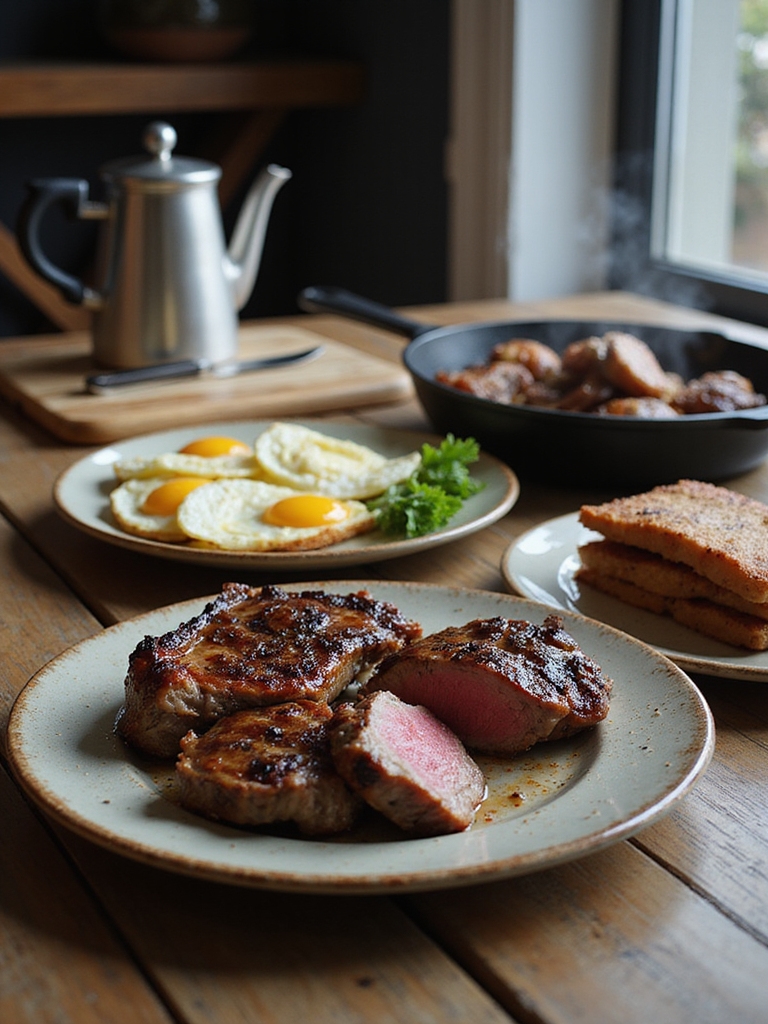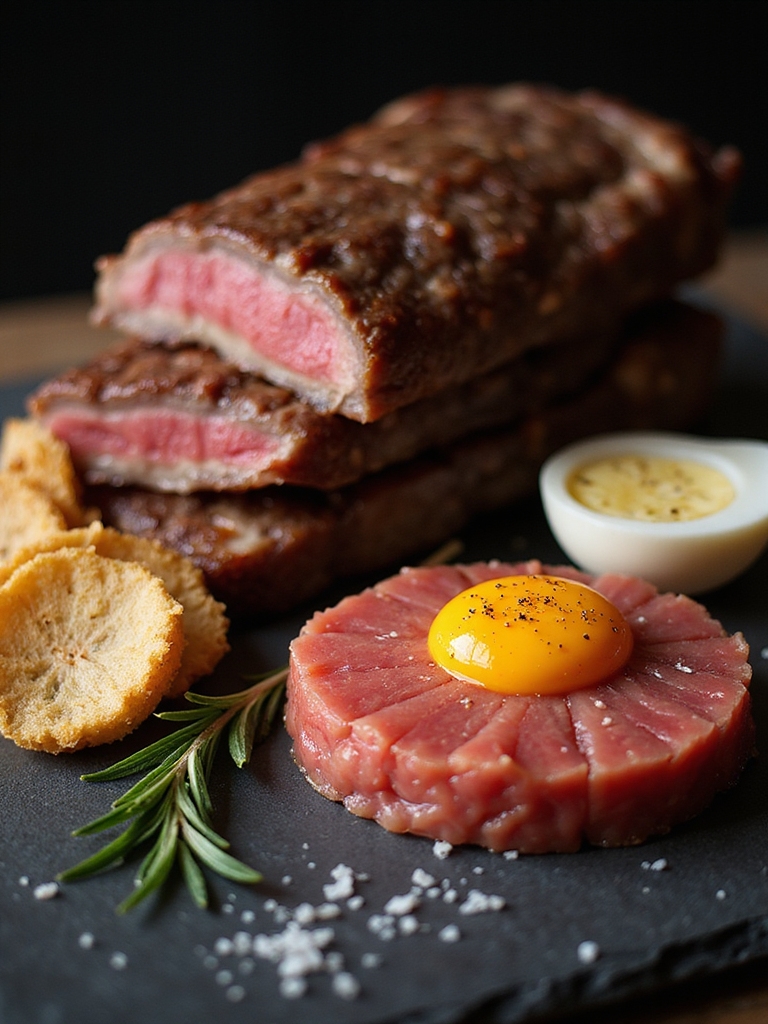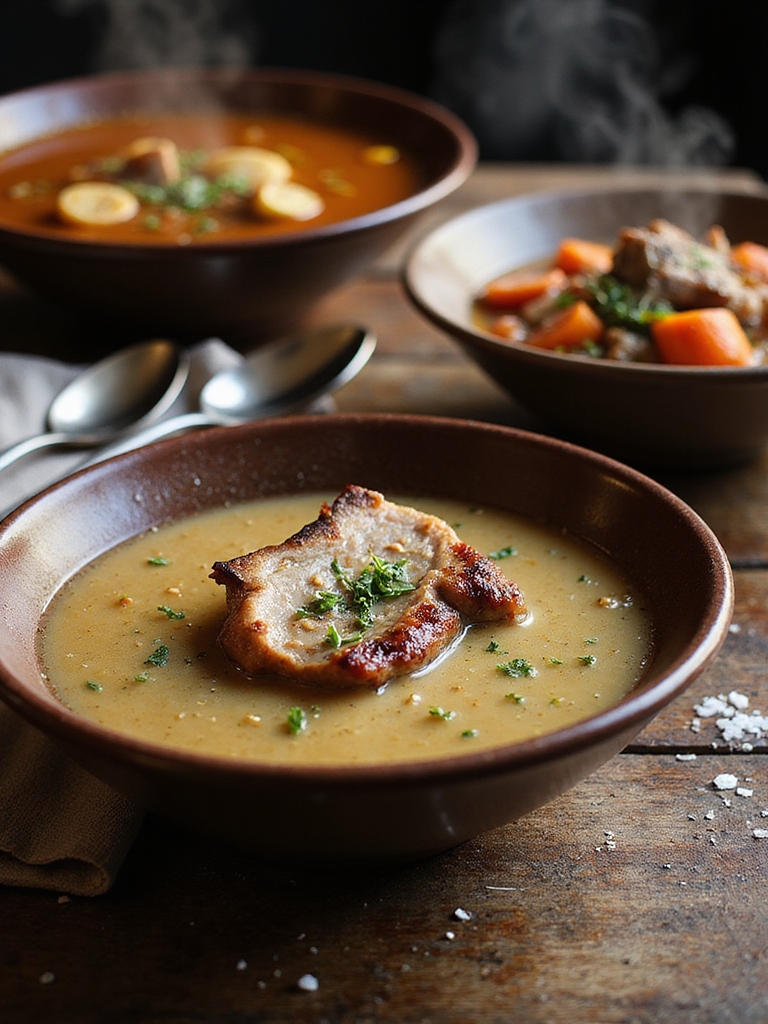
About 70% of home cooks say bone broth is their go‑to comfort food in winter, and you’ll see why once you taste a properly gelatinous pot. You’ll learn how to pull deep, beefy flavor from marrow and knuckle bones, build soups that actually stick to your ribs, and make freezer‑ready batches that save busy nights.
Stick around and I’ll show you the straightforward methods, quick tricks, and fixes that make every bowl feel intentional.
How to Use Bone Broth as Your Carnivore Soup Base
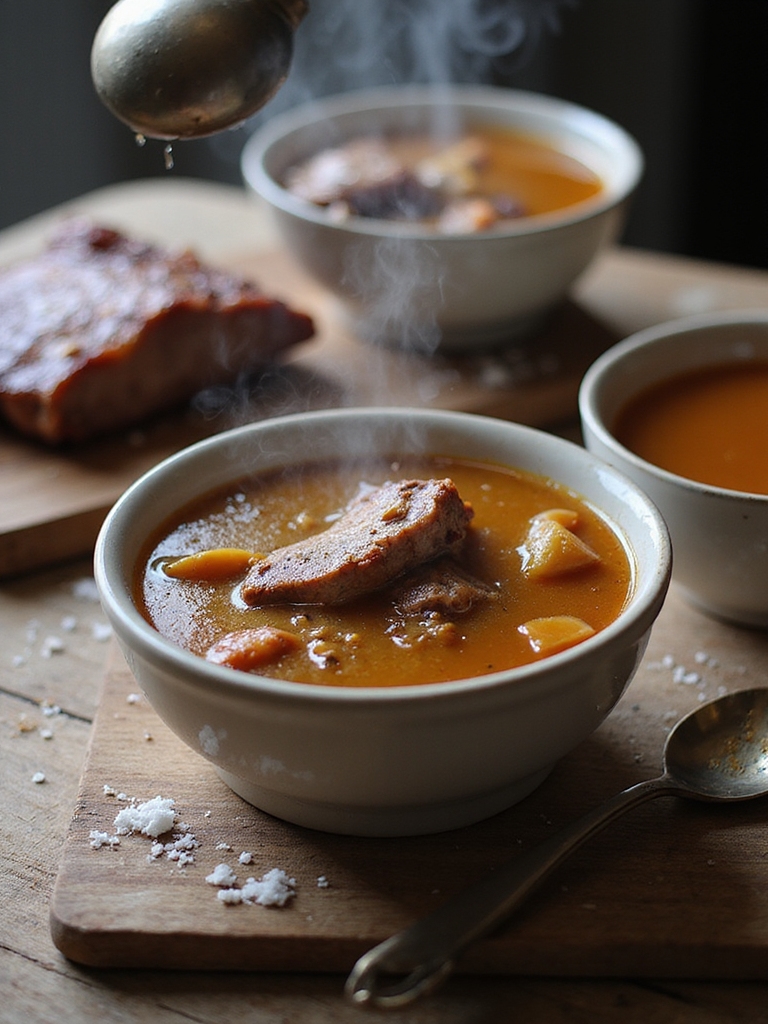
When you want a carnivore soup that’s both comforting and nutrient-dense, start with rich, simmered bone broth as your base — it’s the backbone of flavor and gut-healing goodness.
You’ll pick marrow-rich bones, add a splash of vinegar to coax minerals out, then simmer low and slow until the kitchen smells like success.
Strain for clarity, skim fat if you like, or keep it for silkier mouthfeel.
Use that broth to layer meaty elements—roasts, ground beef, or shredded pork—seasoned simply with salt and maybe a hint of mustard or herbs if you tolerate them.
Bone broth also makes an excellent starting point for creative carnivore-friendly variations, like incorporating slow-roasted marrow or beef scraps for deeper flavor and satisfying texture.
Core Method: Build a Carnivore Soup (Step‑by‑Step)
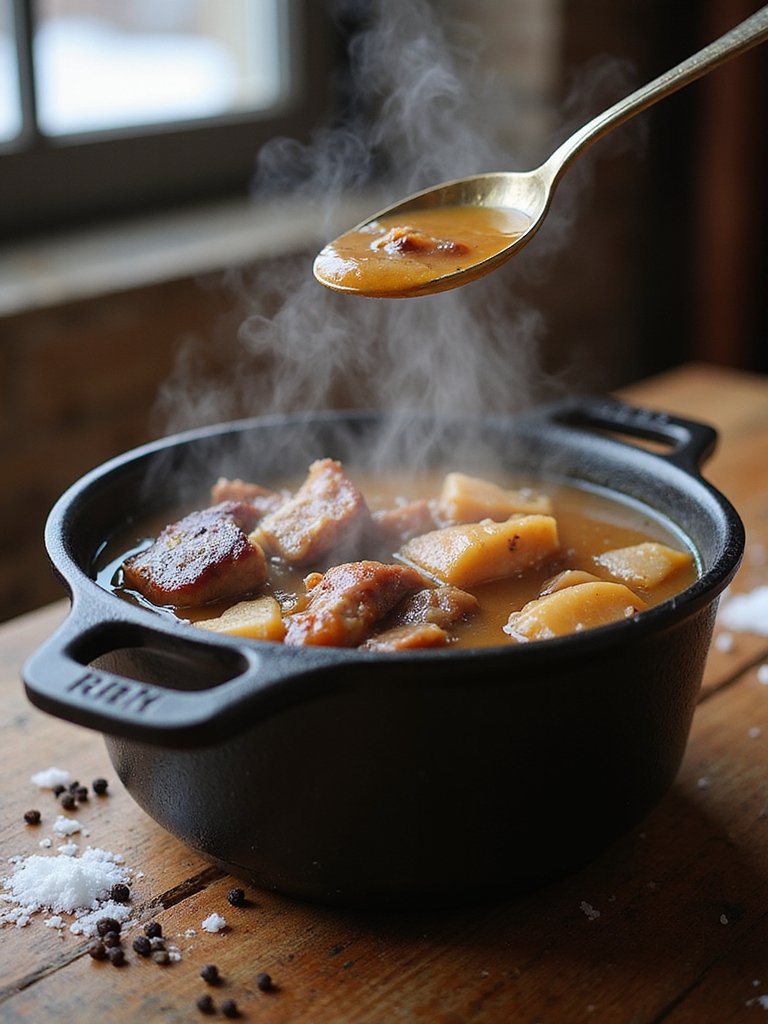
Now that you’ve got a pot of glossy bone broth ready, building a carnivore soup is mostly about layering textures and timing so every spoonful feels indulgent without fuss.
Start by searing fatty cuts for browning, deglaze with broth, then add slow proteins. Simmer gently, skimming fat if you want less richness.
Finish with quick-cook bits—thin slices or crumble—to keep contrast. Taste, adjust salt, rest briefly so flavors settle. Serve hot. Many of these recipes work especially well as dump-and-go crockpot meals for busy days.
| Step | Purpose |
|---|---|
| Sear | Maillard flavor |
| Simmer | Tenderize |
| Add quick bits | Texture contrast |
| Rest | Flavor meld |
Quick Options: Pressure‑Cooker Beef Soup in 60 Minutes
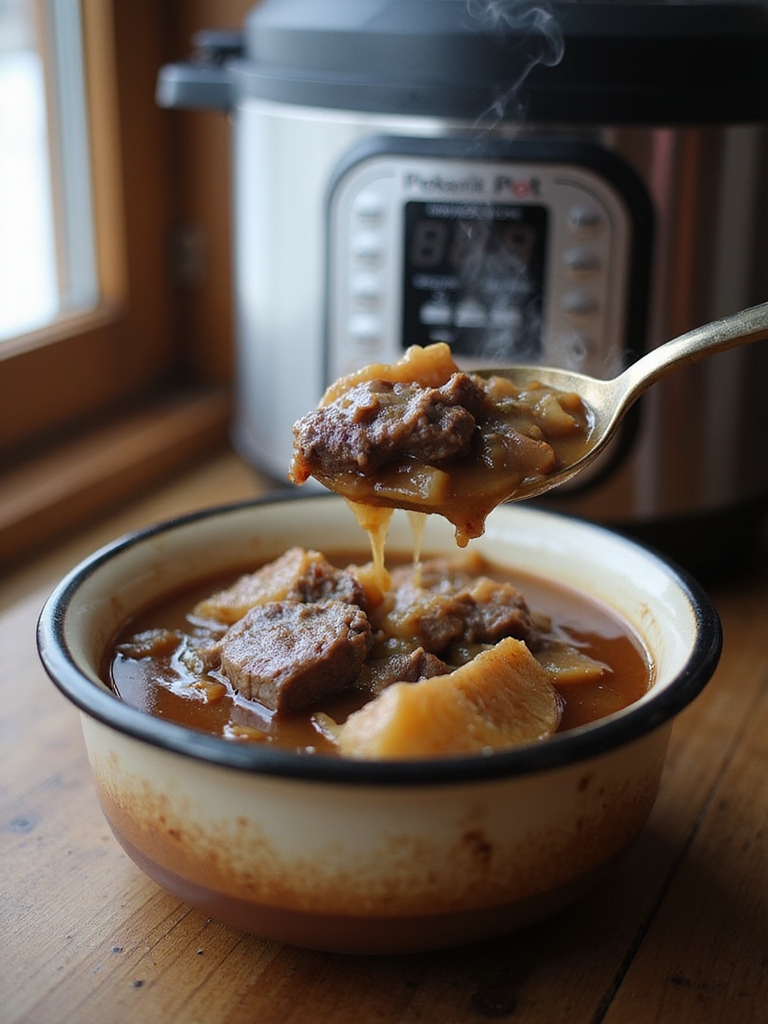
If you’re short on time but want rich, beefy broth, a pressure cooker is your secret weapon—trim, sear, add water and seasoning, and you’re basically done with prep.
Use high pressure to collapse connective tissue fast, watch your liquid level, and let natural release finish the job for silky texture.
You’ll have a weeknight-worthy carnivore soup in about 60 minutes. Crockpot meals designed for the carnivore diet practically cook themselves when you choose cuts with plenty of connective tissue.
Fast Prep Steps
Got a tight schedule? You can still enjoy a rich pressure‑cooker beef soup in an hour.
Trim and cube beef into even pieces so they brown quickly. Salt ahead for flavor; sear in batches to avoid steaming. Deglaze with bone broth, scraping browned bits.
Toss in hearty cuts—oxtail, short rib—or stew meat for texture. Add a few marrow bones for depth and minimal aromatics if you tolerate them.
Lock lid, set high pressure, and walk away for 35–40 minutes while it works magic. Quick release, skim excess fat, and rest briefly before serving. Many beginners find that ridiculously easy recipes help them stick with the carnivore approach.
High‑Pressure Tips
Trim, sear, and lock the lid—your pressure cooker does the heavy lifting so you don’t have to. You’ll brown beef for flavor, add bone broth, aromatics if you like, then seal.
Use high pressure to extract deep, beefy richness in 40–45 minutes; quick-release keeps veggies firm if you add them. Don’t overfill—follow the max line—and deglaze before sealing to avoid burn errors.
Check seasoning after cooking; pressure dulls salt, so you might need more. For faster batches, cut meat smaller.
You’ll have a comforting, concentrated soup in about an hour—minimal fuss, maximum warmth. Quick, simple carnivore meals like seared steak or beef bones can be ready in under 20 minutes when you choose smaller cuts and efficient techniques.
Slow Braise: Classic Oxtail Stew (Slow‑Simmer Method)
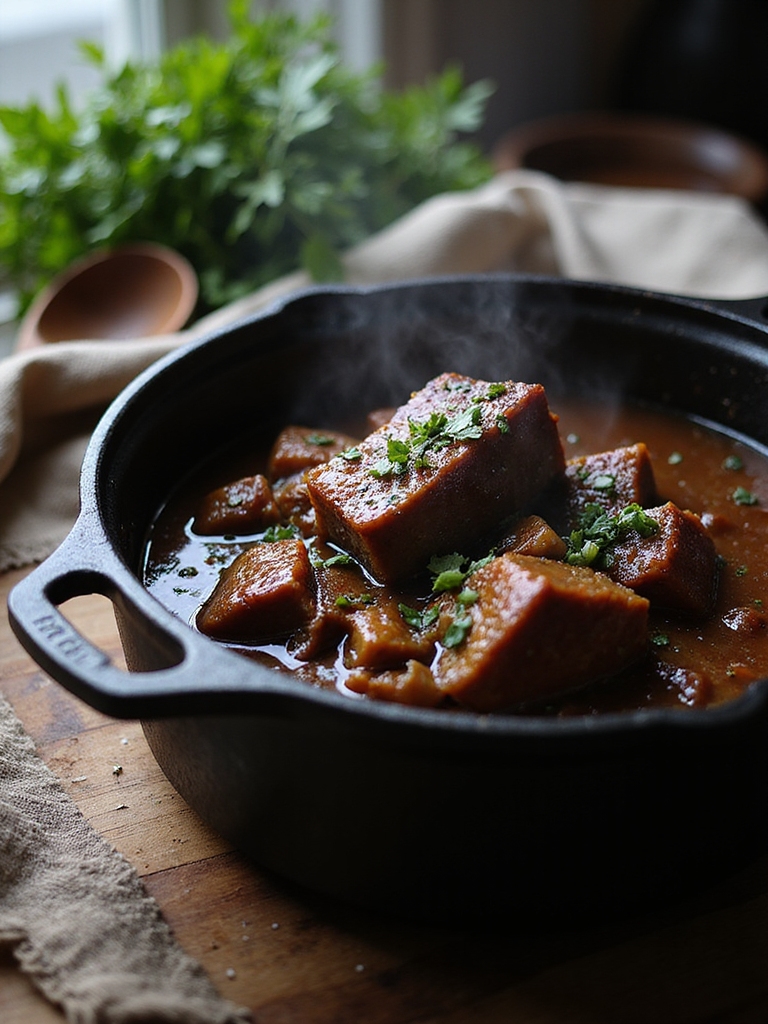
When you slow‑braise oxtails, patience pays off in glossy, gelatin‑rich sauce and meat that practically falls off the bone; this classic method lets collagen melt into deep, beefy flavor with minimal fuss while you get on with other things.
You brown pieces first for Maillard magic, then nestle them in a snug pot with a splash of stock, aromatics if you tolerate them, and a low oven or simmering burner. Turn heat to whisper, skim occasionally, and let hours do the work.
You’ll finish with spoon‑coating richness and a stew that feels like a warm, carnivore hug.
This approach mirrors the hearty, meat-first focus of a comforting carnivore meatloaf, emphasizing rich textures and unadorned protein-forward flavor.
Beef Bone Broth Soup With Shredded Short Rib
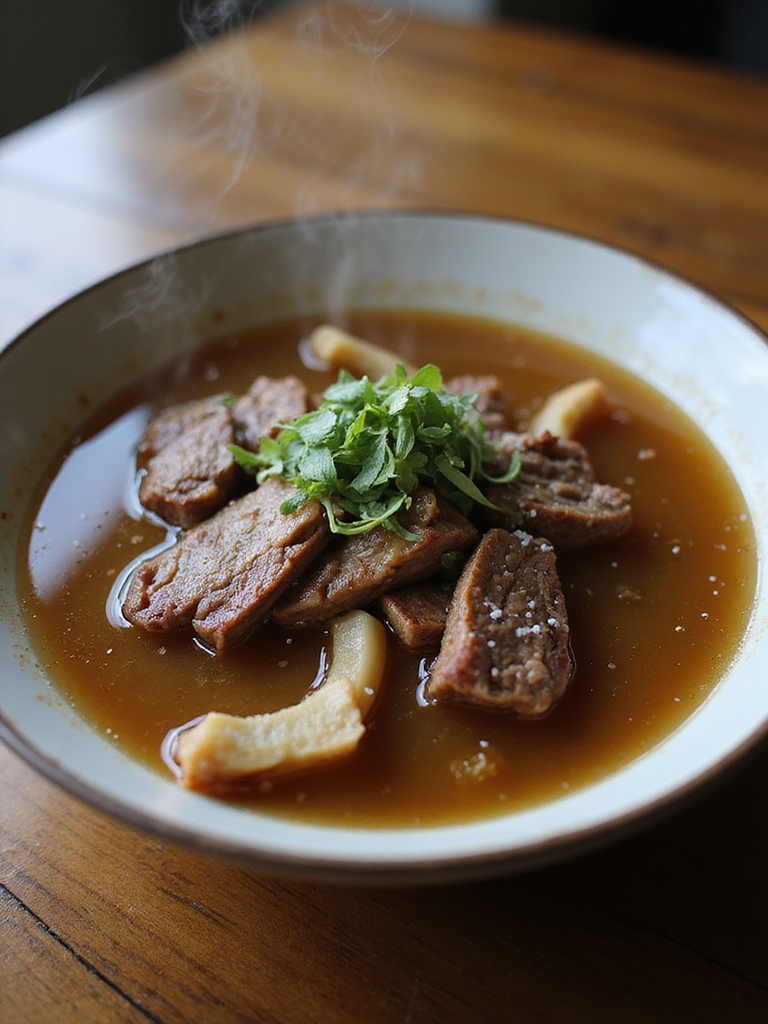
You’ll love how the gelatin-rich bone broth becomes the soulful stage for tender, shredded short rib. Sip it to feel the deep, beefy flavor and the way the meat melts into the broth.
It’s simple, nourishing, and downright comforting on a carnivore plan. Consider stocking up on essential staples like bone broth, short ribs, and other nutrient-dense cuts to make meal prep easy and satisfying — especially when following a shopping list of carnivore diet staples.
Rich Bone Broth Base
A deep, simmering pot of beef bone broth is the kind of comfort that grabs you by the elbows and won’t let go—rich, gelatinous, and loaded with savory depth that makes shredded short rib sing.
You’ll coax flavor from marrow and knuckle bones, simmering low, skimming, and tasting until the broth feels inevitable. Use salt sparingly; let the collagen and roasted bones speak. Strain, chill, and skim fat as you please.
This is your blank canvas—pure, beefy, and reassuring. Carnivore-friendly beverages like plain water and clarified broths can complement the soup without introducing non-animal ingredients.
Shredded Short Rib
Tuck into this bowl and let the shredded short rib do the talking—slow-braised until it falls apart, then pulled into tender, beefy ribbons that soak up that glossy bone broth.
You’ll ladle warmth that tastes like patience: marrow, a hint of roasted garlic, and nothing unnecessary.
Serve it simply—no carbs stealing the show—just a sprinkle of coarse salt and maybe a crack of black pepper if you’re feeling rebellious.
The meat’s richness turns every spoonful into a hug.
Make extra; reheated broth revives those ribbons into something even more comforting the next day.
Pork Belly and Crackling Broth for Rich Mouthfeel
Roasting pork belly until the fat renders and the skin crackles gives your broth an irresistible, silky mouthfeel that’ll make even skeptical guests ask for seconds.
You’ll brown the belly, deglaze the pan with a splash of water, then simmer bones and cracklings low and slow so collagen blooms into luxurious body.
Skim occasionally, salt judiciously, and strain for a clear, glossy finish.
Serve hot with a spoonful of shredded crackling on top — pure comfort and texture contrast.
This broth comforts without fuss, proving that rich, simple pork fat can carry a bowl to greatness.
Lamb Shoulder Broth With Garlicky Rendered Fat
Brown the lamb shoulder until the fat sings and the garlic goes golden, then let that garlicky rendered fat become the backbone of a broth that’s both rustic and refined.
You’ll deglaze the pan with a splash of water, scrape those fondy bits, then add bones, a few aromatics (stick to bay and thyme), and slow-simmer until the meat yields.
Skim, strain, and reduce to concentrate flavor.
Season simply—salt, maybe a grind of pepper—and serve hot. The broth clings to the spoon, warming you from the inside out; it’s unapologetically meaty, clever in its simplicity, and utterly comforting.
Chicken Carcass Broth and Pulled Dark‑Meat Soup
Pull the last bones from a roast or leftover bird and you’ll find they make the kind of broth that feels like a hug for your insides—rich, gelatinous, and infinitely forgiving.
You’ll simmer those carcasses low and slow with a splash of apple cider vinegar to coax minerals out, then skim and strain until amber clarity greets you.
Pick the dark meat, shred it into unpretentious ribbons, and return it to the pot.
Salt judiciously, heat through, and serve plain or with a pat of rendered chicken fat.
It’s humble, restorative, and exactly what your cold evenings ordered.
Texture Tricks for Silky, Unctuous Carnivore Soups
You’ll get silkier, more luxurious soups by sneaking in rendered bone marrow for fat and flavor.
Pureeing broths until they’re velvet-smooth and concentrating them into collagen-rich reductions will give body and that unctuous mouthfeel you want. These simple texture tricks turn basic stock into something downright indulgent.
Rendered Bone Marrow Boost
Tilt a hot spoon and watch marrow melt into the pot — that silky, unctuous richness is what transforms a plain meat broth into a velvet carnivore soup.
You’ll roast marrow bones until edges brown, scoop glowing centers, and whisk them into simmering stock.
That glossy fat coats your spoon and rounds flavors without thickeners.
Use a little at a time — marrow’s intense, luxurious, and generous; too much makes the pot cloying.
Finish bowls with a spoonful for depth and mouthfeel, and save trimmed marrow for pan-seared bits.
Simple, savage comfort that elevates every slurp.
Silky Pureed Broths
If marrow gives your soup that glossy, buttery hit, pureeing takes mouthfeel to the next level by turning whole ingredients into an unctuous, velvety broth you can sip like a creamy consommé.
You’ll blitz roasted bones, tender meat, and a splash of cooking liquid until silkier than a tuxedo napkin. Use an immersion blender for control or a high-speed blender for shear‑smoothness, and strain if you want ghost‑clear texture.
Season lightly — salt, a touch of acid like fermented fish sauce, maybe browned fat for depth. Serve warm, and watch skeptical guests swoon at how luxurious simple carnivore broths can feel.
Collagen-Rich Reductions
Because collagen is the secret scaffold behind velvet-rich soups, concentrating it turns ordinary stock into something you’ll spoon like silk — glossy, clingy, and deeply satisfying.
You reduce gently, skim solids, and finish with a pat of marrow or butter for sheen. Use oxtail, knuckle bones, or skin-on wings; low simmer and patience pay.
Taste as it thickens; salt late. Chill a bit to check gel strength before serving. You’ll learn texture fast, and friends will beg the recipe.
| Cut | Time | Tip |
|---|---|---|
| Oxtail | 6–8 hrs | Roast first |
| Knuckle | 8–12 hrs | Long simmer |
| Wings | 3–4 hrs | Cheap, rich |
| Marrow | 1–2 hrs | Add at end |
Add Calories: Tallow, Butter, and Marrow (How Much)
Want richer, more satisfying carnivore soups? Add fat thoughtfully: start with 1 tablespoon tallow per cup for silkiness, or ½–1 tablespoon butter if you tolerate dairy and crave a creamier note.
For bone marrow, roast a few bones, scoop 1–2 teaspoons per serving into the pot near the end—marrow shines as a finishing flourish, not a base.
Scale up for higher calories: double fats for heartier bowls. Taste as you go; fats change texture and mouthfeel.
You’ll boost calories, satiety, and flavor without fuss—just measure, simmer, and enjoy.
Seasoning Choices That Stay Carnivore‑Compliant
When you season carnivore soups, think simple: good salt and mineral blends are your baseline for flavor and electrolytes.
Use animal‑derived umami boosters like bone broth, reduced liver, or fish sauce (sparingly) to deepen taste without breaking the rules.
If you want a punch without plants, stick to herb‑free spices—smoked paprika alternatives like pure smoked salt or plain pepper substitutes will keep things interesting.
Salt And Mineral Blends
If you think “seasoning” on carnivore means only plain salt, think again — smart salt and mineral blends can lift broths and pan juices without sneaking in plants or additives you’ll regret.
You’ll want uniodized sea salt, Celtic salt, or finely ground Himalayan for texture and trace minerals. Look for blends that list only salt and potassium or magnesium chloride — no anti‑caking agents, dextrose, or yeast extracts.
Use sparingly, taste as you go, and store in airtight jars to keep flavors bright. These little tweaks make soups feel finished, savory, and surprisingly complex without leaving the diet.
Animal‑Derived Umami Boosts
Salt and mineral blends do a lot of the heavy lifting, but you can push broths into truly savory territory with ingredients that come from animals, not plants.
Think concentrated bone marrow, browned roasting juices, anchovy-packed fish sauce (check labels), or reduced beef tallow infused with pan fond.
Add a splash of raw egg yolk for silk and depth, or a spoonful of collagen-rich gelatin to round mouthfeel. Fermented animal products like fish sauce or aged cured meats lend umami without herbs.
Taste as you go — these boosts are powerful, so a little goes a long way in your pot.
Simple Herb‑Free Spices
Reach for a grinder and a steady hand—simple, herb-free spices let you amp flavor without breaking carnivore rules. You’ll want coarse sea salt, freshly cracked black pepper, smoked paprika (if you tolerate minimal plant-derived extracts), and ground Sichuan or white pepper for a different heat profile.
Use toasted bone marrow fat to carry those flavors, not oils or sweeteners. Sprinkle sparingly, taste as the soup simmers, and adjust boldly—salt early, pepper late.
Keep single-ingredient seasonings, check labels for additives, and remember: restraint often reveals more depth than a crowded spice shelf.
Meal‑Prep and Batch‑Cook: Freezer‑Ready Carnivore Soups
When you’ve got a busy week ahead, batching carnivore soups lets you grab a hot, nourishing meal in seconds without reheating a complicated recipe; think rich bone-broth stews and beefy consommés that freeze beautifully and thaw even better.
You’ll love having portions ready: label, stack, and rotate. Freeze flat in zip bags for quick thawing, or use mason jars for neat servings. Reheat gently to preserve texture. Keep a simple inventory so nothing languishes.
Try these steps to streamline prep and savor homemade comfort whenever hunger strikes.
- Cook big batch
- Cool quickly
- Pack smart
- Label/date
Adapt Soups for Autoimmune Diets and Reintroduction
Because autoimmune protocols can be strict, you’ll want to simplify and phase ingredients so your soups support healing without triggering flares.
Start with bone broth, single proteins, and minimal seasoning. Reintroduce foods slowly, noting reactions and waiting days between trials. Trust your gut—literally—and keep portions small the first time.
| Phase | Example |
|---|---|
| Elimination | Beef bone broth |
| Intro 1 | Soft chicken, small portion |
| Intro 2 | Egg yolk (if tolerated) |
| Return | Gradual beef cuts |
Record symptoms, tweak textures, and celebrate small wins; patience pays off deliciously.
Fixes for Greasy, Bland, or Cloudy Soups
You’ve been careful with elimination and slow reintroductions, but even the most disciplined soups can turn out greasy, flat, or murky — and that can undo the comfort you were aiming for. Triage quickly: skim fat, coax flavor, and polish clarity.
- Skim surface fat after cooling; refrigerate then remove solidified fat.
- Brighten broth with a splash of acid (vinegar or lemon) to wake flavors.
- Concentrate by simmering gently to reduce and intensify taste without adding ingredients.
- Clarify cloudy stock using egg-white raft or strain through cheesecloth for a clean, elegant finish.
You’ll rescue soups without betraying carnivore simplicity.
Shopping Checklist: Cuts, Bones, and Tools to Stock This Winter
Stock your pantry and freezer with a few smart cuts, bones, and the right tools, and you’ll be able to turn out warming, no-fuss carnivore soups all winter long.
Pick marrow and knuckle bones for gelatin, oxtail for richness, and short ribs or chuck for meaty depth.
Keep bone broth concentrate or frozen stock handy.
Buy fatty cuts like brisket and pork shoulder for mouthfeel; trim less if you like richness.
Tools: heavy stockpot or Dutch oven, fine mesh strainer, slotted spoon, sharp knife, and freezer bags.
Label everything—future you’ll thank present you.
You might worry this sounds too rich or fussy for weeknights — it isn’t. With a pressure‑cooker shortcut or frozen portions ready to reheat, you’ll have silky, collagen‑rich bowls in minutes.
Make big batches, skim or chill out grease, then pull tasty meat for fast meals. These soups are simple, forgiving, and deeply satisfying — cozy, nourishing, and perfect for winter nights when you want serious comfort with minimal fuss.