

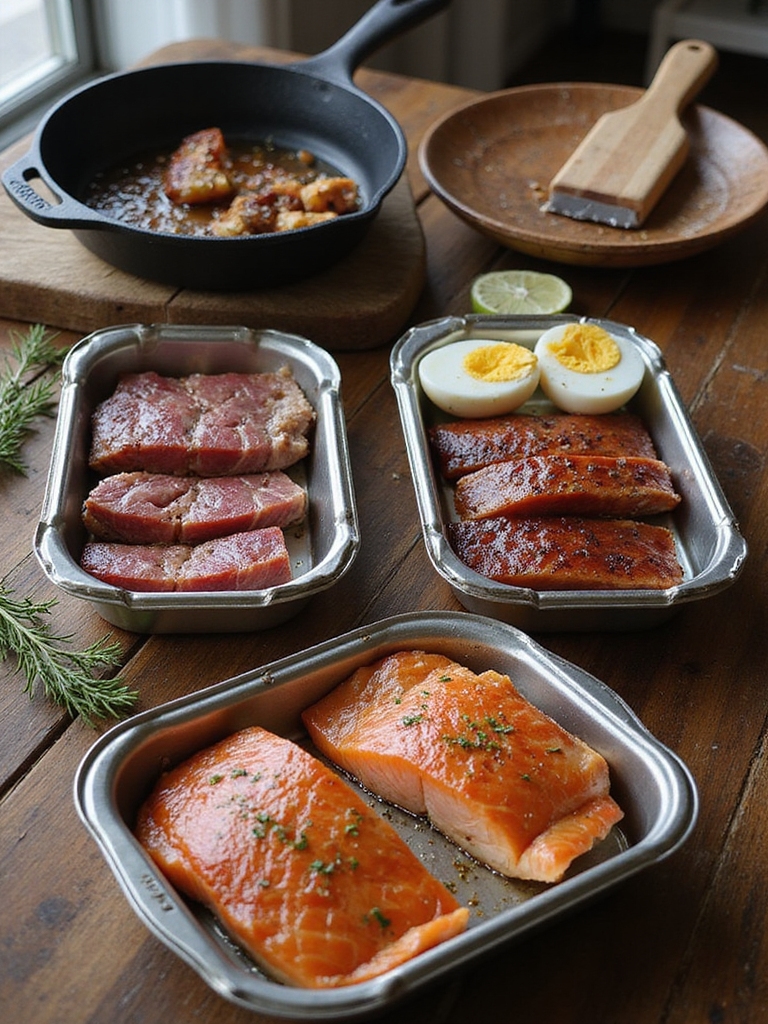
About 72% of home cooks say batch‑cooking saves them time and stress, so you can stop guessing what’s for lunch. You’ll learn how to prep big, fatty cuts and portion them into grab‑and‑go meals that stay juicy all week.
I’ll show simple schedules, foolproof reheat tricks, and small finishing touches that keep texture and flavor interesting — plus a few quick failsafes for when plans go sideways.
Quick Carnivore Lunches: What You’ll Get

Usually, you’ll find quick carnivore lunches are all about simplicity and satisfaction—think seared steaks, leftover roast slices, or fast pan-fried bacon and eggs that get you back to your day without fuss.
You’ll get hearty, protein-forward meals that fuel focus and blunt hunger fast. Expect minimal prep, few dishes, and flavors that rely on quality cooking rather than sauces.
Portions satisfy so you’re not grazing later. They’re portable, fridge-friendly, and forgiving if timing’s off.
You’ll enjoy variety through different cuts and cooking methods, and the payoff is steady energy, easy cleanup, and lunchtime confidence.
A simple weekly plan with repeat meals reduces decision fatigue and keeps cooking minimal while delivering consistent results with simple carnivore meals.
Best Proteins for Make‑Ahead Carnivore Lunches

Quick carnivore lunches are great, but planning ahead makes weekday meals even easier — especially when you pick proteins that hold up in the fridge and reheat like champs.
Choose fatty cuts like ribeye or pork shoulder; they stay juicy and taste better warmed. Rotisserie chicken or slow‑cooked brisket give you quick portions without daily cooking.
Hard‑boiled or fried eggs are portable protein heroes for busy days. Canned fish—sardines or salmon—adds variety and zero fuss.
Ground beef formed into patties or meatballs reheats evenly and pairs with melted cheese. Freeze extras in meal‑sized portions to keep lunchtime effortless.
Affordable ground beef meals are ideal for meal prep when following the carnivore diet, since ground beef is versatile and budget‑friendly.
Time‑Saving Shopping and Batch‑Cook Schedules

With a little planning, you can turn weekly shopping and batch cooking into a smooth, time-saving routine that keeps your carnivore lunches stress-free.
Decide staples, make a short list, and shop once — aim for sales on ground beef, chicken thighs, and pork shoulder.
Schedule two prep sessions: one big cook day and a midweek refresh. Label containers, portion by meal, and chill or freeze.
Keep spices and rendered fat handy for quick reheats. Many budget carnivores rely on ground beef meals as versatile, economical staples for batch cooking.
| Task | Time |
|---|---|
| Shopping list prep | 15 min |
| Grocery trip | 45–60 min |
| Big cook | 90–120 min |
| Midweek refresh | 30 min |
One‑Pan Roasted Meats for Weekly Batch Cooking

Pick hearty, forgiving cuts like chuck roast, bone‑in thighs, or pork shoulder that hold up to a week of eating and simple oven time.
Keep seasoning minimalist—salt, pepper, maybe a smear of tallow or butter—so the meat’s flavor shines without fuss.
Cool and portion promptly into airtight containers, refrigerate or freeze, and reheat gently (low oven or skillet) to preserve texture and juiciness.
These are ideal for slow methods like the Crockpot, which make set‑and‑forget batch cooking easy.
Choosing Cuts For Batch Cooking
Because you’ll be cooking once and eating all week, choosing the right cuts matters more than fancy seasoning—go for fatty, forgiving pieces like bone‑in chicken thighs, pork shoulder, or chuck roast that stay juicy after repeated reheats.
Pick cuts with connective tissue; they become buttery when slow‑roasted and forgive brief oven naps.
Trim only excess if you want rendered fat for reheating.
Bone‑in adds flavor and keeps meat moist while saving you time.
Buy larger pieces to portion easily: roast whole, slice or shred, then store.
You’ll thank yourself midweek when lunches are simple, satisfying, and never dry.
Stock up on essential staples like tallow, suet, and fatty roasts to simplify prep and reheating essential staples.
Seasoning Minimalist Carnivore Style
You’ve already chosen cuts that stand up to reheats; now keep the seasoning simple so the meat’s flavor stays front and center.
Rub steaks, roasts, or chicken with salt—coarse if you like texture—freshly cracked pepper sparingly, and a smear of rendered fat or butter to brown beautifully.
Toss in garlic cloves or anchovy fillets if you want a sly umami wink, but don’t let spices shout.
Roast on a single sheet or pan, turning once for even crust.
When you open the fridge later, the meat should taste like meat—clean, confident, and utterly satisfying.
Many people beginning a carnivore approach start with familiar staples like starter foods to find what they enjoy while keeping things simple.
Storage And Reheat Best Practices
Regularly roasting a week’s worth of meats on one pan saves time and keeps lunches simple, but storing and reheating them right is what keeps texture and safety intact.
Cool cuts quickly—slice larger roasts so they chill faster, then stash portions in shallow airtight containers or vacuum bags. Label with date; eat within four days or freeze up to three months.
Reheat gently: oven at 250–275°F or a covered skillet with a splash of beef broth to revive juiciness. Avoid the microwave‘s rubbery death ray unless you pulse low power briefly. Rest after reheating for even warmth and enjoy.
Dump-and-go crockpot options are also great for busy days and pair well with roasted batches when you need hands-off meals for the week.
Ground‑Meat Bowls You Can Portion and Reheat

Think of ground‑meat bowls as your weekday armor: you’ll batch‑cook big pans, portion them into containers, and grab a protein-packed lunch without fuss.
Reheating is simple, but tweak time and moisture — a splash of broth or a short microwave stir keeps the texture juicy instead of rubbery.
I’ll walk you through easy techniques so your bowls stay flavorful and not sad by Wednesday.
Batch cooking also makes sticking to the carnivore approach easier because you can make large, simple trays of meat ahead of time and portion them into containers for the week, which is great for ridiculously easy meal prep.
Batch Cooking Techniques
Batch-cooking ground-meat bowls saves you time and keeps lunch satisfying through a busy week.
You’ll brown big batches of beef, pork, or lamb, seasoning boldly so each portion sings on reheating.
Use heavy pans to get a caramelized crust, then drain little if you prefer richer bowls.
Divide into equal containers while warm, label with dates, and stash in fridge or freezer.
Add simple mix-ins—crisp pork rinds, rendered tallow, or a soft egg on top—right before eating.
Rotate flavors weekly to avoid boredom; your future self will high-five you at noon.
Reheating And Texture
Keep textures lively when reheating your portioned ground-meat bowls so lunch never feels like a soggy afterthought.
Reheat gently: low heat on stove or microwave in short bursts, stirring between intervals to keep edges from drying and centers from remaining cold.
Add a splash of beef broth or rendered fat before warming to revive juiciness without diluting flavor.
Crisp toppings separately—sear bacon, toast pork rinds—and add them just before eating for contrast.
If you’re using cheese, melt it at the end so it stays creamy.
With these tweaks, your prep stays practical and your lunch stays exciting.
Sheet‑Pan Bacon, Sausages & Organ‑Meat Combos
Slide a sheet pan into the oven and you’ll see how easy a carnivore lunch can be when bacon, sausages, and organ meats share the stage; the key is simple seasoning and staggered timing so everything finishes juicy and browned.
You’ll arrange items by thickness, roast bacon to crisp while adding liver and heart later, and rest slices briefly. Quick tips:
| Protein | Time | Temp |
|---|---|---|
| Bacon | 15–20 min | 200°C |
| Sausage | 20–25 min | 200°C |
Season with salt, pepper, maybe smoked paprika. You’ll get variety, minimal fuss, maximum flavor.
Hands‑Off Slow‑Cooker & Instant Pot Carnivore Recipes
You can set the slow cooker or Instant Pot and walk away while it turns inexpensive cuts into fork‑tender roasts and rich bone broth-based stews.
Throw in marrow bones or shanks for a silky, collagen-packed base, then add simple seasonings and let the machine do the work.
For quicker hands-off options, try high‑protein egg casseroles in the pressure cooker — they’re perfect for batch lunches and reheating.
Low‑Effort Bone Broth-Based Meals
If you want dinner (or lunch) to cook itself, bone broth is your secret weapon—toss a few cuts of meat, a jar of rich broth, and a handful of seasonings into a slow cooker or Instant Pot, set it, and go about your day while the machine does the hard work.
You’ll come back to tender meat, savory broth, and zero fuss. Use broth to reheat, braise, or sip. Here’s a quick guide:
| Cut | Time | Tip |
|---|---|---|
| Short ribs | 8 hrs low | Skim fat for clarity |
| Beef shank | 7 hrs | Season after cooking |
| Chicken thighs | 4 hrs | Bone-in for richness |
| Oxtail | 9 hrs | Strain for silky broth |
Set‑And‑Forget Roast Cuts
Let the slow cooker or Instant Pot do the heavy lifting—pop in a big, marbled roast, set the timer, and forget about it until mealtime; you’ll come back to fork-tender meat and a panful of savory juices that practically cook themselves.
You’ll love how minimal prep yields maximum payoff: salt, pepper, maybe a smear of tallow, and the appliance handles the rest. Shred or slice for lunches, portion into containers, and spoon over juices for reheated richness.
It’s foolproof, economical, and perfect for busy weeks. You get reliable texture, deep flavor, and zero babysitting—meal prep made gloriously effortless.
High‑Protein Egg Casseroles
When mornings are hectic but you still want a protein-packed lunch, a slow-cooker or Instant Pot egg casserole has your back—set it up the night before and wake to a savory, sliceable loaf that reheats like a dream.
You’ll toss eggs, cream (or bone broth), shredded cooked meat, and salt into the pot, press go, and forget it.
The result’s custardy, sturdy, and built for sandwiches or solo bites. Picture textures and flavors:
- Golden top, steam rising.
- Juicy shredded brisket folded through.
- Silky egg interior, fork-friendly.
- Crisped edges from broil finishing.
Meal prep: effortless, satisfying, repeatable.
Simple Bone‑Broth Soups for Fast Lunches
Because bone broth cooks up so quickly and packs so much savory comfort, it’s your fastest route to a satisfying carnivore lunch.
You’ll keep jars of rich stock in the fridge, then heat a cup, add shredded chicken, diced pork belly, or short ribs, and finish with a pat of butter or spoonful of collagen.
Season lightly—salt, a crack of pepper—and let the aromas do the convincing.
Soups reheat brilliantly, so batch‑make for the week and grab one between meetings.
They’re minimal fuss, maximal flavor, and perfect when you want warm, restorative food without chopping a mountain.
Sliced Steaks & Cold‑Cut Lunches That Last
Think of sliced steak and cold cuts as your fridge-friendly armor for busy days—slice once, eat many times.
You’ll love grabbing ready protein that stays exciting: sear a flank, chill and slice thin, or pick robust cured cuts.
Pack a few slices, a dab of mustard, and warm them if you want.
They hold texture, flavor, and sanity through the week.
- Shiny pink roast beef, peppery edges
- Thinly sliced ribeye, buttery mouthfeel
- Salami or soppressata, spicy and chewy
- Smoked turkey or ham, mild and versatile
Rotate varieties to avoid boredom.
Portioning, Labeling & Freezing Carnivore Meals
Those ready-to-grab steaks and cold cuts are only half the convenience—how you portion, label, and freeze them makes the rest of the week painless.
Portion by meal: single-serve steaks, stacks of bacon, or two-slice cold-cut bundles. Use freezer-safe bags or vacuum seals to avoid freezer burn and pack flat for space.
Label with date, contents, and intended meal so nothing becomes mystery meat. Freeze on a baking sheet first for quick separation later.
Thaw in the fridge overnight or transfer to a cooler spot in the morning. Small habits now save you time and decision fatigue later.
Safe Reheating for Best Texture and Flavor
When you reheat carnivore meals the right way, you’ll keep juicy steaks from drying out and crispy bacon from going limp — and you’ll actually look forward to leftovers.
Heat gently: low oven (275–300°F) or stovetop with a splash of beef broth keeps meat tender. Cover to trap steam for roasts; uncover at the end to crisp. Use a meat thermometer—reheat to 165°F for safety without overcooking.
Avoid microwave nuking if you crave texture; use it only for thin slices.
- Steak slowly warming, edges seared again
- Bacon restored to snap
- Roast steaming tender
- Juicy burger intact
Beat Carnivore Lunch Fatigue: Texture & Spice Tricks
Don’t let lunchtime become a bland rerun — switch up cooking methods like searing, slow-roasting, or smoking to give the same cuts exciting new textures.
Toss in bold seasonings — smoked paprika, garlic powder, crunchy finishing salt, or a hit of mustard — to wake your taste buds without straying from carnivore basics.
Small changes like these keep meals interesting and make you actually look forward to lunch.
Vary Cooking Techniques
Frequently you’ll find that simply changing how you cook your meat — grilling, searing, slow-roasting, or crisping in a skillet — makes lunchtime feel new again, and you’ll actually look forward to it.
You’ll switch textures and moods without any recipe drama. Try these quick mental images to plan your week:
- Charred steak with a smoky crust you slice thin.
- Butter-basted chicken thighs, skin crackling and golden.
- Low-and-slow pork shoulder shredding into tender ribbons.
- Quick-seared tuna, rare center, peppered edges.
Rotate techniques across meals; leftovers reheat differently, keeping every lunch surprisingly satisfying.
Use Bold Seasonings
Want to keep noon interesting? Use bold seasonings to rescue repetitive carnivore lunches. You don’t need herbs or carbs — just punchy, animal-friendly flavor.
Sprinkle smoked paprika on steak, dust pork chops with garlic powder and black pepper, or rub lamb with ground cumin and crushed fennel.
Finish seared salmon with lemon pepper and a snappy anchovy butter. Rotate spice profiles each week so your brain gets novelty even if ingredients repeat.
Keep small jars labeled and pre-mixed for meal prep. These concentrated accents transform texture monotony into mouthwatering bites without derailing your carnivore approach.
Quick Carnivore Add‑Ons and Seasonings That Work
When you need to dress up a simple steak or leftover roast without fuss, a few smart carnivore-friendly add-ons and seasonings make all the difference. You’ll want bold, minimal options that punch flavor without guilt.
Think texture, fat, and umami boosters you can stash in the fridge.
- Seared butter with garlic-infused oil—golden, nutty gloss.
- Anchovy paste blended into hot pan drippings—salty depth, no fishiness.
- Pork cracklings or crushed pork rinds—crackle contrast for tender meat.
- A shave of aged cheese or bone marrow—silky, savory finish that feels indulgent.
Sample Weekly Carnivore Lunch Plans (Small/Large)
Those quick add‑ons are small hacks you can lean on all week, so let’s map out actual lunches that use them.
For a small day, pack two hard‑boiled eggs, 3 oz cold roast beef, and a dab of mayo; sprinkle flaky salt and chives.
For a large day, bring a grilled ribeye, pan‑fried bacon, and a handful of pork rinds for crunch.
Swap leftovers into mason jars: sliced steak over beef tallow‑roasted bone marrow, or pulled chicken with butter.
Rotate sauces—mustard, anchovy butter—to avoid boredom.
You’ll eat simply, feel satisfied, and save time.
Troubleshooting Common Carnivore Meal‑Prep Problems
If meal‑prep has left you with soggy eggs, bland leftovers, or a fridge full of steaks you don’t want to reheat, you’re not alone — carnivore cooking has quirks you’ll quickly learn to outsmart.
You can rescue texture and flavor with simple tweaks: crisp eggs in a skillet, re-crisp roasted fat, finish steak slices briefly under a broiler, or add cold crunchy pickled radish for contrast (if you tolerate).
Plan portions, label dates, and rotate meals so repetition feels intentional.
Visualize fixes:
- Pan-fry eggs to golden edges.
- Broil steak slices for 60–90s.
- Reheat bones for broth.
- Pack crisp garnishes.
You’ve set yourself up for success: batch-cook fatty, collagen-rich cuts, stash hard-boiled eggs and canned salmon, and keep bone broth and tallow handy for quick reheats.
Variety and texture — seared ribeye bites, shredded pork, or crunchy cracklings — keep lunches exciting.
Remember, “many hands make light work”: prep once, enjoy all week. Stay flexible, tweak spices, and you’ll beat lunch fatigue with minimal fuss and maximal flavor.


