


About 32% of people on low‑carb plans say they miss pizza most — and you’ll probably nod if you’re among them. You can recreate that ritual with meat, cheese and clever technique, and it often nails the comfort more than the carb.
I’ll show you how to pick a base, fix soggy crusts and scale for a crowd, but first you’ll want to know which methods actually taste like the real thing.
What Is Carnivore Pizza : And Does It Curb Carb Cravings?
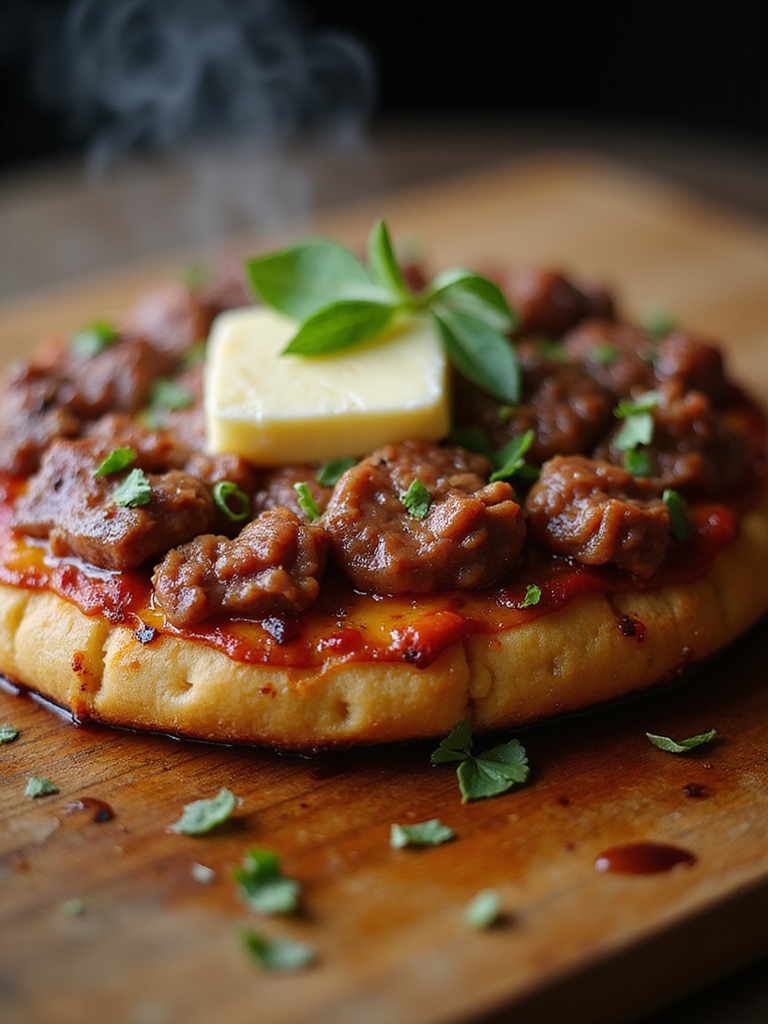
Think of carnivore pizza as pizza gone full-on animal kingdom: no crust made from flour, no tomatoes or herbs—just layers of meat and cheese fashioned to mimic the familiar pie you love.
You’ll recognize the ritual—slice, lift, bite—even if the textures surprise you. It’s designed to sate protein and fat cravings that often chase carbs; many find the richness blunts the urge for bread.
You’ll still miss certain comforts, like tangy sauce, but the savory heft fills plate and expectation.
If you’re gauging carbs, it’s an effective, blunt instrument—satisfying, disciplined, and unapologetically meaty.
Comforting carnivore dishes like meatloaf show how a meat-first approach can recreate classic comfort foods with hearty, familiar textures and flavors, emphasizing meat-focused recipes to replace carb-heavy staples.
Quick Carnivore Pizza: A Simple Recipe to Try First

Whip up a carnivore pizza in under 20 minutes when you want the comfort of a pie without the carbs or fuss—this quick version uses a seared meat base, melting cheese, and a few salty, savory toppings to give you all the familiar gestures of pizza (slice, lift, bite) with zero flour-based compromise.
You’ll press thin ground beef into a hot pan, brown edges until crisp, scatter shredded mozzarella, and add pepperoni or crisped bacon.
Flip briefly to melt, slice with a spatula, and eat warm.
It’s immediate, unapologetic, and surprisingly satisfying—pizza instincts preserved, carbs politely excluded.
Many beginners find starting with ridiculously easy meals helps them stick to the carnivore diet during the transition.
Choosing a Carnivore Pizza Base: Ground Meat, Whole Cuts, or Cured Layers

Decide what you want your carnivore pizza to do before you pick the base: be fast and crispy, hearty and sliceable, or utterly indulgent and slice-as-you-go.
You’ll pick ground meat for speed and a crust-like chew, whole cuts when you want steakhouse heft and tidy slices, or cured layers if you’re chasing convenience and decadent saltiness.
Consider fat content, binders, and how you’ll handle structural collapse.
Think about oven time and toppings’ moisture — they’ll betray a flimsy base.
Choose the approach that matches your appetite and patience; each rewards different cravings and occasions.
For budget-conscious cooks, ground beef offers a reliable, affordable option with good fat content and quick cooking times, making it ideal for many carnivore pizza recipes that aim to be both tasty and economical (Affordable Ground Beef).
Make a Stable Ground‑Meat Crust (Step‑By‑Step)

You’ll start by picking the right ground meat—higher fat for bind, leaner blends if you want less grease—but don’t overthink it.
Then you’ll mix just enough egg and seasoning to hold the thing together without turning it into a meatloaf.
Finally, you’ll bake and firm the crust on a hot sheet so it crisps up and stays stable under toppings.
I often rely on simple, repeatable recipes from my collection of budget carnivore ground beef meals to keep this method fast and reliable.
Choosing Ground Meat
Pick a ground cut that’s high in fat and low in surprises—85/15 to 80/20 beef, ground pork, or a brisket blend will give you a crust that holds together without turning into a dry crumbly mess.
You’ll want meat that binds naturally; lean heroics end in disappointment. Buy fresh, smell it, check grind consistency, and don’t chase exotic labels when reliable fattiness wins.
Trust texture over marketing. Below is a quick compass to guide choices, not a recipe—save that for the next step. Staples like quality ground beef and pork are essential on a carnivore shopping list, so prioritize reliable fattiness when you shop.
| Cut | Fat% | Character |
|---|---|---|
| Ground beef | 15–20 | Reliable binder |
| Ground pork | 20–25 | Rich, forgiving |
| Brisket blend | 18–22 | Beefy, cohesive |
Preparing The Mixture
Start by chilling your hands and your bowl—cold meat binds better and stays tacky instead of turning into mystery crumbs.
Crack an egg in, sprinkle salt and a pinch of powdered collagen or grated hard cheese if you tolerate it; those tiny cheats help glue without drama.
Use a fork to fold, pressing rather than mashing, until the mix holds when you squeeze a small pat. Don’t overwork—think gentle sculptor, not angry butcher.
Transfer onto parchment, press into an even disk with a slight rim, and smooth the top for predictable browning.
Taste the raw seasoning; adjust confidently.
Carnivore recipes like this are intended to show how simple meat-based meals can be adapted for familiar dishes, illustrating how anyone can make satisfying simple carnivore meals at home.
Baking And Firming
Now take that chilled, shaped patty over to the oven—this is where the meat learns to behave. Preheat to 400°F (204°C); hot edges seal juices, firming structure.
Slide the crust onto a parchment-lined sheet or nonstick pan; you want even contact, no sagging. Bake 12–15 minutes, then press gently with a spatula—if it resists and holds shape, you’re close.
Flip if you prefer an even crust, finishing another 6–8 minutes. Rest five minutes; residual heat finishes the set.
You’ll trim crisp edges, top fast, and bake briefly again. Treat it like sculpture, not soufflé. Also consider serving it with unexpected carnivore-friendly sides like pork rinds or bone broth for added texture and flavor Unexpected Side Dishes.
Egg‑And‑Cheese Crusts for Extra Structure and Crispness

Egg-and-cheese crusts give your carnivore pizza the kind of structure that won’t sag under a river of toppings — and they crisp up in ways a plain meat base won’t.
You whisk eggs, grate a dense cheese, and press a thin layer that bakes into a golden, snappy platform. It bites back, holds molten cheese, and forgives imperfect toppings. You’re not pretending it’s dough; you’re optimizing texture.
Many people on the carnivore diet make these as part of their morning rotation to replace traditional egg breakfasts with something heartier, often pairing them with protein-forward options like bacon or sausage.
| Visual | Texture |
|---|---|
| Golden rim | Crisp snap |
| Bubbling surface | Tender chew |
| Brown freckles | Buttery mouthfeel |
| Edge lift | Holds toppings |
Quick Crust Alternatives: Prebaked Bacon, Prosciutto, and Pork Rinds
If you like the snap and structure of an egg-and-cheese crust but want something even faster—or meatier—try prebaked bacon, prosciutto, or pork rinds as your foundation.
You press prebaked bacon strips into a ring, layer prosciutto sheets for a delicate crisp, or crush pork rinds into a compact base; each gives instant crunch without fiddly batter.
Top while still warm so cheese melts and flavors marry.
You’ll get salt, fat, and texture all at once, and cleanup is delightfully minimal.
It’s not pizza theater, but it’s satisfying, efficient, and unapologetically carnivore.
Sauce Swaps That Add Fat, Umami, and Moisture
Because tomato sauce can feel like gatekeeping when you’re trying to keep it strictly carnivore, look for swaps that bring fat, umami, and a little moisture without dragging in carbs or plants.
You can smear rendered beef tallow or bacon fat as a glossy base, then dot with anchovy paste or finely minced sardines for deep savory notes.
Melted butter mixed with a touch of bone marrow yields silk and richness. If you want tang, use a splash of fermented fish sauce sparingly. Taste as you go; these concentrates demand restraint, but they make your crust sing without a stray vegetable in sight.
Best Cheeses for Melt, Stretch, and Flavor on Carnivore Pizza
You’ll want cheeses that melt cleanly, stretch satisfyingly, and punch up flavor without fuss.
Think high-melt options for a glossy blanket, choices that give glorious pull and mouthfeel, and a few bold picks—like aged cheddar or smoked gouda—to cut through the fat. I’ll walk you through which cheeses do each job and how to use them.
High-Melt Cheeses
Usually the cheese decides how your carnivore pizza behaves—whether it sagely drapes, strings like a guilty confession, or turns into a greasy puddle you’ll blame on the oven.
You want cheeses that melt cleanly, taste bold without shouting, and brown nicely under heat. Consider these dependable players:
- Mozzarella (low-moisture) — mild, reliably creamy, won’t weep if you don’t overbake.
- Provolone — rounder flavor, nods of nuttiness, melts into a glossy blanket.
- Fontina — buttery, melts smoothly, carries salt and depth.
- Gruyère — savory, caramelizes beautifully, adds umami complexity.
Pick combos for balance and restraint.
Stretch And Texture
Often the thing that makes you forgive a limp crust or questionable toppings is the pull of a perfect cheese stretch — that long, elastic ribbon that announces success before you even take a bite.
You want cheeses that melt smooth but resist oiling out: low-moisture mozzarella for pull, provolone for body, young cheddar for flavor without grit.
Blend for texture — a touch of fontina or Monterey Jack softens and aids flow.
Heat gently; aggressive temps break proteins and leave greasy puddles.
Slice and serve hot so the stretch performs; chilled cheese just won’t keep its promise.
Bold Flavor Picks
If stretch and texture get your eye, flavor is what grabs your tastebuds by the collar.
You want cheeses that melt obediently but sing: bold, salty, grassy, or nutty notes that cut through meat and fat.
Choose with purpose.
- Mozzarella (low-moisture) — reliable stretch, mild base for bolder companions.
- Aged cheddar — sharp bite, clever contrast to fatty toppings.
- Gruyère — nutty, savory depth; browns beautifully.
- Parmigiano-Reggiano — crystalline umami finish; grate it like you’re tasteful.
Mix them confidently; balance stretch with punch, and don’t be afraid to overdeliver on flavor.
Topping Ideas: Classic Combos, Gourmet Builds, and Minimalist Plates
Think of toppings as the personality your carnivore pizza wears to the table: bold and unapologetic, whether you stack it with pepperoni and bacon or let a single, perfect ingredient run the show.
You’ll lean on classic combos—sausage, pepperoni, crisp bacon—for instant comfort and predictable pleasure. Try gourmet builds: thinly sliced steak, smoked prosciutto, a scatter of seared scallops if you’re feeling theatrical.
For minimalist plates, trust a single high-quality element—bone marrow, a blistered shrimp, or a caramelized pork belly slice—to carry the bite. Each choice signals intent: nostalgia, luxury, or stark, efficient satisfaction.
Seasonings That Recreate Classic Pizza Flavors
While you’re skipping the dough, you don’t have to abandon the flavors that make pizza comforting—oregano’s warmth, garlic’s punch, and a sharp dried basil can all stand in for tomato sauce’s familiar chorus.
You’ll lean on concentrated seasonings to summon that childhood slice without carbs.
- Crushed red pepper — for bright heat and authentic nostalgia.
- Garlic powder + granulated onion — base savory notes, no weeping tomatoes.
- Smoked paprika — hints of char and depth.
- Dried oregano + basil blend — the unmistakable Italian backbone.
Use sparingly; these are potent actors, not background extras.
Cooking Methods: Oven, Cast‑Iron, Stovetop, and Broiler Tips
Those dried herbs and smoked paprika do more than fake tomato—they set expectations for how you’ll cook the pie, because technique determines whether those flavors sing or simmer into obscurity.
You preheat the oven hot and early for crisp edges; a pizza stone or inverted sheet gives radiant heat, not mercy.
Cast‑iron loves a seared base—start on medium, finish under the broiler for blistered cheese.
On the stovetop, cover briefly to melt toppings, then uncover to revive crust.
The broiler is your quick char tool—watch it like a hawk.
Timing and trust in heat make the carnivore pie convincing.
Fixing Texture Issues: Sogginess, Shriveling, and Crumbly Crusts
If your carnivore crust is sogging out, shriveling up, or crumbling like bad behavior, you can fix most of it without starting over. You’ll nip moisture, support structure, and manage heat with small adjustments.
- Pre-bake thinly to set proteins; don’t wait for toppings to dry it out.
- Pat toppings drier, use less watery meats, and reserve juices.
- Boost binders slightly—extra egg or cheese—when you mix, not after.
- Finish under a broiler or on a hot cast-iron to crisp edges fast.
Do these, and your slice will behave: taut, chewable, and not apologetic.
Scaling and Meal‑Prep: Family Portions and Batch Cooking
Because doubling a recipe shouldn’t double your headache, plan portions, prep stations, and timing before you touch the meat—you’ll save time and avoid a fridge full of sad single slices.
You’ll batch crusts, par-cook toppings, and label trays so dinner isn’t an experiment. Assign one person to assembly and one to ovens or grills; use sheet pans and thermostats like a calm conductor.
| Task | Tip |
|---|---|
| Crusts | Pre-shape, freeze flat |
| Toppings | Pre-cook, cool quickly |
| Assembly | Line trays, stagger ovens |
| Storage | Portion, vacuum or wrap |
You’ll feed a crowd without chaos.
Nutrition Snapshot: Calories, Macros, and What to Expect
While a carnivore pizza won’t masquerade as a light salad, it’ll deliver a dense hit of calories and fat with moderate protein depending on your crust choice, so you’ll want to plan portions like a skeptical host counting chairs.
You’ll notice expectations change: slices feel small but stick to your ribs.
- Calories: high per slice if crust or extra cheese is involved.
- Fat: primary energy source; expect satiation and slowed digestion.
- Protein: decent, varies with meat load and crust.
- Carbs: low if meat/cheese crusts, higher with egg/flour variants.
Track portions; adjust sides and appetite accordingly.
Strict Carnivore Variations: Organs, Tallow, Fermentation, and Why People Adapt Comfort Foods
If you’re feeling adventurous, swapping muscle cuts for organs packs a punch of micronutrients that your pizza-craving self might actually appreciate.
Smearing rendered tallow into the “crust” changes texture and satiety in a way butter never will, and simple fermented meat techniques add tang plus shelf-life without betraying the carnivore premise.
People tweak comfort foods like pizza not out of nostalgia alone but to keep familiar rituals while squeezing more nutrition and variety into a strict meat-only plan.
Organ-Based Nutrition
Leaning into organ-based nutrition means you’re trading steak-night bravado for nutrient-dense oddments that actually do the heavy lifting; liver, heart, kidney and rendered fats like tallow pack vitamins, minerals, and cofactors muscle meat lacks.
You’ll rethink “offal” as insurance — small portions, big returns.
You also get culinary excuses to experiment, which is why people mimic comfort foods with organ-forward twists.
- Start small: pâté, finely chopped liver in meatballs.
- Rotate organs: avoid overload while gaining variety.
- Use acids/spices: cut funk, brighten flavor.
- Track results: energy, sleep, digestion change noticeably.
Tallow And Texture
Rendering tallow changes everything: it’s not just fat, it’s texture engineering for a strict carnivore kitchen.
You’ll notice crusts crisp differently, bakes brown with a savory gloss, and fillings stop collapsing into greasy puddles.
Tallow binds, lubricates, and creates that toothsome resistance your memories of pizza crave—without breadcrumbs, starch, or compromise.
You’ll use it to sear edges, coat pans, or fold into ground meat for a pliant, sliceable base.
It silently boosts mouthfeel and satiety, letting you chase comfort foods while staying rigorously animal-only.
Practice patience; good tallow tastes like memory, not masking.
Fermented Meat Techniques
When you embrace fermentation in a strict-carnivore kitchen, you’re not chasing tang for its own sake so much as releasing durability, depth, and a kind of cultured umami that organs and tallow alone won’t give you.
You’ll treat meat like a patient ingredient, coaxing complexity without plants.
- Cure thin slices with salt and time to concentrate flavor.
- Use whey or leftover brine as a starter for predictable results.
- Age small organ portions under controlled temps for savory funk.
- Render tallow, then infuse with aged meat drippings to carry aroma.
You’ll adapt comfort foods by layering preservation-driven intensity.
You’ve seen how meat and cheese can stand in for crust, sauce, and ritual—so why shouldn’t comfort food feel comforting even on carnivore?
Try a simple ground‑meat or egg‑and‑cheese base, tweak for crispness, and scale up for leftovers; small organ additions and rendered tallow add depth without straying.
You’ll curb carb cravings by honoring texture and habit, not pretending plants; isn’t that the pragmatic heart of this makeover?


