

I’m partial to a few well-chosen vintage pieces: a well‑seasoned cast‑iron skillet, enamelware bowls, a midcentury mixer with original knobs, and maker‑marked ceramics that tell a story.
Set a firm budget, check maker stamps and consistent wear, and weigh restoration costs before you buy. Hunt estate sales, flea markets, and curated online shops for fair deals. Keep displays simple—one meaningful item per nook—and I’ll share how to authenticate, restore, and style them.
Quick Buying Checklist: Decide Use, Budget, Risk
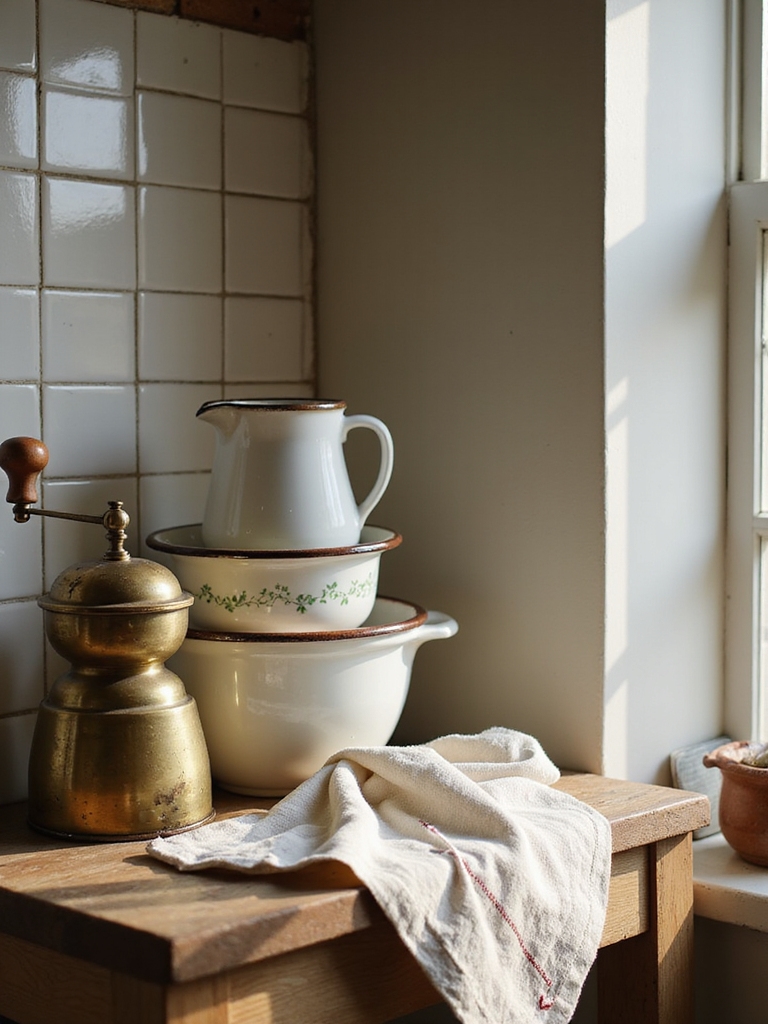
When I shop for vintage kitchen pieces, I start by asking three simple questions: how will I use it, what can I afford, and what risks am I willing to accept.
I pick items with clear purpose, set a firm budget, and weigh repair or restoration needs.
I prefer sturdy, functional pieces that earn their place on my counters and in my daily routine.
I also keep an eye out for rare, statement-making antique kitchen decor that can become a focal point in the space.
How to Authenticate Maker Marks and Labels
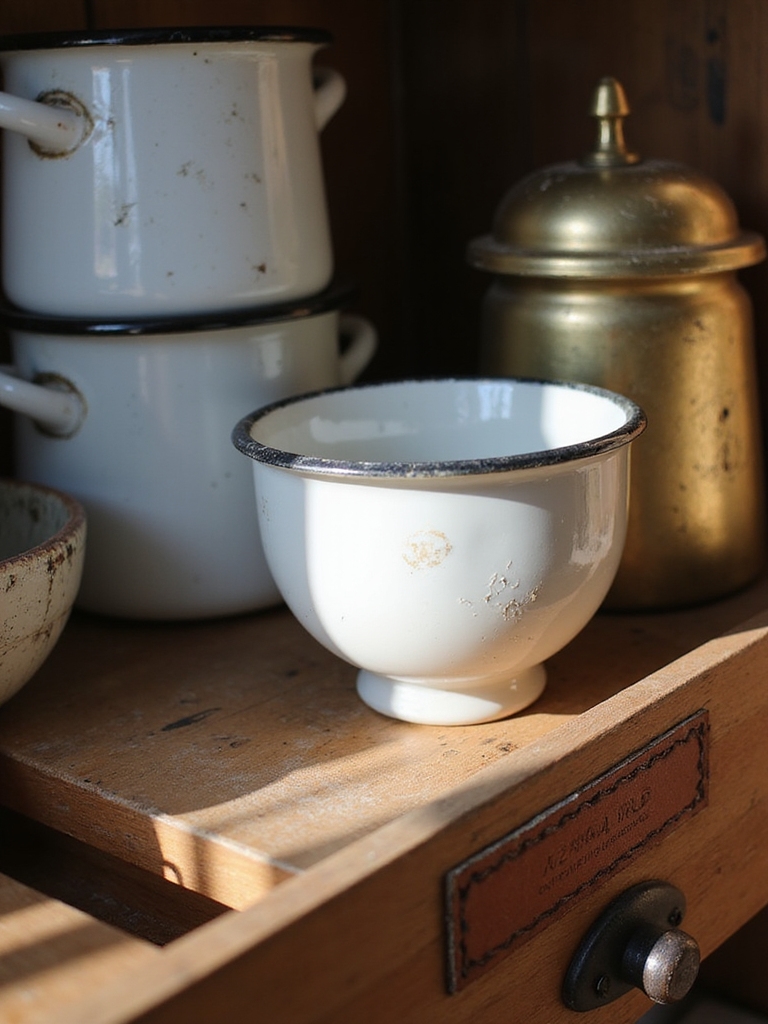
After I’ve decided what I’ll use and what repairs I’ll accept, I focus on maker marks and labels to verify a piece’s story and value.
I gently clean faded stamps, compare fonts and logos with trusted references, and watch for consistent wear.
Provenance notes, period-correct materials, and crisp labels tell me a true vintage tale worth investing in.
Many DIY lovers also enjoy creating complementary pieces inspired by vintage motifs, which can enhance a room’s charm when paired with authentic finds and whimsical kitchen wall art.
Condition Checklist That Determines Resale & Use Value
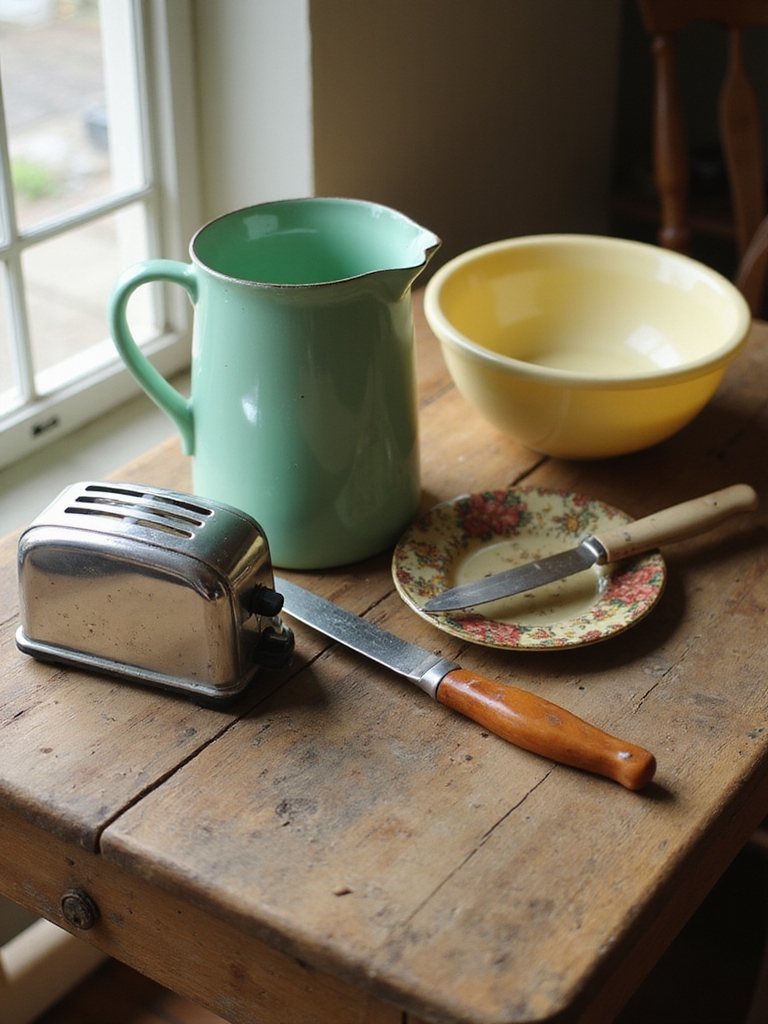
Because I plan to live with or sell the pieces I collect, I run through a short, practical condition checklist that tells me what needs repair, what’s cosmetic, and what’ll affect resale value.
I note structural integrity, functionality, original finishes, maker marks, rust or chips, and any amateur repairs.
I weigh restoration costs against sentimental and market worth before bringing things home.
I also keep in mind practical storage and display strategies to maintain their condition, like regular cleaning and efficient kitchen storage to prevent damage.
Pricing Ranges and Where to Find Fair Deals
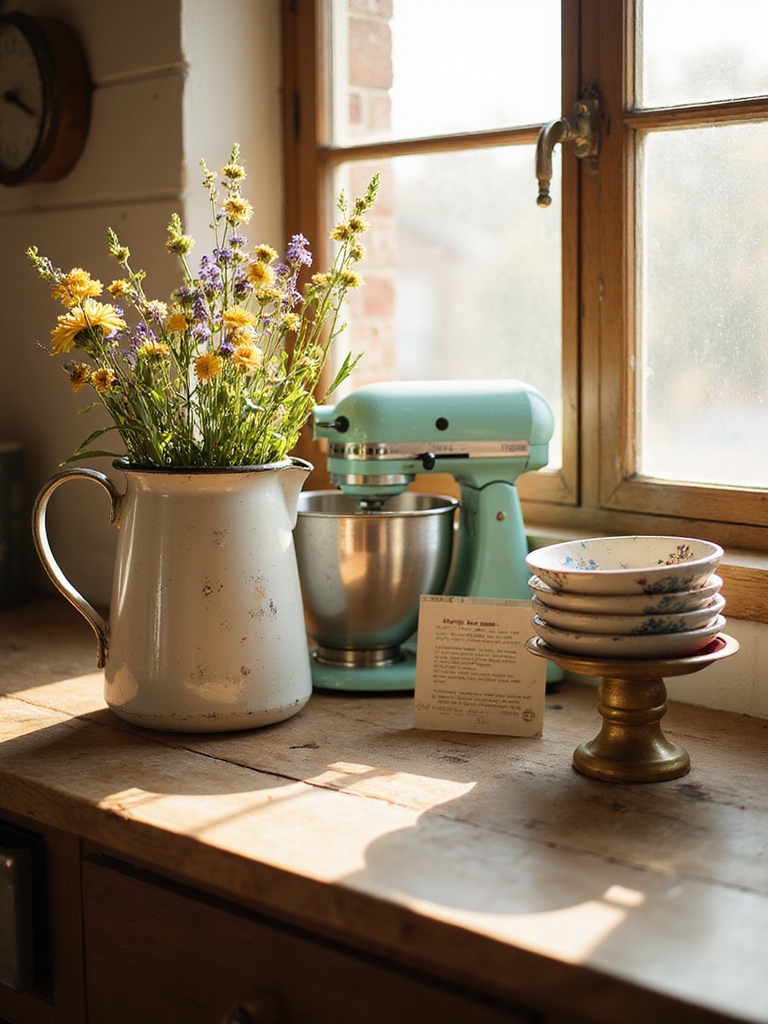
Though prices can surprise you, I’ve found a few dependable ranges for common vintage kitchen pieces so you’ll know when a deal’s fair: enamelware $10–$60, cast-iron skillets $20–$150, glass jars $8–$40, farmhouse signs $25–$120.
I hunt estate sales, local auctions, and thrift shops, and I watch online listings—patience and a keen eye get honest prices and sweet finds.
Washable luxury rugs are also worth considering for busy kitchens, since they combine style with washable durability and can handle spills and heavy use.
Best Vintage Kitchen Pieces That Hold Value
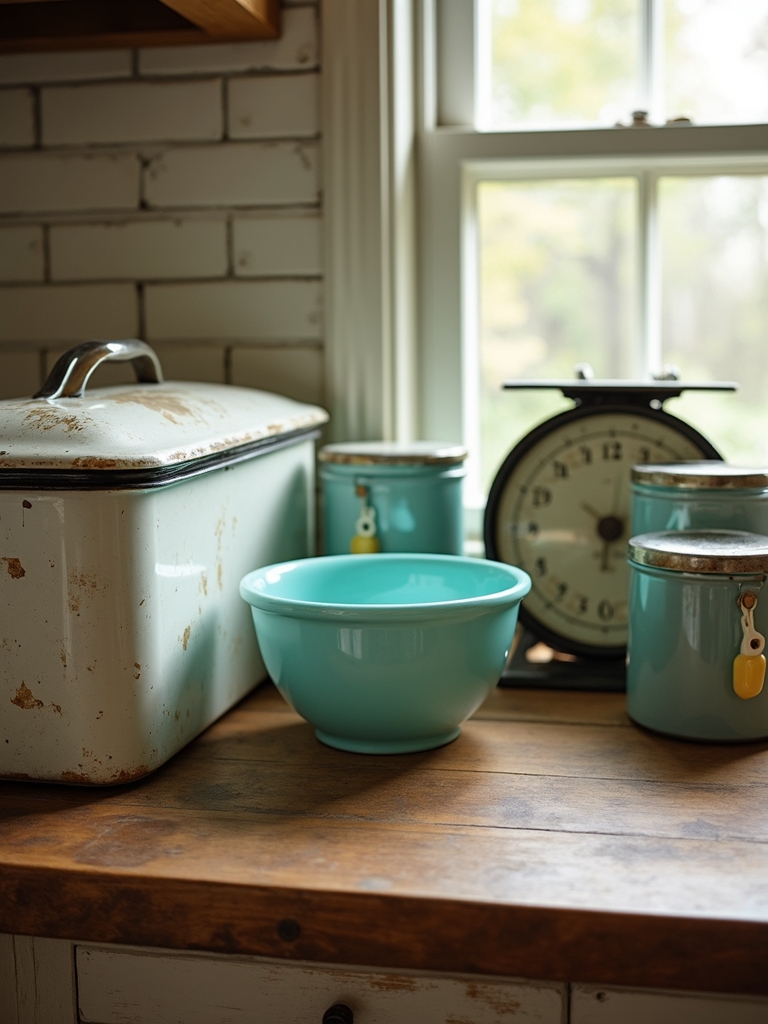
I’ve always kept an eye out for timeless pieces that actually hold their value, like well-seasoned cast iron skillets and classic midcentury appliances.
Those heavy, no-nonsense pans and the sleek, retro ovens and fridges not only look charming in a farmhouse kitchen but perform reliably for years.
Let’s look at what to watch for when shopping so you bring home pieces that feel authentic and stay worth keeping.
Mixing vintage charm with modern kitchen functionality is key, so I focus on items that balance timeless design with contemporary performance.
Iconic Cast Iron Cookware
I still pull my grandmother’s well-worn cast iron skillet down from the rack and feel the history in its weight; these pieces aren’t just cookware, they’re heirlooms that keep getting better with use.
I treasure seasoned pans, Dutch ovens, and griddles — sturdy, simple, and repairable. They cook evenly, age beautifully, and add rustic charm to a kitchen while holding real resale and sentimental value.
Modern kitchens often pair these classics with heavy-duty kitchen sinks to balance rustic charm and lasting durability.
Midcentury Appliances
When I hunt for vintage pieces, midcentury appliances always stop me—their colors, chrome trim, and honest mechanics feel like a lucky find that also holds resale value.
I love a pastel fridge or enamel mixer for practical beauty; they shine in a lived kitchen, simple to maintain, and collectors covet original knobs and logos.
They’re functional heirlooms worth seeking. I also recommend considering a few Luxury Kitchen Gadgets to Elevate Your Cooking Space, especially iconic items with timeless design that retain value over time.
Enamelware & Vintage Signs: Why They Pay Off
Pulling out a chipped enamel pitcher or hanging a tin sign can instantly change the feel of a kitchen, and I’ll show you why those simple pieces matter.
I love how enamelware’s wear shows use and story, while painted signs add color and charm.
They’re affordable anchors that age beautifully, tying together cabinets, open shelves, and morning light with honest, nostalgic warmth.
Designer kitchen shelves benefit from curated pieces that balance form and function, creating a cohesive, elevated look with enamelware and vintage signs.
Mid‑Century Vintage Glass & Barware to Hunt For
Step into a cabinet of mid‑century glass and you’ll find pieces that quietly lift a kitchen’s personality—cocktail shakers with frosted panels, cut‑glass tumblers that catch morning light, and delicate cordial glasses that remember laughter.
I hunt for colored tumblers, etched decanters, and atomic‑era bar tools that wear use like a welcome. They’re sturdy, charming, and instantly make a nook feel lived‑in.
Cast‑Iron Cookware That’s Both Usable and Collectible
I’ll show you how a well‑seasoned skillet sings in the kitchen and why gentle care keeps it that way.
We’ll learn to spot maker’s marks so you can tell a Neat little foundry story from a Sunday morning flea market.
And we’ll talk about which pieces I’d proudly use every day versus the ones I’d hang on the wall for their charm.
Seasoning And Care
Seasoning cast‑iron is part ritual, part maintenance, and I treat it like tending a favorite heirloom: gentle, regular, and respectful.
I wipe pans dry, oil lightly after each use, and heat slowly to build a deep, nonstick patina.
For repairs I scrub with coarse salt and re‑oil, keeping tools usable and charming — simple care that honors history and daily cooking.
Identifying Maker Marks
When I lift an old skillet and turn it over, I’m looking for the small clues that tell its story — numbers, letters, logos or even little design quirks that point to a maker, an era, or a region.
I trace raised stamps, patina patterns, and handle shapes, cross-referencing guides or communities.
Those marks confirm authenticity, help date pieces, and make each skillet feel like a found heirloom.
Display Versus Use
Noticing a maker’s mark makes me want to do more than catalog a skillet — it makes me decide whether it belongs on the wall or on the stove.
I weigh patina, heft, and cracks: some pieces shine as daily workhorses, seasoned and reliable; others keep their fragile charm as decor. Either way, I honor function and history with simple care and respect.
Small Vintage Appliances Worth Buying (Use or Resell)
I love hunting for small vintage appliances because they add honest character to a kitchen and often still work beautifully—or fetch a good price if I decide to resell them. I seek pieces that marry form and function.
- Cast-iron skillets
- Retro toasters
- Hand-crank mixers
- Glass-jar blenders
Each has patina, charm, and practical value.
Statement Sinks, Faucets, and Vintage Kitchen Hardware
After hunting down the perfect toaster or hand-crank mixer, I often find the sink and its hardware pull a room together in a way appliances can’t.
I favor apron-front sinks, aged brass faucets, and porcelain knobs that wear like a story.
They add tactile warmth, quiet history, and practical charm—small investments that anchor a kitchen’s character without shouting, just fitting right into everyday life.
Timeless Ceramics and Earthenware Collectors Want
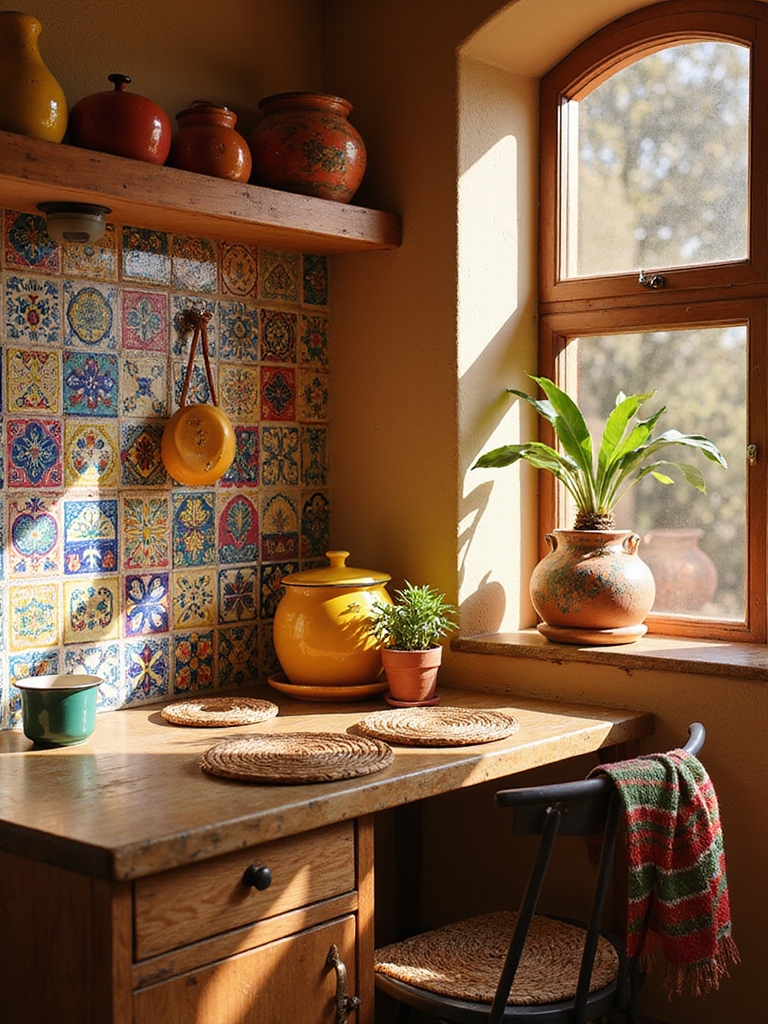
I love hunting for glazed antique patterns that wear their history in soft crazing and cheerful florals, and I often imagine them on a sunlit farmhouse shelf.
I also look for handcrafted regional styles—French faience, English slipware, and rustic Mexican cazuelas—that bring place and story into the kitchen.
Tell me which pattern or region speaks to you so we can find pieces that feel like home.
Glazed Antique Patterns
Patterned ceramics have a way of stopping me in my tracks — those glossy glazes and faded motifs feel like postcards from another kitchen.
I hunt for pieces with honest wear, soft colors, and cheerful motifs that still work today.
- Soft crazing
- Subtle color palette
- Folk motifs
- Functional charm
They mix utility with quiet history on my open shelves.
Handcrafted Regional Styles
Those glazed plates and faded motifs lead me straight to the makers who shaped them — regional potters whose hands and local clay give each piece its story.
I hunt markets for wabi-sabi surfaces, salt-glazed jugs, and slip-trailed bowls that whisper of place.
Each imperfect rim and earthy glaze anchors my kitchen to a quieter past, practical beauty passed down through generations.
Restoration & Preservation: Safe Methods and Supplies
While restoring a treasured piece, I always start by evaluating its condition so I can choose the safest methods and supplies, because gentle care keeps history intact.
I use mild cleaners, soft brushes, archival waxes, and patience.
Steps I follow:
- Inspect for damage.
- Clean gently.
- Stabilize finishes.
- Protect with archival wax, storing in dry, cool spots for lasting charm.
Blend Vintage Pieces With Modern Kitchens (No Clutter)
I like to tuck a single vintage piece into a modern kitchen so it becomes a quiet focal point rather than visual clutter.
I choose one meaningful item—a enamel pitcher, a worn cutting board—and let clean lines and neutral tones surround it.
I keep surfaces clear, limit patterns, and pair authentic patina with simple, functional modern pieces to honor both eras.
Styling Mini‑Collections: Breakfast Corner, Baking Nook, Bar Cart
I like to carve out small, purpose-driven spots—breakfast corner, baking nook, a compact bar cart—so each one feels intentional and easy to use.
I layer worn enamel, wicker, and hand-thrown ceramics for charm. Keep surfaces tidy, display a few beloved tools, and rotate seasonal accents.
- Vintage mugs
- Mixing bowls
- Glass decanters
- Linen napkins
Where to Buy Vintage Kitchen Pieces: Best Markets & Online Spots
When I’m hunting for the right vintage pieces, I start with a mix of markets and online finds so I can touch a few things and also cast a wider net.
I scout weekend flea markets, antique malls, and estate sales for character; then I check curated Etsy shops, Rejuvenation, and local Facebook Marketplace for bargains. I favor well-loved patina and honest provenance.
Well, I’ll be honest — I could go on about maker’s marks and patina until the cows come home, but you don’t need another lecture.
Choose pieces that speak to you, know when to splurge, and don’t confuse “vintage” with “yard-sale chaos.” Treat restorations like gentle CPR, mix old and new with breathing room, and build little nostalgic vignettes you actually use.
Buy smart, love what you keep, and let your kitchen tell its own weathered-story.