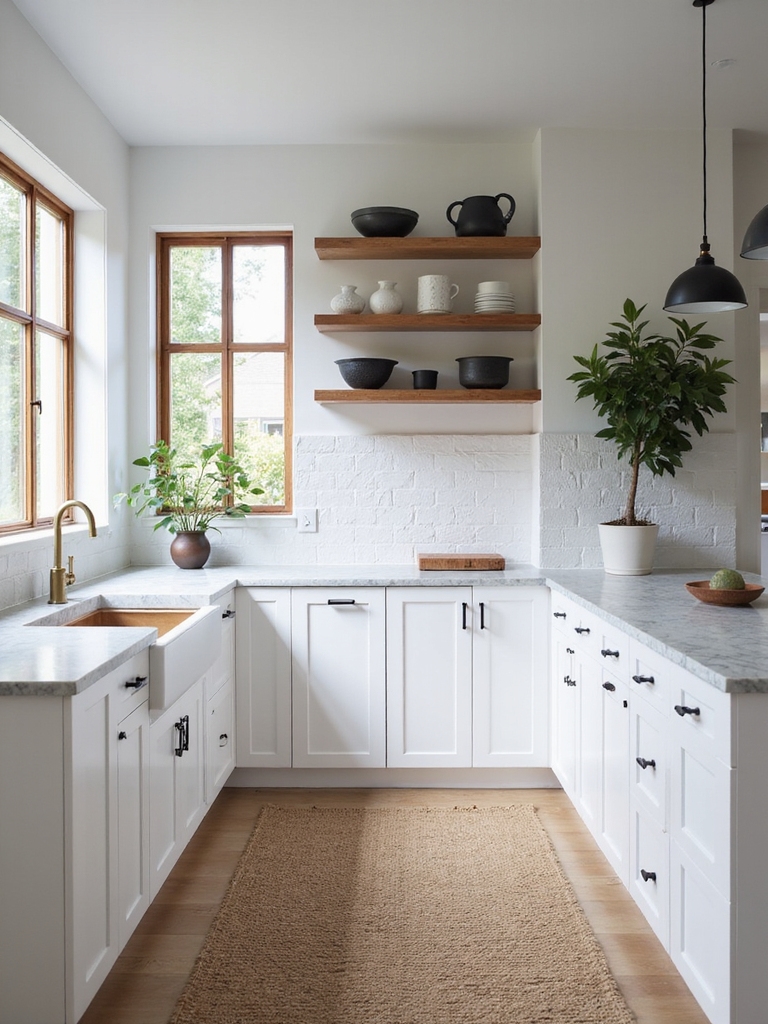
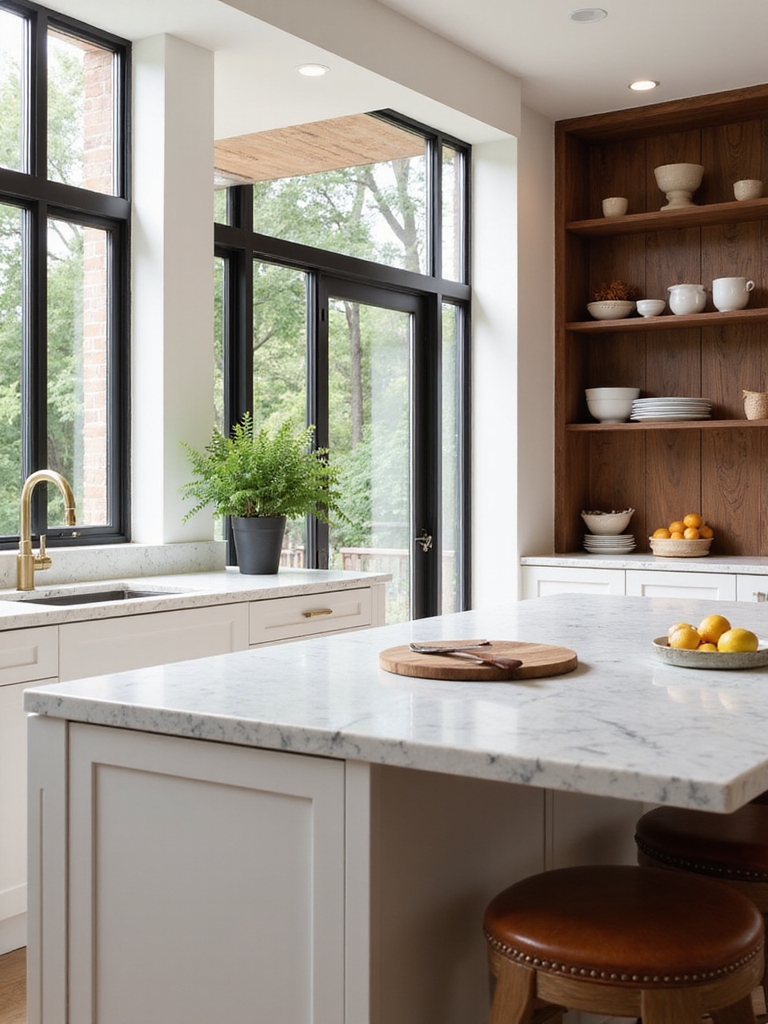
I’ll help you create a warm, modern‑classic kitchen that still feels fresh years from now. Start by mapping how you cook so work zones—prep, cook, clean—flow, then pick durable surfaces like quartz, granite or butcher‑block and neutral cabinet colors with Shaker or slab doors.
Layer lighting, tuck appliances behind panels, and add simple trim or open shelves for charm. Spend on cabinets, countertops, and plumbing; save on accents—keep going and I’ll show you specifics.
How to Build a Modern‑Classic Kitchen: 5 Core Principles

When I set out to design a modern‑classic kitchen, I focus on five core principles that balance timeless details with contemporary needs: proportion, material honesty, functional flow, restrained ornament, and layered lighting.
I choose durable materials, arrange work zones for easy movement, keep decorative elements purposeful, and layer light for task and mood.
The result feels warm, lived‑in, and quietly refined.
White kitchens remain a versatile choice and often include timeless white elements that stay fresh year after year.
Modern‑Classic Kitchen Color Palettes That Age Well

I often let the five guiding principles — proportion, material honesty, functional flow, restrained ornament, and layered lighting — steer my color choices so the scheme feels intentional and enduring.
I favor muted greens, warm greys, soft whites, and deep charcoal for contrast, pairing them with natural wood and aged brass accents.
Those tones age gracefully, feel cozy, and let textures sing without shouting.
A cohesive palette also depends on balancing hue, value, and saturation to maintain harmony across finishes and surfaces — consider proportion as you layer colors.
Choose Cabinet Styles That Look Great Decades Later

When I choose cabinets I stick with timeless door profiles—think Shaker or simple raised panels—that won’t feel dated in a few decades.
I also favor neutral finishes like warm whites, soft greys, or natural stains so the room can evolve without a full overhaul.
And I always prioritize solid joinery and durable materials, since well-built cabinets wear gracefully and outlast trends.
Professional Kitchen Cabinet Decor upgrades for Better Style
Timeless Door Profiles
A simple Shaker door will always catch my eye first, because it reads clean and honest without ever feeling trendy.
I love profiles that whisper warmth and age well. Consider these classics:
- Raised panel — sturdy, timeless, a touch traditional.
- Slab — modern in simplicity, pairs well with wood grain.
- Beadboard — cozy, cottage-friendly, quietly charming.
Many designers also look to modern cabinet styles for inspiration when blending classic details with contemporary function.
Neutral Finish Choices
Because neutral finishes stand the test of time, I tend to choose colors and materials that feel calm and collected rather than loud or trendy.
I favor soft whites, warm greys, and muted greens paired with natural wood accents. These tones age gracefully, allow decor to change, and create a cozy, lived-in kitchen that still feels intentional and quietly elegant for years.
Cabinet colors like soft whites, warm greys, and muted greens are among the cabinet colors that make any home feel more luxurious and help make a kitchen look more expensive.
Durable Construction Methods
Think long-term: I pick cabinet styles that are simple, well-built, and easy to repair so they still look lovely decades from now. I favor sturdy joinery and solid woods, then tweak finishes for warmth.
My practical checklist:
- Mortise-and-tenon or dovetail joints.
- Hardwood frames, replaceable panels.
- Refinishable surfaces and easy-to-find hardware.
That’s how I keep kitchens timeless. I also update finishes and handles with simple hardware swaps to instantly elevate the look without a full remodel.
Durable, Timeless Countertop Materials: Pros and Costs

I’ll walk you through the countertop choices that actually stand the test of time—stone, wood, and engineered surfaces—so you can pick what fits your cooking habits, budget, and the classic look you want.
I prefer granite for durability, marble for elegance (mind the maintenance), butcher block for warmth and easy repairs, and quartz for low upkeep.
I’ll note pros, costs, and care tips. Top Luxury Countertops combine performance and elegance to meet both practical needs and high-end style.
Backsplash Choices That Add Personality Without Dating Your Kitchen

A backsplash is one of the easiest places to inject personality without locking your kitchen into a fad, and I like to treat it as the outfit that complements a classic frame.
I choose enduring materials and subtle patterns that age gracefully:
- Hand-glazed subway tile for warmth and texture.
- Matte stone slabs for quiet elegance.
- Neutral encaustic-look tiles for pattern without trendiness.
Consider premium backsplash alternatives that go beyond basic subway tile, including options that offer texture and depth like hand-glazed finishes and matte slabs with elevated backsplash ideas.
Plan a Functional Layout for How You Really Cook
The backsplash sets the mood, but how you arrange the workstations determines whether your kitchen hums or fights you.
I map my routines first — prep, cook, clean — then place surfaces and appliances to match those rhythms. Keep clear paths, cluster tools where you use them, and leave a cozy landing for hot pans. Practical, lived-in flow beats clever looks every time.
Smart Hidden Storage Ideas That Improve Daily Flow
Let’s tuck things out of sight so your kitchen can breathe and you can move without hunting for spoons. I love clever, rustic-hidden solutions that keep counters calm and mornings easy.
- Pull-out pantry shelves for jars and spices.
- Toe-kick drawers for trays and rarely used tools.
- Concealed appliance garage for the toaster and mixer.
They make daily flow effortless.
Select Hardware and Fixtures That Complement the Look
Once you’ve hidden clutter away, I like to focus on the small finishing touches—hardware and fixtures that feel like they’ve always belonged in the room.
I pick aged brass, oil-rubbed bronze, or matte black for warmth and contrast. Simple cup pulls, bridge faucets, and farmhouse-ready knobs add charm without shouting. They anchor style, feel tactile, and age gracefully with use.
Layer Lighting: Task, Accent, and Mood Solutions
I like to think about kitchen lighting in three layers: bright task lights over counters for cooking, focused accents to show off a farmhouse shelf or tile, and softer mood controls for evening warmth.
I’ll walk you through where to place each accent and how to aim task fixtures so everything works together. With dimmers and adjustable fittings, you can shift the room from lively prep space to cozy gathering spot in a flip.
Layered Task Lighting
I often start by thinking about how we’ll use the kitchen at different times of day—preparing breakfast, simmering a pot at noon, or unwinding with a glass of wine—because layered task lighting should serve each moment.
I focus on practical, cozy solutions:
- Under-cabinet strips for chopping clarity.
- Pendant clusters over islands for focused work.
- Adjustable recessed lights to fine-tune shadowing.
Accent Light Placement
Although task lighting keeps us working, accent lights are what make the kitchen feel lived-in and layered, so I place them to highlight texture and moments: a slim picture light above vintage prints, puck lights inside glass-front cabinets to show pottery, and a warm toe-kick LED that glows along baseboards at night.
I also tuck small uplights by shelves and under arched nooks to craft cozy focal points.
Adjustable Mood Controls
Moving from those cozy accent spots, I like to add adjustable mood controls so the whole kitchen can shift with the hour.
I choose simple dimmers and presets to match cooking, dining, or lingering evenings.
- Soft warm dim for dinners.
- Bright task for prep.
- Layered accents for depth.
It feels homey, practical, and timeless.
Flooring Options: Mixing Natural and Engineered for Longevity
When I plan a kitchen that will last, I pair the warmth of natural wood with the durability of engineered materials so you get beauty that stands up to everyday life.
I choose wide-plank oak or reclaimed boards near prep zones and waterproof engineered planks where spills happen. A muted grout, subtle texture, and thoughtful shifts keep the floor timeless and forgiving.
Hide Built‑Ins So Your Kitchen Still Feels Classic
I like to hide modern conveniences behind timeless cabinet facades so the room reads as classic at first glance.
Integrated appliance panels and cleverly concealed storage keep the sightlines calm while giving you all the function you need.
Let me show you how small details—matching doors, pop‑open drawers, and slide‑away pantry solutions—make a big difference.
Seamless Cabinet Facades
A few subtle details can make built‑ins disappear into the background so your kitchen keeps that timeless, lived‑in feel I love;
I’ll show you how to hide appliances and storage behind seamless cabinet facades without losing functionality. I favor simple panels, warm wood tones, and classic hardware—here’s how:
- Continuous grain alignment
- Concealed handles or shadow gaps
- Matching finish on drawers and doors
Integrated Appliance Panels
Think of integrated appliance panels as the quiet cousins of your cabinetry—they let fridges, dishwashers, and ovens blend into the room so the kitchen reads as calm and lived‑in.
I love how matching panels preserve sightlines, hide modern hardware, and keep surfaces soft and timeless.
Choose warm wood tones or painted finishes, subtle handles, and clever paneling details to keep things classic without feeling dated.
Hidden Storage Solutions
You’ll find that hiding built‑ins keeps the room feeling uncluttered and timeless, so I often tuck pantry shelves, spice racks, and broom closets behind doors that read like regular cabinetry.
I like finishes that age well and simple pulls.
Try these small ideas:
- Pull‑out spice drawer
- Flip‑down appliance garage
- Narrow broom cupboard
They keep charm without clutter.
Add Timeless Architectural Details: Trim, Open Shelves, and Panels
Because trim, open shelves, and paneled cabinets work together to give a kitchen real character, I start there when I want a space to feel rooted and welcoming.
I add simple crown molding, staggered open shelves for pottery and cookbooks, and shaker-style panels for warmth.
These details age gracefully, invite texture, and make everyday routines feel intentional and charming.
Durable Paints and Finishes That Stand Up to Wear
I usually start with the finish before picking hardware, since the right paint or topcoat dictates how a kitchen will hold up day to day.
I favor durable, washable choices that age gracefully. Consider these essentials:
- High-quality acrylic enamel for cabinets.
- Satin or eggshell wall paint for scrubbability.
- Hardwax oil or polyurethane for wood countertops and open shelves — simple, protective, and warm.
Budget Guide: Where to Spend More and Where to Save
When I’m planning a kitchen, I decide early which elements deserve a bigger slice of the budget and which can be thrifty without losing charm.
I spend on lasting cabinetry, good countertops, and reliable plumbing fixtures.
I save on lighting accents, simple hardware, and open shelving.
Prioritize quality where daily wear matters; use modest touches to add personality without overspending.
Small Updates With Big Impact (No Full Remodel Required)
You can freshen up a kitchen without tearing down a wall or draining your savings; I focus on a few targeted changes that make the space feel cared-for and timeless.
I’ve found small shifts go a long way:
- Swap hardware for warm brass or matte black.
- Add open shelving with pottery and linen.
- Repaint cabinets in a soft, durable cream.
I’ve loved mixing crisp modern lines with warm, familiar details — sleek cabinets beside worn timber, cool stone against cozy lighting — because that contrast keeps a kitchen feeling both fresh and lived‑in.
You don’t need a full overhaul to get lasting style: invest where it matters, save where it won’t show, and add small, tactile touches that invite use. Do that, and your kitchen will welcome you — now and years from now.