
I design kitchens that honor Indian cooking rituals while making daily life easier; I balance heavy‑duty ventilation, dedicated zones for grinders and pressure cookers, and pull‑out spice storage with warm, handcrafted finishes like brass pulls and reclaimed wood.
I plan layouts—galley, L‑shape or island—for efficient workflow, tuck a compact puja nook into circulation, and choose durable, easy‑clean surfaces. Stick with me and you’ll find practical layouts, budget tips, and maintenance routines to keep the soul intact.
How to Plan a Modern Indian Kitchen : 5-Step Checklist

Let’s dig in: planning a modern Indian kitchen means balancing tradition with smart, practical design, and I’ll walk you through a simple 5-step checklist to make it work.
I’ll ask you to map cooking habits, prioritize ventilation and durable surfaces, plan storage for spices and vessels, allocate appliance zones, and pick finishes that age gracefully while keeping warmth and ease of use at the center.
Authentic Indian kitchen designs blend tradition with utility to create spaces that are both culturally resonant and highly functional.
Choosing a Layout: Galley, L‑Shape, Island – What Fits Indian Cooking

I’ll walk you through the three kitchen layouts that make the most sense for Indian cooking—galley, L‑shape, and island—so you can match your routine to a plan that actually works.
I prefer galley for compact efficiency, L‑shape for flexible prep and family flow, and an island when you want extra workspace and social cooking.
Think workflow, ventilation, and spice storage.
Smart L-shape designs can optimize corner storage and traffic flow with clever storage solutions that suit modern lifestyles.
Add a Compact Puja Nook Without Breaking Workflow

While cooking, I still want a calm corner for daily prayers, so I carve out a compact puja nook that never interrupts the workflow.
I tuck a small shelf near the pantry door, keep clay lamps and a brass idol, and use a sliding wooden panel for privacy.
It’s practical, fragrant with incense, and feels like home without stealing countertop or movement space.
I enhance the space with curated luxury accents like statement brassware and artisanal pieces to elevate the look for luxe interiors.
Smart Storage for Masalas, Tiffins, and Cookware

I love keeping masalas in clear, labelled jars on a shallow pull-out so I can grab the one I need without fumbling.
I also set up a dedicated tiffin and cookware zone near the stove with stackable racks and handles-out hooks so everything stows neatly and comes out easily.
Let’s look at simple hacks to make those zones efficient and pleasant to use.
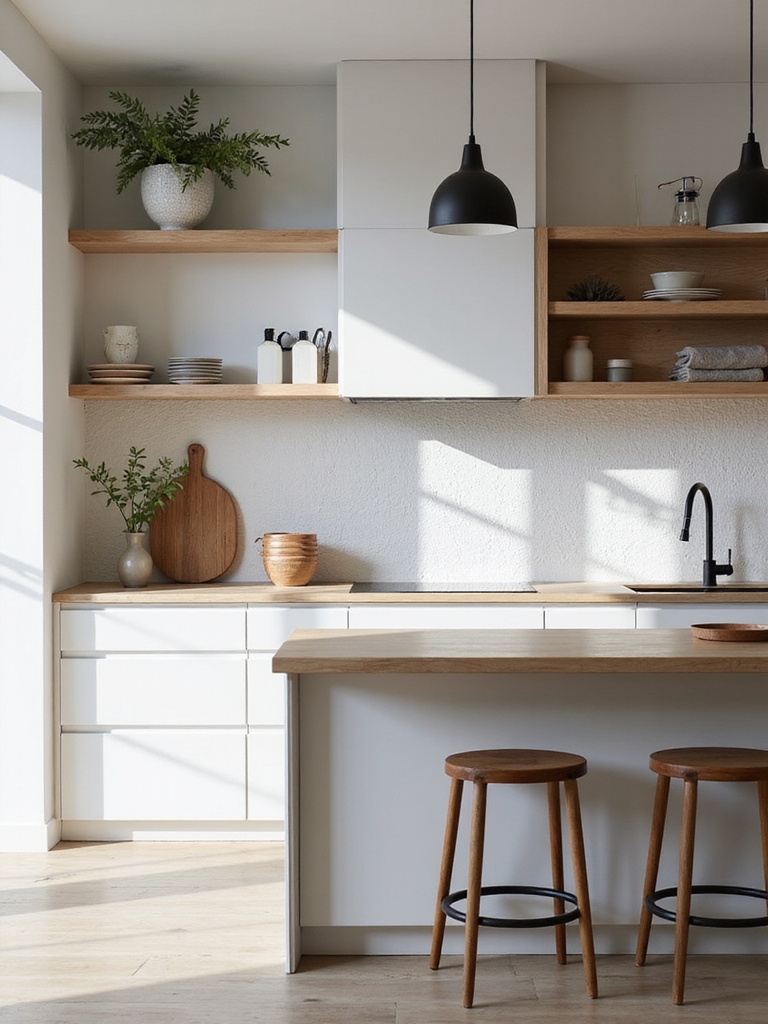
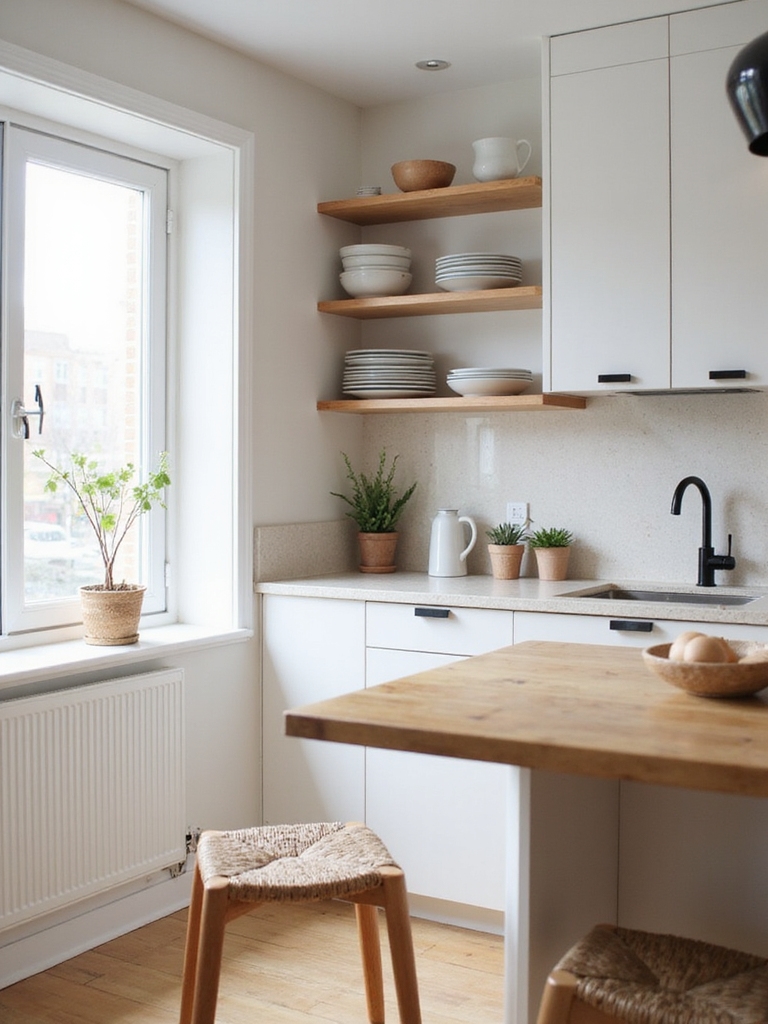
Open shelf setups often use minimalist displays to look effortlessly chic, with open shelving creating a light, accessible feel.
Masala Organization Hacks
Let’s plunge into masala organization — I keep my spices, tiffins, and cookware within easy reach so cooking feels effortless, not chaotic. I use clear jars, labeled tins, and a simple magnetic rack to honor aroma and rhythm.
- Clear jars for daily staples
- Labeled tins for blends
- Magnetic rack for quick reach
This keeps my kitchen calm and cozy. I also rely on proven storage hacks to maintain a constantly tidy space.
Tiffin & Cookware Zones
After organizing spices into jars and tins, I set up clear zones for tiffins and cookware so everything has its own rhythm on the shelf.
I group stacked steel tiffins by size, label lids, and keep daily boxes within easy reach. Heavier pots live lower, nesting pans save space, and a woven basket holds lids and cloth wraps for a tidy, lived-in kitchen.
I also applied professional organization systems to create efficient, accessible storage throughout the kitchen.
Appliances for Traditional and Everyday Indian Cooking

I’ll walk you through the appliances that make everyday Indian cooking feel effortless, from heavy-bottomed gas stoves and pressure cookers to tawa-friendly burners.
We’ll look at efficient spice grinders and wet grinders that preserve aroma and texture, and how multi-function machines like instant pots or food processors can replace several single-use tools.
Together we’ll decide which combos suit a rustic home kitchen without losing traditional flavors.
Traditional homes can be refreshed with subtle modern upgrades like optimized storage, lighting, and space-saving layouts to blend culture with contemporary convenience.
Essential Indian Cookware Appliances
I keep a few trusty appliances within arm’s reach because they turn everyday Indian cooking from chore to comfort: a sturdy pressure cooker for dals and stews, a heavy-bottomed gas or induction-friendly kadai for bhunjis and deep-frying, and a good mixer-grinder for wet pastes and masalas.
- Tawa for rotis and crepes
- Idli steamer for breakfasts
- Small oven for bhunas and bakes
Regional decor cues like brass utensils, patterned tiles, and hand-painted ceramics can create a global-inspired look that complements these appliances.
Efficient Spice Grinding Tools
Reach for the grinder that suits the job and you’ll feel the difference in every curry and chutney I make; whether it’s a compact electric spice grinder for quick dry masalas, a wet grinder for smooth coconut and lentil pastes, or the trusty stone grinder for that old-fashioned aroma, each tool shapes flavor and workflow in my kitchen.
I favor simple, durable machines that respect tradition and save time.
Multi-Function Cooking Machines
Think of a single machine that can grind, knead, steam, and simmer, and you start to see why multi-function cooking appliances have become staples in my kitchen; they let me move from dosa batter to dal tadka with fewer pots and less fuss.
I rely on one unit to simplify rhythms:
- Faster prep
- Space saved
- Consistent results
They feel like family.
Ventilation and Chimney Choices for Heavy Indian Frying
Often I cook long, smoky sessions of bhajis and tandoori-style dishes, so ventilation is something I take very seriously.
I choose a powerful chimney with high suction, washable baffles, and quiet motors. I pair it with cross-vent windows or an exhaust fan, keep ducting short and insulated, and service filters regularly—small habits that keep aromas pleasant and walls unstained.
Mix Vernacular Materials: Wood, Brass, Stone, Jali
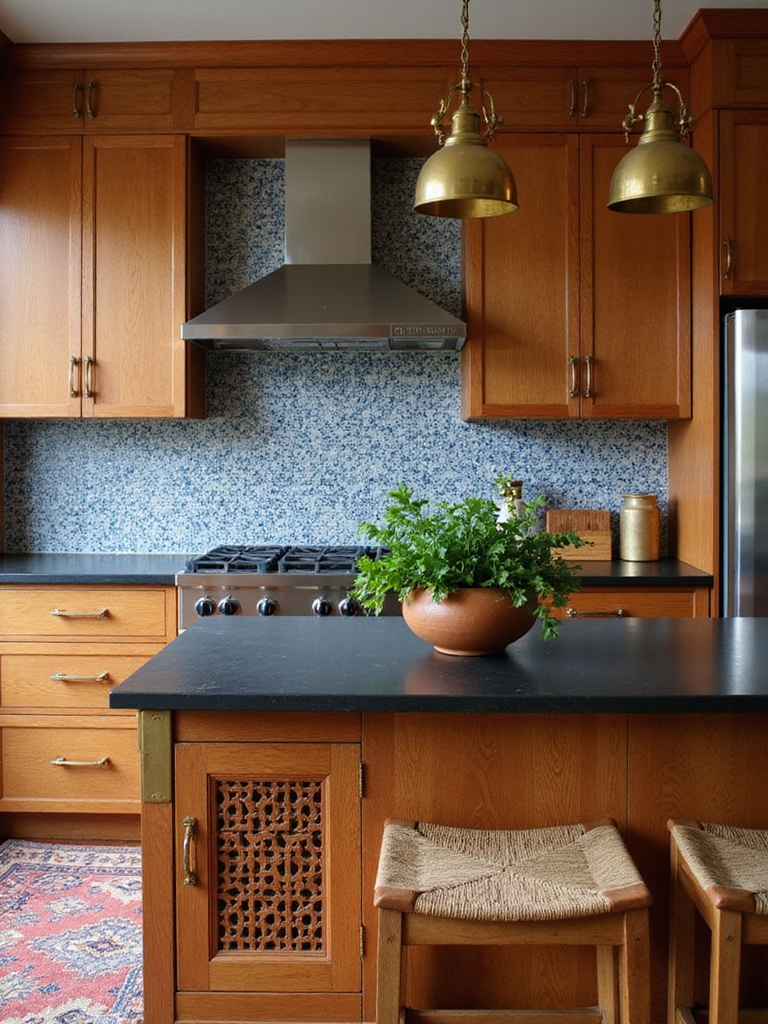
I lean into materials that tell stories—warm timber, burnished brass, hand-hewn stone and patterned jali—to give a kitchen soul as well as function.
I mix textures for practicality and charm, celebrating craft and patina.
- Reclaimed wood for cabinets
- Brass accents for handles and vessels
- Stone counters with jali screens for light and airflow
Color Palettes That Balance Vibrancy and Minimalism
How do you keep a kitchen lively without it feeling cluttered? I pair muted terracotta or indigo walls with crisp off-white counters, then let small bursts of marigold or teal appear in textiles and pottery.
That restrained contrast keeps the room warm and grounded, celebrating colour without overwhelming surfaces, so the space feels calm, purposeful, and quietly joyful.
Cabinets and Hardware With an Artisanal Nod
Embrace handcrafted cabinets that feel lived-in and honest; I choose warm, grain-forward woods or painted frames with subtle distressing to give the kitchen soul without shouting for attention.
I pick simple joinery and tactile finishes, pairing them with hand-forged pulls to honor craft. Consider these touches:
- Brass cup pulls
- Leather strap handles
- Exposed dovetail drawers
Flooring and Backsplash Ideas That Survive Spice Splatter
Although spice splatters are part of daily life in an Indian kitchen, I still want surfaces that stand up to heat, stains, and frequent washing without losing their soul; so I choose flooring and backsplashes that’re both durable and quietly textured.
I favor terracotta or matte porcelain floors and glazed subway or hand‑crafted encaustic tiles—easy to clean, forgiving of dings, and full of earthy character.
Lighting for Cooking, Display, and Ritual Moments
With floors and backsplashes that take the knocks of everyday cooking, I turn my attention upward to light—how it guides chopping, flatters my display of brassware, and holds space for a small puja.
I choose layered fixtures to suit tasks and mood:
- Bright task lights over prep.
- Warm accent lighting for shelves.
- Soft, focused light for the puja nook.
Budget Ways to Add Handcrafted Details
I like to weave small handmade touches into the kitchen that don’t blow the budget but give the room personality—hand-painted ceramic knobs, a string of macramé spice pouches, or a simple reclaimed-wood shelf nailed in place.
I also upcycle brass utensils into hanging hooks, stitch a runner with block-printed fabric, and display a clay diya on a corner tray for quiet, crafted charm that feels warm and lived-in.
Hiring a Contractor or Designer: Key Questions to Ask
After you’ve layered those handmade touches and feel the kitchen taking shape, it’s time to bring in someone who can make the bigger pieces fit—plumbing, cabinets, and lighting that honor the handcrafted vibe.
I ask clear, practical questions to protect the look and budget:
- Timeline and milestones?
- Past projects like mine?
- Warranty and change-order policy?
Maintenance: Brass, Wood, Stone, and Chimney Care
I keep a simple brass polishing routine so handles and fixtures stay warm and glowing without much fuss.
I’ll share a few wood sealing tips to protect cabinets and butcher blocks from stains and steam.
And I’ll explain how regular chimney filter cleaning keeps smoke and smells out of the heart of your kitchen.
Brass Polishing Routine
I usually start my brass polishing routine with a quick visual check, looking for tarnish spots, fingerprints, or dull patches that give away heavy use.
I then:
- Gently wash with mild soap and dry.
- Use a soft cloth with a bit of brass polish, rubbing with the grain.
- Buff to a warm sheen, avoid harsh abrasives.
I enjoy the ritual; it feels grounding.
Wood Sealing Tips
In the kitchen, when I’m sealing wood—whether a butcher block, open shelving, or a cherished farmhouse table—I treat it like tucking the surface in for winter: clean, dry, and protected.
I sand lightly, remove dust, and apply food-safe oil or thin polyurethane in thin coats, letting each cure.
I wipe spills quickly and reapply annually or when water beads no longer.
Chimney Filter Cleaning
After caring for wood surfaces, I turn my attention to the chimney and its filters—those hardworking parts that keep cooking fumes from overstaying their welcome.
I clean regularly, using warm soapy water and a soft brush, then dry thoroughly.
This keeps smells away and performance strong.
- Remove filters gently.
- Soak, scrub, rinse.
- Reinstall when dry.
Quick Renovation Timeline and Budget Checklist
Let’s map out a quick, realistic renovation timeline and a tight budget checklist so you won’t get blindsided by delays or surprise costs.
I suggest 4 weeks for demo and structural tweaks, 3 for cabinets and surfaces, 1 for appliances and finishes.
Budget: materials 60%, labor 25%, contingency 15%.
I’ll track invoices, approvals, and delivery dates so we stay on schedule and on budget.
I can already picture your kitchen: warm light pooling on wooden countertops, a small puja nook glowing like a quiet ember, jars of masala lined up like colorful soldiers.
Follow the checklist, pick a layout that feels like home, and tuck smart storage into every corner. With handcrafted touches and sensible appliances, you’ll cook, celebrate, and clean with ease.
Trust the process — your modern Indian kitchen will unfold, cozy and confident.