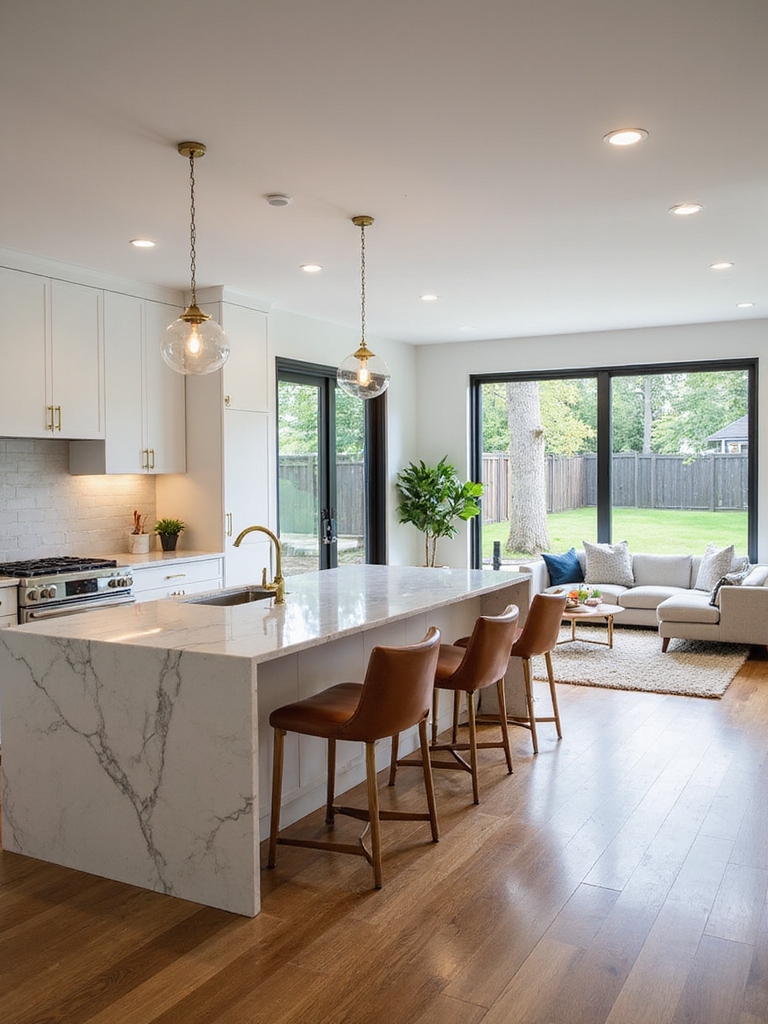


I love open cupboards because they make a kitchen feel lived-in and deliberately styled—warm wood shelves, stacked plates, a few jars and pottery create a curated rhythm. Keep everyday pretty, hide the clutter, and group like with repetition and breathing space.
Use mixed textures, warm lighting, and one closed cabinet for less attractive bits. Expect a bit more dusting and tidy habits, but the payoff is a cozy, effortless focal point you’ll want to explore further.
Is Open Cupboard Storage Right for You?

Curious if open cupboard storage will work for your kitchen? I love the effortless charm it brings — dishes become display, everyday things feel alive.
But be honest: I know you’ll need neat habits, regular dusting, and cohesive ware. If you crave warmth, easy access, and personality, it fits.
If clutter stresses you, keep some closed storage instead. Open shelf setups often look effortlessly chic when styled with cohesive collections and thoughtful spacing.
Define Your Open-Storage Goals and Trade-Offs
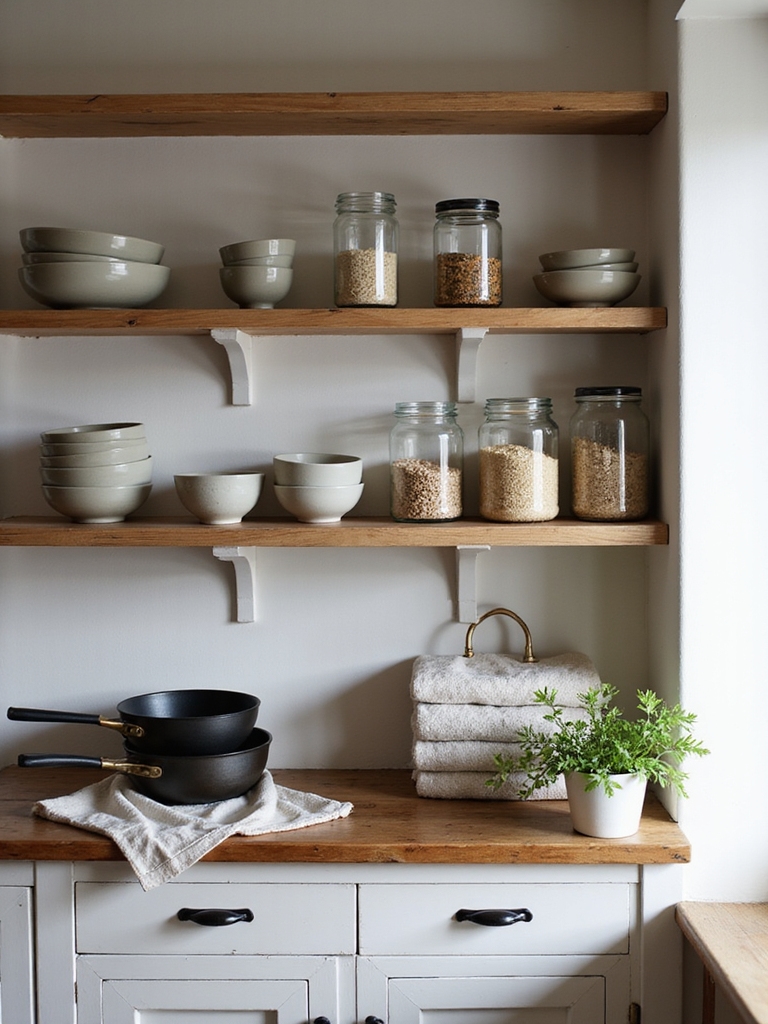
Before you rip out cabinet doors, sit down and decide what you want open storage to do for you — I’ll tell you mine: show off favorite pieces, speed up morning routines, and make the kitchen feel lived-in.
For me, that meant balancing display with practicality: fewer fussy items, easy-to-grab plates, and accepting extra tidying.
You’ll trade pristine minimalism for warmth and everyday charm.
Open cabinets can also create a stunning focal point that transforms the whole room.
Choose a Color and Material Palette for Open Cupboards
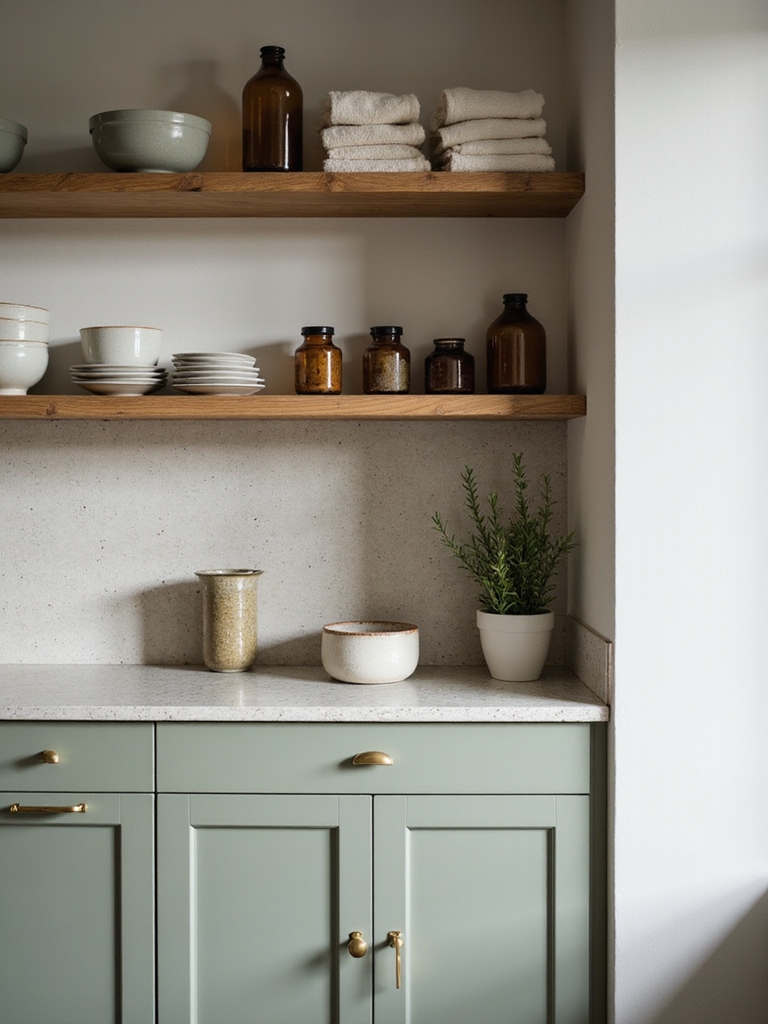
When I pick a color and material palette for open cupboards, I think about how pieces will age, how they’ll read from across the room, and how they’ll work with the rest of the house; warm woods, matte paint, and a few metal accents usually get me where I want to go.
I lean into tactile finishes that hide wear and feel timeless.
- Walnut tones with soft white paint
- Matte black hardware for contrast
- Earthenware and woven baskets for texture
- Brass accents to warm the mix
Open cabinet kitchens remain popular because they create an intentionally curated look that highlights timeless materials and thoughtful styling.
Balance Open Shelves, Glass-Fronts, and Alcoves by Zone
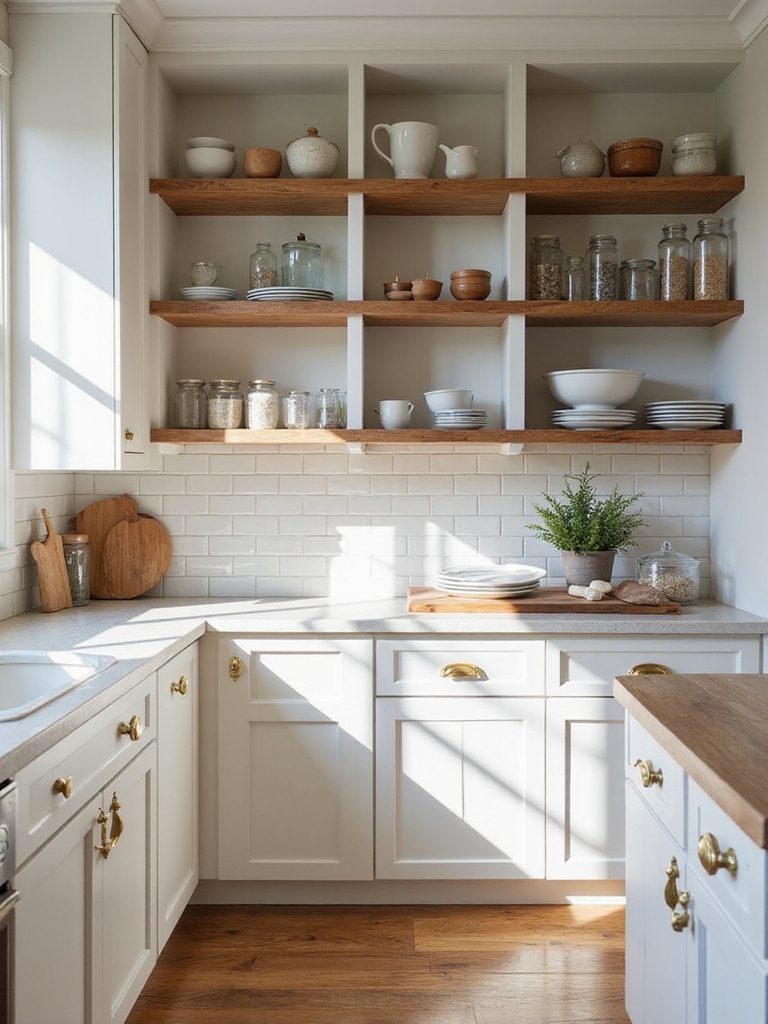
When I plan open cupboards, I think in zones so everyday dishes live on open shelves and fragile or pretty pieces tuck behind glass-fronts.
I’ll reserve alcoves for cookbooks, oils, or decorative items that can take a bit of visual weight without cluttering work areas.
Mixing wood, metal, and glass by function keeps each zone practical and grounded while still feeling warm and intentional.
Open kitchen shelves are a great way to create an effortless look that inspires the rest of the space.
Zone-Based Display Planning
Balancing open shelves, glass-front cabinets, and alcoves by zone makes a kitchen feel both purposeful and lived-in, and I’ll show you how to do it without creating cluttered sightlines.
I plan displays by use: prep, cook, serve, and storage, keeping frequently used items accessible and pretty pieces protected.
- Prep: utensils, bowls
- Cook: oils, pans
- Serve: dishes, pitchers
- Storage: labeled jars
Open shelving and glass-front displays can be styled in ways that look chic rather than cluttered, using intentional curation to keep surfaces orderly and visually appealing.
Mix Materials By Function
You’ve seen how zoning keeps things tidy; now I’ll show you how to match materials to those zones so the kitchen reads right and works harder.
I mix open wood shelves for everyday dishes, glass-front cabinets for pretty glassware, and recessed alcoves for spices and oils.
Each material handles use and display differently, so I place them where function and beauty meet effortlessly.
Open shelving can range from budget-friendly to total luxe depending on materials and styling.
Decide What to Display and What to Hide
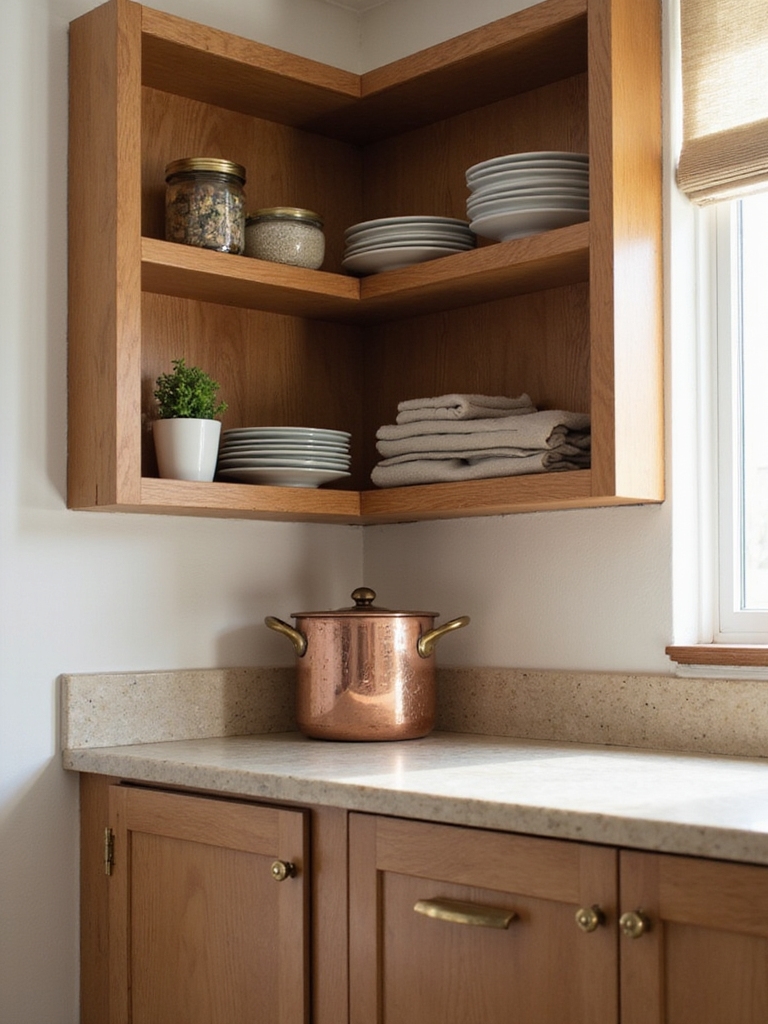
I’ll start by asking you to pick a mood for your open cupboards—cozy and lived-in, crisp and curated, or somewhere in between—because that decision tells me what should be on show and what ought to be tucked away.
I lean practical: display everyday, pretty pieces; hide clutter and mismatched storage; rotate seasonal items.
Consider:
- Handled mugs and wooden bowls
- Glassware you use
- Decorative jars with staples
- Bulky appliances stored closed
Open shelving kitchen ideas often spark conversation and can showcase your style when you mix function and form thoughtfully.
Styling Rules for a Tidy, Curated Look (Spacing, Repetition, Layers)
When I style open cupboards, I focus on three simple rules—spacing, repetition, and layers—that keep things feeling tidy without looking staged.
I leave breathing room between groups, repeat materials or colors for rhythm, and layer textures—wood, stone, linen—so shelves feel lived-in.
I group items by purpose and scale, edit ruthlessly, and step back often to keep the look calm and deliberate.
Open shelves are a beautiful way to showcase your dishware and make the kitchen feel intentionally curated.
Arrange Dishware, Glassware, and Cookware for Visual Balance
I like to group plates and mugs by color so the eye rests on a calm palette. Then I mix tall glasses, short tumblers, and stacks of bowls to create pleasing height and texture contrasts.
It’s surprising how a few thoughtful pairings make the whole open cupboard feel balanced and lived-in.
Group By Color
A handful of thoughtfully grouped colors can turn an open cupboard from cluttered to calm, and I like to start by laying out everything on the counter so I can see how hues play together.
I gently cluster plates, mugs, bowls, and jars by color to make shelves feel intentional and soothing.
- Soft whites and creams
- Warm terracotta and rust
- Muted greens and sage
- Deep navy and charcoal
Vary Heights And Textures
Now that you’ve grouped pieces by color, it’s time to play with heights and textures so each shelf feels layered and alive.
I mix tall glass carafes with squat earthen bowls, stack plates in uneven piles, and tuck woven baskets beside shiny copper pans.
The contrast keeps the eye moving and makes functional items feel intentionally placed, cozy, and practical.
Add Texture and Accents So Shelves Don’t Look Sterile
Texture brings life to open shelves, and I’ve found a few simple ways to keep them from feeling sterile.
I mix worn ceramics, wooden bowls, woven baskets and a scattering of vintage cookbooks to make a cozy, lived-in display that still feels intentional.
- Earthenware mugs and plates
- Natural fiber baskets
- Weathered wood trays
- Stacked, loved cookbooks
Lighting for Open Cupboards and Display Alcoves
I like to think of lighting in open cupboards as layers that set mood and make things useful—soft ambient glow for the whole room, focused under-cabinet lights where you prep, and small accent lights to show off special pieces.
I’ll show you how to mix those layers so your shelves feel warm and practical, not like a display case.
Let’s talk bulbs, placement, and simple fixtures that keep the rustic charm.
Layered Ambient Lighting
When I layer ambient lighting in and around open cupboards and display alcoves, I aim to make each shelf feel like a small, welcoming room rather than just a storage spot.
I choose warm, dimmable fixtures to highlight textures and ceramics, keeping the glow gentle and lived-in.
- soft LED strips
- recessed puck lights
- warm-tone bulbs
- hidden dimmers
Task-Focused Under-Cabinet
Although focused lighting can be utilitarian, I like to use task-focused under-cabinet fixtures to make open cupboards and display alcoves work beautifully as well as look cozy.
I favor warm LED strips or small puck lights tucked under shelves to brighten prep zones and reveal textures.
They’re practical for chopping, reaching, and cleaning while giving wooden shelves a lived-in, welcoming glow without fuss.
Accent And Display Lighting
How can a few well-placed lights turn a simple shelf into a vignette you’ll want to show off? I love soft LED strips or tiny puck lights to highlight ceramics, glass, and wood tones. Warm light adds depth without glare.
I keep wiring discreet and aim for layered glow to invite touch and linger.
- warm LED strips for shelves
- brass puck lights
- dimmable accents
- concealed wiring
Durable Hardware and Finishes for Everyday Use
I pick hardware that can take daily life — solid brass knobs, stainless pulls, and heavy-duty hinges that won’t wobble after a year of reaching and rinsing.
I choose finishes that age gracefully, like oil-rubbed bronze or patinated brass, so fingerprints and wear add character.
Practical locks and soft-close mechanisms keep things quiet; sturdy mounting and easy-clean surfaces keep my open shelves working beautifully.
Design Open Cupboards for Small Kitchens Without Clutter
With a few clever choices, I make open cupboards work beautifully in a small kitchen without letting clutter take over:
I limit what’s on display to the essentials, use baskets and matching jars to keep things tidy, and stagger open shelving with a closed cabinet or two to hide less attractive items.
- Slim open shelves for everyday dishes
- Woven baskets for obscure bits
- Labeled glass jars for staples
- One closed cabinet for appliances
Adapt Open Storage for Family Homes and Heavy Use
Small kitchens taught me to be picky about what sits on open shelves, but family life asks for a different kind of practicality.
I choose sturdy baskets, enamelware, and labeled jars so kids can grab snacks without chaos.
Heavy-duty hooks, lower accessible shelves, and wipeable surfaces keep things tidy. It’s about durable charm—open, lived-in, and ready for daily use.
Budget-Friendly Ways to Get a Curated Open-Cupboard Look
I like to start by editing my essentials—only keeping what I use daily so the shelves breathe.
Then I mix in thrifted finds for character, pairing them with a few uniform containers to keep things tidy and cohesive.
That simple trio—edit, mix, match—gives an affordable, curated open-cupboard look.
Edit Your Essentials
Because clutter makes even the prettiest open cupboard feel chaotic, I start by editing down to the things I actually use and love; that simple discipline instantly creates a curated, budget-friendly look.
I keep surfaces simple, rotate seasonal pieces, and let function lead. Try these small edits:
- Keep daily dishes within easy reach
- Store duplicates out of sight
- Group like items for calm
- Display a single treasured pot
Mix Thrifted Finds
Dig through flea markets and yard sales and you’ll find the pieces that give an open cupboard real soul. I hunt for mismatched plates, worn wooden bowls, and scuffed glass jars, then mix them with my everyday mugs.
It’s economical and personal—each item tells a story, softening the shelf while keeping the look cozy, layered, and effortlessly collected.
Uniform Containers Only
Start by lining up matching jars and canisters, and you’ll see how quickly a shelf goes from cluttered to calm.
I stick to one label style and neutral glass or ceramic, and the kitchen feels intentional without spending much.
Simple swaps transform chaos into quiet order.
- clear glass jars
- white ceramic canisters
- kraft paper labels
- uniform lids and scoops
When to Hire a Pro: Structural, Cabinetry, and Lighting Work
If you’re like me and enjoy rolling up your sleeves, there are still moments in an open-cupboard kitchen where calling in a pro makes sense: when load-bearing walls are at stake, custom cabinetry requires precise joinery and finishes, or hardwired lighting and electrical reroutes are involved.
I hire experts for structural changes, bespoke cabinet builds, and complex wiring—then I handle styling and simple updates myself, cozy and confident.
Maintenance Routines and Quick Fixes to Keep Shelves Intentional
Keeping shelves intentional means treating them like small stages—every few weeks I scan what’s on display, tuck away things that have drifted in, and pull forward the pieces that make the space feel purposeful.
I wipe dust, swap seasonal items, and fix little chips to keep the look lived-in but tidy.
- Wipe and declutter weekly
- Rotate a focal object monthly
- Repair chips quickly
- Rebalance colors and heights
I’ve loved showing you how open cupboards can feel curated, not chaotic — but they’re only right if you’re willing to edit and tidy.
Picture my neighbor Claire: she swapped a run of upper cabinets for open shelves, kept everyday plates in a warm white stack, and hid clutter in baskets below — now her kitchen feels lived-in and peaceful.
Try one shelf first; you might fall for the cozy, rustic vibe.