
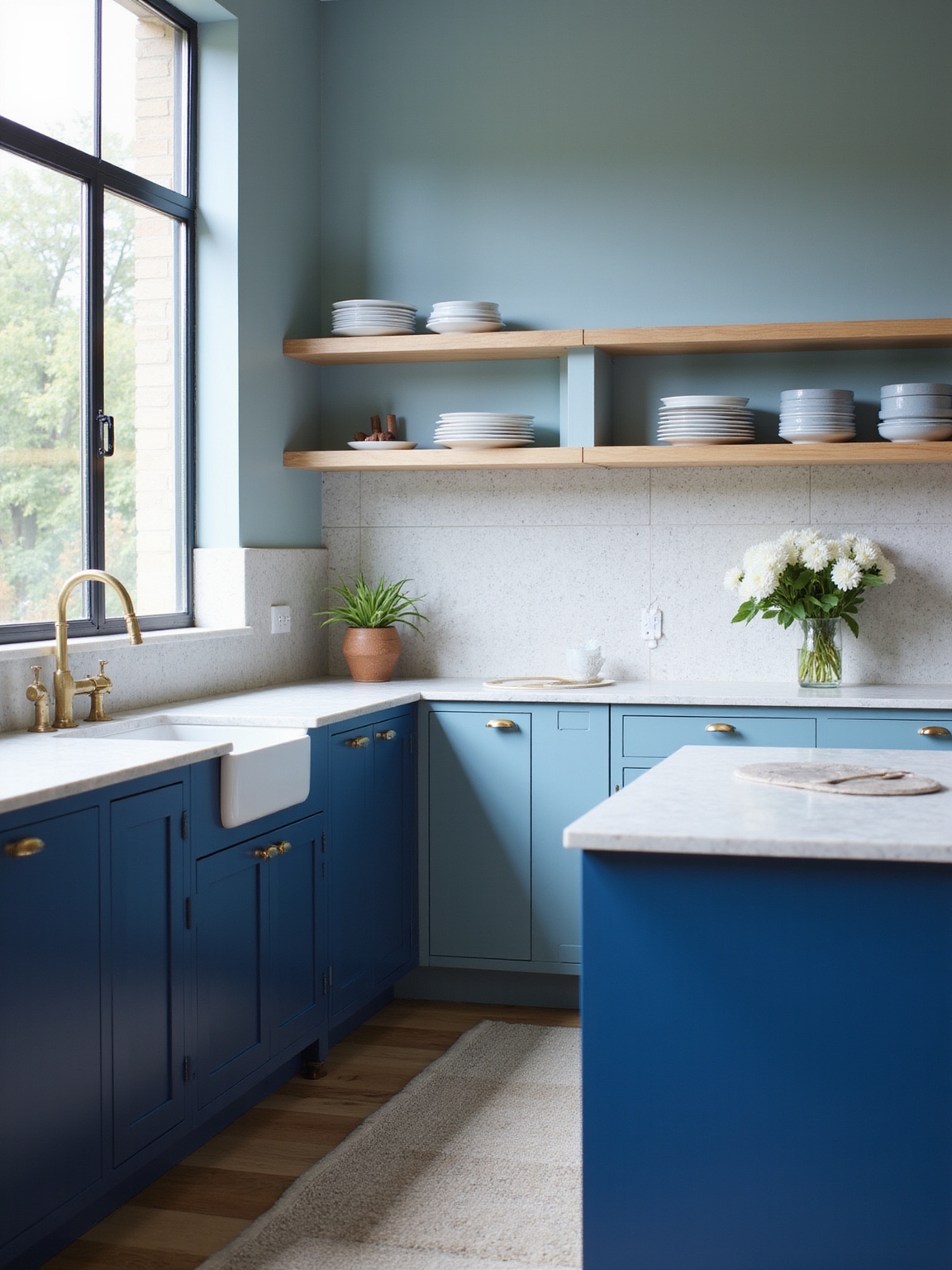
I’ll help you pick the perfect blue, from cozy navy to airy sky, by testing samples in your light and next to wood and brass. Navy anchors a room and feels lived‑in with warm oak and aged brass; mid‑blues and teals read fresh with open shelving and matte brass hardware; pale skys widen small, dim spaces paired with whitewashed cabinets and linen.
Try paint on multiple walls at different times of day — there’s more guidance ahead.
How to Pick the Right Blue for Your Kitchen

When I’m choosing a blue for a kitchen, I start by looking at the light — does it flood the room or sit soft and warm?
I test swatches on different walls, watch them at morning and evening, and pair samples with wood tones and brass.
I trust mood, scale, and practicality: darker blues hide wear; paler blues open space yet still feel grounded.
I also consider how to craft a cohesive palette by balancing dominant, secondary, and accent hues, often pulling from wood tones and brass to tie everything together.
Which Blue Mood Fits Your Space: Cozy, Dramatic, or Airy?

I like to think about how blue feels in a room before I choose it, because a warm, cozy blue wraps a kitchen in comfort while a pale, airy sky-blue opens it up.
If your space is small or needs a soft, welcoming glow, those richer, warm blues make it feel snug and lived-in. But when you want light and breeziness, a pale sky tone lifts the room without fuss.
Neutral palettes often provide a timeless backdrop for blue accents, helping them feel both current and classic, especially when paired with simplicity and balance.
Cozy Warm Blues
Comfort grounds a room, and I’m here to help you decide if a cozy warm blue will do that job. I picture flax baskets, worn wood, and a blue with brown undertones that hugs sunlight.
Choose muted teals or slate blues to soften edges, add textured linens and brass accents, and let the kitchen feel like a well-loved gathering place.
Consider pairing these blues with warm grey accents to avoid a cold, industrial feel and keep the space inviting.
Airy Pale Skies
If you want the room to breathe, go pale: I reach for blues like washed linen or the kind of sky you notice on slow mornings, and they lift a kitchen without shouting.
Those soft hues bounce light, make wood grain glow, and calm the bustle. I pair them with warm brass and worn pine for an easy, lived-in feel that still feels fresh.
Natural palettes like sage green can also layer in a calming, nature-inspired contrast.
When to Choose Navy Blue Kitchens

When I’m picking a color for a kitchen, navy blue calls to me when I want a space that feels grounded, a little moody, and quietly elegant without fuss.
I choose navy for older homes, cozy cottages, or rooms needing contrast with warm wood and brass. It anchors open shelves, hides wear, and lets natural light and rustic textures sing without shouting.
Many designers pair navy with moody black kitchens to amplify a high-end, dramatic look.
Mid‑Blue and Teal Kitchens for a Contemporary Look
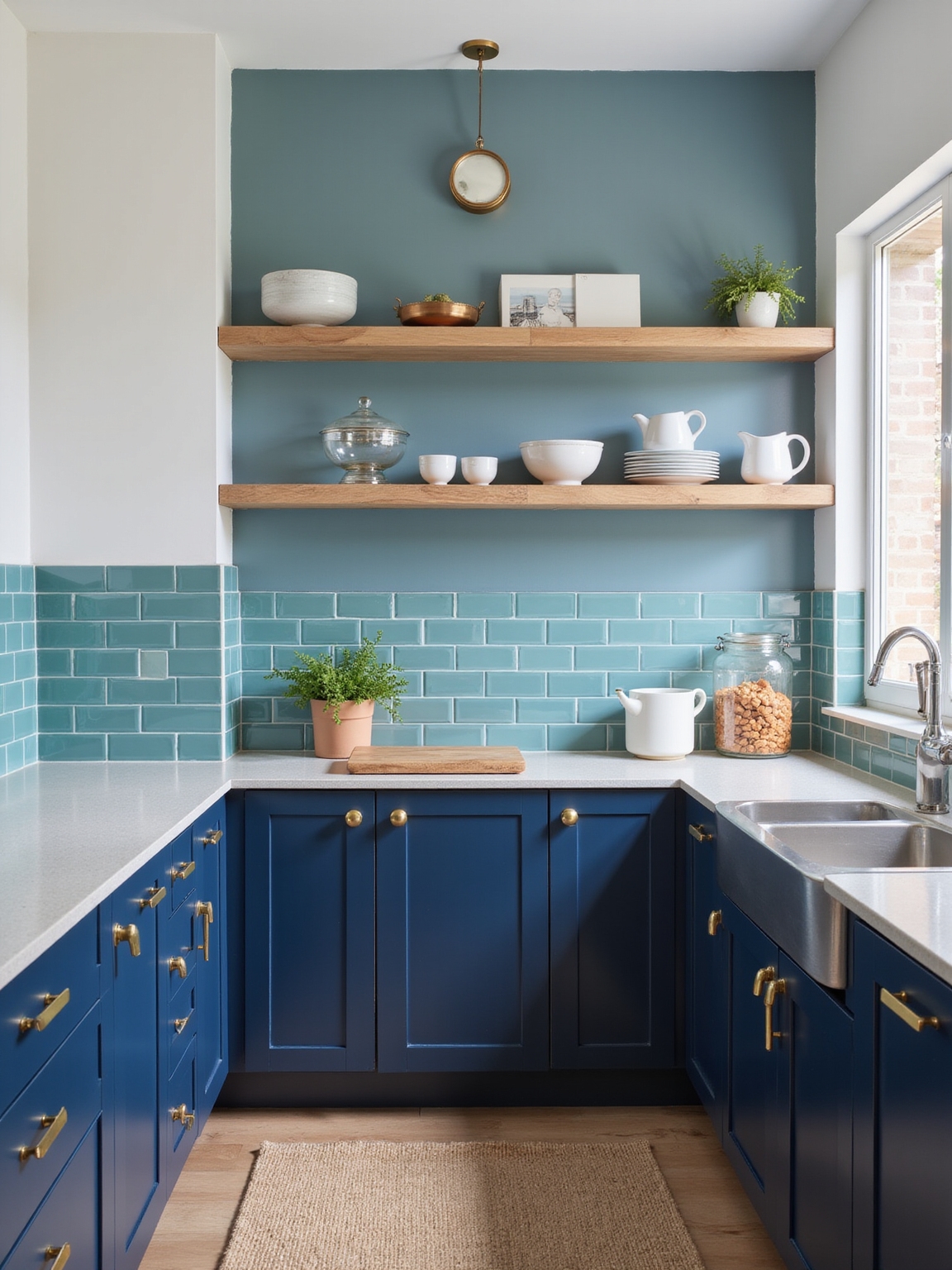
I’m excited to talk about how mid‑blue cabinets can bring a fresh, grounded feel to a kitchen while keeping things modern. I’ll show simple ways to style those cabinets — from natural wood handles to warm lighting — so they read contemporary but still cozy.
Then we’ll look at adding teal accents in tile, textiles, or small appliances to give the space a lively, coordinated pop.
Cabinet colors can significantly affect a home’s perceived value, with certain hues making spaces feel more luxurious and upscale.
Mid‑Blue Cabinet Styling
I love how mid‑blue cabinets anchor a kitchen without shouting—pulling together teal accents, warm wood, and matte brass into a calm, contemporary statement.
I like open shelving with pottery, simple shaker fronts, and rubbed bronze pulls for a lived‑in feel.
Pair with textured stone countertops, soft pendant lighting, and woven rugs to keep the room grounded, inviting, and quietly modern.
Consider clever storage solutions to conceal bulky appliances, like appliance garages or hidden pull‑outs, to maintain the calm aesthetic while keeping countertops clear and functional with discreet storage.
Teal Accent Integration
Bring in teal and you’ll see how mid‑blue settles into a quietly modern rhythm; I like to layer teal as an accent rather than a rival, nudging it into backsplashes, open shelving displays, or a single island face to create depth without chaos.
I pair warm woods and matte brass for cozy contrast.
- Teal backsplash
- Island face pop
- Open shelf styling
- Brass hardware
- Wooden accents
Coastal kitchens often combine these elements with natural textures for a relaxed, vacation-ready feel and durable finishes like warm woods to keep the look grounded.
Soft Sky and Powder Blues for Light, Coastal Kitchens
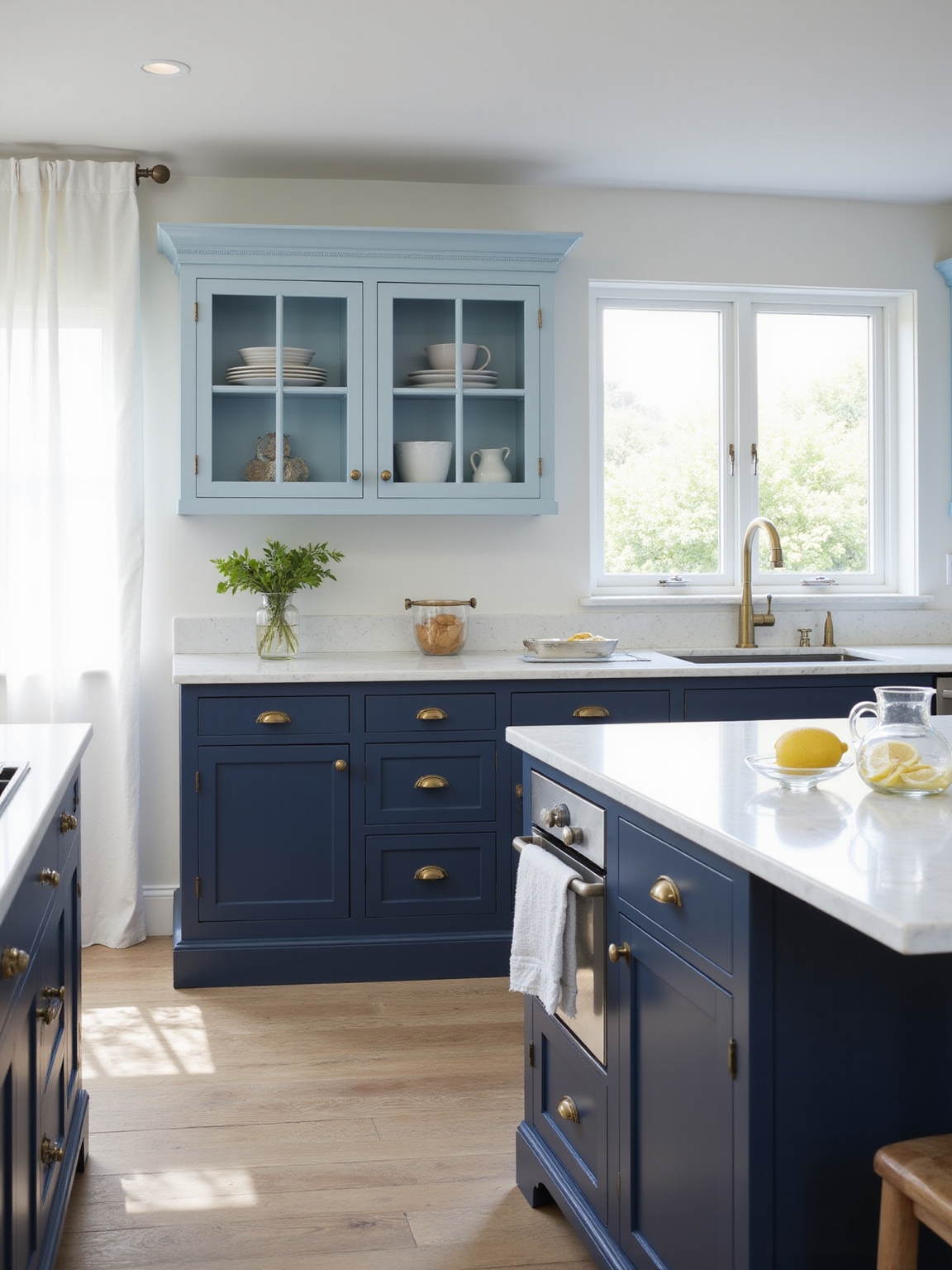
With the softest sky and powder blues, I love turning a kitchen into a light, coastal nook that feels like a gentle breath of sea air.
I pair weathered wood, whitewashed cabinets and linen textiles to keep things breezy.
Subtle blue on walls or lower cabinets brightens mornings, while brass or matte black hardware adds rustic contrast without stealing the calm.
Test Blues in Your Kitchen Lighting
After a few evenings of testing, I can tell you how much lighting changes a blue kitchen‘s mood. I swapped bulbs, moved lamps, and watched navy warm or cool with each glow. You’ll want to try mixes and notice shadows, so your blue reads true and inviting.
- Try warm LED for cozy navy
- Test cool light for crisp skys
- Use dimmers
- Sample at dusk
- Note reflective surfaces
Pair Blue Cabinets With Stone, Quartz, or Butcher Block Counters
I’ve learned that the right countertop can make blue cabinets sing, so I pair them thoughtfully—stone for drama, quartz for consistency, or butcher block for warmth.
I choose veined marble or slate with deep navy, reliable quartz with softer blues, and worn butcher block with cottage hues.
Each option balances color and texture, creating a lived-in, cozy kitchen that feels intentionally curated.
Choose Metal Finishes: Brass, Chrome, Black, or Nickel
When I’m choosing hardware for blue cabinets, I like to match warm blues with brass to bring out their cozy tones.
Cooler blues get a crisp boost from chrome, while matte black gives a bold, grounded look that works with both light and dark shades.
Tell me which vibe you’re after and we’ll pick the finish that fits.
Match Warmth With Brass
I love pairing blue kitchens with brass because the warm, golden glow softens cool tones and adds a lived-in, rustic charm.
I choose aged brass for handles, faucets, and light fixtures to create cozy contrast and visual depth without overpowering soft sky or deep navy hues.
- Aged brass knobs
- Brass gooseneck faucet
- Pendant lights
- Drawer pulls
- Open shelving brackets
Pair Cool With Chrome
A chrome faucet gleams like a slice of morning light, and I like using that crispness to reinforce blue’s cool, clean vibe.
I pair chrome hardware with soft sky cabinets and deep navy islands to keep lines bright and simple. The reflective metal adds a practical, lived-in elegance—easy to wipe, resilient to wear—and it keeps the palette feeling fresh and airy.
Opt For Matte Black
Leaning into matte black feels like settling into a worn leather chair — it grounds blue tones and brings a cozy, rustic edge without stealing the show.
I use it on pulls, faucets, and light fixtures to add quiet contrast and tactile warmth.
- Defines shape without glare
- Hides fingerprints better
- Pairs with navy beautifully
- Ages gracefully
- Easy to mix with wood
Wood Tones That Flatter Blue Cabinets: Warm, Neutral, Cool
When I’m picking wood to pair with blue cabinets, I think about the mood you want to create as much as the color itself.
I lean toward warm oak for cozy navy, honey maple to soften mid-tones, and ash or bleached walnut when I want a cooler, airy feel.
Mixing a neutral pine keeps things grounded, giving blue room to sing without shouting.
Flooring Choices That Support Blue Palettes
Since wood choices set the cabinet mood, I also think about how the floor will carry that vibe through the whole room.
I lean toward floors that ground blues without competing: warm oak, cool gray tile, honey pine, slate, or textured concrete.
Each option balances navy to sky tones differently, so I pick one that complements your chosen blue and the room’s light.
- Warm oak
- Cool gray tile
- Honey pine
- Slate
- Textured concrete
Layer Matte, Satin, and Gloss Finishes for Depth
I like to start with matte on larger surfaces to ground a blue scheme and keep things cozy.
Then I use satin on cabinets and woodwork for those soft midtones that catch the light just enough.
Finally, a few glossy accents bring bright highlights that make the whole kitchen sing.
Matte For Grounding
Harmony grounds a room, and I lean on matte finishes to anchor a blue kitchen’s palette without stealing the show.
I love how matte soaks up light, hides imperfections, and feels quietly soulful against navy or sky tones.
- soft, non-reflective depth
- camouflages wear and stains
- pairs with natural wood
- emphasizes color purity
- creates cozy, lived-in charm
Satin For Midtones
Bringing satin into the mix softens shifts between matte and gloss, and I lean on it for midtones that need just a touch of glow without shouting.
I use satin on cabinet faces and island aprons to catch morning light, balancing warmth and color depth.
It resists fingerprints better than flat paint, yet keeps the kitchen feeling lived-in and inviting rather than fussy.
Gloss For Highlights
After softening midtones with satin, I layer in gloss on the highest points to make details sing. I tap a tiny brush to edges and knobs, catching light so blues read richer and more alive.
It feels like seasoning—gentle, deliberate, warm.
- Highlight edges
- Accent hardware
- Define moulding
- Boost depth
- Control shine
Accent Colors and Patterns: Backsplashes, Textiles, Hardware
How do you let blue sing without overwhelming the room? I lean into warm accents: butcherblock countertops, terracotta tiles, and brass hardware to tame navy depth.
A patterned subway tile backsplash or handwoven linens adds homespun texture. I pick textiles with small-scale prints so blue stays central, while matte black pulls grit and brass brings sunlit charm—simple, layered, and honest.
Small, Low‑Cost Updates: Paint an Island, Add Open Shelves, Swap Accessories
Paint the island—it’s the fastest, cheapest way I give a kitchen new life. I pick a blue that feels lived‑in, add open shelves for ceramics, and swap out knobs and linens.
Little changes make the room sing without fuss.
- Paint island in a warm navy or soft sky
- Install floating oak shelves
- Replace hardware with brass
- Swap textiles for blues
- Style with pottery
Budget and Phase a Blue‑Kitchen Refresh
Let’s map the refresh so it fits your wallet and timeline—I like breaking the project into affordable phases that still feel rewarding.
I’d list must-haves, like paint and hardware, then schedule weekends for DIY and budget for a tradesperson for plumbing or electrical.
Start with high-impact, low-cost changes, save splurges for last, and track expenses to avoid surprises.
Common Pitfalls With Blue Kitchens : and Quick Fixes
Because blue can read cold or overpowering if you don’t balance it right, I check for a few telltale issues early: too-dark cabinets that shrink the space, clashing undertones between walls and tile, mismatched metals that make the room feel busy, and poor lighting that deadens the hue.
- Brighten with warm wood accents
- Swap one metal finish
- Add layered lighting
- Test paint samples at dusk
- Introduce soft textiles
I’ve seen how the right blue can change a kitchen — like a friend who painted her island navy, then hosted her granddaughter’s first birthday under soft sky cabinets, and everyone lingered longer.
Trust your mood: pick cozy navy, lively teal, or airy powder blue, and layer in warm woods and brass.
Start small if needed. You’ll end up with a kitchen that feels like home, calm and inviting every single day.