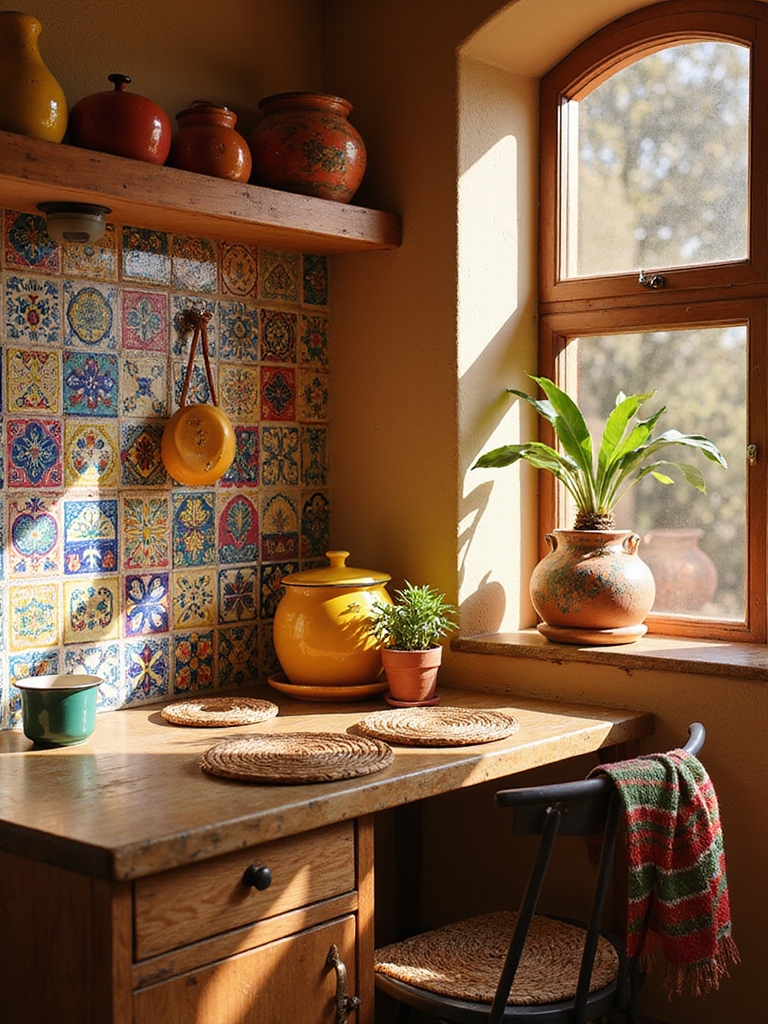

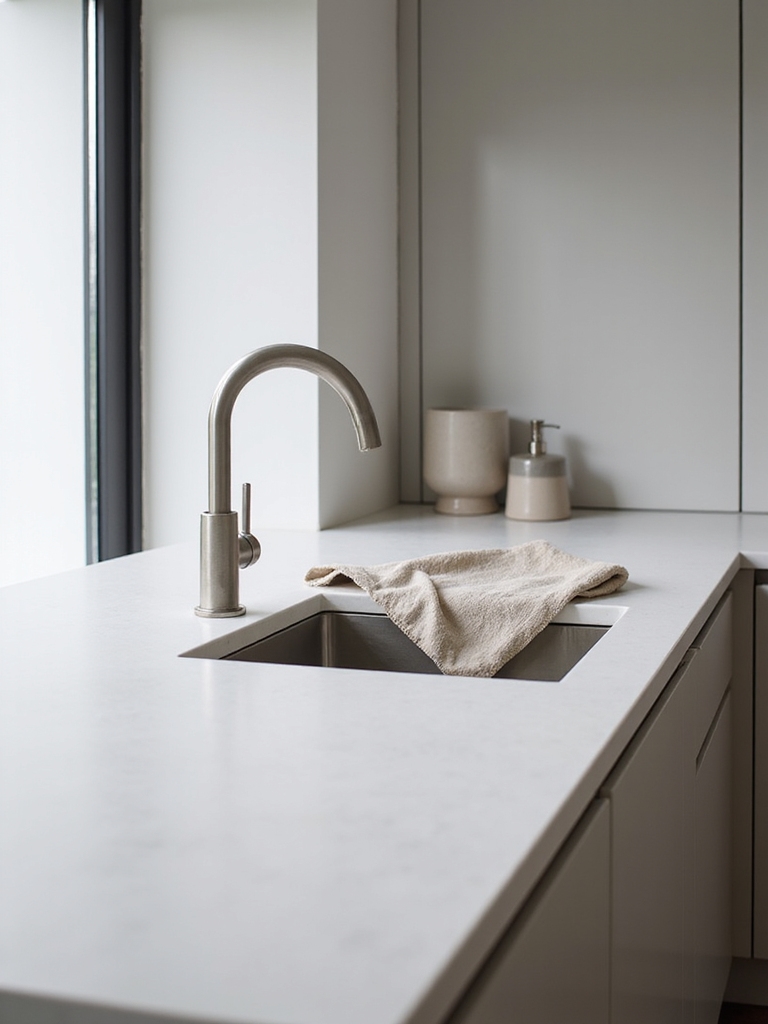
I’ll keep your kitchen calm by stripping surfaces to honest materials: warm wood grains, honed stone or matte quartz, and a single soft-metal faucet. I hide function behind handleless fronts, push-to-open latches, and pull-out pantries so counters stay clear.
I limit color to two muted tones, add one vintage or wooden anchor piece, and use woven linens for texture. Tidy rituals—five-minute clears and monthly purges—make the look last, and I’ll show how to organize each zone next.
Core Principles of an Ultra‑Minimalist Kitchen
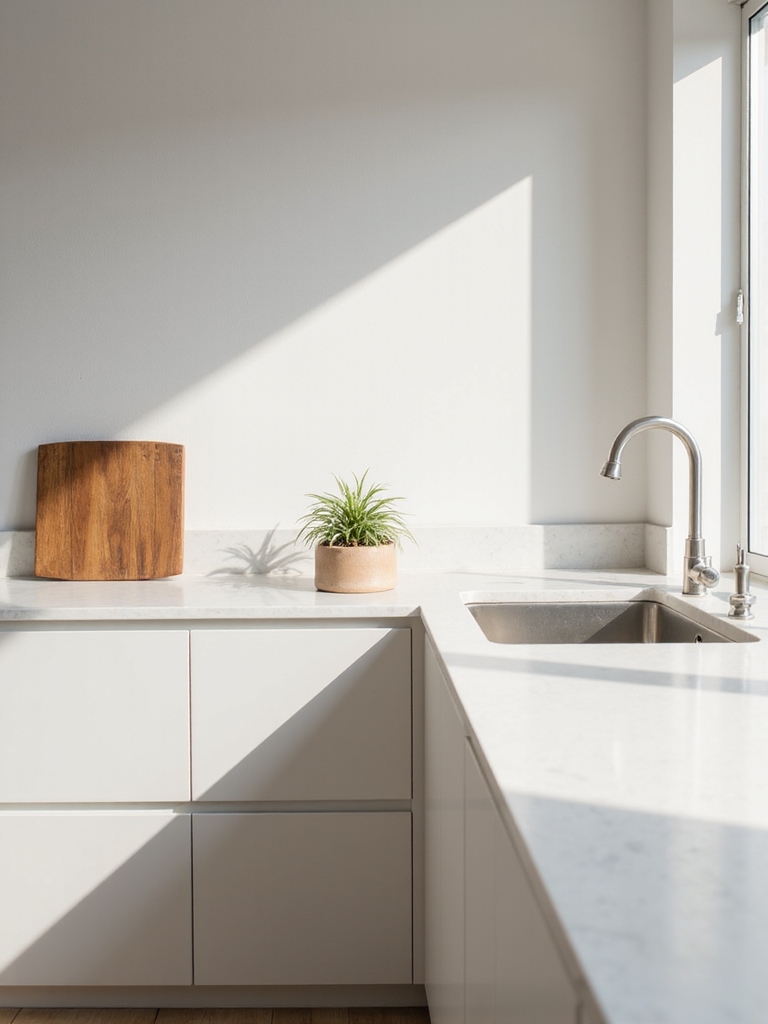
A few simple rules keep an ultra‑minimalist kitchen feeling warm and lived‑in: I focus on quality over quantity, keep surfaces clear, and let natural materials and light do the decorating.
I pare tools to essentials, favor tactile woods and stone, and embrace neutral palettes.
I let practical items double as decor, maintain order with hidden storage, and cherish a calm, functional space.
Timeless minimalist kitchens often rely on minimalist kitchen decor elements like neutral palettes, tactile woods, and uncluttered surfaces to achieve a lasting aesthetic.
Quick Start: 3 Moves to a Clean Finish

I’ll show you three simple moves that make a kitchen feel calm and finished: carve out clear countertop zones for prep, eating, and display.
Then tuck clutter away with concealed storage so only what matters is visible.
Finally, pick a monochrome accent to tie the room together without fuss.
Create a tidy look by limiting decor to a few purposeful pieces and organizing them into clear countertop zones.
Clear Countertop Zones
Often I start by grouping everything on the counter into three piles: daily tools, occasional items, and things that don’t belong in the kitchen.
Then I return daily tools to a tidy, limited spot—coffee jar, knife block, a single bowl. Occasional items get a short-term home, and stray things are whisked away.
The result feels calm and lived-in. A pared-down arrangement emphasizes sleek prep areas and keeps the workspace functional.
Concealed Storage Solutions
Let’s tuck clutter out of sight with three simple moves that make the kitchen feel calm without stripping it of personality.
I hide small appliances in pull-out cabinets, use drawer inserts for utensils and linens, and stash pantry items in woven baskets behind doors.
These cozy, practical solutions preserve surfaces, keep routines efficient, and let wood, stone, and light breathe.
Many of these tricks are inspired by proven storage hacks that keep kitchens tidy with minimal effort.
Monochrome Accent Choices
How do you create a striking, calm kitchen with just one color?
I pick a single hue—matte black, soft sage, or warm clay—and weave it through textiles, open shelves, and a statement kettle.
I balance scale and texture so the color feels intentional, not flat.
A monochrome accent simplifies decisions and gives the room a cozy, orderly heartbeat.
Timeless black and white schemes can amplify that effect when combined with classic contrasts.
Choosing a Pared‑Back Color Palette

Color is the quiet backbone of a minimalist kitchen, and I like to start by narrowing my palette to two or three muted tones that work together like old friends.
I choose a soft base—off‑white or warm gray—pair it with a grounded accent like slate or olive, and reserve one gentle pop for interest. It feels calm, lived‑in, and honest.
Neutral decorating focuses on timeless materials and balanced tones, which is why I often recommend incorporating chic neutral styling into the overall scheme.
Materials & Textures for Quiet Warmth

Once you’ve settled on that muted palette, I look to materials and textures to bring the room to life without fuss.
I favor warm wood grains, honed stone, and woven linens—simple, tactile layers that age gently.
Matte metals and soft leather add subtle contrast. I keep patterns minimal, letting honest surfaces and a few handcrafted pieces whisper comfort into the kitchen.
High-performance surfaces like luxury countertops can combine durability with refined aesthetics to maintain that quiet warmth.
Seamless Cabinetry & Hidden Storage
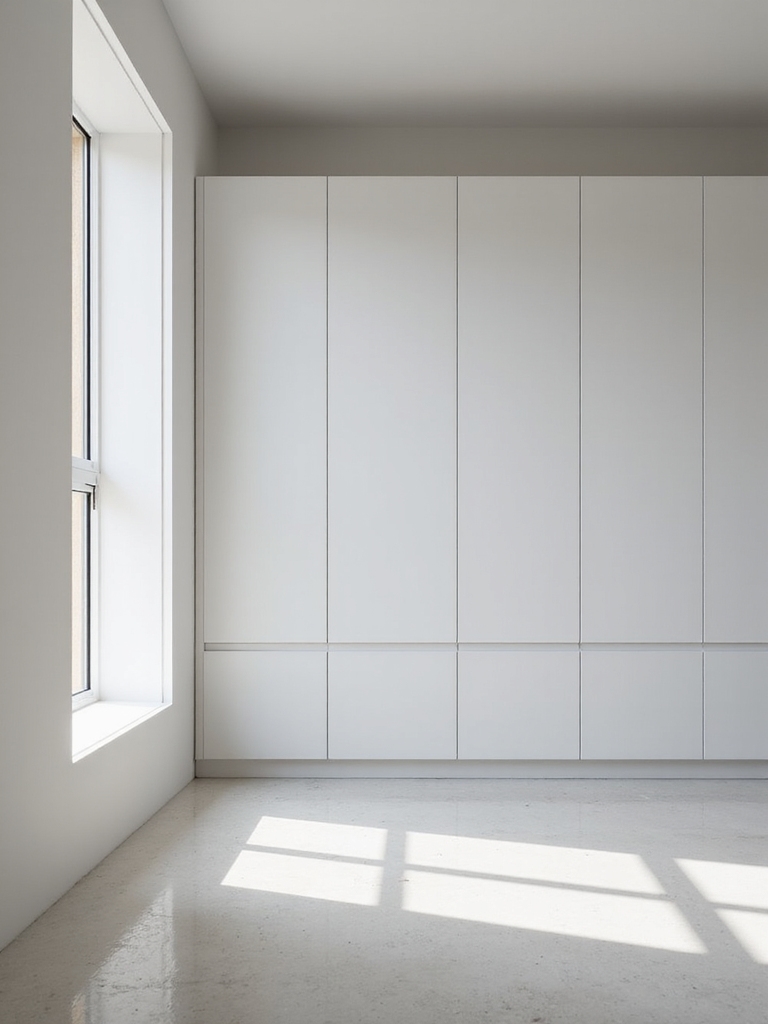
Because clutter breaks the quiet I aim for, I hide function behind seamless fronts and soft-close drawers that keep the kitchen looking like a calm, lived-in shelter.
I choose handleless cabinets, inset doors, and push-to-open latches so everything tucks away.
Pull-out pantries, drawer organizers, and under-sink trays let essentials live out of sight, leaving simple surfaces and a cozy, uncluttered feel.
Switching to new cabinet hardware can instantly update the look, especially when you choose easy hardware swaps that complement the minimalist aesthetic.
Countertops With a Calm, Clean Look
With the cabinets and storage hidden, the countertops become the room’s quiet protagonists, so I choose surfaces that feel calm and inviting.
I lean toward honed stone or soft matte quartz in warm neutrals, add a simple wooden cutting board for texture, and keep clutter to a minimum.
The surface should soothe the eye and invite touch without calling attention to itself.
Appliances: Streamlined Choices and Concealment
I pick appliances that feel calm and purposeful, then hide or soften anything that competes with the room’s quiet mood.
I choose matte finishes, simple silhouettes and compact sizes that respect space.
I tuck a dishwasher behind a panel, stow small gadgets in drawers, and let a single statement range quietly anchor the room — practical, honest, and easy on the eyes.
Hardware: Invisible, Flush & Push‑to‑Open
After I hide the appliances, the hardware becomes the quiet handshake between me and the kitchen — it should be almost invisible.
I favor flush pulls, push‑to‑open latches and recessed grips that keep faces clean and warm wood uninterrupted.
They whisper function: soft, reliable, and honest. Choosing hidden details lets light and texture take center stage while storage stays seamless and calm.
Flooring & Baseboards That Simplify Sightlines
I like to keep the floor in a seamless neutral—warm gray or soft beige—to let the room breathe and the cabinets stand out.
Pairing that with flush, minimal baseboards keeps sightlines uninterrupted and makes the space feel longer.
When the color palette flows continuously from floor to walls and trim, the kitchen reads calm and intentional.
Seamless Neutral Flooring
In a minimalist kitchen, I favor seamless neutral flooring because it quietly ties the room together and keeps sightlines calm.
I choose warm-toned planks or smooth stone in muted greys and beiges, letting natural texture add character. It hides wear, brightens shadows, and connects cabinets to the rest of the house. Simple, durable surfaces make daily life feel easier and more honest.
Flush Minimal Baseboards
A clean edge makes a room feel calmer, so I keep baseboards flush with the wall to let the floor and cabinets breathe together.
I love how that subtle seam tucks visual clutter away, making light and texture sing.
It’s a tiny, humble detail—painted matte, trimmed sharp—that grounds my rustic kitchen while keeping sightlines simple and serene.
Continuous Color Palette
When you strip color contrasts back to one continuous palette, the room settles and your eye can roam without interruption—I like carrying the same warm tone from floor to baseboard so the whole plane reads as one calm surface.
I’ll often suggest:
- Stain-matched hardwood for seamless flow.
- Low-gloss baseboards to hide joints.
- Neutral grout and junction strips to keep sightlines simple.
Lighting Strategies for Crisp, Uncluttered Spaces
Because good light guides how we move and feel in the kitchen, I focus on layering sources that stay simple and purposeful.
I choose warm, dimmable overheads, focused task strips under shelves, and a single pendant over an island or table.
Natural light gets celebrated with unobtrusive window treatments.
Shadows are considered; clutter-free fixtures keep the mood calm and lived-in.
Sinks, Faucets & Prep‑Zone Layout
I’ve found a single-bowl sink is the quiet heart of a minimalist kitchen, roomy enough for pots but simple in form.
Pairing it with a monochrome faucet finish keeps the look calm and cohesive, so your eye isn’t pulled in a dozen directions.
For prep, I arrange a slim, uncluttered zone with just the essentials—cutting board, soap, and a towel—so everything feels intentional and easy to use.
Single-Bowl Sink Selection
Let’s focus on the single-bowl sink—it’s the quiet workhorse of a minimalist kitchen and often the smartest choice for a clean, efficient prep zone.
I favor simple, deep basins that hide clutter and handle big pans.
Consider these points:
- Depth for soaking.
- Integrated drainboard option.
- Durable material like stainless or fireclay for a rustic, lasting feel.
Monochrome Faucet Finishes
A monochrome faucet finish can quietly set the tone for the whole prep zone, so I lean toward finishes that feel deliberate and lived-in rather than flashy.
I prefer matte black, aged brass, or soft pewter — tones that age gracefully and hide fingerprints. They anchor simple sinks, echo cabinet hardware, and give a calm, cohesive look without shouting for attention.
Streamlined Prep Zone Layout
Think of the prep zone as the kitchen’s workbench — I size and place the sink, faucet, and surrounding surfaces so everything feels within reach and effortless.
I favor deep single bowls, a pull‑down sprayer, and generous counter space for tidy prep.
- Deep, simple sink
- Matte faucet with reach
- Clear, durable counters for staging
Decluttering Habits That Actually Stick
When I started paring down my kitchen, I didn’t aim for perfection so much as small, repeatable actions I could actually keep doing; those tiny habits—five-minute counters, one-drawer purges, a “donate” box by the door—slowly changed how the space felt and how I used it.
I now sweep clutter weekly, limit duplicates, label lids, and habitually return things to homes so calm endures.
Styling With a Few Purposeful Accessories
I like to anchor a minimalist kitchen with one statement piece—a vintage enamel teapot or a bold wooden cutting board—to give the space personality without clutter.
I pair that with neat, functional storage like woven baskets and labeled jars so everything has a home and stays tidy.
A small natural-texture accent, such as a linen towel or a sprig of eucalyptus, softens the room and keeps the look warm and lived-in.
One Statement Piece
I’ve always loved letting one strong piece do the talking in a kitchen, so I pick an item that feels both purposeful and beautiful—maybe a worn wooden breadboard, a large ceramic jug, or a vintage copper pan—and place it where it naturally anchors the space.
- Choose meaningfully
- Let it breathe
- Keep surroundings calm
Neat Functional Storage
I like to strip storage down to what truly works, keeping only a few well-chosen pieces that pull double duty—beautiful to look at and built for everyday use.
I favor mason jars, a slim wood utensil crock, and a woven basket for linens.
Each item is honest, handy, and easy to reach, so the kitchen feels tidy, warm, and intentionally simple.
Natural Texture Accent
Often I reach for one or two tactile pieces to finish a minimalist kitchen—things that add warmth without shouting.
I pick natural textures that whisper, not compete. They ground the space and invite touch.
- Woven bread basket
- Wooden cutting board, hand-oiled
- Linen dish towels
These small choices feel intentional and quietly rustic.
Small Kitchens: Space‑Saving Minimalist Tactics
With limited counter space and a small footprint, I’ve learned to make every inch count by stripping the kitchen down to essentials and letting practical beauty take over.
I favor open shelves for a calm, airy feel, wall hooks for mugs, slim rolling carts, and a single-purpose wooden cutting board. Every item earns its place; nothing decorative survives without function.
Budget Swaps & Maintenance Routines
When money’s tight, I lean into smart swaps that keep the kitchen pared-back without feeling cheap: thrifted farmhouse bowls, a durable bamboo cutting board instead of pricey hardwood, and a basic magnetic knife strip that clears counter clutter.
I stick to simple maintenance and routines:
- Wipe surfaces nightly.
- Oil wood weekly.
- Declutter monthly.
These habits keep rustic calm and functionality intact.
I’ll leave you with this: imagine your kitchen as a well-worn linen napkin—soft, light, and folded just so. With pared-back colors, quiet textures, and hidden places for the clutter, the room breathes like a country morning.
Keep only what you touch, style what you love, and let surfaces show their calm. It’s not about emptiness but intention—a cozy, uncluttered refuge where every item earns its place.