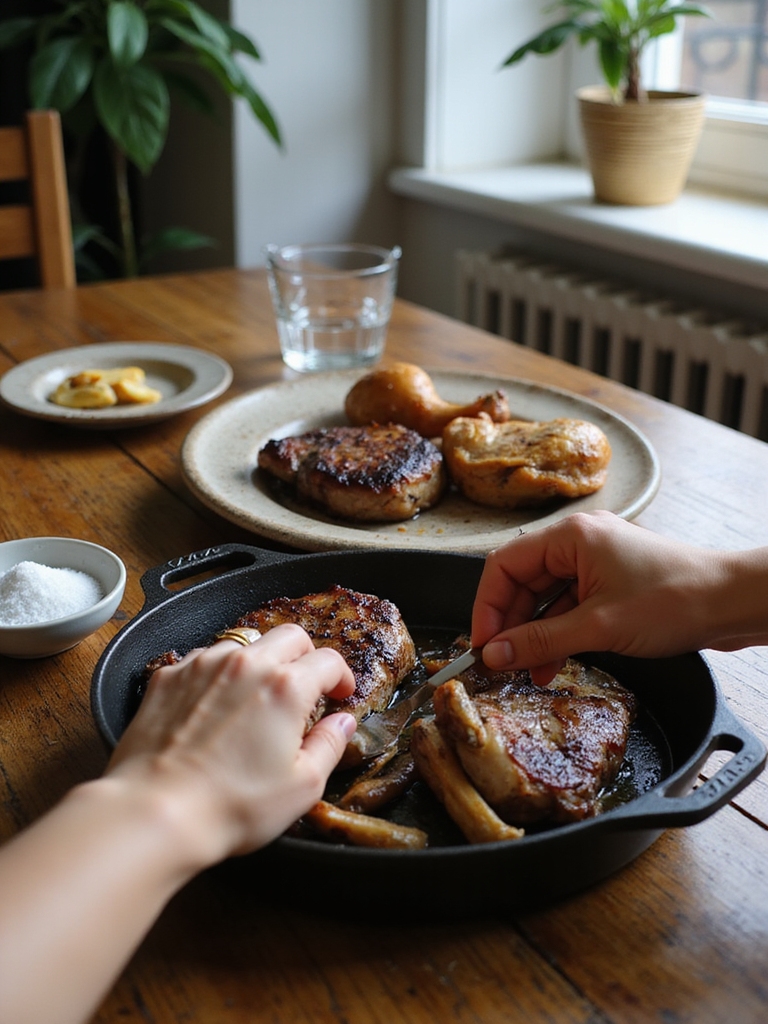


About 40% of people who try restrictive diets quit within a month — so you’ll want a plan that actually sticks. You’ll get simple, repeatable carnivore meals that make mornings easy, lunches portable, and dinners something you look forward to.
I’ll show practical swaps, batch-cook tricks, and social hacks to keep you consistent — and a tiny rotation you can lean on forever.
A 1‑Week Carnivore Framework You Can Repeat

Usually, you’ll find the carnivore diet works best when you simplify, and that’s exactly what this 1‑week framework does: give you a repeatable plan so you don’t overthink meals, stay satisfied, and track what’s working.
You’ll rotate a few protein sources—beef nights, chicken days, fish or shellfish once a week—and pair them with fatty cuts or eggs to hit satiety.
Batch-cook roasted or slow‑cooked meats, portion for quick reheats, and log how you feel after each meal.
Keep snacks simple: jerky or hard‑boiled eggs.
Stick to the loop, tweak based on energy, and breathe.
Batch cooking and simple recipes can also make the plan sustainable for long-term consistency and convenience.
5‑Minute Carnivore Breakfasts That Fill You Up
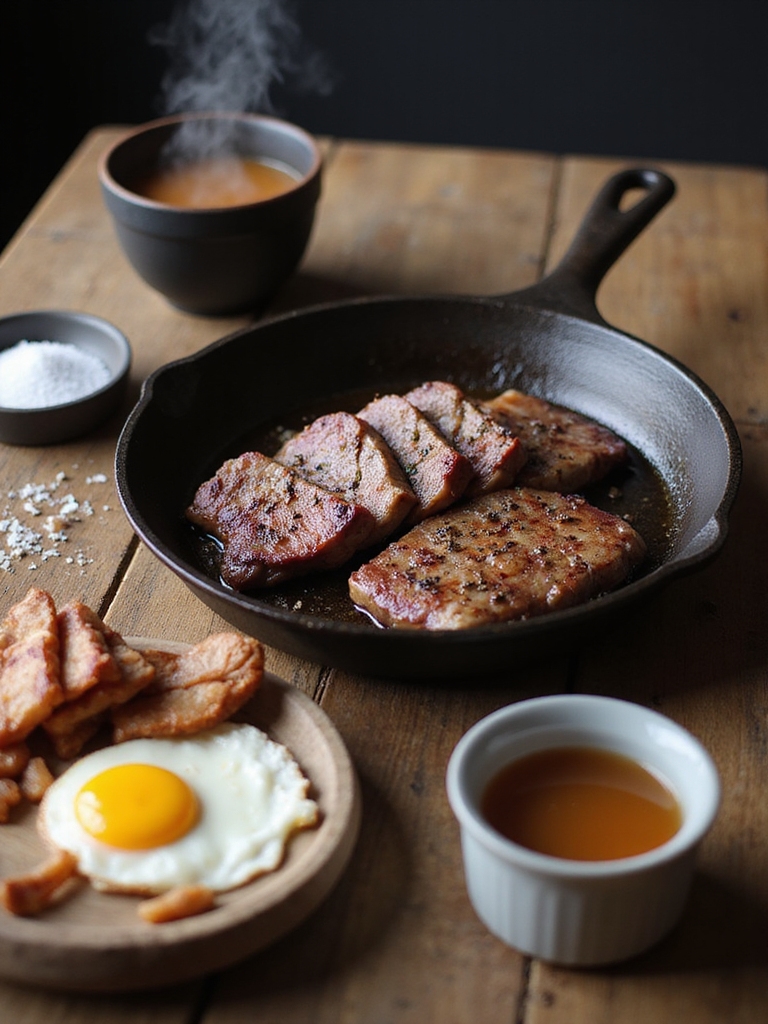
You can get breakfast on the table in minutes with quick‑cook proteins like thin steaks, ground beef, or seared sardines.
Boost staying power with high‑fat add‑ins—think butter, tallow, or a soft egg yolk—and you’ll stay satisfied until lunch.
Pack leftovers into portable options like meat rolls or chilled pates for grab‑and‑go mornings.
Try rotating different protein bases and preparations to avoid boredom and support long‑term adherence.
Quick Cook Proteins
Hit the ground running with proteins that cook in minutes and keep you full until lunchtime. You’ll love how simple choices rescue busy mornings: eggs, thin steaks, and smoked fish are fast, forgiving, and satisfying.
Pick what you enjoy, season lightly, and cook confidently — no gimmicks needed. Try these staples:
- Soft-scrambled eggs — fluffy, quick, and endlessly tweakable.
- Minute steaks — sear both sides for a flavorful crust in under five.
- Canned smoked salmon — ready, portable, and protein-dense.
These options get you eating fast, feeling fueled, and smiling at your own efficiency. Many people find these are some of the most irresistible carnivore breakfasts to wake up for.
High‑Fat Add‑Ins
Often a quick sprinkle of fat is all you need to turn a speedy protein into a truly satisfying carnivore breakfast, and you’ll find the best add-ins take minutes to toss on and keep hunger away until lunch.
You can melt butter or ghee over eggs, drizzle beef tallow on pork chops, or slide thin slices of pâté onto warm steak.
Add a spoonful of crème fraîche or a smear of cream cheese for silky richness.
Salt smartly, because fat carries flavor.
These tiny upgrades boost calories, curb cravings, and make mornings feel indulgent without fuss.
Stock a few staples like marrow bones and tallow for easy, high-energy cooking and snacking with pantry staples.
Portable Meal Options
Staple a hard‑boiled egg, a slice of smoked salmon, or a pocket of pork rinds in your bag and you’ll have a minute‑ready carnivore breakfast that actually keeps you full. You want something portable, mess‑free, and satisfying, so pick combos that travel well and hit fat and protein.
- Beef jerky + cheese cube — chewable, savory, zero fuss.
- Canned sardines + avocado chunk — omega kick, creamy texture.
- Cold roast beef rollups with pâté — luxe, compact, filling.
Rotate these, stash extras, and you’ll breeze through mornings without hunger or heroic food prep. Practical snacks like these make it easier to maintain long‑term consistency on a carnivore routine.
High‑Fat Carnivore Lunches for Busy Days
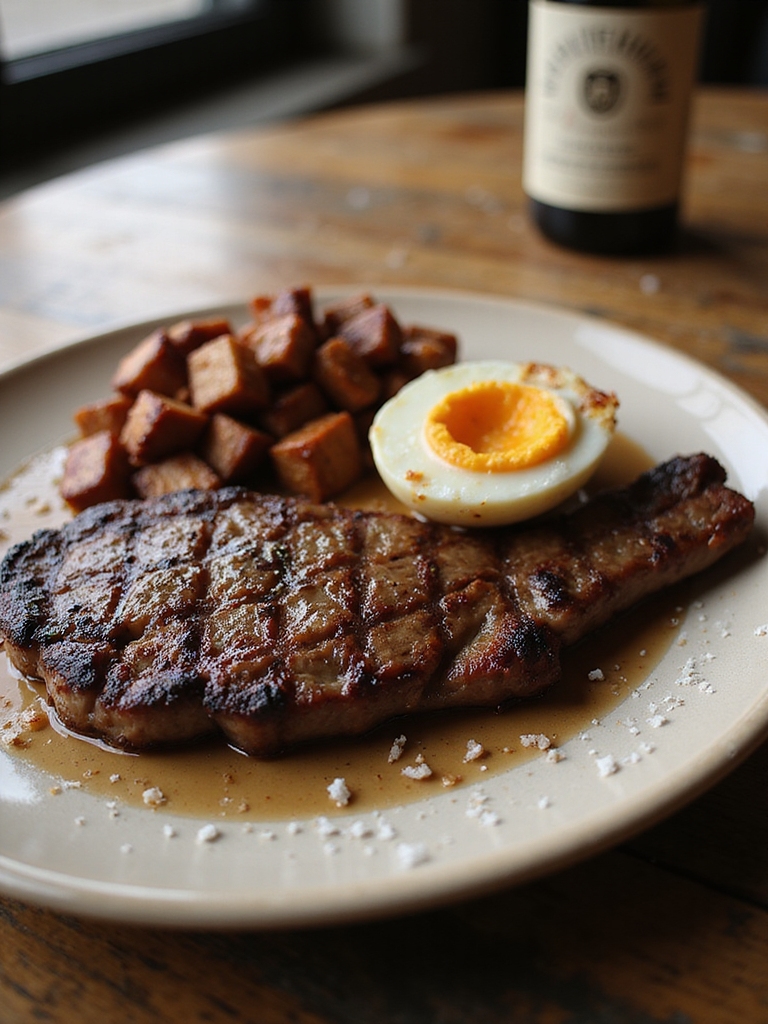
When you’re racing through a workday, portable fatty meat packs — think salami, smoked brisket slices, or peppery tallow-wrapped bites — keep your energy steady without a stove.
If you’ve got five minutes, a quick bone marrow bowl with roasted marrow scooped over warm meat is ridiculously satisfying and rich in fat.
Both options travel well and cut hangry afternoons short, so you can stay focused and well‑fueled.
Travel-friendly snacks like pre-sliced cured meats are ideal for the Carnivore Diet.
Portable Fatty Meat Packs
If you’re juggling meetings, errands, or a commute, portable fatty meat packs keep your carnivore lunch on track without fuss — think slices of colby or aged cheddar if you include dairy, thick-cut salami, pork rinds for crunch, and pre-cooked pork belly or beef brisket that stay good at room temp for hours.
You’ll grab a small cooler or insulated bag, stack sturdy pieces, and skip soggy salads.
Try these combos for variety:
- Salami, cheddar, pork rinds.
- Pork belly, hard cheese, pickled egg.
- Brisket slices, butter cubes, crunchy rind.
They’re simple, satisfying, and travel-ready. Consider adding a packet of electrolytes to stay balanced on the go electrolyte balance.
Quick Bone Marrow Bowls
Often you’ll crave something rich and effortless, and quick bone marrow bowls answer that call with minimal fuss and maximum fat.
You roast marrow bones until soft, scoop the golden goodness, and pile it over warm shredded beef or chopped steak.
Add a pinch of sea salt, a whisper of cracked pepper, maybe scorched crispy beef bits for texture.
It’s fast, portable in a shallow container, and keeps you satisfied through busy afternoons.
Eat with a spoon, napkin ready.
You’ll get calories, collagen, and pure comfort that supports consistency without drama or prep-heavy rituals.
Including marrow bowls in your routine can help maintain a steady intake of essential carnivore staples like high‑fat cuts and organ-rich options high-fat cuts.
One‑Pan Dinners That Scale for Meal Prep
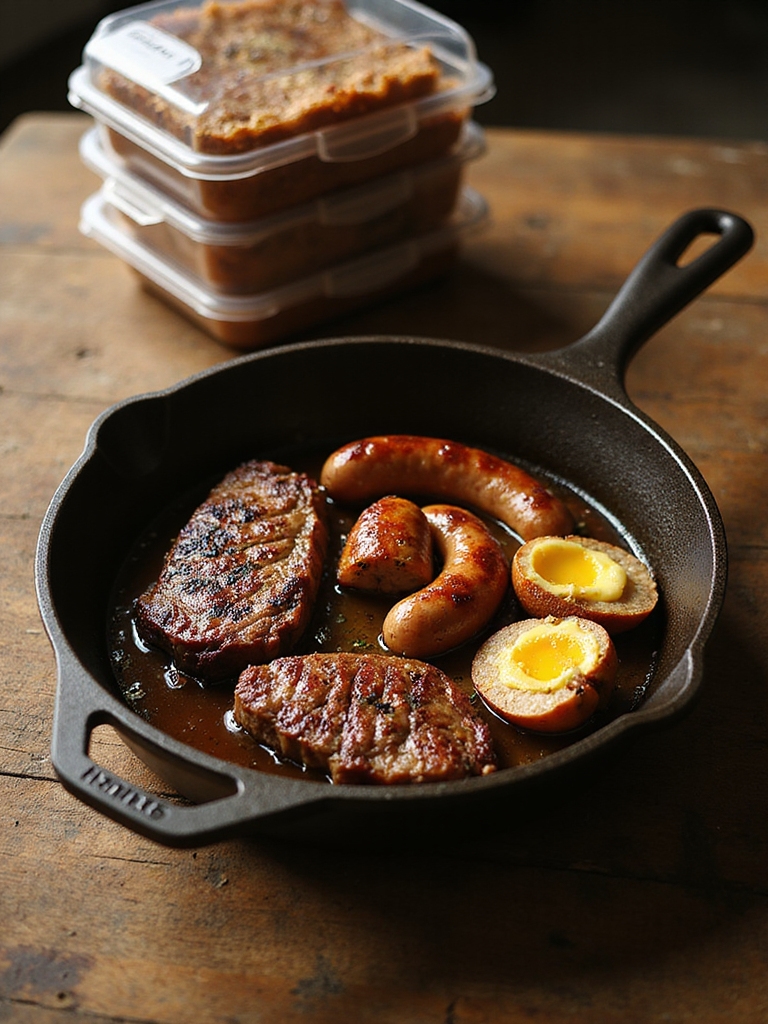
Whip up a single pan and you’ve got dinners that not only taste great tonight but scale effortlessly for the week ahead.
You’ll sear steaks, brown sausages, or roast chicken pieces together, then finish with rendered fat and pan juices—minimal fuss, maximum flavor.
Pack into containers, reheat gently, and you’re set.
- Cook proteins that share timing (steak + bacon).
- Use high-heat for crust, lower to finish evenly.
- Reserve pan juices for reheating or drizzling.
You’ll save time, avoid ingredient waste, and keep meals interesting by swapping spices or animal fats each batch.
Hands‑Off: Slow‑Cook and Sous‑Vide Carnivore Recipes
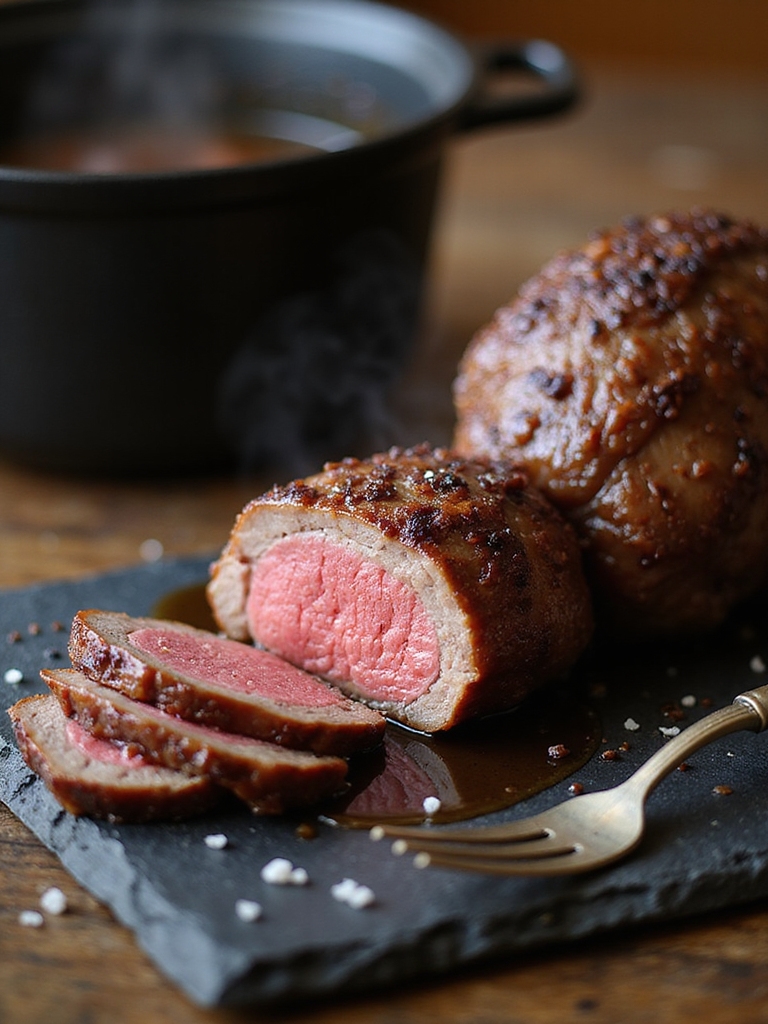
You’ve mastered one-pan dinners, but some weeks you want dinner to practically make itself—enter slow-cookers and sous-vide.
You toss a brisket, short ribs, or pork shoulder into the cooker with salt, maybe butter, set it low, and let time do the heavy lifting.
With sous-vide, you seal steaks or chicken, set a precise temp, and walk away—perfect doneness every time. Both methods concentrate flavor and tenderness without fuss.
Finish with a quick sear for crust, shred or slice, and you’ve got reliably simple carnivore meals that free your evenings and keep cravings satisfied.
Batch‑Cooking Schedule for a Low‑Effort Week
Pick one weekly batch plan that fits your appetite—roast a big brisket, pan-sear steaks, and slow-cook some bone broth—and you’ll have meals sorted for days.
Schedule two efficient cooking slots (a longer Sunday cook and a quick midweek refresh) to keep prep time low and flavor high.
You’ll spend less time in the kitchen and more time enjoying big, simple carnivore meals.
Weekly Batch Plan
Plan one big cook session and you’ll sail through a week of carnivore meals with almost zero thinking. You’ll roast, sear, and portion so breakfasts, lunches, and dinners pop from fridge to plate without drama. Keep it simple, reliable, and flavorful.
- Cook: two large protein batches (beef roast, chicken thighs).
- Portion: meal-sized containers and snack-ready jerky or sliced cold cuts.
- Rotate: use different sauces or broths daily to avoid boredom.
You’ll save time, cut decision fatigue, and still enjoy variety. Stick to a predictable rhythm and the week becomes effortless — tasty, efficient, and satisfying.
Efficient Cooking Slots
When you carve up your week into two or three reliable cooking slots, meals stop being a scramble and start feeling almost automatic — mornings and evenings become “heat and eat” instead of “what on earth?”
Pick predictable windows: a big Sunday roast, a midweek grill, and maybe a small prep on Thursday.
Cook batches that reheat well — brisket, ribeye steaks, ground beef mixtures, roasted bones for broth.
Portion into ready-to-go containers so you’re not deciding.
Label and rotate flavors so boredom stays away.
This minimal schedule saves time, keeps your fridge honest, and makes sticking to carnivore simple and pleasurable.
Rotate Proteins to Avoid Nutrient Gaps
Because different cuts and species bring distinct vitamins, minerals, and fatty-acid profiles, rotating your proteins keeps your diet balanced and interesting—so swap beef for lamb, pork, poultry, or fatty fish across the week.
You’ll get iodine from fish, zinc from beef, and vitamin B12 from organ meats without boredom. Think of variety as culinary insurance.
- Schedule: pick 3–4 proteins for a week.
- Include one organ or fatty fish twice weekly.
- Repeat favorites but rotate preparation.
This approach keeps meals exciting, cushions nutrient gaps, and makes you more likely to stick with the plan.
How to Add Fat and Salt for Better Satiety
Pick higher-fat cuts like ribeye or pork belly to stretch meals and keep you satisfied longer.
Dress your plates with animal-based sauces—beef tallow vinaigrette or a dollop of rendered lamb fat adds richness without carbs.
Salt strategically at the table and during cooking to boost flavor and help your body hold onto electrolytes.
Choose Higher-Fat Cuts
Choose higher-fat cuts to make meals more satisfying and keep cravings at bay—you’ll feel fuller longer and rely less on snacks. Pick ribeyes, brisket, or pork shoulder; their marbling delivers flavor and steady energy.
Trim smartly—leave some fat, remove silver skin. Salt generously to enhance taste and signal satiety. Rotate cuts so you won’t get bored: variety keeps you consistent without complexity.
- Ribeye: rich, quick-sear favorite.
- Brisket: slow-cook reward, great leftovers.
- Pork shoulder: versatile, fatty and forgiving.
You’ll eat less, enjoy more, and stick with the plan.
Use Animal-Based Dressings
You’ve learned how fattier cuts keep you satisfied; now think about how to finish those cuts with animal-based dressings that add salt and smooth, lingering fat.
Rub melted tallow, schmaltz, or pork lard over steaks, drizzle warm bone marrow on roasted chops, or spoon cold pâté onto slices for instant richness.
These dressings carry flavor, boost calories, and slow digestion so you stay full longer.
They’re simple: heat, strain, season lightly, and pour.
You’ll enjoy deeper mouthfeel and effortless satiety without carbs.
Experiment—small additions transform meals from “fine” to “can’t-stop-eating” good.
Season Strategically With Salt
Salt smartly and add fat deliberately to turn a good carnivore meal into a satisfying one: a finishing sprinkle of coarse sea salt wakes up meat’s natural flavors, while a glossy swipe of tallow, butter, or bone marrow slows digestion and keeps you full longer. You’ll want to taste as you go and guard against overdoing it.
- Salt late: finish steaks and roasts to preserve juiciness and flavor.
- Layer fat: melt butter or spoon marrow over hot cuts for immediate satiety.
- Textural boost: crisp pork rind crumbs or seared fat add mouthfeel and pleasure.
Do this, and meals stick.
Portion Rules: Scale for Fat Loss, Maintenance, or Gain
When you tweak portion sizes on a carnivore plan, you’re really dialing the dial between losing fat, holding steady, or building muscle—so learn to read your plate like a thermostat.
Aim for a slight calorie deficit for fat loss: trim portions of fattier cuts, keep protein steady to protect muscle.
For maintenance, match portions to activity—regular workouts mean slightly bigger servings.
To gain, increase both protein and fat, prioritize nutrient-dense cuts and add extra meals or snacks.
Track energy, performance, and waistline; adjust weekly.
Use simple rules: protein first, fat to satiety, and nudge portions until results match goals.
Budget‑Friendly Carnivore Cuts and Where to Buy Them
A few smart swaps and shopping habits can cut your carnivore grocery bill without sacrificing taste or nutrition.
You’ll favor fattier ground beef, bone-in chicken, and pork shoulder — cheap, filling, and versatile. Shop local but compare prices: wholesale clubs, ethnic markets, and butcher counters often have hidden deals.
Buy in bulk, portion, and freeze; marrow bones and oxtails add richness on a budget. Watch sales and build a simple rotating menu so nothing spoils.
Try:
- Ground beef bulk packs
- Bone-in chicken thighs
- Pork shoulder or Boston butt
Eat well, spend less, stay consistent.
Carnivore Snacks and Travel Options That Work
Regularly packing a few sturdy, no-fuss options lets you stick to carnivore rules whether you’re commuting, flying, or road-tripping.
Think shelf-stable jerky, tinned fish, pork rinds, and hard cheeses for short trips. Bring a small cooler with cooked steaks, boiled eggs, and bone broth in a thermos for longer hauls.
Portable utensils, napkins, and a compact knife make eating less awkward. At airports, choose protein-heavy lounges or pre-order plain grilled meats.
When hunger hits, you’ll feel calm, not hangry—preparedness keeps you social and satisfied without compromising simplicity or sanity on the go.
Quick Protein & Prep Swaps to Add Variety
Swap in a different cut or cooking method and you’ll trick your taste buds into thinking you’ve got a whole new menu—without straying from strict carnivore rules. You’ll keep meals exciting by switching proteins and techniques fast.
Try these quick swaps to stay consistent without boredom:
- Grill flank steak one night, slow-braise short ribs the next — same beef, different joy.
- Pan-sear pork chops, then pulverize into quick pork hash for mornings.
- Roast whole chicken, shred for salads or fast skillet bites.
You’ll embrace variety, save time, and stick to the plan without missing flavor or fun.
Dining Out and Social Strategies to Stay Consistent
You’ve already learned how small changes in cuts and methods keep home meals interesting, and those same principles will help when you eat out or socialize.
Choose grilled steaks, roast chicken, or bunless burgers; ask for extra butter or a side of eggs.
Scope menus quickly—seafood, steaks, deli bar—and steer conversations toward venue choices. Bring confidence, not excuses: say you’re sticking to meat for health, then enjoy the company.
Offer to host so you control the menu sometimes. Tip the server for flexibility and smile when they swap fries for bacon—simple swaps keep you consistent and sociable.
Troubleshooting Plateaus, Boredom, and Energy Slumps
If progress stalls or meals start to feel monotonous, don’t panic — small, strategic tweaks usually get things moving again.
You can reignite enthusiasm and energy without abandoning the plan. Try concise experiments, track outcomes, and lean on variety within limits.
- Rotate cuts: swap ribeye for skirt or organ meats to change nutrients and flavor.
- Adjust timing: shift meal frequency or fasting windows to find better energy.
- Fine-tune fat: increase or decrease added fat to match activity and satiety.
Stay curious, note results, and treat plateaus as feedback — not failure.
Sample Weekly Menus You Can Rotate Indefinitely
For steady progress and less mealtime decision fatigue, rotate a few simple weekly menus you can repeat indefinitely — each one built from interchangeable proteins, cooking methods, and fat levels so you can keep variety without reinventing the plan.
You’ll pick three menus: hearty, light, and indulgent. Each day swaps steaks, ground beef, chicken thighs, or fish; you’ll vary cooking (grill, roast, sear) and fat (butter, tallow, skin-on). Use this simple matrix to mix-and-match.
| Menu | Example Day |
|---|---|
| Hearty | Ribeye, roasted marrow |
| Light | Poached fish, chicken skin |
You’ve got a small, trusty rotation—ribeyes that sear like late-summer thunder, brisket that falls apart like soft evening plans, and surprise canned fish for pocketed rescue.
Keep butter, marrow, and a cheeky organ or two on standby, batch-cook like a weekend ritual, and swap a jerky for a roll-up when life gets loud.
Repeat the framework, tweak the spices, and watch consistency feel less like a chore and more like a delicious coincidence.