


You might be surprised to find that the idea “meat only fixes everything” has more nuance than the slogan suggests. If you’re curious how a mostly‑animal diet can fit school runs, social dinners, and travel without turning you into a kitchen hermit, there are practical tweaks that keep results but add flexibility.
Stick around and you’ll see how simple swaps, portion rules, and habits make it livable — and when to pull back.
What the Modified Carnivore Diet Is and Who It Helps

If you’re curious about the modified carnivore diet, think of it as a meat-first plan that’s been nudged toward flexibility — you still center most meals on animal foods, but you allow limited plant foods, dairy, or carbs when they help you feel better or meet nutritional needs.
You’ll mostly eat steak, eggs, fish, and high-fat dairy, but you’ll also slip in low-to-moderate carb veggies, berries, or cooked tubers occasionally.
It suits people chasing weight loss, simpler meals, blood-sugar stability, or relief from certain sensitivities — basically anyone who wants meat focus without rigid austerity.
Flexibility like this supports long-term consistency and makes the approach more sustainable for many people.
Decide If This Approach Fits Your Goals

Because you’re aiming for something between strict meat-only and a more forgiving everyday plan, decide whether the modified carnivore actually matches what you want to get out of it—weight loss, simpler meals, symptom relief, or better blood sugar control require different tolerances for carbs, fasting, and food variety.
Think about your priorities, patience, and social life.
You’ll trade some convenience for fewer decisions and possibly clearer signals from your body. Ask: will you tolerate strictness for fast results, or prefer flexibility?
Consider these practical questions:
- How strict will you actually be on weekdays versus weekends?
- What symptoms or metrics matter most to you?
- How social meals will you keep?
Consistency matters more than perfection, so build a plan you can sustain that emphasizes steady adherence over occasional extremes.
Choose Your Animal Staples and Allowed Plants
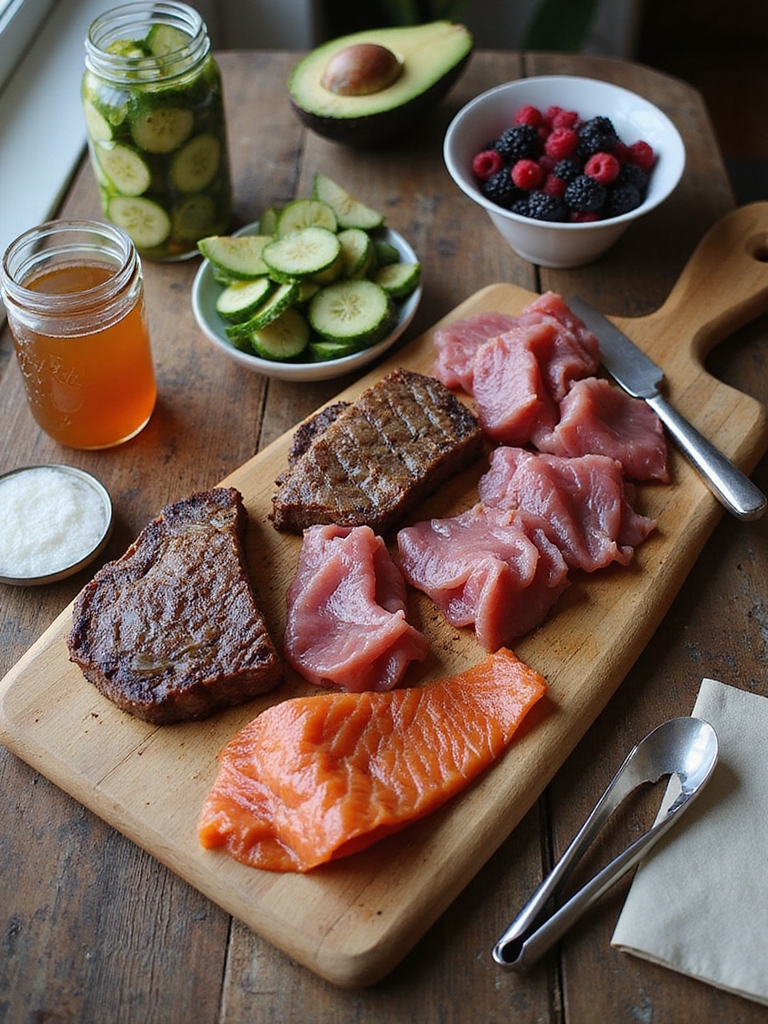
Now you pick the animal staples that’ll form the bulk of your meals—think beef, pork, chicken, and fatty fish—and aim for quality over trendier cuts.
You’ll also choose a few permitted plants, like low-carb leafy greens or minimal berries, to keep variety without blowing your carb limits.
Let’s map out sensible combos that match your tastes and goals so the plan’s actually sustainable.
You can start with a small set of consistent items to simplify shopping and meal prep, focusing on shopping staples that support the carnivore approach.
Animal Staples Selection
Pick a handful of animal staples you enjoy and can eat regularly, because consistency beats variety when you’re trying to keep things simple. You’ll pick proteins that fit your budget, schedule, and taste—think reliable, not glamorous.
Rotate to avoid boredom, prioritize fattier cuts for energy, and buy frozen or canned backups for busy days. Keep seasoning minimal; let the meat be the star. Consider organ meats occasionally for nutrients. Simple planning prevents slip-ups.
- Ground beef or lamb for quick meals
- Bone-in chicken or thighs for versatility
- Salmon or sardines for omega-3s
Also, focus on stocking essential staples from the carnivore-friendly list to make following the plan easier day-to-day.
Permitted Plant Options
You’ve got your dependable animal staples lined up, and that makes it easier to decide what small plant allowances to keep.
Pick low-carb, nutrient-dense options: leafy greens (spinach, arugula), cruciferous veggies (broccoli, cauliflower) in modest portions, and occasional berries for a touch of sweetness.
Use herbs and citrus zest for flavor without carbs piling up. Rotate choices so meals don’t feel austere: a handful of sautéed spinach one day, roasted cauliflower the next. Keep portions purposeful—think garnish not salad bowl.
These plants complement animal foods, ease digestion, and make the plan sustainable without derailing results.
The inclusion of modest servings of specific vegetables is part of the ongoing debate around their role in a carnivore-style diet, with some proponents accepting small plant allowances to improve sustainability and nutrient variety.
Set Protein, Fat, and Portion Targets by Goal

Whether your goal is fat loss, performance, or simple maintenance, setting clear protein, fat, and portion targets keeps the carnivore diet from becoming guesswork.
You’ll feel less like you’re winging it and more like you’ve chosen sensible rules that match your life.
Start by calculating a protein range (grams per kg or bodyweight) and pair it with a fat target that supports energy and satiety.
Use portion cues so meals stay simple, not sloppy.
Consider these starting guidelines:
- Protein: prioritize 1.6–2.2 g/kg for most goals.
- Fat: adjust to fill remaining calories.
- Portions: steak palm-sized, eggs per meal.
An easy carnivore meal plan for busy women helps translate these targets into practical daily meals and snacks, keeping choices simple and time-efficient while supporting goals like fat loss and performance with meal structure.
Build a Simple Weekly Modified‑Carnivore Meal Plan

Often, a weekly plan takes the stress out of a modified‑carnivore approach, so you can stop improvising at dinner and actually enjoy your food.
Sketch three mains—beef, chicken, fatty fish—then repeat with slight tweaks: different spice rubs, sauces, or charred veg.
Batch‑cook proteins once or twice, portion into containers, and label days.
Add simple breakfasts: eggs, smoked salmon, or Greek yogurt if you tolerate it.
Snacks? Pork rinds, cheese, or boiled eggs.
Reserve one flex meal for social life.
Keep a short shopping list, a two‑column prep day, and you’ll eat well without drama.
Batch cooking also helps maintain consistency and saves time, making it easier to follow a simple carnivore routine.
Meal Timing and Flexible Eating Windows
If you’re juggling work, workouts, and social life, meal timing on a modified‑carnivore plan can be flexible rather than rigid—pick a window that fits your day and stick to it most of the time.
You’ll feel better when meals sync with energy needs, not the clock. Try experimenting with eating windows and watch performance, mood, and hunger cues.
- 8–10 hour window for steady days and training
- 4–6 hour window when you want simplicity or fat loss
- Eat‑when‑hungry approach for social or travel days
Be consistent, adjust as life demands, and don’t stress occasional deviations. Research on women suggests paying attention to hormone fluctuations can help you time meals for better energy and recovery.
Quick Portable Breakfasts and Snacks
You’ll love how portable egg muffins let you grab a hot, protein-packed breakfast without fussing over a plate. Pair them with meat snack rolls for a no-brainer combo that keeps you full and on-plan through a busy morning.
Let’s talk simple recipes and storage tricks so these staples actually make your life easier.
Portable Egg Muffins
Frequently, portable egg muffins save mornings when you’re short on time but still want something filling and strictly carnivore-friendly; they’re fundamentally baked, bite-sized omelettes you can customize with bacon, ground meat, or organ blends, then grab and go.
You’ll love that they reheat well and travel without melting into a mess.
Make a batch on Sunday and relax the week.
Tips to keep them simple and tasty:
- Use high-fat mix-ins (bacon, tallow-cooked beef) for satiety and texture.
- Season lightly with salt and optional powdered liver for nutrients.
- Bake in silicone cups for easy release and transport.
Meat Snack Rolls
Roll up thin slices of cured or cooked meat around concentrated fillings and you’ve got a portable, no-fuss snack that’s all carnivore—think salami or roast beef wrapped around creamier bits like soft egg, crumbled cooked bacon, or a smear of beef tallow–based pâté.
You’ll love how they travel, don’t need reheating, and satisfy fast. Make batches, chill, and grab.
| Type | Filling | Best Moment |
|---|---|---|
| Salami | Soft egg | Morning commute |
| Roast beef | Bacon crumble | Midday hunger |
| Prosciutto | Pâté | Snack with coffee |
| Turkey | Hard egg | Post-workout |
Grocery List and Batch‑Cooking Shortcuts
When you shop for a modified carnivore plan, think like a prep cook: buy in bulk, prioritize fatty cuts, and grab a few versatile pans of protein that cook well together.
You’ll save time and sanity by batching—roast, sear, and portion into jars or containers for the week. Label dates, rotate flavors, and keep simple staples ready.
- Ground beef, pork shoulder, and whole chickens for big batches
- Bone broth and tallow to boost fat and flavor
- Eggs and smoked fish for quick, varied meals
Cook once, eat calm; reheating should feel routine, not heroic.
Travel and Dining Out on a Modified Carnivore
Traveling on a modified carnivore? Pack hearty snacks for airports and planes so you’re not at the mercy of baggage claim fries.
At restaurants, ask for simple swaps—double the protein, skip the carbs—and don’t be afraid to steer the kitchen a little. With a bit of planning you’ll eat well and still enjoy the trip.
Airport And Plane Strategies
You can still eat well on the go with a little planning and a few smart swaps, even inside airports and on planes where options feel slim; bring dense, shelf-stable protein (jerky, canned fish, hard cheeses if allowed) and scout airport restaurants for simple grilled meats or eggs rather than carb-heavy platters.
Pack a small kit—napkin, salt, butter or mayo packets—to upgrade airline servings. Use TSA-friendly containers and tuck snacks in carry-on. Stay hydrated; dehydration masquerades as hunger. Trust your instincts when menus look overcomplicated.
- Choose protein-first kiosks
- Prioritize fats for satiety
- Time meals around flights
Restaurant Ordering Tips
Roll up your sleeves and read the menu like it’s a map — you can still eat confidently on a modified carnivore plan without making a fuss.
Scan for grilled, roasted, or seared proteins; ask for sauces on the side and skip sugary glazes.
Substitute veggies for fries or rice, but keep portions modest.
Order steaks, burgers without buns, chicken, fish, or eggs — they’re reliable.
Request extra butter, olive oil, or cheese if you need calories.
Be polite but firm with modifications; servers are used to swaps.
Tip well and enjoy the meal without apologizing for your choices.
Family Meals: Blending Carnivore Plates With Others
Mixing carnivore plates into family meals doesn’t have to be a battle—it’s about simple swaps and a little creativity so everyone eats well without derailing your goals.
You can plate seared steaks or roasted chicken while others get sides; pass sauces separately and let people add. Keep it relaxed: nobody needs to know your steak came with a stealthy butter-herb finish.
- Offer build-your-own bowls: meat first, optional veggies on the side.
- Make double-batch proteins so everyone serves themselves.
- Use shared condiments to bridge tastes without compromising your plate.
You’ll stay sane and social—win-win.
Handle Cravings, Low Energy, and Digestion Changes
When cravings, energy dips, or digestion shifts show up, don’t assume they mean the diet’s failing — they’re often your body recalibrating, and you can steer it.
Notice patterns: are cravings tied to social situations, boredom, or real hunger? Tackle them with fattier cuts, an extra egg, or a short walk.
If energy falls, check meal timing, electrolytes, and sleep before blaming the food.
For digestion changes, slow portion size changes, add bone broth or fermented foods if you tolerate them, and track fiber reintroduction carefully.
Be patient, adjust pragmatically, and don’t shame yourself for needing tweaks.
Monitoring Health: Labs and Key Symptoms to Track
Tracking key labs and symptoms keeps you honest about how the modified carnivore diet is affecting your body — and gives you the data to tweak it safely.
You’ll want baseline and follow-up checks, plus a little self-auditing: note energy, mood, digestion, sleep, and any unusual aches. Share results with a clinician who gets low‑carb approaches.
- Lipid panel, fasting glucose, HbA1c
- Electrolytes, kidney function, B12, vitamin D
- Urine ketones, blood pressure, weight trends
Watch for persistent fatigue, dizziness, or cognitive fog; those are signals to reassess macros, salt, or medical causes.
Cost‑Saving Tips for an Animal‑Based Routine
You’ve got the labs and symptoms on your radar, so now let’s look at how to keep an animal‑based routine manageable on your budget. Shop sales, buy in bulk, and embrace frozen cuts—they’re cheaper and last longer.
Learn simple meal templates: ground beef, eggs, bone broth—repeat with small tweaks. Use cheaper organs for nutrients; slice thin and mix with milder meat if texture’s weird.
Trim and cook cheaper cuts slowly to maximize flavor. Plan weekly menus, prep portions, and freeze extras to avoid impulse buys. Track cost per meal; small tweaks add up fast and keep you steady.
Common Pitfalls and How to Avoid Them
Although an animal‑based routine can be straightforward, several common pitfalls will trip you up if you’re not careful — nutrient gaps, boredom, food fatigue, and social friction top the list.
You’ll want simple fixes: track key nutrients, rotate cuts, and plan for parties so you don’t implode. Small strategies keep momentum.
- Vary cuts and cooking to avoid monotony.
- Use organ meats or supplements for micronutrients.
- Prepare short scripts for social situations so you’re not cornered.
You’ll stay sane by anticipating snag points, keeping choices interesting, and owning your boundaries without drama.
Easy Progress Checks and When to Reintroduce Plants
You’ll want a handful of quick progress metrics—sleep quality, stool regularity, and energy through the day—to see if the plan’s actually working for you.
Track them for a few weeks, then try timed plant reintroductions (start small, wait 3–7 days per new food) to spot reactions.
If symptoms flare or energy dips, pull back and reassess; if things stay steady, you can keep expanding the plant list.
Quick Progress Metrics
If you’re keeping this up for a few weeks, there are a few simple checks that tell you if the diet’s working and when it’s safe to try adding plants back in. Watch energy, sleep, and cravings — they don’t lie.
Track weight and measurements weekly, not daily. Use a simple mood log for inflammation or joint changes. If most markers improve, you’re ready to experiment slowly.
- Energy stable through the day
- Sleep regular and restorative
- Minimal cravings and gut upset
If a setback appears, pause reintroduction, fix hydration/electrolytes, then reassess after a week.
Timed Plant Reintroduction
Easing plants back in works best when you’ve got clear, simple checks to tell you it’s safe—steady energy, good sleep, low cravings, stable weight trends, and calm joints or gut.
Start small: add one plant food every 3–7 days, track symptoms and mood, and note portions.
If you stay fine after 72 hours, keep it; if not, pause and wait until baseline returns.
Prefer low-FODMAP veggies, cooked greens, or peeled fruit first.
Use a journal or app, but keep it boring: date, food, reaction.
Slow, measured reintroduction tells you what truly works for your life.
Think of this plan as a well‑worn pocketknife: you’ll reach for steak, eggs, and a bit of berries when you need reliable tools, not a full toolbox.
You’ll trim fat and portions to fit your goals, swing a week of simple meals into place, and carry jerky for emergencies.
If something doesn’t work, you’ll swap a blade or test a plant slowly. Keep an eye on energy and labs, and use common sense—this is meant to fit your life, not rule it.


