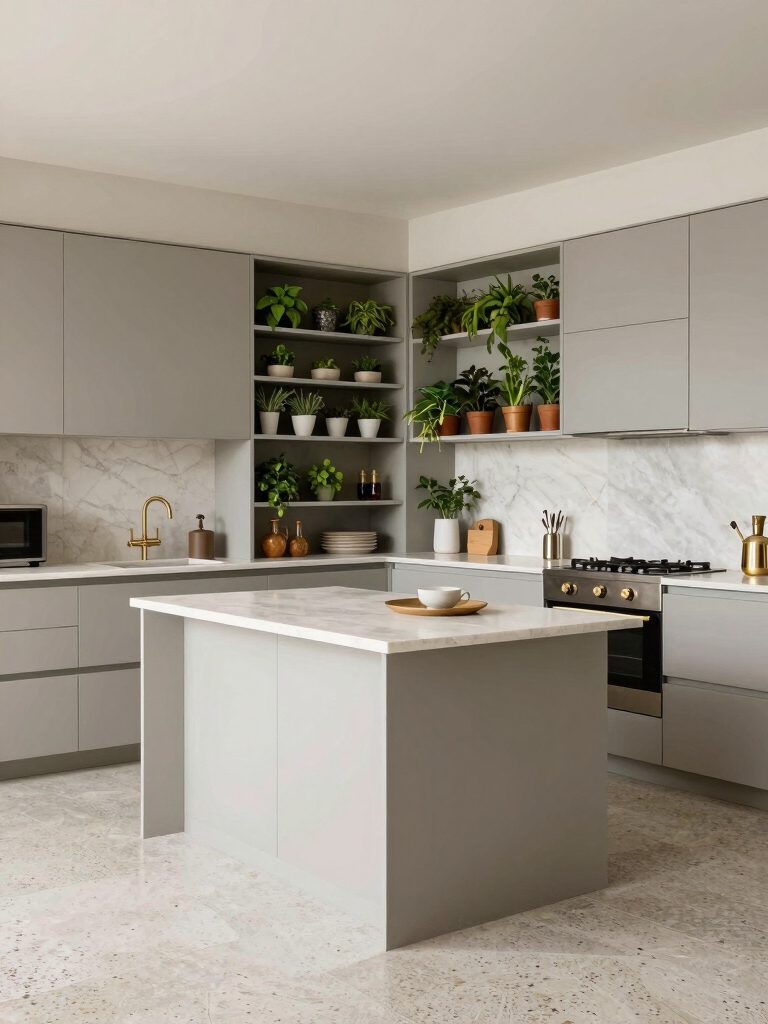


I brighten small kitchens by layering light and using reflective finishes that chase the darkness from corners. I start with under-cabinet LED strips for shadow-free counters, add puck lights where I cook, and weave in ambient, task, and accent layers to keep the space flexible. I choose reflective backsplashes and clear cabinets to multiply light, plus energy-friendly, swappable bulbs for quick upgrades. Curious how to tackle those dead zones in your own kitchen? I’ve got practical steps to share.
What Effective Small-Kitchen Lighting Delivers

Effective small-kitchen lighting does more than brighten a room—it shapes how you move, work, and feel in the space.
I’ve learned that layering light reduces glare, guides steps, and reveals color, texture, and detail.
When you plan thoughtfully, you create zones for tasks, meals, and mood—without clutter.
The payoff: confidence, calm, and efficiency you’ll notice every day. Additionally, elegant lighting schemes can elevate your kitchen’s aesthetic while enhancing functionality.
Under-Cabinet LED Strips for Bright, Shadow-Free Counters
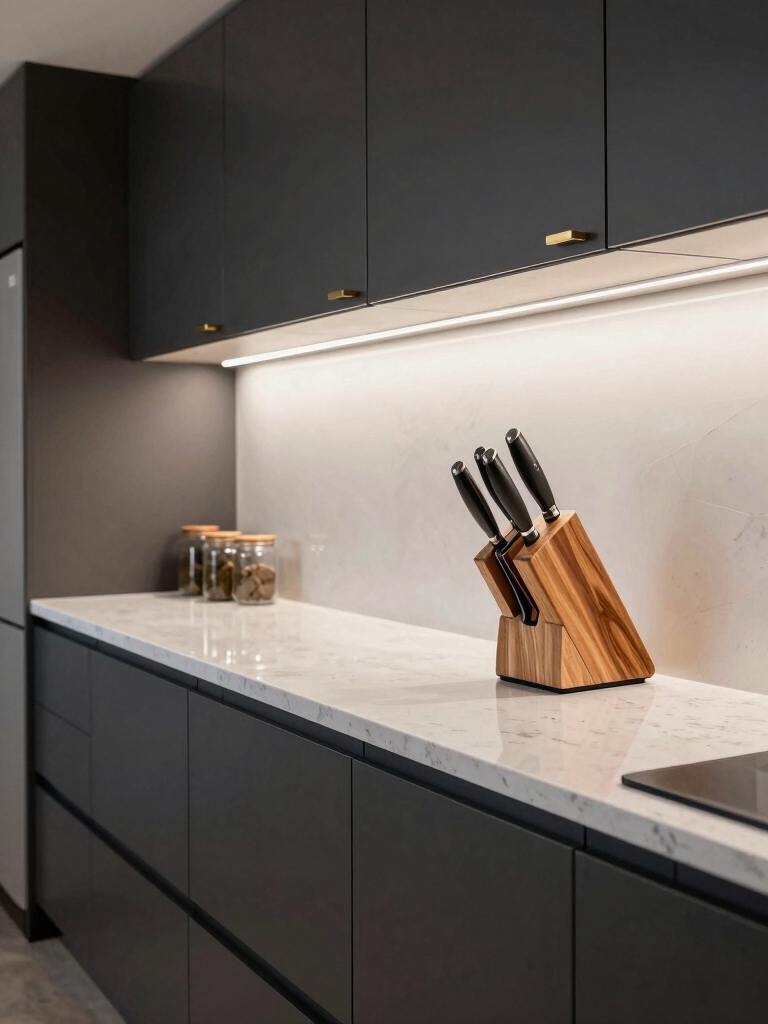
Under-cabinet LED strips are the simple trick that makes counters feel bright and inviting without adding bulk.
I line them beneath cabinets, choosing soft, true-white tones that wash the countertop evenly. They stay out of sight when I don’t need drama, but glow on command for detailed prep.
No glare, just clean, shadow-free lighting that helps me cook confidently. This method is a great way to implement layered lighting in your kitchen for a more dynamic and inviting atmosphere.
Puck Lights: Targeted Illumination Where You Cook

Puck lights sit right where I cook, hovering above the stovetop or prep station to chase shadows and put everything in crisp, usable light.
They’re quick, focused, and unobtrusive, helping me see details without blasting the whole room. Small, reliable power, simple switches, and instant task clarity change how I move around the kitchen. Adding layered lighting not only enhances functionality but also contributes to the overall ambiance of the space.
- Highlight precision without glare
- Install where corners need brightness
- Swap in warm tones for atmosphere
Layer Lighting: Ambient, Task, and Accent in One Plan

Layering lighting in the kitchen means designing with intent: ambient glow for atmosphere, task light for practical work, and a touch of accent to highlight personality.
I combine ceiling, under-cabinet, and decorative fixtures in one plan, ensuring balance and flexibility.
You’ll move from dawn to dinner without a hitch, enjoying warmth, clarity, and a space that reflects you. Incorporating large window styles can enhance the natural light in your kitchen, creating an even more inviting environment.
Reflective Surfaces That Multiply Light in Tiny Kitchens
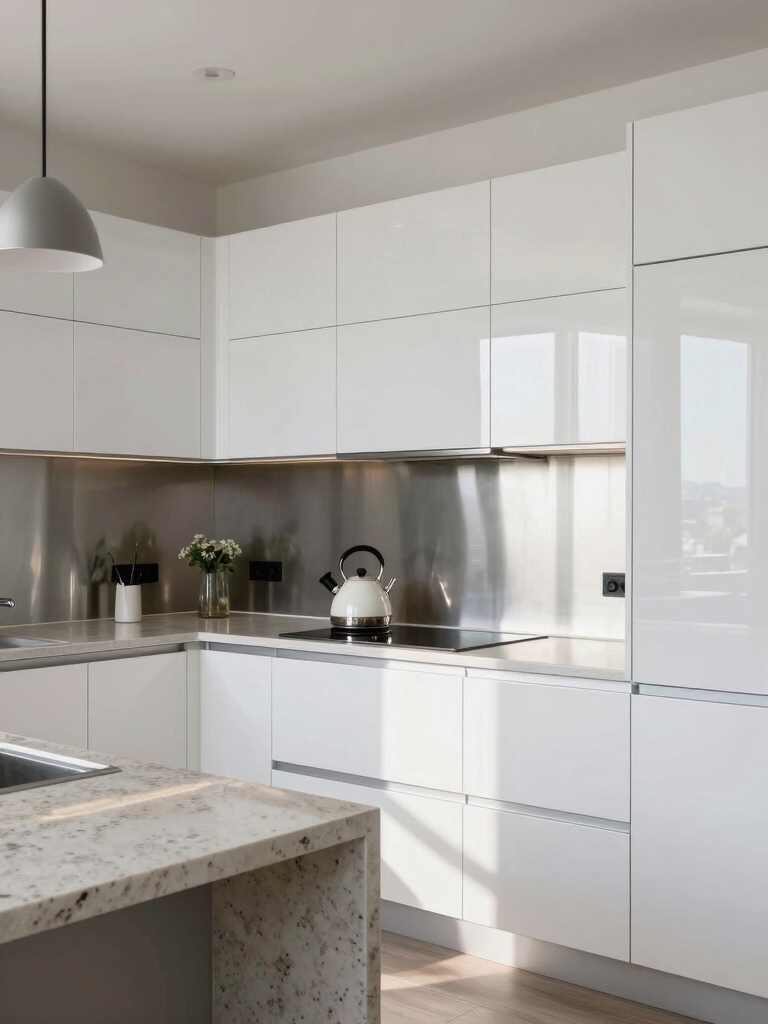
In a tiny kitchen, every watt counts, and reflective surfaces are my smartest multipliers. I look for glossy whites, chrome finishes, and glassy backs to bounce light where it matters, not clutter.
These tricks feel almost magical, yet they’re practical, steering shadows away and brightening corners without adding fixtures.
- Glossy white cabinets and ceilings
- Chrome hardware and mirrored accents
- Glass or high-gloss backsplashes that reflect modern white kitchen design light.
Clear Cabinets and Light-Reflective Backsplashes
Clear cabinets pair beautifully with a light-reflective backsplash to bounce daylight around the room, making a small kitchen feel instantaneously brighter.
I’ll show you how choosing glassy or high-gloss surfaces can multiply the light you already have, while staying practical and easy to clean. Additionally, incorporating open kitchen cabinets can enhance the overall brightness and aesthetic of your space by showcasing your beautiful dishware.
Let’s explore simple choices that keep your space open and inviting without sacrificing style.
Light-Reflective Backsplash Benefits
Clear cabinets and light-reflective backsplashes can seriously open up a small kitchen. I’ve watched how bright surfaces bounce light, making tight corners feel wider and more inviting. Here’s what you’ll gain:
- Enhanced perceived space without major changes
- Easier cleaning with fewer shadows and streaks
- Softer, even illumination that flatters every task
Incorporating light-reflective backsplashes can also introduce a stylish element that complements your decor. Give reflections a chance; they quietly transform.
Clear Cabinets, Brighter Space
Have you noticed how clear cabinets and light-reflective backsplashes turn a cramped kitchen into something that feels open and welcoming?
I’ve learned that transparency brightens every surface, while clean lines reduce visual clutter.
I pair glass-front cabinets with a gloss tile, bounce light across countertops, and trust the space to breathe.
It’s practical, stylish, and instantly uplifting for daily rituals. Utilizing corner open shelves also allows for additional storage without sacrificing light and airiness in the kitchen.
Plug-In Pendant Lights for a Quick Kitchen Lift
Plug-in pendant lights are my quick fix for a brighter, more focused kitchen workspace.
They’re easy to install and switch on right where you need task lighting, without a remodel.
Plus, their compact, ceiling-centered design keeps the space feeling open while adding a touch of elevation.
Easy Plug-and-Play Setup
When a quick kitchen lift is the goal, plug-in pendant lights are a simple, smart trick I reach for. They install in minutes, don’t require wiring, and cast focused warmth over prep zones, making mornings feel brighter.
My tips keep setup clean, adjustable, and balanced with existing décor.
- Choose adjustable pendants for dining and prep areas
- Use warm, dimmable bulbs for cozy ambiance
- Clip-on or swag cords keep floors clear
Elevates Kitchen Task Lighting
Tiny tweaks can make a big difference, so I reach for plug-in pendant lights to elevate kitchen task lighting without a full remodel.
I pick cords, bulbs, and shades that cast focused, friendly light over prep zones. They’re quick, reversible upgrades: portable radiance, no drilling, flexible styling.
The glow boosts clarity for chopping, reading recipes, and morning coffee, instantly sharpening the kitchen atmosphere.
Space-Saving Ceiling Focus
Two simple choices can transform a small kitchen fast: ceiling-focused plug-in pendants that stay out of the way while delivering bright, directional light.
I love how these fixtures lift counters without clutter, creating a focused work zone and a smarter footprint. They’re versatile, easy to install, and mood-adjustable, turning tight spaces into inviting, practical spaces you’ll actually use.
- Minimal, magnetic adapters for flexibility
- Adjustable height for task accuracy
- Quick cable management tips for clean ceilings
Dimming and Zoning: Smart Ways to Adjust Brightness
Dimming and zoning aren’t just fancy features; they’re practical tools you can use to tailor kitchen light to whatever you’re doing.
I map tasks to brightness, switching to task lighting when chopping, and dimming for cozy dinners.
Zoning lets me group fixtures by area, so I avoid glare.
It’s seamless, efficient, and keeps the space inviting, not overwhelmed, with every moment lit just right.
Color Temperature and Perceived Brightness in Small Kitchens
Color temperature shapes how bright a small kitchen feels, and I’ll show you how warmer or cooler tones influence our sense of space.
I’ll share how brightness perception changes with color temperature, plus quick tips to balance task lighting with ambient glow.
Let’s explore how subtle shifts in hue and intensity can make your compact kitchen feel more open and efficient.
Color Temperature Impact
Color temperature can dramatically shape how bright a small kitchen feels, because cooler light (around 4000–5000K) tends to read as crisper and more awake, while warmer light (about 2700–3000K) feels cozier but can wash out details.
I’ll share how it guides mood and efficiency, not fluff.
- Pick task lighting around 4000K for counters
- Use dimmers to blend temps as needed
- Consider mixed layers for balance
Brightness Perception Factors
Brightness in a small kitchen isn’t just about how many lumens you can push; it’s how your eyes read those lumens in the space you actually use.
I’ve learned color temperature shapes perception: warm tones feel cozy but can dull task brightness, while cooler tones read as brighter yet clinical.
Balance, contrast, and layered lighting let me see details clearly without glare.
Small-Kitchen Lighting Tips
Small kitchens demand careful color temperature choices because the right mix can make a tight space feel brighter and more functional.
I’ve learned that cooler temps boost perceived brightness, while warmer hues feel cozy without harsh glare.
Here’s how to tune it:
- Opt for 3500–4200K for practical tasks
- Layer lighting: ceiling, under-cabinet, counter accents
- Dimmers prevent glare while preserving mood
Smart Lighting That Responds to Your Kitchen Rhythm
Smart lighting that responds to your kitchen rhythm makes cooking feel effortless: as I chop, boil, or simmer, the lights shift—soft to bright, warm to cool—so you get the perfect ambiance and visibility without thinking about it.
I love how sensors anticipate pauses, keeping shadows away on prep and plating, guiding focus without distraction, turning routines into confident, enjoyable moments.
Pantry Lighting: Hidden Yet Handy for Small Storage
Pantry lighting might seem small, but it makes a big difference when storage is tight.
I’m talking about smart, tucked-away solutions that brighten shelves without glare, so you can find jars quickly and stay organized.
Let me share three simple ideas you’ll actually use:
- Under-shelf LEDs for easy visibility
- Motion-activated strip lights for hands-free use
- Small puck lights in corners to eliminate shadows
Swappable Bulbs for Budget-Friendly Upgrades
Swappable bulbs are a simple, budget-friendly upgrade that can brighten your kitchen without a full remodel.
I grab a few dim corners and switch to brighter, warm-toned LEDs, instantly lifting the mood. You’ll notice crisper task lighting over counters and a cozier overall glow.
I choose bulbs with a long life and compatible heat output, keeping costs steady.
Lighting in Dark Corners: Nooks, Crannies, and Dead Zones
Hidden corners can feel like afterthoughts in a small kitchen, but with a little planning they stop pulling the room down and start lighting up the space.
I’ll show you practical ideas that feel natural, not gimmicks, so you actually notice the glow when you cook, dine, or read.
- Use layered lighting to define pockets
- Illuminate shelves and cabinets with plug-in strips
- Add compact task lamps for dead zones
Safety and Practicality: Heat, Spills, and Easy Cleaning
I’ll start with heat-aware choices that keep cabinets cool to the touch and gadgets safe in a small space.
When spills happen, I opt for spill-resistant surfaces and easy wipe-downs, so cleanup isn’t a chore.
And I favor easy-clean lighting fixtures that stay bright with minimal maintenance, so your kitchen stays welcoming.
Heat Management Tips
If you’re cooking in a small kitchen, smart heat management starts with simple setup: keep hot pans centered on the burner, use a heat-safe trivet, and clear the area of clutter so nothing accidental lands in the flame.
- Keep handles turned inward to avoid bumps
- Wipe spills immediately to prevent smoke
- Use lids to control splatter and heat variance
Spill-Resistant Surfaces
Spill-resistant surfaces are a smart upgrade for small kitchens, where a single mishap can slow you down.
I choose quartz, enamel, or sealed laminate for smooth cleanup and fewer stains.
When heat meets a spill, I’ll wipe, not worry, and carry on cooking.
Practical, durable, and elegant, they keep the space calm, safe, and always ready for the next move.
Easy-Clean Lighting Fixtures
Easy-clean lighting fixtures make a big difference in a small kitchen.
I’ll share how I choose surfaces that resist heat, spills, and fingerprints, then keep them gleaming with simple routines.
You’ll notice fewer scrapes, less drama, and brighter corners as I test materials that tolerate daily life.
- Sealed LED housings
- Spill-resistant finishes
- Removable, washable shades
Quick Fixes and a Budget Breakdown for a Brighter Kitchen
Whenever you want a brighter kitchen without breaking the bank, small changes can add up fast.
I start with a quick audit: swap dim bulbs for LEDs, refresh under-cabinet lighting, and reflectors or mirrors to bounce light.
Next, allocate a budget: priorities first, then affordable tweaks.
Track costs, compare options, and enjoy brighter mornings without stressing your wallet.
Simple, practical, effective.
Conclusion
I’ve learned that good kitchen lighting isn’t a luxury, it’s a quiet helper, turning a maze of counters into a well-lit story. When you mix under-cabinet LEDs, puck lights, and smart layers, every corner becomes usable and inviting. Think of your kitchen as a stage, and lighting as the spotlight that lets you cook, chat, and savor every bite. Start small, plan smart, and watch the space brighten—like sunlight finally finding a room that was waiting.