


You could live on water and raw steak and still survive a siege, but you’d miss the small comforts that keep you human. You want drinks that do more than hydrate — something to patch electrolytes, soothe joints, and add savor without sneaking in plants.
I’ll show you broths, marrow, dairy options if you tolerate them, and simple salt mixes, so you can pick what fits your goals and feel better sooner.
What Counts As Carnivore-Friendly Drinks?

Usually you’ll want drinks that could pass a background check at a butcher shop: plain water, bone broth, and unflavored animal-derived liquids are the obvious choices, because they contain no carbs, no plant antinutrients, and nothing that forces your body to do a double take.
You’ll also accept small amounts of dairy if you tolerate it—full-fat cream, plain yogurt whey—though some purists balk.
Plain sparkling water is fine; mineral waters bring electrolytes.
Avoid teas, coffee if you’re strict, and any sweetened or flavored concoctions.
In short, stick to animal-first, minimal-processing liquids that don’t complicate digestion.
Including a variety of cooked and raw meat-based options can help meet nutritional needs, particularly for effective foods.
Bone Broth for Carnivore: Benefits & Recipe

You’ll find bone broth is like bottled sunshine for a carnivore—rich in collagen, minerals, and amino acids that patch joints and perk digestion.
Making it’s stupidly simple: roast bones, simmer with water and a splash of vinegar for 12–24 hours, skim, and salt to taste.
Stick it in the fridge or sip warm between meals and you’ll notice the quiet difference in energy and recovery.
Many carnivores also enjoy turning broth into hearty meals by adding seared meats or leftover bones to create more satisfying soups.
Nutrient Density Benefits
Though it’s mostly water, bone broth punches above its weight: simmering bones and connective tissue pulls out collagen, gelatin, minerals, and amino acids that give a carnivore diet real nutrient density beyond muscle meat.
You’ll notice subtle differences — silkier joints, calmer digestion, a background hum of minerals — because broth fills gaps plain meat can leave.
Think of it as targeted insurance.
- Collagen and gelatin: support for connective tissue and skin.
- Minerals: bioavailable calcium, magnesium, phosphorus for balance.
- Amino acids: glycine and proline that aid detox and repair.
Sip deliberately; it’s quiet potency.
Starter foods like marrow and organ meats can complement broth as beginner-friendly carnivore choices, especially when combined with marrow-rich bones to deepen flavor and nutrition.
Simple Bone Broth Recipe
Gather bones, salt, and patience: this is a recipe that mostly lets time do the work while you sip the payoff.
You toss roasted marrow and knucklebones into a pot, cover with cold water, add a teaspoon or two of salt, maybe a splash of apple cider vinegar to coax minerals out.
Simmer low for 12–24 hours, skimming as needed; longer yields silkier gel.
Strain, cool, and skim fat if you like it lean.
Drink warm, use as base for sauces, or sip between meals.
It’s humble, restorative, and exactly the kind of simple ritual you’ll crave.
For even easier, low-effort options on busy days, consider using a crockpot to make bone broth with minimal hands-on time and consistent temperature control for set-and-forget cooking.
Organ and Marrow Broths: Nutrition Guide

You’re about to meet broths that punch above their weight—organ and marrow stocks brim with vitamins, minerals, and collagen that your body actually recognizes.
I’ll walk you through simple, safe prep so you don’t end up with a cloudy mess or a culinary regret.
Expect notes of richness and silkiness on the tongue, and tips for taming strong flavors if you’re not ready to love them straight away.
These broths also make excellent bases for hearty carnivore soups and stews, perfect for winter comfort cooking.
Nutrient Density Explained
When you sip a steaming cup of organ or marrow broth, you’re not just chasing warmth—you’re getting a concentrated hit of micronutrients that few other foods deliver so efficiently; vitamins A and B12, iron, zinc, collagen, and bioavailable fats arrive in forms your body recognizes and uses.
You learn to value density over volume. Broth whispers potency: tiny servings, big returns.
- Deep nutrients — organs pack vitamins and trace minerals you rarely find elsewhere.
- Structural support — collagen and gelatin aid tissue repair and gut comfort.
- Fat-soluble delivery — marrow carries fats that shuttle vitamins where they belong.
You’ll taste history, chemistry, and thrift. Supplement this knowledge with practical food choices from animal-based sources.
Preparation And Safety
If you want broth that’s safe and potent, start by choosing fresh, well-sourced organs and marrow and handle them like the treasures they are—chilled, trimmed of bad bits, and rinsed clean so off-flavors and contaminants don’t sneak into the pot.
You’ll roast bones for depth, simmer gently to coax minerals without boiling them to bitterness, and skim foam that carries impurities.
Use acid briefly to extract nutrients, but don’t overdo it. Cool quickly, refrigerate, and discard after a few days or freeze portions.
Sanitize tools, trust your nose, and when in doubt, err on the side of caution. Staples like high-quality bones and organs are worth buying regularly for consistent nutrition and flavor essential staples.
Taste And Texture
Often the first sip surprises people: organ and marrow broths marry a deep, velvety mouthfeel with a mineral-rich, slightly sweet backbone that lingers rather than shouts.
You’ll notice subtle umami, a whisper of iron from liver, and the gelatinous silk from marrow that coats your palate.
Taste varies by cut and simmer time, so you learn quickly.
- Texture: rounded, slick, gently viscous.
- Flavor: savory, slightly sweet, mineral-anchored.
- Aftertaste: clean, slow-fading, comforting.
You drink thoughtfully, like someone transcribing history by taste, and you start to appreciate nuance in bone-deep simplicity.
Carnivore diets sometimes include unexpected side dishes like organ broths and marrow-based preparations, which expand the range of flavors and textures available to followers and highlight nutrient-dense offal as part of the eating pattern.
Zero-Carb Electrolyte Mixes: Recipes & Salts
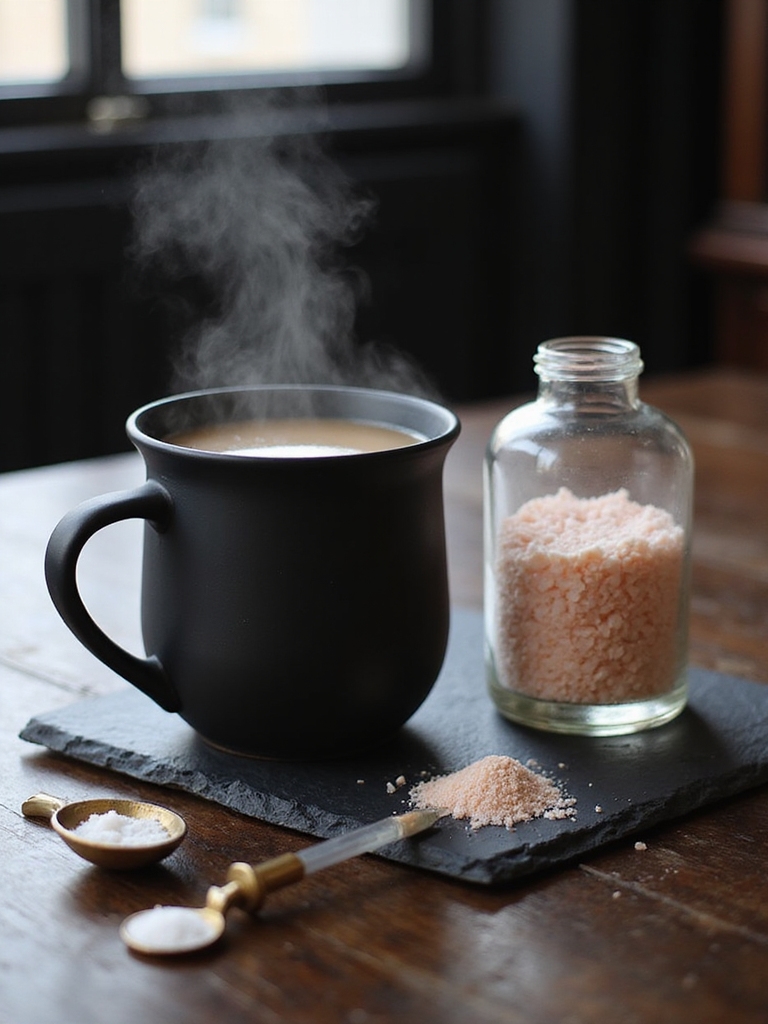
Dial in your salts and you’ll stop the wobbly-head, muscle-cramp, and bathroom-chandelier moments that surprise new carnivores — because on zero-carb plans you’re not just cutting sugar, you’re flushing water and electrolytes hard and fast.
You mix sodium (sea salt or pink Himalayan), potassium (unflavored potassium chloride), and a touch of magnesium (citrate or glycinate) into cold water; taste, tweak, repeat.
Typical ratios: a pinch to a quarter teaspoon salt, 100–300 mg potassium, 100–200 mg magnesium per liter.
Sip slowly. Label jars. Adjust for sweat, activity, and symptoms.
These simple mixes keep you steady, lucid, and oddly serene.
Coffee on Carnivore: Timing and Tips

You’ll want to time your cup where it helps energy and fasting goals—usually mid-morning rather than right after waking or too late in the day.
Add fats like butter or tallow sparingly to smooth the jitters without sabotaging digestion, and watch how your body reacts.
If you get acid, cramps, or loose stools, try cutting strength, spacing coffee from meals, or swapping to darker roasts until things settle.
Optimal Coffee Timing
Usually, timing your coffee on carnivore matters more than you think — drink it too early and it can blunt appetite, too late and it can disrupt sleep or ketone patterns. You want rhythm, not ritual. Sip when hunger aligns with your goals, not when habit clicks a switch.
Try these simple anchors:
- Morning pause: wait 30–60 minutes after waking to let cortisol settle and let true hunger arrive.
- Pre-meal lift: drink 15–30 minutes before eating to sharpen focus and enjoyment of meat.
- No-go window: avoid caffeine within 6 hours of bedtime to protect sleep and metabolic calm.
Listen to your body; tune the beat.
Adding Fats Safely
If you time your coffee well, the next question becomes what you mix into it — and here’s where fat choices quietly steer hunger, ketones and digestion.
You’ll want butter or tallow for stability and simple flavor; they blend with warmth, calm appetite, and keep ketosis humming without theatrical swings.
MCT oil jumps in faster, nudging ketone production and mental zing, but start small — it’s efficient and insistent.
Salt balances richness; a drop of creamct reduces harshness if you tolerate dairy.
Measure, don’t guess. Taste and tolerance tell you more than rules; iterate gently, observe, adjust.
Minimizing Digestive Issues
When coffee stirs your gut like an unexpected drumroll, slow the tempo: sip, note, and tweak rather than blitzing through a mug and hoping for the best.
You’ll learn patterns fast: timing, strength, and whether fat cushions the blow.
Try these simple approaches and listen to your belly.
- Brew gentler — lighter roast, cooler water, shorter steep — to cut acidity and jitter.
- Time it — after a meal or with added fat to blunt stimulation; avoid fasting gut provocations.
- Scale back — reduce cups, dilute with broth or water, and accept slower caffeine climbs.
Tea on Carnivore: Which Types Work?
Often you’ll find tea treated like a gray area on carnivore—some swear by a cup of black or green without issue, others see it as a gateway to non-animal flavors and stomach trouble.
You can usually tolerate plain black, green, or white tea if you keep it unsweetened and light; the leaves are minimal interference, caffeine predictable.
Herbal teas are trickier—peppermint or chamomile might soothe, but blends with fruit, honey, or licorice push you away from strict carnivore aims.
Listen to your gut: if a cup sparks cravings, bloating, or mood shifts, skip it.
If not, sip sparingly and enjoy.
Dairy and Cream for Flexible Carnivores
If you’re easing into carnivore, a splash of milk can feel like permission to breathe while your gut recalibrates.
Reach for heavy cream to enrich coffee or sauces without the lactose hit, and remember cultured options—yogurt, kefir, aged cheeses—can tame intolerance and add beneficial bacteria.
Let’s sort when and how each fits your flex-carnivore rhythm.
Milk For Transitioning Carnivores
You’ll likely reach for milk or cream as you soften from strict carnivore to a more flexible version, and that’s fine — dairy can smooth the shift if you tolerate it.
You’ll sip, measure, test reactions, and enjoy the small velvet of milk on your tongue.
- Start with small amounts — a splash in coffee reveals tolerance without drama.
- Choose cultured dairy first; yogurt or kefir often sits easier in the gut.
- Track symptoms and energy; milk can be comforting or noisy, depending on you.
Trust instincts, keep it simple, and let dairy be a bridge, not a crutch.
Heavy Cream Uses
Think of heavy cream as your savory velvet: it enriches sauces, bulks up coffee, and patches texture gaps when you’re easing back into plants or keeping things meat-first.
You’ll whisk a spoonful into pan juices to marry fat and flavor, stir it into bone broth for silk, or fold it gently into egg custards and pâtés to heighten mouthfeel without stealing focus.
It steadies dressings, softens spice, and gives coffee a velvety heft that water can’t mimic.
Use sparingly, taste as you go, and let cream amplify meat-forward dishes rather than compete with them.
Fermented Dairy Options
After you’ve used heavy cream to silk sauces and bolster coffee, fermented dairy offers a tangy counterpoint that plays well with meat-forward plates.
You’ll find brightness in cultured cream that cuts fat’s richness and a cool, slow tang in yogurt that soothes spice.
Try these modest accompaniments when you want contrast without carbs:
- Crème fraîche — rich, tangy, splashed on roasted beef or seared fish.
- Plain full-fat yogurt — spooned beside lamb kebabs for creamy relief.
- Kefir — drink or drizzle; effervescent, probiotic, and lightly sour against fattier cuts.
Use sparingly; respect carnivore simplicity and enjoy the subtle lift.
Gelatin vs Collagen Drinks: Pros/Cons
Although they both come from the connective tissue of animals, gelatin and collagen drinks behave differently in your cup and in your body: gelatin gels and gives you that wobbly mouthfeel, while hydrolyzed collagen dissolves clear and slips past the stomach faster.
You’ll notice gelatin’s texture fills the mouth, slows sipping, and can soothe digestion; it’s tactile, comforting, and sometimes theatrical.
Collagen’s neutral, rapid-absorbent nature fits busy mornings and stealthy protein boosts. Gelatin supplies gel-forming amino patterns; collagen offers peptides that circulate without pomp.
Choose texture if you crave ritual, choose collagen if you want convenience and subtle nutritional support.
Adding Animal Fats to Drinks Safely
When you stir a slab of tallow or a spoonful of ghee into your morning cup, you’re playing with more than flavor—you’re balancing texture, temperature, and digestive load.
You’ll want to respect heat (don’t scorch), emulsify for silkiness, and start small so your gut adapts. Think of fat as seasoning, not bulk.
- Warm, not boiling—protect aroma and structure.
- Use a whisk or blender—avoid oily separation.
- Begin with half a teaspoon, increase over days.
You’ll find ritual in the wobble of oil, a quiet ceremony that steadies appetite and mood.
Reading Labels on Store-Bought Drinks
Scan the back of the bottle like you mean it—those tiny lines tell you whether a drink belongs in your carnivore rotation or is a sugary impostor.
You’ll hunt for simple ingredient lists: water, salt, perhaps natural flavor or collagen. If you see long chemical names or plant syrups, set it down.
Check serving size and calories; low numbers with zero sugar suggest safety. Sodium can be your friend after heavy meats, so don’t reflexively avoid it.
Nutrition panels are your map—read them with curiosity, skepticism, and a little delight, because clarity keeps your plate honest and your thirst satisfied.
Avoiding Hidden Carbs and Additives
If you want to keep your carnivore plan honest, get suspicious about anything that isn’t salt, water, or animal-derived protein — manufacturers sneak carbs into drinks under crafty names like dextrose, maltodextrin, fruit concentrate, and even “natural flavors.”
Read ingredient lists as if they’re a confession; a single unfamiliar word can hide sugars, starches, or plant extracts that nudge you out of ketosis or spark cravings.
You’ll want simple rules:
- Choose drinks with two or fewer ingredients.
- Avoid anything with “-ose,” starches, or plant extracts.
- Favor bone broth, plain collagen waters, and straight meat broths.
Trust taste and small labels.
Managing Electrolytes During Transition
Because your body dumps water and salt fast as it burns through glycogen, you’ll likely feel lightheaded, crampy, and cranky unless you proactively manage electrolytes during the shift.
You’ll want sodium first: salted broths, a pinch on meat, or bouillon between meals keeps blood volume polite.
Potassium follows—think liver, or a measured low-carb supplement—so muscles don’t protest.
Magnesium calms nerves and sleep; a small nightly dose helps.
Sip slowly, don’t flood yourself; taste guides you. Track symptoms and adjust gently. If dizziness or palpitations persist, pause and check with a clinician rather than soldiering on.
Rotating Drinks to Prevent Nutrient Gaps
Mix up your drinks so you’re not betting all your nutrition on one cup — rotating beverages keeps holes in your intake from opening into real problems.
You’ll keep tastebuds curious and nutrients balanced by sipping purposefully: bone broth one day, chilled raw eggs (if you dare) another, and mineral-rich organ-infused broths alternately.
That gentle swing prevents micronutrient blind spots and boredom.
- Bone broth — collagen, sodium, comfort.
- Organ broths — iron, B12, density.
- Egg or dairy drinks — choline, fat-soluble vitamins.
Rotate with intent; listen to cravings as clues, not commands, and adjust the mix.
Daily Drink Protocols: Strict, Moderate, Relaxed
Usually you’ll pick one protocol and stick with it for a stretch, because consistency lets you see what’s working, but you can also shift between strict, moderate, and relaxed approaches as your goals change.
You’ll choose strict when you want clarity: water, bone broth, maybe black coffee; no plants, no sweeteners, disciplined rhythm.
Moderate lets you add full-fat dairy, occasional electrolytes, maybe tea—practical, forgiving.
Relaxed means savoring a wider range: cream in coffee, herbal tea, the occasional fermented animal product, still avoiding carbs.
Rotate based on energy, mood, and social life; listen to hunger cues and the subtle language of your body.
How to Test What Works for You
You’ve picked a protocol and lived with it long enough to notice patterns, so now it’s time to experiment like a careful scientist with a strong sense of taste.
You’ll tinker, measure, and keep a sly journal — because anecdote flavored by notes becomes data. Test one variable at a time: swap coffee for bone broth, add a pinch of salt, or extend fasting windows.
Track energy, digestion, and sleep for a week each. Adjust based on clear shifts, not moods. Trust taste and metrics equally; your body replies in whispers and roars, and you’ll learn to translate both.
- Isolate one change.
- Record daily.
- Compare weeks.
You’ll sip bone broth and sparkling water like a monarch and a monk—opulent marrow one day, austere mineral water the next—because variety keeps you nourished and sane.
Rotate broths, tweak salts, and let coffee or dairy be treats, not crutches. During shift, prioritize electrolytes; when stable, relax into rhythms that suit your body.
Test, note, adjust. You’re not chasing perfection, just better fuel for the life you actually live.


