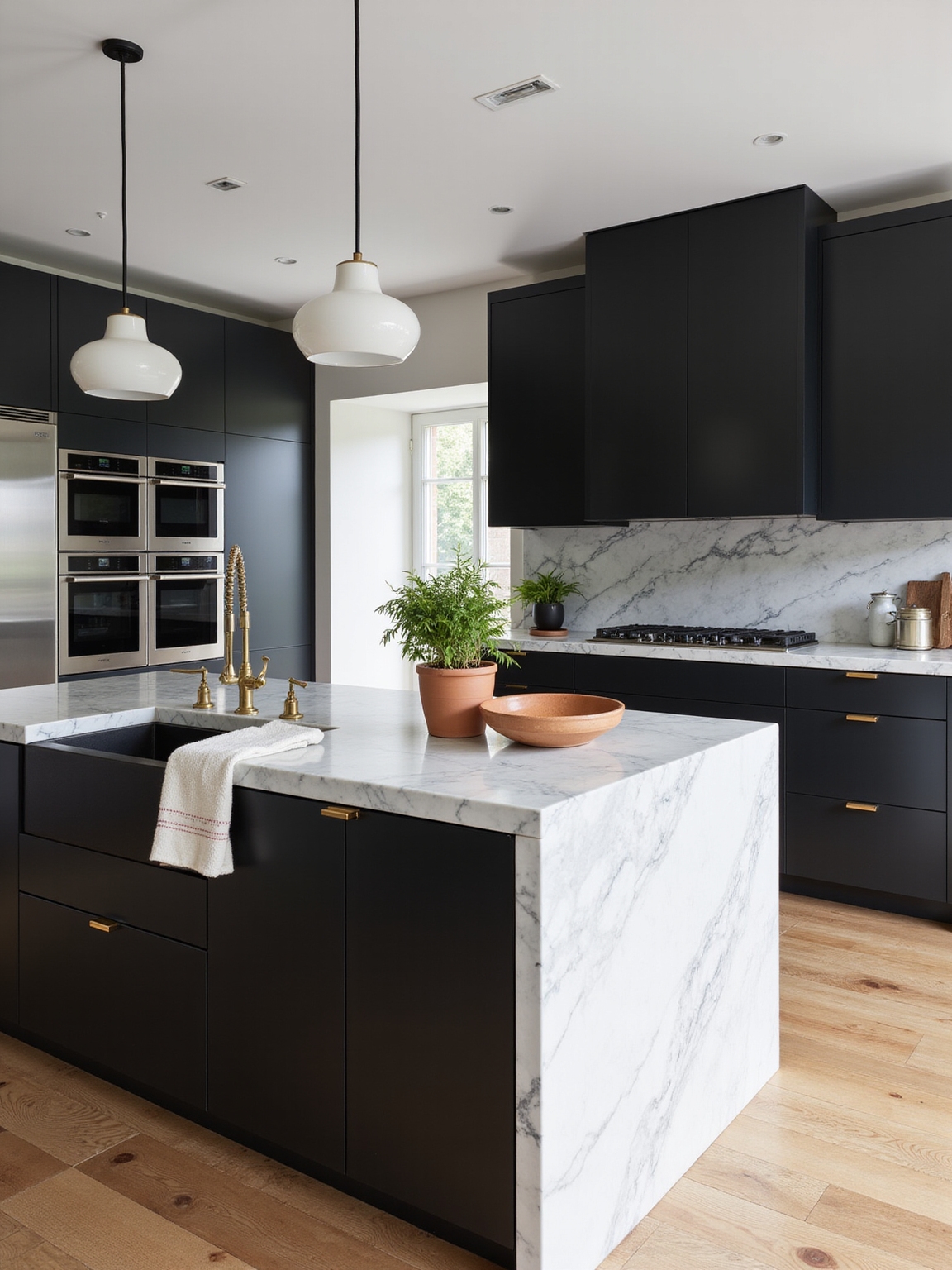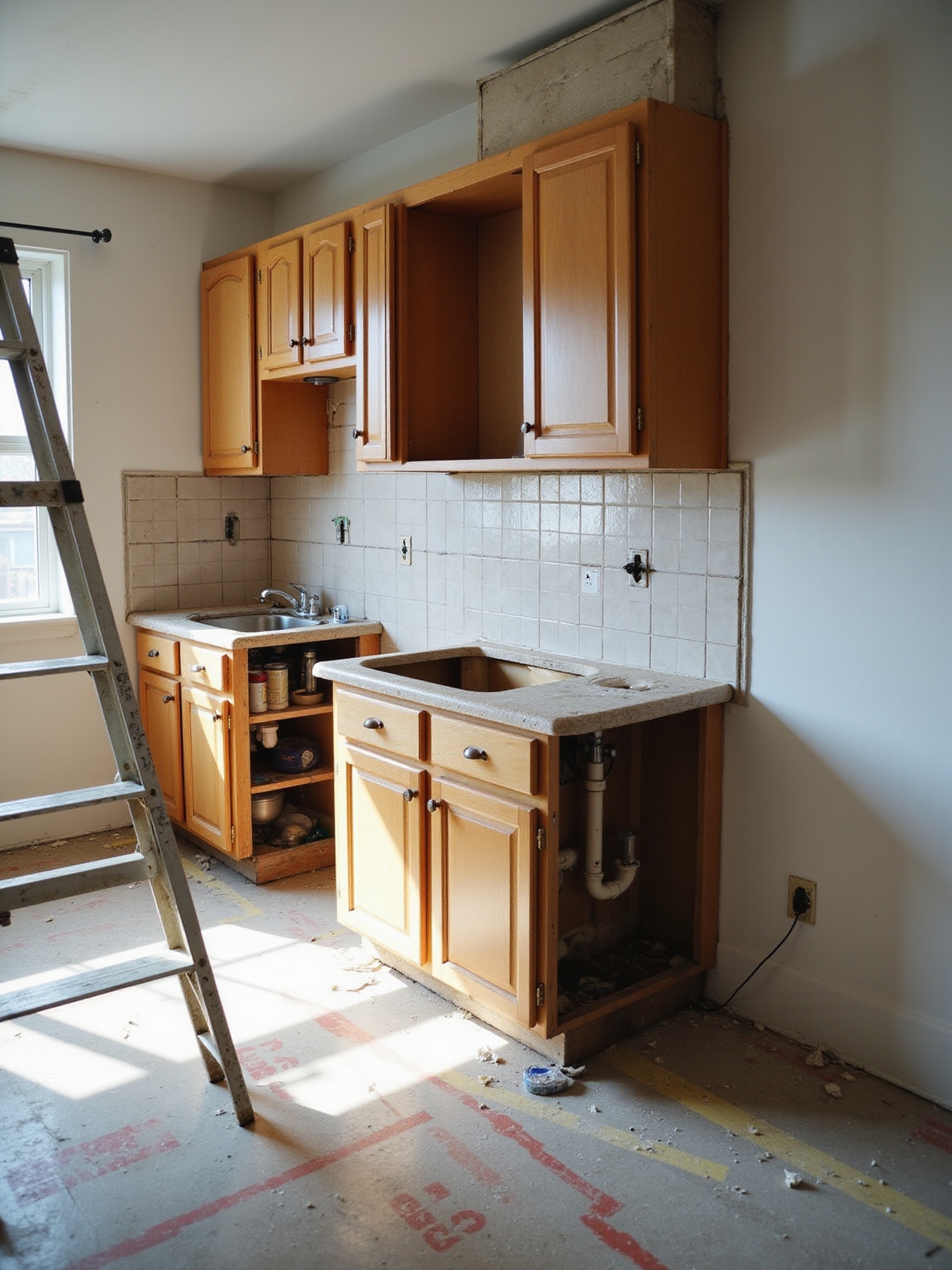


I love mixing function with a soft, farmhouse feel when I define an open kitchen—think waist-high shiplap half-walls with a reclaimed-wood counter, slim matte-black framed glass panels that keep sightlines, or a built-in banquette with hidden drawers to anchor a cozy dining nook.
Sliding barn or pocket doors add flexible privacy, while open shelving and freestanding plant screens balance storage and light. Keep traffic and sightlines in mind, and I’ll show you how to pick the right option next.
How To Choose An Open-Kitchen Partition: 3 Questions To Answer

When I help homeowners pick a partition for an open kitchen, I start by asking three simple questions that quickly reveal what the space — and the people in it — really need: do you want separation or sightlines, how much storage or counter space do you need, and what level of permanence or flexibility fits your lifestyle?
I listen, note traffic flow, measure sightlines, and match materials to daily habits.
A peninsula layout can often provide extra counter space while still maintaining an open feel.
Partial Divider Vs. Full Partition: When To Choose Which
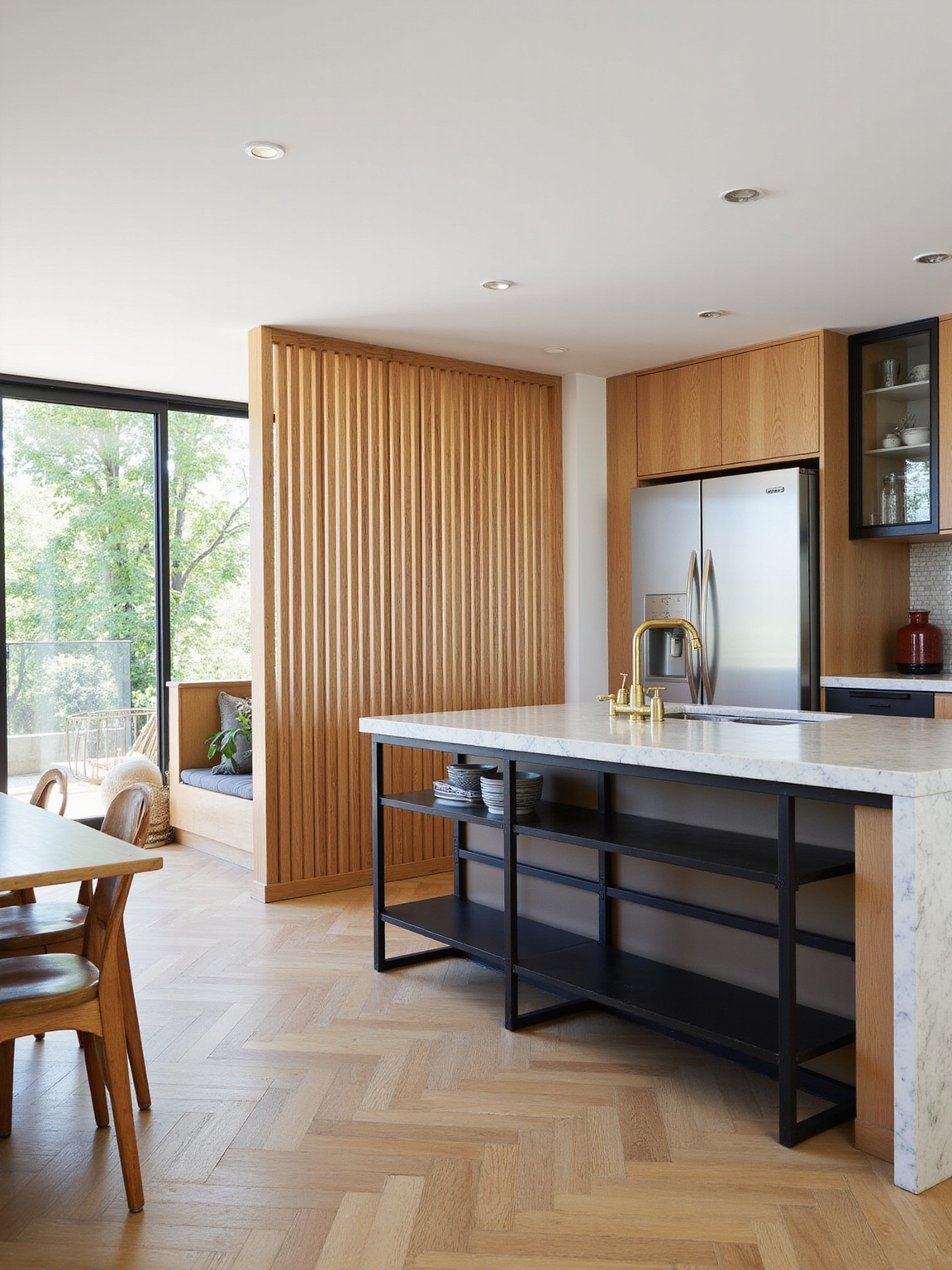
If your answers pointed toward keeping sightlines and a lighter touch, a partial divider often fits better than a full partition.
I’d pick a waist-high shiplap half wall when I want casual separation—it defines zones without closing space.
Choose a full partition when you need sound control, storage, or a dramatic backdrop.
I balance function with farmhouse charm and measured proportion.
I also like to incorporate rustic elements like reclaimed wood or distressed finishes to reinforce the modern farmhouse feel.
Glass & Metal Screens For Open Kitchen Partitions

I like using glass and metal screens when I want separation without shutting a room away.
Slim glass panels framed in light-filtering steel keep sightlines open while softening glare and noise.
Let me show you how frame finishes and glass thickness change both the look and the feel.
Consider pairing these screens with sculptural vent hoods to make the whole kitchen feel like a unified work of art.
Light-Filtering Steel Frames
I often reach for light-filtering steel frames when I want to keep an open kitchen feeling while still defining the space; their slim metal grids and glass panels let sunlight pass through but soften sightlines so the kitchen reads as its own room without feeling closed off.
I like matte black frames, muted patina, and seeded glass to add texture and farmhouse warmth while keeping sightlines airy.
These frames are a key element in creating moody black kitchens that radiate luxe elegance.
Slim Glass Paneling
How do you keep an open kitchen airy without losing a sense of room definition? I use slim glass paneling set in matte black or aged brass frames to separate spaces while preserving light.
The panels feel delicate yet sturdy, echoing farmhouse metals and clear sightlines. I recommend narrow mullions, tempered glass, and simple hardware for a clean, intentional partition that won’t overwhelm.
Sliding glass doors also offer a seamless transition and visual continuity with adjoining rooms sliding glass.
Sliding Barn & Pocket Doors For Flexible Separation
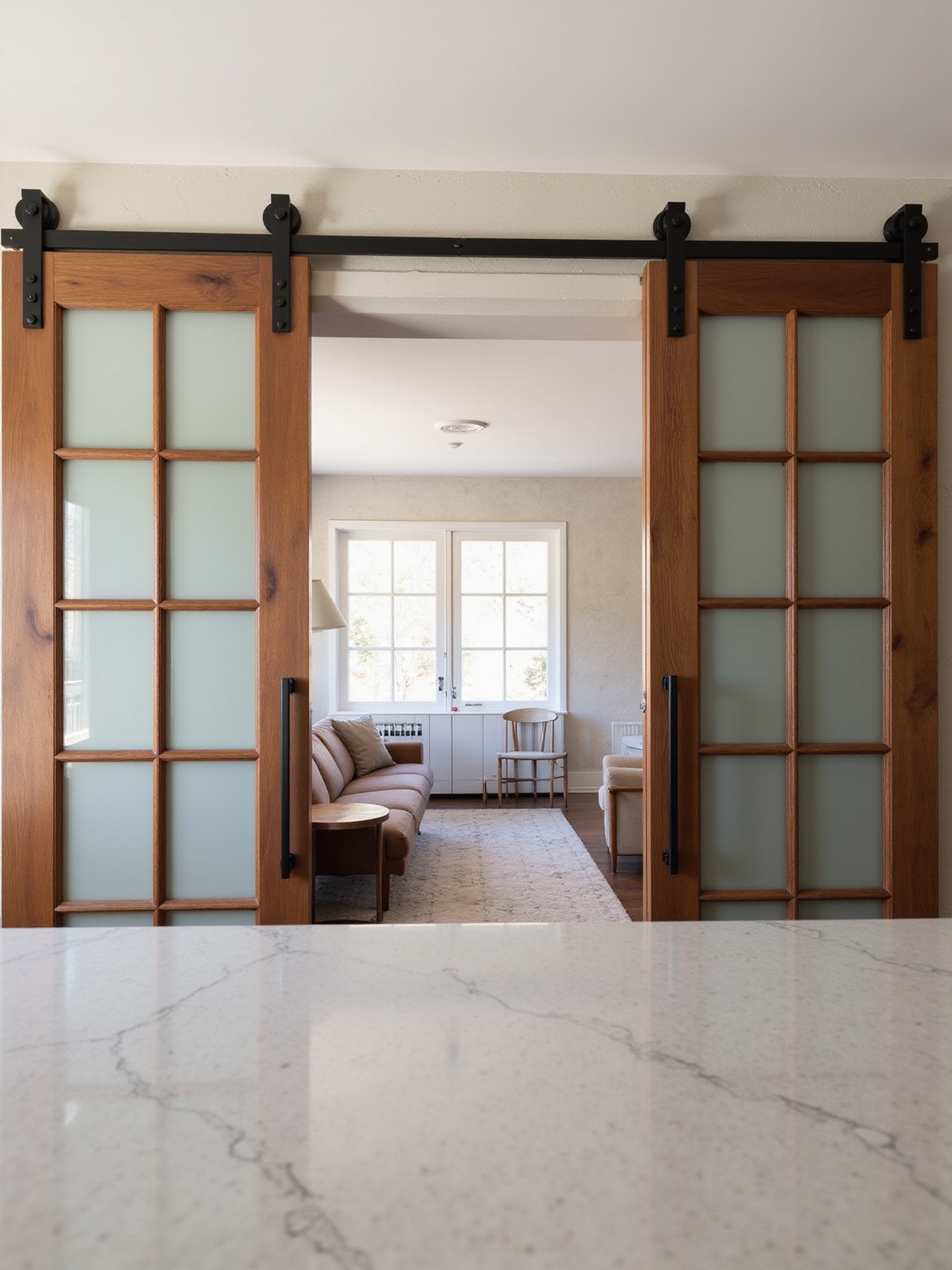
I love using sliding barn and pocket doors when I want flexible separation that doesn’t eat up floor space—pocket doors disappear into the wall and barn doors glide neatly along the outside.
I’ll walk you through choosing styles and finishes that match a farmhouse kitchen, from distressed pine to matte black hardware, and how those choices affect light and sightlines.
We’ll also look at how different door materials balance natural light with privacy so you get the right feel for cooking, dining, or entertaining.
You can achieve a custom look without bespoke carpentry by using standard modular units and fittings from major suppliers like IKEA to streamline installation and keep costs down, especially when planning door openings and hardware for standard units.
Space-Saving Operation
Slide a door and the room changes its mood — that’s the magic I love about using sliding barn and pocket doors in open-concept kitchens.
They tuck away, free floor space, and let traffic flow without swinging hazards. I pick hardware and tracks for smooth, quiet action.
- Saves footprint for islands.
- Keeps walkways clear.
- Lets zones shift instantly.
Architects often rely on space-saving layout tricks to make these transitions both functional and stylish.
Style And Finish
Think of the door as a finishing touch that sets the tone—I pick barn and pocket doors not just for function but for how their materials and hardware sing with the rest of the kitchen.
I favor reclaimed wood, matte black pulls, and soft rails that echo cabinetry. Sliding options keep sightlines, pocket doors vanish when needed, and details like beadboard or glass panels make a quiet, tailored statement.
I also recommend considering simple hardware swaps like updated pulls and hinges to instantly elevate your cabinet look and tie the door styling into the kitchen’s overall finish, especially when choosing matte black pulls to coordinate finishes.
Light And Privacy
Alongside finish and hardware, light and privacy shape how a kitchen feels and functions, so I tune sliding barn and pocket doors to do both.
- Frosted glass panels let morning sun through while hiding clutter.
- Soft-stained wood absorbs glare, creating cozy, even light.
- Pocket doors vanish when open, giving full openness or quiet separation in seconds.
Open Shelving As A Room-Divider With Storage
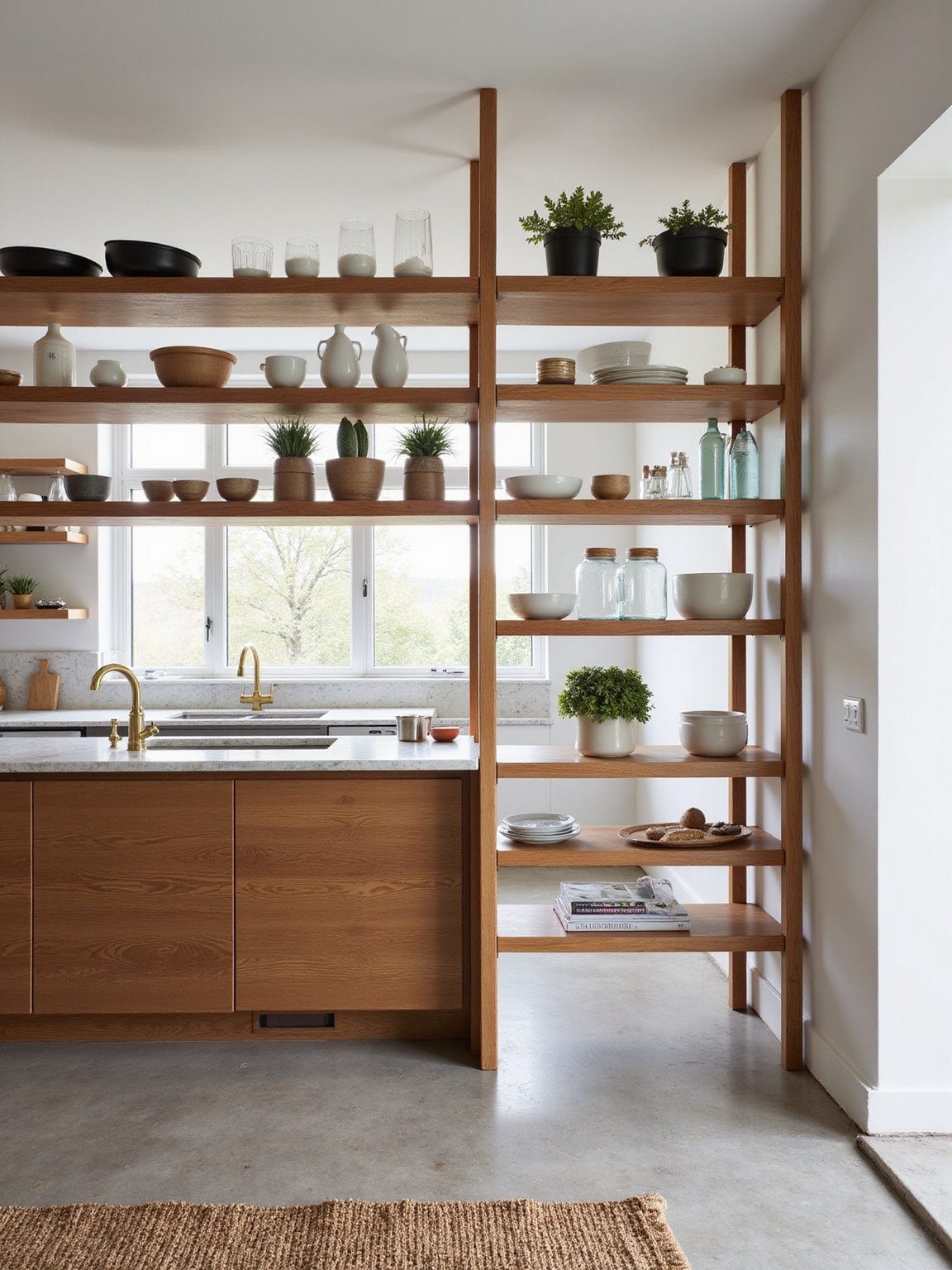
With a row of open shelves standing between the kitchen and living area, I get the best of both worlds: an airy sightline and useful storage that doesn’t feel closed off.
I style baskets, pottery, and everyday dishes for easy reach, balancing display with concealed bins.
Natural wood, soft paint, and woven textures keep the farmhouse warmth while organizing clutter thoughtfully and accessibly.
Freestanding Cabinetry And Islands That Anchor Zones
I love how a freestanding cabinet or island becomes a furniture-piece anchor that defines the kitchen’s edge without building walls; I choose pieces with turned legs, beadboard fronts, and warm wood tops to add texture and function.
- Storage-focused base cabinets for pantry overflow.
- Seating-friendly islands that invite casual meals.
- Display nooks for pottery and cookbooks, keeping the room cozy.
Half-Walls & Counter-Height Dividers For Casual Separation
After anchoring a space with a freestanding island, I often reach for half-walls or counter-height dividers to create a gentler boundary that still keeps sightlines open.
I like beadboard panels topped with reclaimed wood counters for warmth, adding a ledge for stools or plants.
They define the kitchen without closing it off, offer extra storage or art display, and feel comfortably informal.
Curtains & Fabric Panels: Cheap, Soft, And Temporary
Curtains and fabric panels are my go-to when I want a quick, cozy divider that won’t break the bank.
I hang vintage linen or checked cotton on a simple rod to soften sightlines and absorb kitchen noise.
They’re easy to swap for seasons or wash.
- budget-friendly swap
- easy installation
- seasonal texture change
Plant Walls And Living Partitions For A Biophilic Feel
I love bringing the garden indoors, so a vertical garden wall becomes a living focal point that softens sightlines and freshens the air.
For more flexibility, I often suggest freestanding living screens—they’re easy to move and let you control light and privacy without building walls. Both options give an open kitchen a warm, farmhouse rhythm while keeping the space functional and breathable.
Vertical Garden Walls
Often I reach for greenery when a room feels too open, and a vertical garden wall has become my favorite way to bring life and purpose into an open-concept kitchen.
I tend, prune, and plan with a practical eye: moisture control, light, and plant choice matter.
I like simple systems that feel rustic and intentional:
- Herbs in shallow pockets for easy harvesting
- Ferns and pothos for texture
- Succulents where light is limited
Freestanding Living Screens
Freestanding living screens feel like portable garden-rooms that I place where the kitchen needs a little privacy and a lot more life.
I choose reclaimed wood frames, mix trailing pothos with rosemary and ferns, and angle the screen to catch light without blocking flow.
They soften noise, hide clutter, and bring scent and texture—practical, cozy, and unmistakably farmhouse.
Decorative Metal And Laser-Cut Screens As Focal Points
Drawing on years of kitchen makeovers, I love how decorative metal and laser-cut screens instantly give an open plan a measured sense of enclosure without feeling heavy.
They layer texture, pattern, and light to anchor a space while keeping sightlines airy.
- Weathered iron adds farmhouse character.
- Geometric cuts introduce modern rhythm.
- Patinas and paint tailor warmth and contrast.
Glass Block & Frosted Panels: Privacy With Light
I love how glass block and frosted panels keep a kitchen bright while softening sightlines, so you get daylight without feeling exposed.
I’ll walk you through how different textures and thicknesses scatter light for an even glow, and which patterns give more privacy versus those that favor openness.
Then we can talk practical placement—half-walls, full screens, or inserts—so you can choose the mix of light diffusion and seclusion that fits your farmhouse kitchen.
Light Diffusion Benefits
A glass block or frosted panel can be the quiet hero in an open-concept kitchen, letting me keep sightlines and daylight while still giving you privacy where it matters most.
I love how soft light fills the room without glare.
- Evenly scatters sunlight for gentle moods.
- Hides clutter without darkness.
- Preserves warmth and visual connection.
Design And Privacy Options
When I’m choosing glass block or frosted panels for an open kitchen, I focus on balancing daylight with deliberate privacy—those materials let me soften harsh sun while keeping sightlines and a sense of togetherness.
I pick muted textures, grid patterns, or fluted glass to hide clutter yet admit glow. Placement, framing, and height control views, while warm trim ties the look to farmhouse charm.
Built-In Banquettes And Bench Seating To Define Dining Nooks
You’ll find that built-in banquettes and bench seating make a neat, cozy way to carve out a dining nook without putting up walls.
I love how they anchor a corner, add storage, and invite lingering meals.
Consider these simple touches:
- Cushioned bench with tucked drawers.
- Wrapped beadboard back for farmhouse charm.
- Mix of pillows for seasonal color and comfort.
Lighting & Flooring Strategies That Reinforce A Divider
Although it’s subtle, I rely on lighting and flooring to pull a room into two distinct zones without building a wall.
I layer warm pendant light over the dining side and recessed task lights in the kitchen, then shift flooring—wide oak planks for dining, durable tile by the range—to signal function.
These tactile, luminous cues feel intentional and cozy in a farmhouse plan.
Cost, Timeline, And DIY Difficulty By Partition Type
Lighting and flooring set the mood, but budget, schedule, and skill level usually decide which divider you’ll actually build.
I’ll walk you through realistic costs, typical timelines, and how hands-on each option is so you can pick confidently.
- Open shelving: low cost, weekend install, easy DIY with basic tools.
- Half wall: moderate cost, 1–3 days, needs drywall and framing skills.
- Glass or metal screen: higher cost, 1–2 weeks, pro help often required.
Placement Checklist & Measurement Tips Before Install
Before I mark a single line, I map out sightlines, traffic flow, and appliance clearances so the partition actually improves the space instead of getting in the way.
I measure doorway widths, island overhangs, and path widths, note outlet and vent locations, and sketch elevations.
I double‑check ceiling heights, swing arcs, and sightline anchors, then add a 3/4″ tolerance for trim and finish.
You’ve got options—like planting a row of apple trees between two fields, each partition gives your open kitchen its own mood.
Choose the scale, materials, and lighting that feel like home: a glass-and-metal screen for light, a banquette for cozy, or open shelving for lived-in charm.
Measure carefully, plan the timeline, and don’t rush the details. With thoughtful choices, your kitchen and dining spaces will settle into a warm, well-defined rhythm.