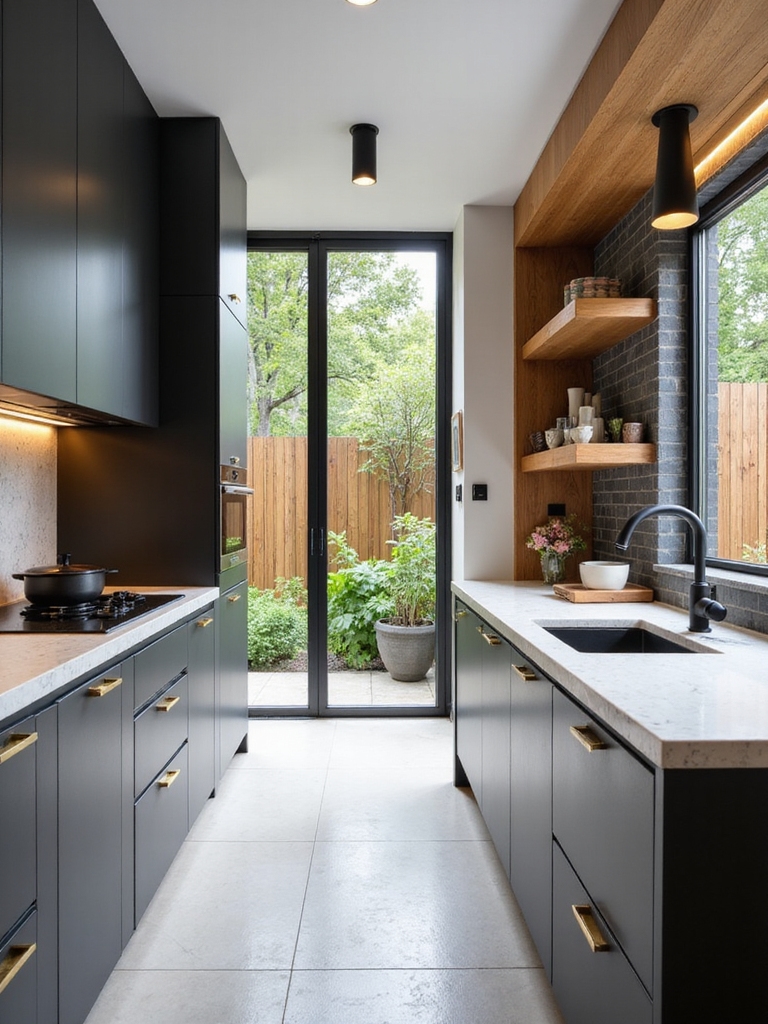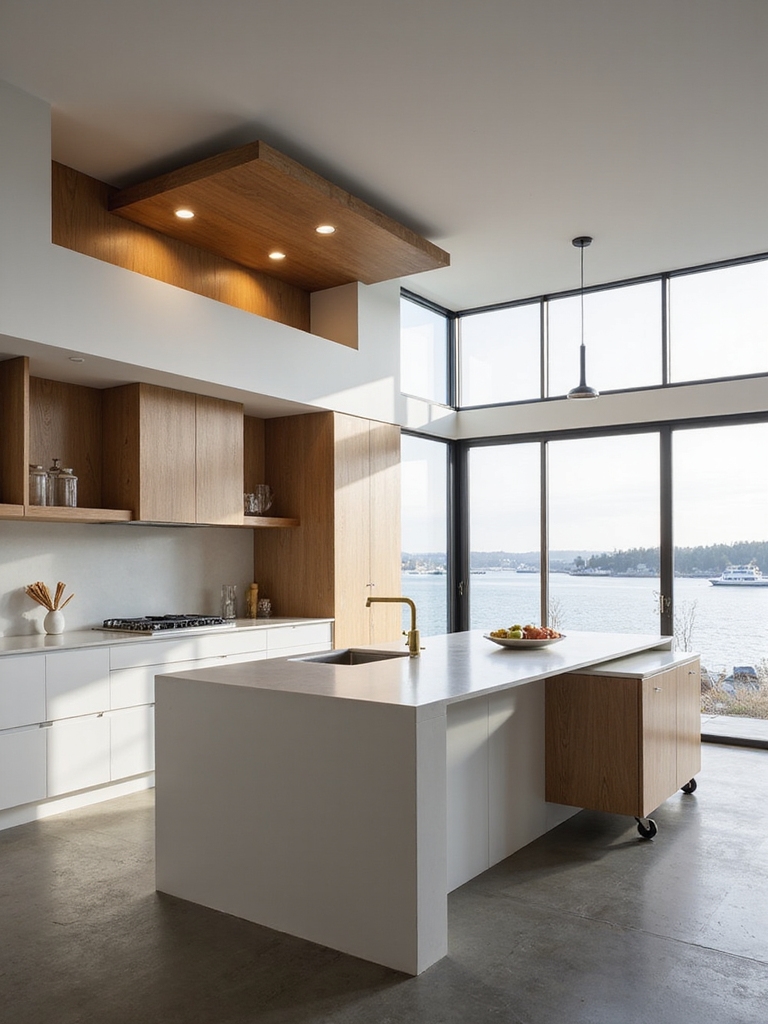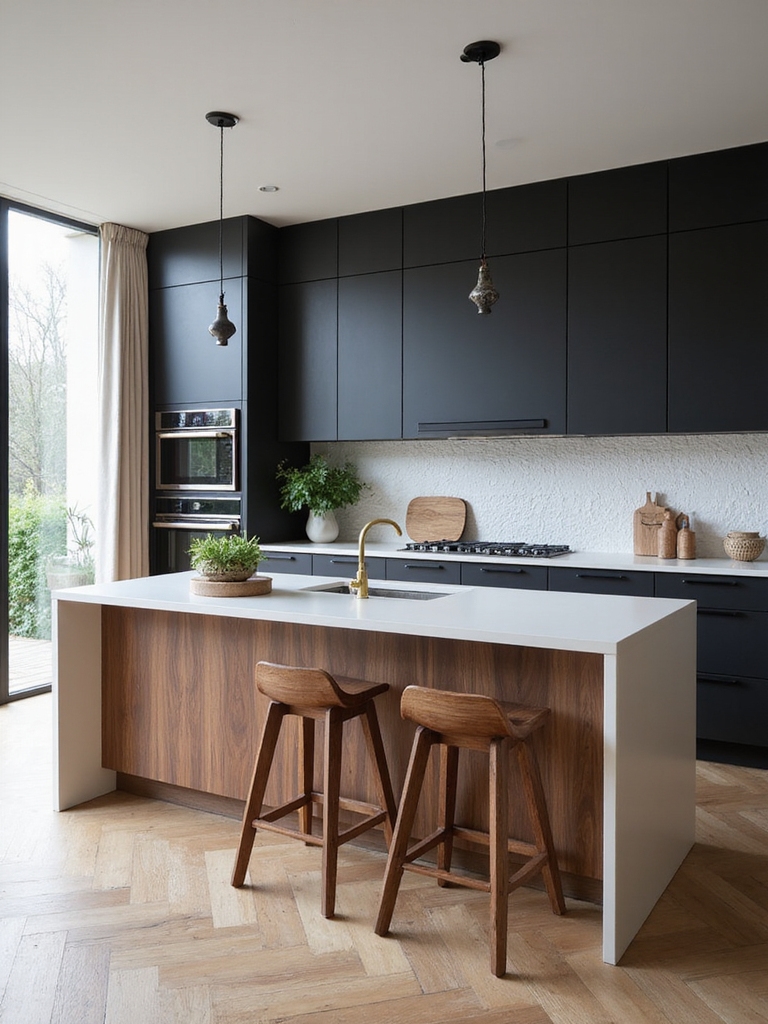


I like kitchens that feel calm and useful: handleless cabinets, warm wood, and honed quartz make surfaces easy to care for and forgiving of life. I zone tasks—coffee, prep, cook, clean—so tools live where I actually use them, and I hide small appliances in deep drawers or an appliance garage.
Daily five-minute resets and a strict keep/donate/store rule keep counters clear, and I’ll show how a few simple swaps make it all effortless.
5 Core Principles for a Modern Minimalist Kitchen

When I think about a modern minimalist kitchen, I focus on function first and form will follow: clean lines, uncluttered surfaces, and only the tools I actually use within reach.
I favor natural materials, honest finishes, and purposeful storage. I keep color muted, light abundant, and movement easy.
Every item earns its place, and the room breathes like a well-tended farmhouse. Modern minimal designs often draw on Serene Modern principles to create calm, zen-like spaces.
Quick Start: 5 Steps to Declutter and Design

I’ll start by clearing out items I never use so the counters and cupboards can finally breathe.
Then I’ll zone the space for cooking, prep, and cleanup so everything’s within easy reach.
Finally, I’ll pick a few multi-use pieces that keep the look simple and make daily tasks easier.
A small collection of minimal counter decor can enhance a sleek prep area while keeping clutter to a minimum.
Clear Out Unused Items
Let’s roll up our sleeves and clear out what we don’t use: I start by scanning shelves and drawers, pulling out mismatched mugs, duplicate gadgets, and that one baking pan that’s never left the back.
I sort items into keep, donate, or toss piles, whispering thanks to things leaving. The kitchen breathes easier, surfaces open, and daily moments feel quieter and more honest.
I also adopt simple daily habits and tools like designated bins and a weekly wipe-down to maintain a neat and organized kitchen for the long term.
Zone For Daily Tasks
After clearing out the clutter, I carve the kitchen into simple zones so daily tasks flow without fuss.
I keep a morning coffee corner, a prep area near the sink, and a cooking station with essential tools within reach.
Open shelves hold everyday dishes; a small landing by the stove catches hot pans.
This routine keeps mornings calm and everything purposeful.
Open shelving proves that less is more when arranged to feel light and intentional.
Choose Multi-Use Pieces
I lean into pieces that pull double duty, saving space and keeping things honest in a small kitchen. I choose a farmhouse table that’s prep surface and dining spot, a butcher block with hidden storage, and stools that tuck under counters.
These multipurpose choices cut clutter, honor function, and keep the room feeling warm and lived-in without excess.
Consider adding a compact island with multifunctional storage to maximize surface area and organization.
Edit Your Belongings: Keep, Donate, or Store (With Checklist)

I’ll walk you through a simple keeps-or-goes routine that helps the kitchen breathe again.
For each item, I ask three quick questions—do I use it, does it bring joy, can someone else benefit—and then decide to keep, donate, or store.
Use the short checklist I’ve included to make fast, clear choices without second-guessing.
Many of these choices work best when paired with innovative storage solutions that free up counter space and streamline daily routines.
Keep, Donate, Or Store
Let’s walk through your cupboards together and decide what stays, what leaves, and what needs a little extra space; I’ll keep the questions simple so choices don’t get overwhelming.
I’ll ask if you use it, love it, or need it seasonally. Keep daily, donate duplicates or unused, store sentimental or seasonal items in labeled boxes.
Gentle, steady progress beats rushing. Consider adding space-saving organizers to maximize efficiency and keep surfaces clear.
Quick Decision Checklist
When decisions feel heavy, I keep a simple checklist in my apron pocket so clearing the kitchen stays calm and steady: Do I use it weekly? If yes, keep.
If no but still loved, store. If rarely used and no joy, donate. Ask: does it fit my flow, space, and budget? One quick pass and the countertop breathes easier.
Keep Your Kitchen Counter Clutter-Free With Minimal Rules and remember to follow minimalist rules to maintain long-term order.
Plan a Layout for Effortless Flow in a Minimalist Kitchen

Because a kitchen should move with you, I start by mapping how I actually cook — the path from prep to stove to cleanup — and then strip the plan down to only what’s needed.
I favor clear sightlines, sensible work triangles, and cozy zones that feel lived-in, not crowded.
- Positioning that shortens steps
- Dedicated landing spots for hot pans
- Open sightlines for easy conversation
Conceal Clutter With Handleless, Integrated Cabinetry

I love how seamless flat-front doors calm the eye, turning a busy kitchen into a peaceful room.
By matching integrated appliance panels and using hidden push-to-open hardware, you keep everything tucked away without sacrificing function.
Let me show you how these choices make clutter disappear and keep your space feeling warm and simple.
Seamless Flat-Front Doors
A flat-front cabinet feels like a deep breath in a busy kitchen; I love how handleless doors and integrated panels tuck everything out of sight so the space reads calm and uncluttered.
I pick warm wood finishes and matte paints to keep things cozy while simple lines do the work.
- Smooth surfaces hide visual noise
- Soft-touch mechanisms feel gentle
- Natural tones add rustic warmth
Integrated Appliance Panels
Tuck your appliances behind matching cabinet fronts and you’ll instantly calm the room; I love how integrated panels keep the refrigerator, dishwasher, and even tall ovens from breaking the visual flow.
They let wood grain and simple lines sing, creating a cozy, rustic vibe while hiding utility. It’s an effortless way to feel tidy and grounded without fuss or flashy hardware.
Hidden Push-To-Open Hardware
You’ll love how push-to-open hardware disappears into the cabinetry and lets those clean, handleless surfaces do the talking; I lean into it when I want my kitchen to feel calm and uncluttered.
It keeps lines simple, hides handles, and makes daily routines effortless.
Try these ideas to tame visual noise:
- Seamless fronts for a cottage-meets-modern look
- Soft-close for gentle, rustic comfort
- Strategic placement for easy reach
Organize Small Appliances: Drawer Systems and Appliance Garages
When I’m designing a minimalist kitchen, I favor drawer systems and appliance garages because they keep counters clear without hiding the kitchen’s soul; they give each gadget a purposeful place so we’re not digging through cupboards or moving things around to find the mixer or toaster.
I tuck the slow cooker and blender away, label drawers, and use pull-out trays for easy access—simple, warm, and practical.
How to Style Open Shelving Without Adding Clutter
I like to keep open shelves feeling intentional, not like a catchall for every dish and gadget we own. I balance function and beauty: limited plates, a few bowls, and seasonal decor.
I edit often, keep neutrals, and leave breathing room so each piece matters.
- Curate by color and use
- Mix closed containers with display items
- Rotate decor by season
Design a Multipurpose Island That Frees Counters
A workbench-style island changes how I use my kitchen, turning it into a hub that clears countertops and keeps the room feeling open.
I tuck appliances, chopping boards, and baskets into deep drawers, add a butcher-block top for prep, and hang a rail for utensils.
It becomes dining, homework, and staging space—practical, simple, and comfortably rustic without cluttering counters.
Low‑Maintenance Countertops and Seamless Backsplash Choices
I like choosing countertops that stand up to daily life—quartz or honed concrete give you durability without fuss.
For a truly minimalist look, I prefer grout‑free backsplashes like large slabs or continuous stainless steel that wipe clean in seconds.
Together they keep the kitchen feeling calm, practical, and easy to care for.
Durable Low‑Maintenance Surfaces
Think about surfaces you can live with every day—I’ll walk you through options that cut fuss without killing character.
I prefer materials that shrug off spills, age gracefully, and stay visually calm so your kitchen breathes.
Choose textures and tones that feel lived‑in, not fussy.
- Honed quartz for stain resistance and soft matte warmth
- Porcelain slab for toughness and easy wiping
- Waxed reclaimed wood for patina and simple upkeep
Seamless Grout‑Free Backsplashes
When you want a kitchen that feels calm and easy to live in, I reach for grout‑free backsplashes—because they wipe clean, read as one continuous surface, and let the countertop breathe without visual clutter.
I choose honed stone or large porcelain slabs for warmth and durability, pair them with matte fixtures, and enjoy a tidy, rustic look that’s effortless to maintain and quietly inviting.
Integrate Appliances for a Streamlined Minimalist Look
Though it may seem counterintuitive, I find that tucking appliances out of sight is the quickest way to make a kitchen feel calm and intentional.
I hide the noisy bits, keep counters clear, and choose paneled fronts that whisper rather than shout.
- Integrate fridge and dishwasher with cabinet panels
- Use built‑in microwaves at shoulder height
- Stow small appliances behind lift‑up doors
Lighting That Defines Zones and Keeps Surfaces Calm
Because light shapes how we move through a kitchen, I use layered lighting to carve out work zones and keep countertops feeling calm.
I rely on soft under-cabinet strips for prep, warm pendant pools above an island for gathering, and subtle toe-kick or wall-wash accents to guide movement.
Light becomes a quiet organizer, revealing surfaces when needed and letting them rest when not.
Choose Minimal Hardware and Intentional Fixtures
I lean into pared-back hardware and carefully chosen fixtures to keep the kitchen feeling honest and uncluttered.
I choose matte knobs, slim pulls, and simple faucets that whisper rather than shout.
Each piece earns its place, matching my wood tones and soft light.
- Matte black knobs for subtle contrast
- Brass faucets for warm character
- Slim pulls to preserve clean lines
Durable Floors and Wall Finishes That Hide Wear and Dampen Sound
I lean on durable floors and forgiving wall finishes to keep the kitchen looking lived-in without feeling tired; they soak up daily life and quiet the clatter so we can actually enjoy being here.
I prefer textured porcelain or warm-aged timber and matte limewash walls — they mask scuffs, resist stains, and soften footsteps.
Practical, humble materials make the room calm and enduring.
Daily Habits and Workstation Setups to Keep Counters Clear
Usually I clear surfaces as I go, so countertops never become a catchall that drains the kitchen’s calm.
I set small routines and a tidy workstation: a chopping board that slides into a bin, a single-tool coffee corner, and a daily five-minute reset.
Those little rituals keep things usable and peaceful, like a well-loved farmhouse counter that’s always ready for company.
- Keep one-purpose zones
- Stash prep tools nearby
- End-day five-minute sweep
Budget Swaps Versus Where to Invest for Durability
When I plan a kitchen refresh, I weigh cheap swaps against places worth a little splurge: small appliances and decorative accents can save you money, but I invest in worktops, the sink, and cabinet hardware that have to stand up to daily life.
I choose durable counters, a deep stainless sink, solid hinges and a reliable faucet, then curb costs on linens and utensils.
I’ve walked you through ways to make the kitchen breathe again — a calm harbor in the daily rush.
When I clear a counter or choose a warm, durable floor, it feels like pruning a wild garden so the good things can grow.
Keep what you love, hide what you don’t, and design for slow, steady rhythms. Your kitchen will be a simple, honest refuge that welcomes messy life with open arms.