


You’ll feel like a prehistoric king after one ribeye, even if you can’t flip a pan without burning it. You don’t need fancy spices or 12-ingredient sauces—just reliable cuts, eggs, butter or tallow, and salt.
I’ll show you tiny rules, hands-off tricks, and meal-prep shortcuts that keep food boringly simple and wildly satisfying, so you can stop overthinking dinners and actually enjoy the results.
What Is the Carnivore Diet : Who Benefits?
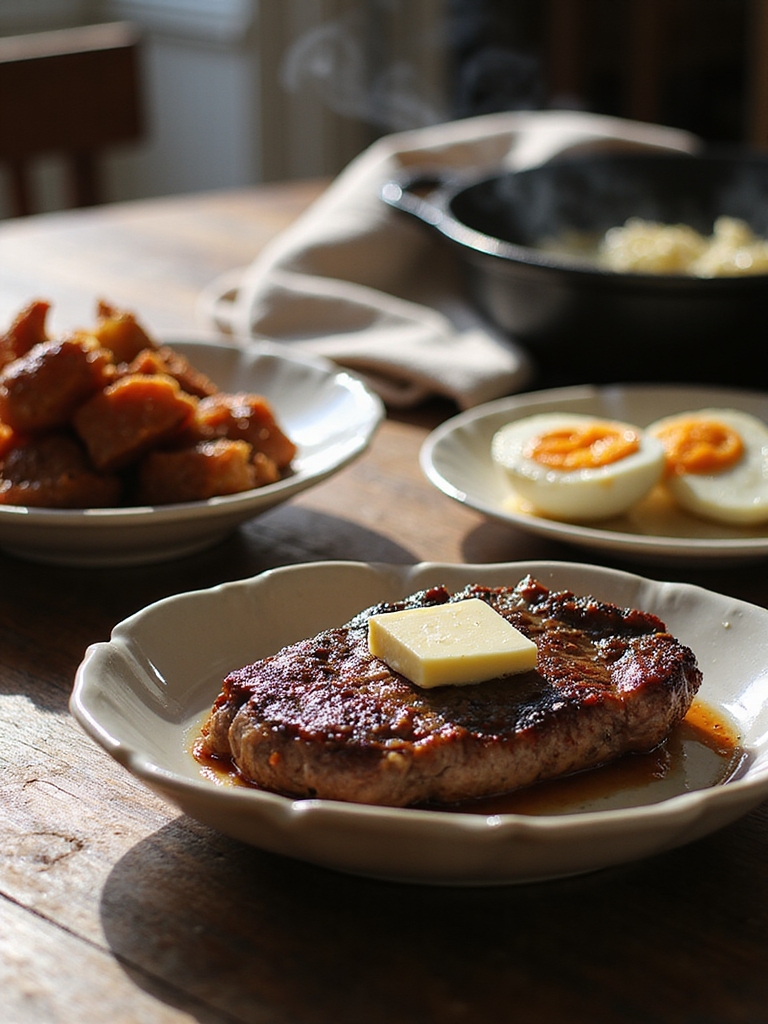
If you strip your plate down to meat, fish, eggs, and a little salt, that’s the carnivore diet in brief — no plants, no fuss.
You’ll drop carbs, simplify choices, and lean into protein and fat as fuel.
People chasing weight loss, blood sugar control, or relief from autoimmune flares often report wins, though responses vary.
You might feel clearer-headed or less bloated, or you might miss fiber and variety; both are valid.
Before you overhaul meals, check meds and health conditions with a clinician.
If you try it, start intentionally and monitor how your body responds.
Many beginner women find tracking electrolytes and adjusting sodium intake helps manage initial symptoms.
Start Simple: 3 Rules for Beginner Carnivore Meals

Start simple: make meat the main event on your plate and treat everything else as optional background.
Drastically cut ingredients so shopping and decisions don’t wear you out.
Keep cooking easy—if it’s simple to prep and hard to mess up, you’ll actually stick with it.
Use these meal ideas to keep your carnivore routine effortless and varied.
Keep It Meat-First
Keep meat front and center — make it the plate’s headliner, not an afterthought — because when you keep meals meat-first you’ll cut decision fatigue and get the nutrients your body actually needs.
You pick a cut, cook it well, and everything else supports that star. Don’t overthink sides; think texture and fat balance. You’ll feel satisfied, save time, and stop staring blankly into the fridge.
| Meat | Cut | Purpose |
|---|---|---|
| Beef | Ribeye | Fat and flavor |
| Chicken | Thighs | Juicy protein |
| Pork | Belly | Satiety, collagen |
Simple Carnivore Meals Anyone Can Make is a great place to start if you want practical, no-fuss recipes and guidance on the basics of the carnivore approach — learn the essential cuts and how to use them.
Limit Ingredients Drastically
Because fewer moving parts mean fewer guesses, treat your first carnivore meals like a minimalist art piece: three components max, each with a clear job — protein, fat, and a seasoning if you want — so you’ll stop overthinking and actually enjoy eating.
Keep it intentional: a steak, a knob of butter, and flaky salt. Or eggs, bacon, and black pepper. Limiting ingredients trims decision fatigue and reveals what your body likes.
You’ll notice patterns faster, waste less, and gain confidence. When meals are simple, setbacks feel smaller and victories taste better — literally and mentally.
Simple carnivore cooking techniques can get you consistently good results with minimal effort, like focusing on basic searing to lock in flavor.
Stick To Easy Cooking
Usually, you’ll want to cook like you’ve got better things to do: simple, predictable, and forgiving.
Keep three rules: pick forgiving proteins (ribeye, ground beef, chicken thighs), master one reliable method (pan-sear, roast, or slow-cook), and repeat favorites until they stop feeling novel.
You’ll waste less time, money, and willpower if you avoid recipes that demand precision or fancy equipment.
Season lightly, trust instinct, and don’t panic when timing’s off — fat rescues a lot.
Stick-to-easy cooking makes the carnivore shift sustainable: fewer decisions, consistent results, and meals that actually fit your life.
Choose methods and cuts that prioritize effortless cooking to make daily eating maintainable.
One-Day Starter Plan for the Carnivore Diet

When you’re ready to try a day on the carnivore diet, think of this plan as a friendly, no-nonsense tour guide that keeps meals simple, satisfying, and easy to prep.
You’ll get protein-focused meals, minimal decision fatigue, and room to tweak portions. Don’t overthink snacks—listen to hunger.
Hydrate, add salt, and expect straightforward energy shifts. Below’s a quick, practical itinerary to follow.
A helpful baseline is to focus on whole-animal foods and prioritize what to eat to simplify choices and ensure nutrient variety.
| Time | Meal | Example |
|---|---|---|
| Morning | Protein | Steak or cold roast |
| Midday | Main | Pan-seared salmon |
| Afternoon | Snack | Pork rinds |
| Evening | Dinner | Ribeye with bone broth |
Zero-Recipe Breakfasts (Eggs, Bacon, and Options)

If you liked the one-day plan’s no-nonsense approach, mornings can stay just as simple — no recipes, no timers, no drama.
You’ll fry eggs in butter, crisp bacon, or broil steak leftovers and call it breakfast like a champion.
Pick eggs soft, hard, or scrambled — they’re forgiving. Salt confidently. Rotate fattier cuts for satiety; add bone broth if you want warmth without fuss.
Listen to hunger, not rules: eat one egg or six. Clean-up’s fast.
You’ll feel steady energy and less decision fatigue.
Breakfast becomes fuel, not a production — exactly what you wanted.
Effortless carnivore breakfasts often rely on simple, repeatable choices that emphasize consistent satiety.
Five-Minute Egg + Meat Pairings for Busy Mornings

Often you’ll want something fast that still feels like a proper meal — enter five-minute egg + meat pairings that get you out the door satisfied.
You’ll crack eggs while reheating leftover steak or crisping thin-cut bacon; it’s efficient and comforting.
Mix textures: runny yolk with salty char, soft scrambled with shredded pork. Pack extras for later. Here’s a quick visual menu to spark ideas:
| Egg Style | Meat | Texture |
|---|---|---|
| Sunny-side | Bacon | Crisp/silky |
| Scrambled | Ground beef | Crumbly/soft |
| Omelet | Ham | Folded/meaty |
| Poached | Salmon | Delicate/oily |
| Fried | Steak | Seared/tender |
Carnivore breakfasts can be irresistibly satisfying and simple to prepare.
Hands-Off Sheet-Pan & One-Skillet Dinners
You’ve already mastered grabbing eggs and reheating meat; now let’s make dinner just as effortless. Toss fatty sausages, chicken thighs, or salmon on a sheet pan, season lightly with salt, and let the oven do the heavy lifting while you relax.
One-skillet meals are even lazier — sear ground beef or pork, add butter, and finish covered so juices mingle without babysitting. Both methods give predictable, tender results and minimal cleanup.
You’ll save time, avoid decision fatigue, and still eat satisfying carnivore meals. Try batch-cooking once a week and reheating portions for instant, comforting dinners.
No-Fuss Steaks: Timing, Doneness & Resting Tips
Master a steak without drama by focusing on three simple things: timing, doneness, and resting — in that order.
You’ll sear hot, finish gentler, and let juices settle; that’s the secret to a tender, predictable bite. Trust the feel and a quick thermometer check, not guesswork.
Resting isn’t lazy — it’s essential. Slice against the grain, serve confidently, and enjoy.
- Start with room-temp steak for even cook
- Sear hard for crust, then lower heat to finish
- Use thermometer: 125°F rare, 135°F medium-rare
- Rest 5–10 minutes covered loosely
- Slice across the grain and serve immediately
Versatile Ground-Meat Templates for Every Night
If you want dinner to feel effortless every night, ground meat is your secret weapon — quick to cook, forgiving, and endlessly adaptable.
You’ll learn three templates: skillet crumble with butter and salt, spice-free meatballs, and flattened patties for crisp edges.
Mix and match pork, beef, or lamb; add egg for bind if you want. Keep seasoning minimal, cook hot, rest briefly.
You’re aiming for comfort, speed, and zero guesswork—meals that meet carnivore rules and feel satisfying.
| Template | Quick Idea |
|---|---|
| Skillet crumble | Butter, salt |
| Meatballs | Egg binder |
| Patties | High heat |
| Casserole base | Layered meat |
Slow Cooker & Sous-Vide Carnivore Meals (Set-and-Forget)
Ground meat’s great for quick weeknights, but when you want dinner done while you’re out living your life, set-and-forget methods are your best friend: slow cookers and sous-vide let tough cuts turn buttery and lean roasts stay perfectly tender with almost no babysitting.
You’ll love the ease: toss meat, salt, maybe a pat of butter, press start, forget it. Come back to reliably delicious protein that doesn’t judge your schedule.
Perfect for meal prep, recovery days, or impressing partners without effort.
- Chuck roast low and slow
- Pork shoulder pulled
- Beef short ribs sous-vide
- Chicken thighs tender
- Steak finished sear
Bone-In Cooking: Simple Broths, Roasted Bones, Nutrient Boosts
Roasting bones and simmering them into broths is where flavor and nutrients concentrate without you doing much more than a little patience and a big pot.
You’ll roast marrow-rich bones, simmer long with a splash of vinegar, and end up with gelatinous, comforting broth that feels like effort rewarded.
Use bones for broth, roast for snacks, and freeze portions. You’ll get collagen, minerals, and deep beefy taste without fuss.
| Use | Time | Result |
|---|---|---|
| Roasting | 30–45 min | Browned flavor |
| Simmering | 12–24 hr | Gelatinous stock |
| Freezing | 1–3 months | Ready boosts |
Carnivore Grocery List: What to Buy for Two Weeks
Plan your cart with purpose: for two weeks on the carnivore diet you’ll want a mix of fatty and lean cuts, organ meats, bone-in pieces for broth, and a few cooking essentials so you’re never stuck eating the same thing twice.
You’ll buy intentionally — hunger-curbing fats, iron-rich organs, and reliable proteins that rehearse well. Don’t overcomplicate seasoning; salt, butter, and maybe tallow do wonders.
Stock quantities depend on appetite, but aim for variety so meals feel different without fuss. Here’s a simple shopping snapshot to keep you fed and sane:
- Ribeyes and chuck roast
- Ground beef (80/20)
- Beef liver or heart
- Pork chops and bacon
- Beef bones for broth
Meal-Prep Shortcuts to Save Time and Decision Energy
You’ll thank yourself on busy nights when you’ve got make-ahead protein packs stacked in the fridge — steaks, cooked ground beef, and boiled eggs ready to reheat.
Batch cooking essentials like slow-roasted brisket or large-sheet pan pork chops cut decision fatigue down to nothing.
Little upfront work means you’ll eat well all week without thinking twice.
Make-Ahead Protein Packs
Think of make-ahead protein packs as your future self’s best friend: assemble a few containers of cooked meats, organ blends, and ready-to-eat fats on Sunday, and you’ll breeze through weeknight hunger without debating what to eat.
You’ll grab a pack, heat if desired, and eat like someone who planned ahead — no willpower required.
Keep labels, rotate flavors, and mix textures so meals feel intentional, not repetitive.
Portion by hunger, not rules.
Treat this like insurance against hangry mistakes.
- Sliced roast beef + beef tallow
- Pan-seared liver cubes
- Grilled chicken thighs
- Pork belly strips
- Smoked salmon portions
Batch Cooking Essentials
When time’s tight and hunger’s loud, batch cooking turns frantic meals into a five-minute habit you actually enjoy; cook once, eat smart all week.
You’ll pick a couple reliable proteins—roast a tray of ribeyes, slow-cook a pork shoulder, boil eggs—and portion them into reusable containers.
Season simply, label with dates, and stash in fridge or freezer.
Reheat gently to preserve texture, or eat cold for speed.
Rotate flavors so boredom doesn’t win: herb butter one day, crispy pan-sear the next.
This saves decision energy, money, and stress, so you can actually enjoy eating carnivore.
Simple Seasoning & Animal Fat Choices That Improve Flavor
Want to make carnivore meals that actually sing? You don’t need fancy spices—just smart choices. Use salt first; it wakes meat’s natural taste. Pepper or smoked paprika adds personality if you tolerate them.
Pick animal fats—beef tallow, pork lard, butter, or duck fat—for cooking and finishing; they carry flavor and keep meat juicy. Rotate fats to avoid boredom.
Taste as you go and adjust salt or fat amount; you’re aiming for balance, not overload. Keep it simple, confident, and forgiving—cooking should feel like play, not pressure.
- Salt (coarse or fine)
- Butter
- Beef tallow
- Pork lard
- Duck fat
Common Beginner Pitfalls and How to Avoid Them
If you jump in expecting every meal to be restaurant-perfect, you’ll get discouraged fast — and that’s okay, because most carnivore beginners stumble over a few predictable mistakes you can fix quickly.
You’ll undercook or overcook proteins—practice simple temps. You’ll skimp on salt and fat, then blame the diet; add butter, tallow, or extra yolks.
You’ll eat the same cut repeatedly and get bored—rotate beef, pork, fish, and organ meats. You’ll ignore simple prep and convenience hacks; batch-cook and freeze portions. Be patient, troubleshoot one thing at a time, and celebrate small wins—they compound.
Adjust Meals for Hunger, Performance, or Digestion
If you need more performance, bump up the protein—think bigger steaks or extra egg whites—so your muscles get what they need.
If you’re constantly hungry, add more fatty cuts or a pat of tallow to meals to stay satisfied longer.
And if digestion’s acting up, play with meal timing—smaller, spaced plates or eating earlier can make a big difference.
Increase Protein For Performance
Crank up the protein when you need to power through workouts, quiet gnawing hunger, or settle a sensitive stomach—on the carnivore diet that usually means adding more beef, eggs, or fatty fish rather than piling on carbs. You’ll feel stronger, recover faster, and stay satisfied without guessing.
Start small, track performance, and tweak timing—pre-workout bites and post-session protein help muscle repair. If digestion protests, try gentle proteins like egg yolks or poached fish.
- Double your usual steak portion occasionally
- Add an extra egg at breakfast
- Include a canned tuna snack
- Try lean ground beef meals
- Use collagen in broths
Add Fats For Fullness
Boost fats to feel satisfied and steady: on carnivore, fats are the secret throttle that keep hunger at bay, stabilize energy, and smooth digestion when protein alone feels harsh.
You’ll learn to layer butter, tallow, or fatty cuts onto lean meats so meals hang with you longer and prevent energy crashes.
If you’re jittery or hungry two hours after eating, nudge fat up a notch—add a pat of butter, drizzle beef tallow, or choose ribeye over sirloin.
Listen to your appetite, experiment in small steps, and enjoy smoother, more reliable meals that actually keep you going.
Time Meals For Digestion
Now that you’ve learned to layer fats for staying power, you’ll also want to think about when you eat — timing can make the difference between a satisfied, steady day and one punctuated by sluggishness or mid-afternoon hanger.
You’ll tweak meal times to match digestion, workouts, and brain work. Eat earlier if you need steady energy, delay if fasting aids focus, and split meals when digestion feels heavy. Listen to cues, not clocks. Practical shifts give big wins.
- Eat 1–2 hours before intense workouts
- Delay breakfast if fasting improves focus
- Split large meals into smaller plates
- Move dinner earlier for sleep
- Rest 2–3 hours after big meals
You’ll start with ribeye and eggs but end up gaining confidence, trading pantry panic for a freezer of simple, reliable meals.
You’ll crave variety and learn to love repetition; you’ll worry about missing carbs and find calm in salt and fat.
Keep it boringly predictable and surprisingly satisfying: batch-cook, tweak fat for fullness, rotate cuts to avoid boredom, and remember—small tweaks beat big rules when you’re building a lasting, easier eating habit.