


I love open living room and kitchen plans because they make everyday life feel like a welcoming farmhouse gathering. They solve flow and sightline issues, invite conversation while you cook, and let an island anchor prep, dining, and extra storage.
Use rugs, furniture placement, and layered lighting to define zones without walls, and pick comfy, scaled pieces so the space breathes. Keep finishes warm and durable, and stick around to learn simple fixes and layout ideas.
Why an Open-Plan Living + Kitchen Works for Modern Life
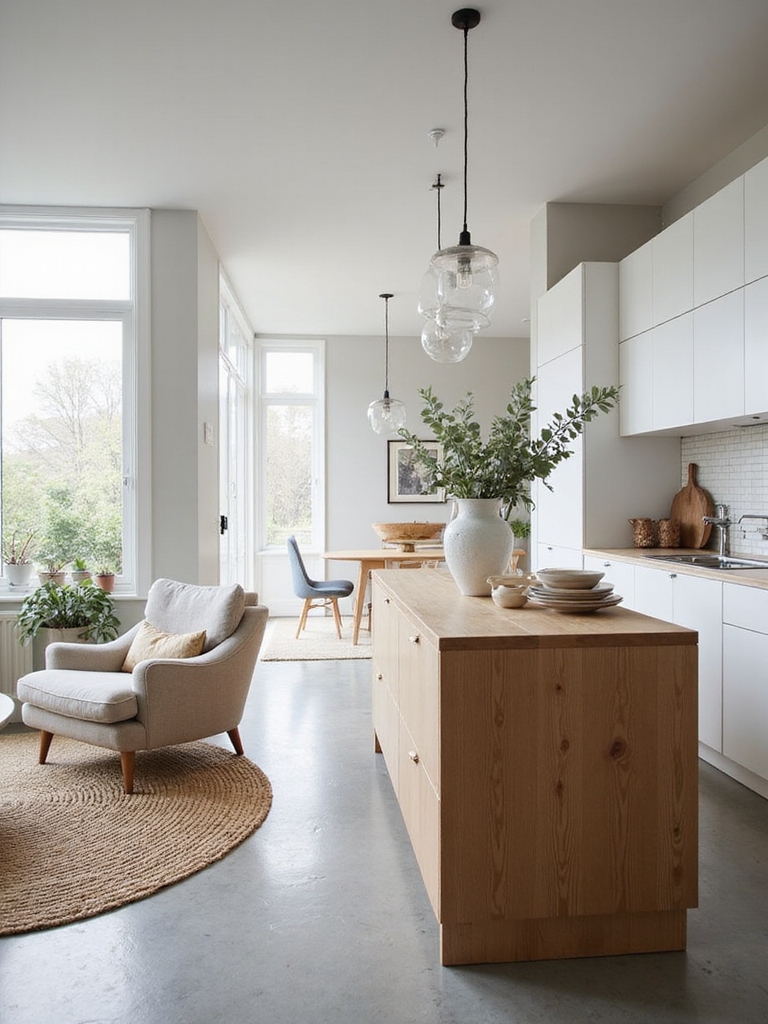
Because I love gathering people, an open-plan living room and kitchen fits how I actually live: it keeps conversations flowing while dinner’s on the stove and kids or guests lounge nearby.
I can prep meals, supervise homework, and chat without shutting myself away. The layout feels honest and welcoming, with rustic touches, cozy textiles, and practical surfaces that weather real life beautifully.
Open-plan designs often feature island layouts that anchor the space and encourage interaction.
Everyday Problems Open Plans Solve (Noise, Flow, Socializing)
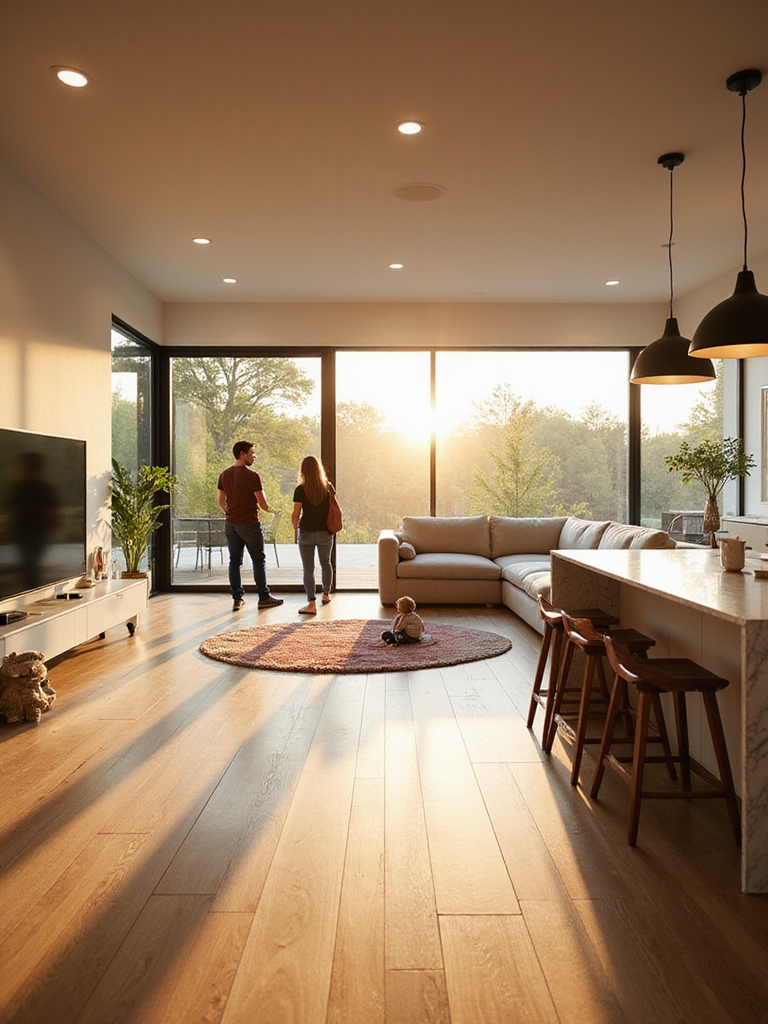
When I open up the living room to the kitchen, everyday headaches—noise, awkward traffic, and lonely cooking—start to melt away.
I hear kids and music without shouting, move through the space without bumping into chairs, and chat while chopping vegetables.
It feels cozy and practical: a lived-in farmhouse heart where conversations flow, clutter finds a spot, and hospitality happens naturally.
Open island kitchens encourage socializing and make cooking a shared activity.
Layout Types Designers Love: L‑Shape, Island-Forward, Galley-Open
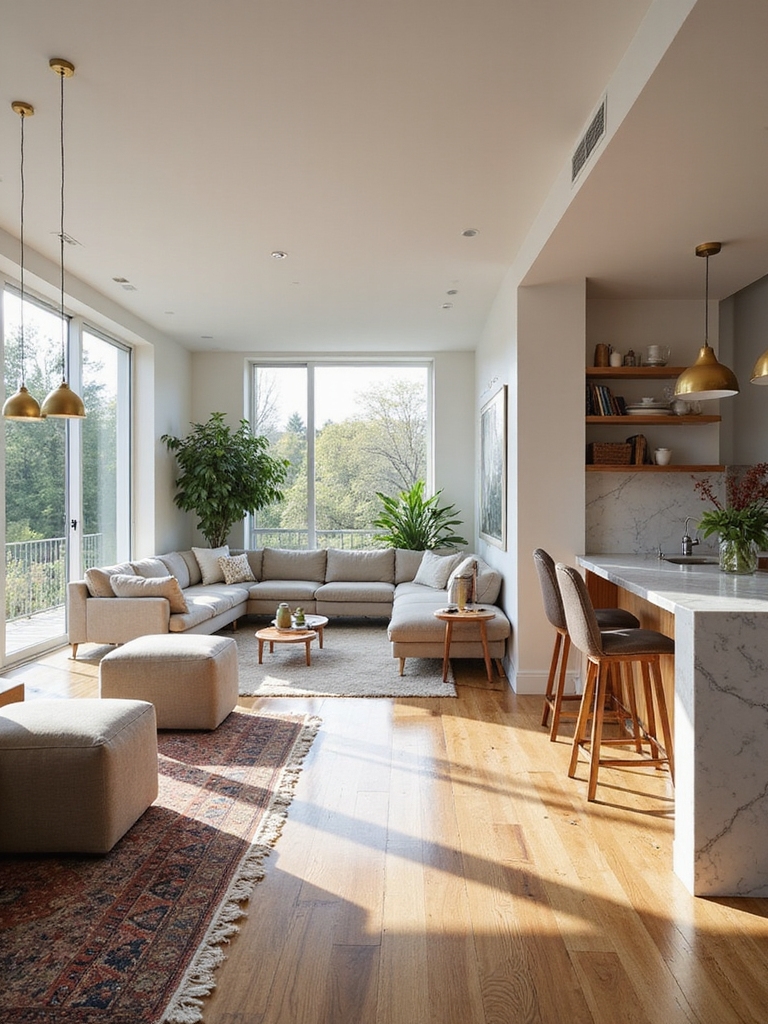
I like to break layouts down into three go-to shapes—L‑shape, island‑forward, and galley‑open—because each answers a different way we live and move through a farmhouse‑style home.
I favor L‑shapes for cozy zones, island‑forward for casual gathering and sightlines, and galley‑open for efficient prep.
Each keeps flow natural, sightlines clear, and daily life feeling warm and practical.
Top architects often recommend open-concept planning for clear sightlines and sociable layouts that blend kitchen and living areas.
Choose the Right Island for Cooking, Dining, and Storage
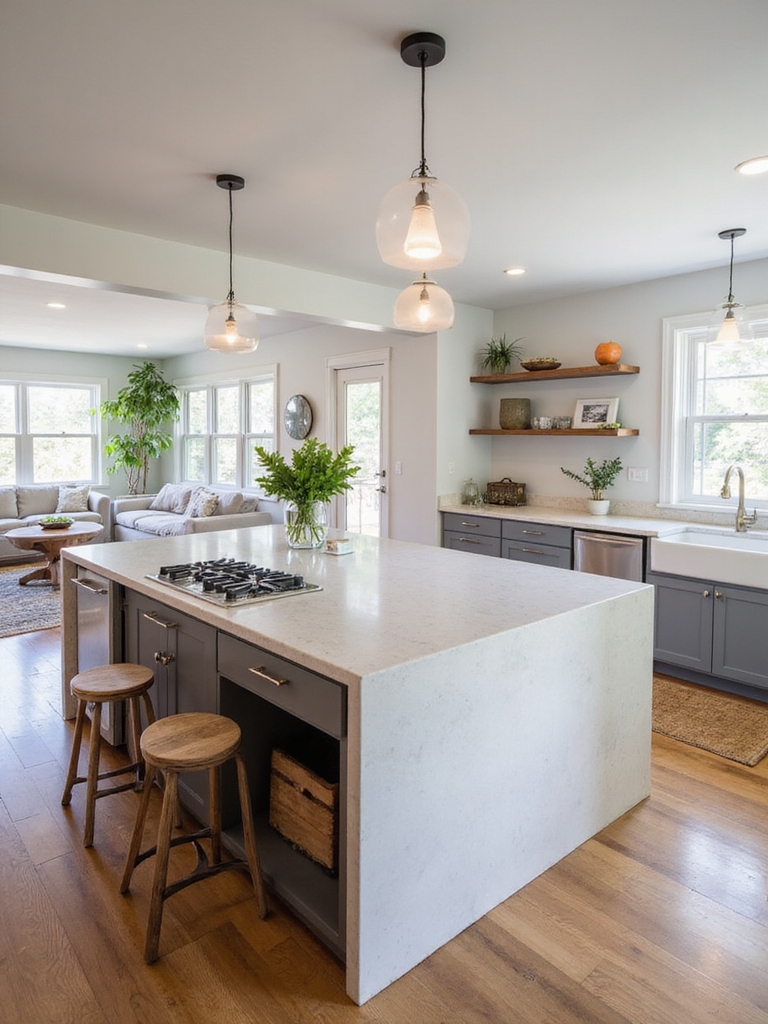
I often start by asking what you want your island to do—cook, eat, store, or some mix of all three—because that choice drives size, layout, and appliance needs.
I recommend a sturdy farmhouse top for gatherings, under-counter drawers for pantry overflow, and a cooktop if you love to prep with company.
Keep seating comfortable but compact to preserve traffic flow.
Open Kitchen Islands often become the focal point of open-plan homes, designed to balance cooking, dining, and storage functions while encouraging social interaction.
Define Zones Without Walls Using Furniture and Rugs
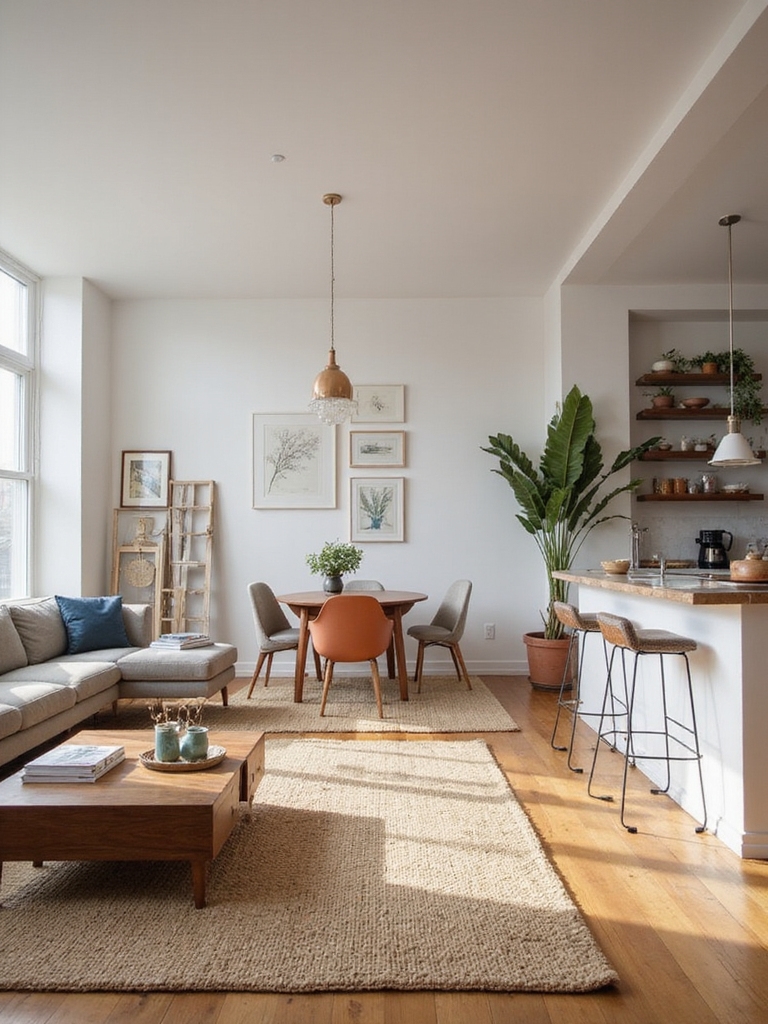
If your island sets the stage for cooking and seating, the rest of the room needs to feel organized without cutting it off.
I use area rugs, a cozy sofa facing inward, and a console to anchor the living spot. Rugs define scale, furniture backs hint separation, and mixed textures keep the farmhouse vibe cozy while flow remains open and inviting.
One simple strategy designers often recommend is creating clear defined zones with furniture and rugs to maintain flow and function.
Arrange Sightlines and Walkways So Everyone Stays Connected
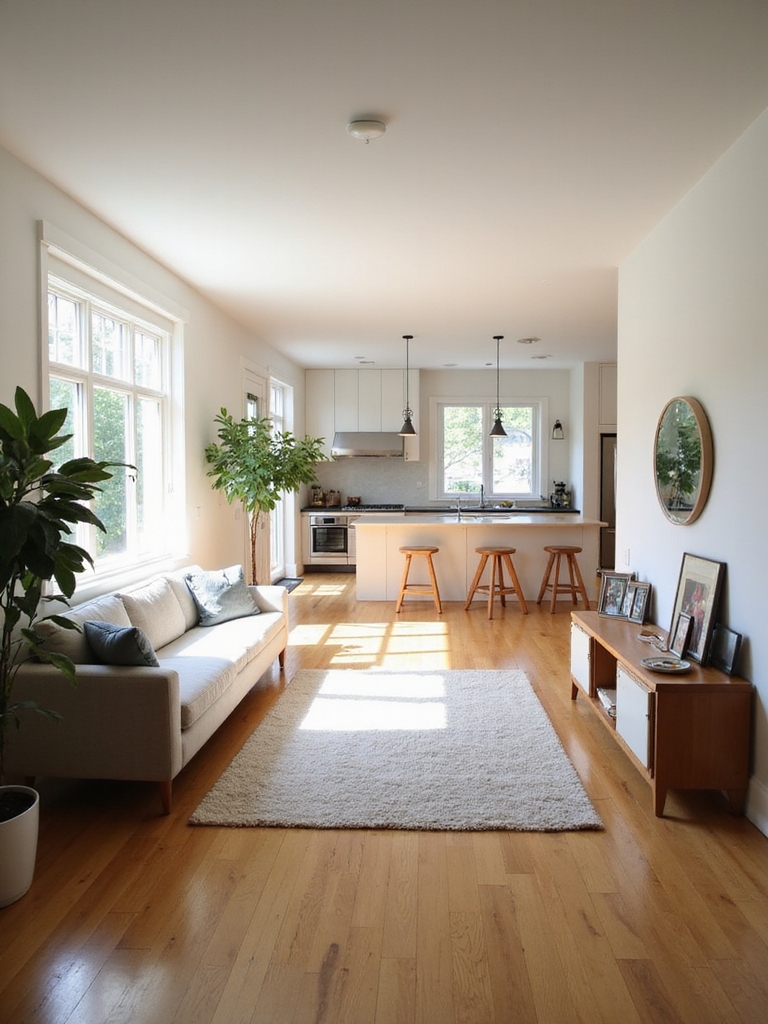
By angling seating toward the island and leaving clear paths between the kitchen work triangle and living area, I keep conversations flowing no matter who’s chopping or stirring.
I steer clear of blocked sightlines, position low-back chairs, and tuck a narrow console to define a walkway.
Guests can circulate freely, kids can peek over counters, and everyone feels included without tripping over each other.
I also recommend choosing an open-plan layout that matches the home’s footprint to maximize flow and functionality, especially when adapting open kitchen layouts to unusual floor plans.
Lighting Strategies to Unify Spaces and Create Separate Zones
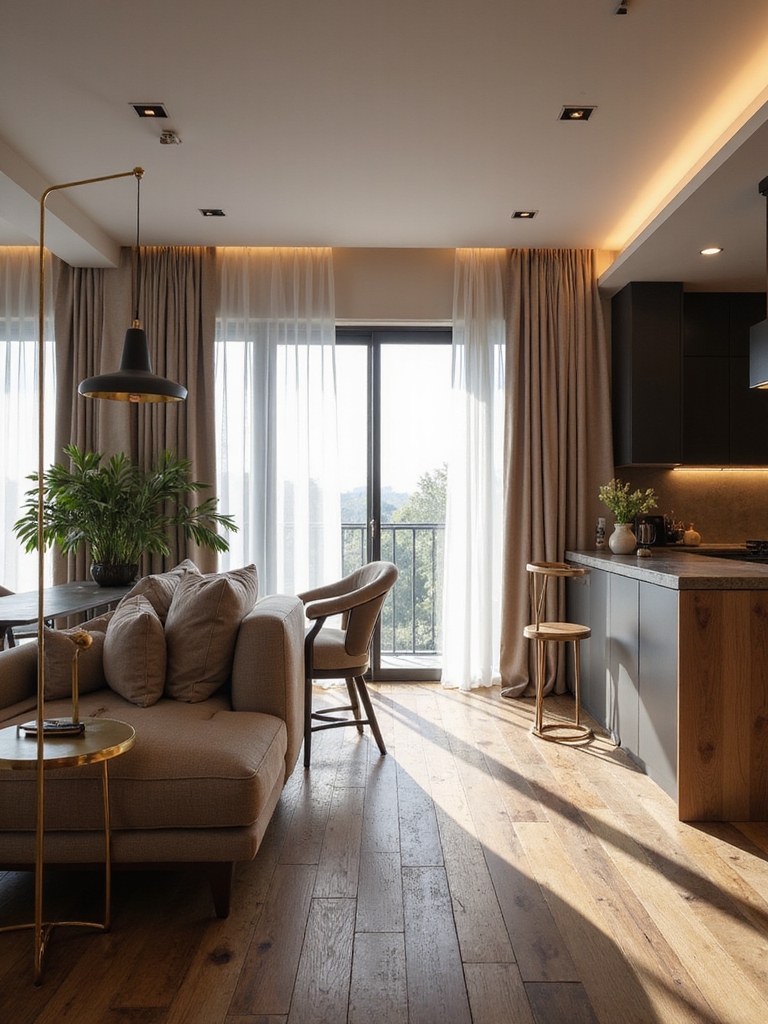
When I layer lighting—task, ambient, and accent—it feels like stitching the kitchen and living room into one warm, functional fabric while still letting each zone breathe.
I use pendants over the island, recessed dimmable lights for overall glow, and cozy lamps by the sofa.
Trim brightness for dining, spotlight artwork, and keep color temperature consistent for a calm, lived-in farmhouse feel.
This approach echoes elegant lighting schemes that prioritize layered lighting to create a five-star kitchen ambience.
Coordinate Cabinetry, Countertops, and Flooring for Cohesion
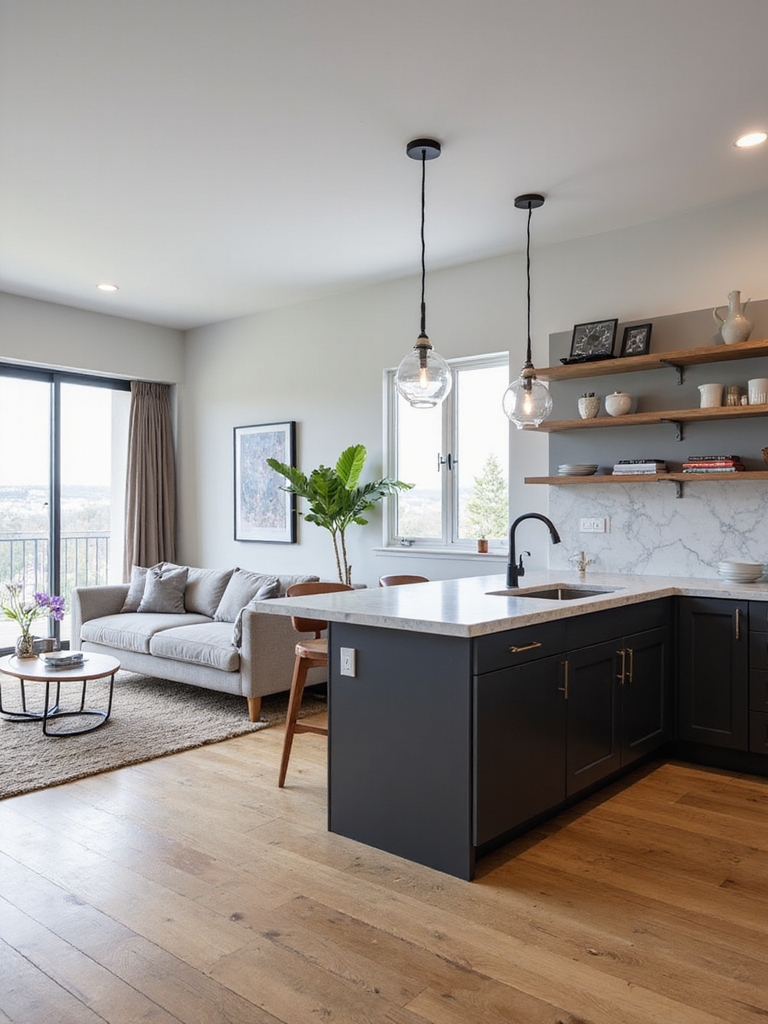
Although a kitchen island anchors the room, I think the real glue that ties an open living-kitchen togehter is the deliberate coordination of cabinetry, countertops, and flooring—each surface should talk to the others without shouting.
I favor muted cabinets, warm wood floors, and a durable stone countertop that echoes wood tones. That balance keeps the space cozy, cohesive, and effortlessly lived-in.
Enduring white kitchen design often relies on timeless white kitchen elements like cabinetry and countertops to maintain lasting appeal.
Smart Storage Tricks to Keep Open Plans Clutter-Free
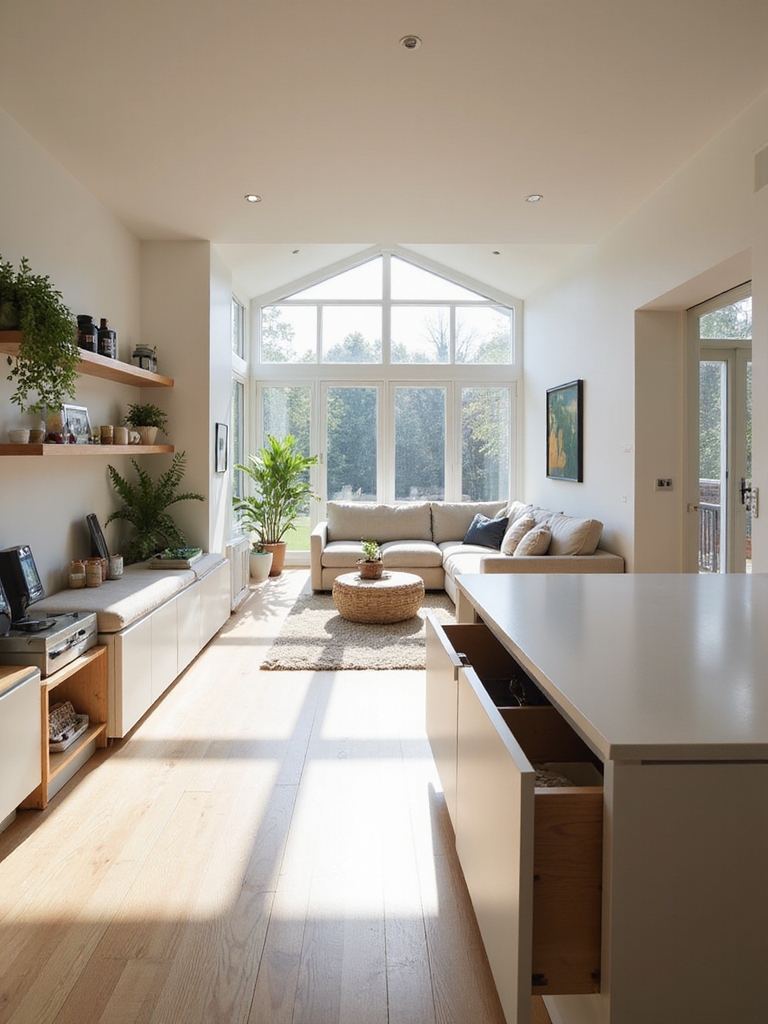
Coordinating surfaces creates a calm backdrop, but open living-kitchen plans still need smart storage to stay that way.
I tuck baskets under benches, add closed cabinetry with warm wood tones, and use sideboards to hide dinnerware.
Hooks for aprons, a dedicated mail station, and sleek drawers for gadgets keep counters clear. These small, practical choices keep the farmhouse feel uncluttered and inviting.
Acoustic Fixes to Cut Kitchen-to-Living Noise
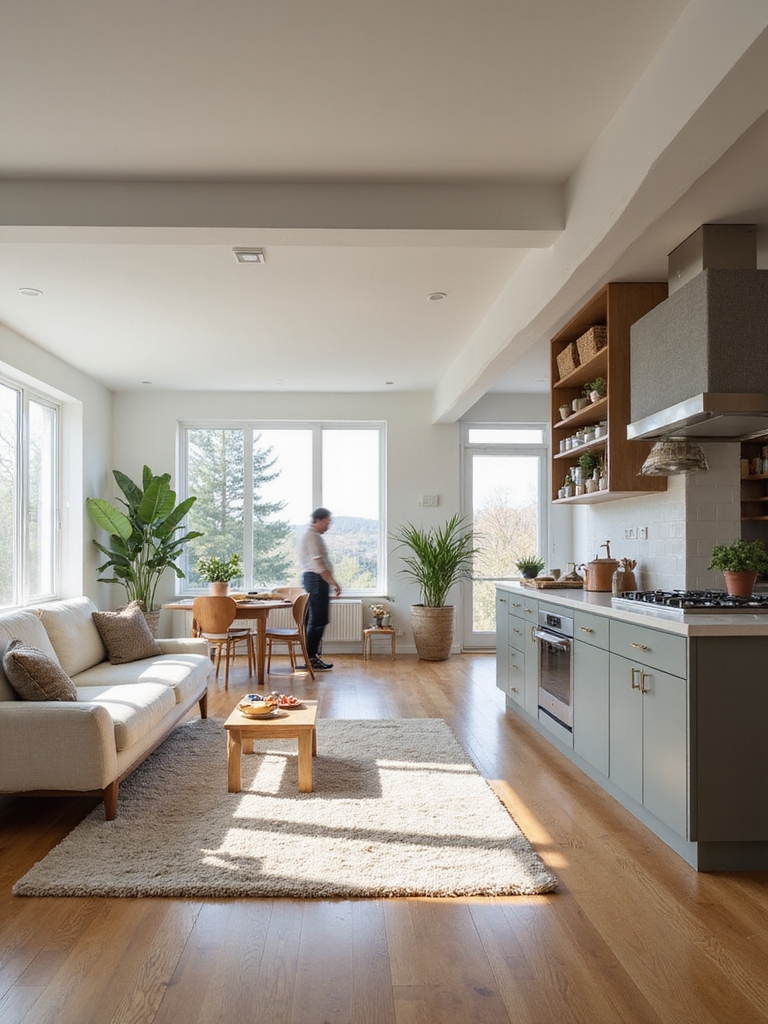
I’ve found that carving out soft-surface zones with rugs and upholstered pieces tames clatter between the kitchen and living room.
Adding sound-blocking doorways or heavy curtains gives you quick control when you need quiet.
Simple ceiling and wall treatments—like acoustic panels or shiplap with insulation—finish the job without sacrificing that cozy farmhouse feel.
Soft Surface Zones
I usually start by layering soft surfaces between the kitchen and living room because they do the most good for everyday noise; rugs, upholstered seating, and fabric-covered acoustic panels soak up clatter from dishes and conversations so you get a calmer, cozier space.
I’ll add:
- Thick wool rug
- Slipcovered sofa
- Window drapes
- Fabric wall panels
These choices feel homey and grounded.
Sound-Blocking Doorways
Let’s seal up those noisy thresholds so the kitchen bustle doesn’t drift into the living room; I find a solid, well-fitted door or a thoughtfully upgraded opening makes the biggest difference.
I like weatherstripping, door sweeps, and heavy cores for doors—simple, rustic fixes that really work. Pocket doors with seals or snug barn doors also help, keeping chatter and clatter pleasantly contained.
Ceiling And Wall Treatments
While we can tame a lot of kitchen noise with doors, treating the ceilings and walls is where you’ll see the biggest drop in echo and travel of sound between rooms.
I love simple, cozy fixes that actually work:
- Add acoustic panels behind shiplap.
- Use fabric-wrapped boards above the island.
- Install a softened ceiling cloud.
- Hang heavy curtains to damp reflections.
Color Palettes and Textures That Create Visual Cohesion
Because open living rooms and kitchens flow into one another, I choose color palettes and textures that tie the spaces together so the whole feel reads as one warm, lived-in home.
I lean on soft whites, muted sage, and warm wood tones, layering linen, woven baskets, and matte ceramics. Those repeating hues and tactile elements quietly unify sightlines and invite lingering.
Furniture Choices That Balance Scale and Conversation Flow
Now that the palette and textures have set a gentle, continuous backdrop, I focus on furniture that feels right in scale and encourages conversation.
I choose pieces that welcome lingering, arrange seating to face one another, and leave clear pathways. My checklist:
- Deep, comfy sofa
- Pair of swivel chairs
- Low, sturdy coffee table
- Slim console for flow
These choices feel homey and honest.
Design Moves That Make Entertaining Effortless
I lean into layouts and little conveniences that keep the mood easy and the work out of the way—clear traffic lanes, a dedicated landing spot for drinks, and lighting that shifts from bright for prep to soft for lingering.
I add an island with bar seating, accessible serving trays, hidden trash, and cozy throw blankets so guests feel welcome and I stay calm while hosting.
Budget-Friendly Updates That Look High-End
I’ve learned a few tricks that make paint feel luxe without breaking the bank, like layering soft neutrals and satin finishes for subtle depth.
Swapping in affordable, well-placed lighting—think statement pendants over the island and warm under-cabinet strips—instantly elevates the whole open space.
Let me show you simple changes that look custom but stay wallet-friendly.
Luxe-Looking Paint Tricks
A fresh coat of paint can instantly elevate a living room-kitchen combo, and I’ll show you easy, budget-friendly tricks that look far more expensive than they are.
I love simple, cozy updates—here’s what I do to make rooms feel luxe without splurging:
- Soft, warm neutrals
- Accent wall with matte trim
- Subtle two-tone cabinetry
- Faux-washed finish for depth
Affordable Lighting Upgrades
Often I start with lighting when I want to lift a living room-kitchen space without overspending, because layered light changes feel instantly luxe.
I swap bulbs for warm LEDs, add dimmers, and hang a statement pendant over the island.
Under-cabinet strips and plug-in wall sconces create depth without rewiring.
These small, affordable swaps give a cozy, curated farmhouse look that reads high-end.
Common Pitfalls Designers Avoid : And Quick Fixes
While you might love the airy feel of an open living room and kitchen, I watch designers sidestep a few recurring pitfalls that can make the space feel disjointed or impractical.
I’ll share quick fixes that feel cozy and sensible:
- Zoning: rugs and lighting.
- Scale: choose furniture that breathes.
- Storage: hidden cabinets.
- Flow: clear pathways, simple sightlines.
So you want an open-plan miracle, huh? I’ve seen kitchens eating living rooms and everyone’s happier for it.
You get flow, less yelling through doors, and islands that double as buffet bars and homework HQs.
Use rugs and sofas like polite bouncers, pick furniture that actually fits people (not just Instagram dreams), and fake expensive finishes with smart swaps.
Do that and your home will feel like a warm, well-behaved barn—minus the hay.


