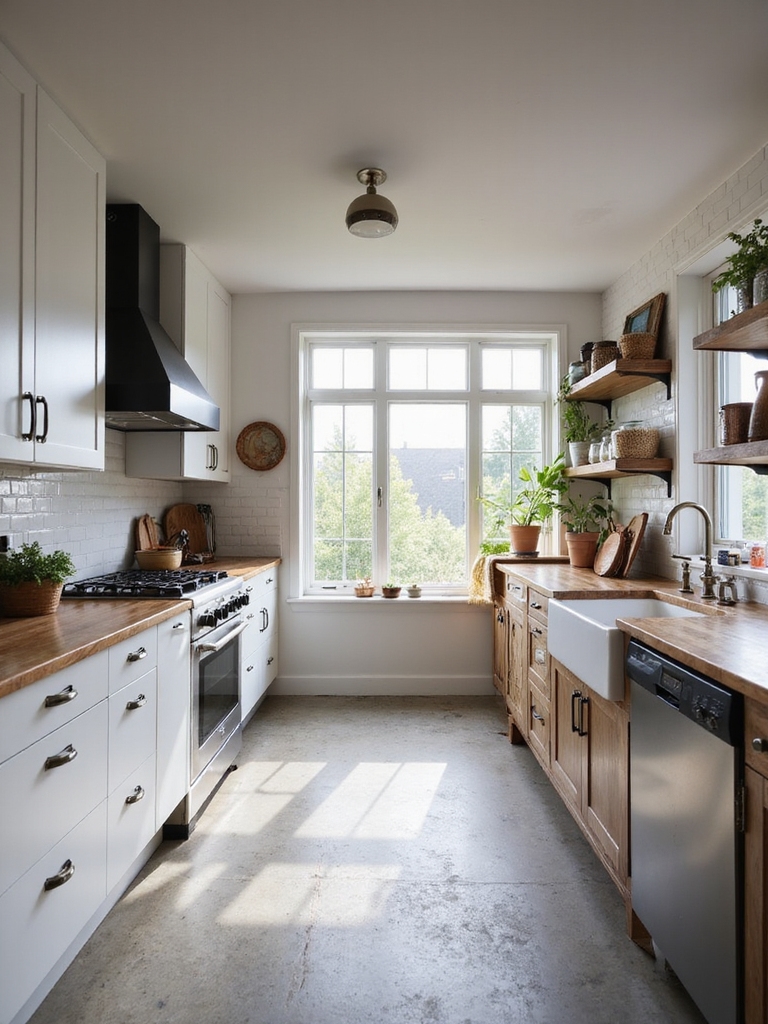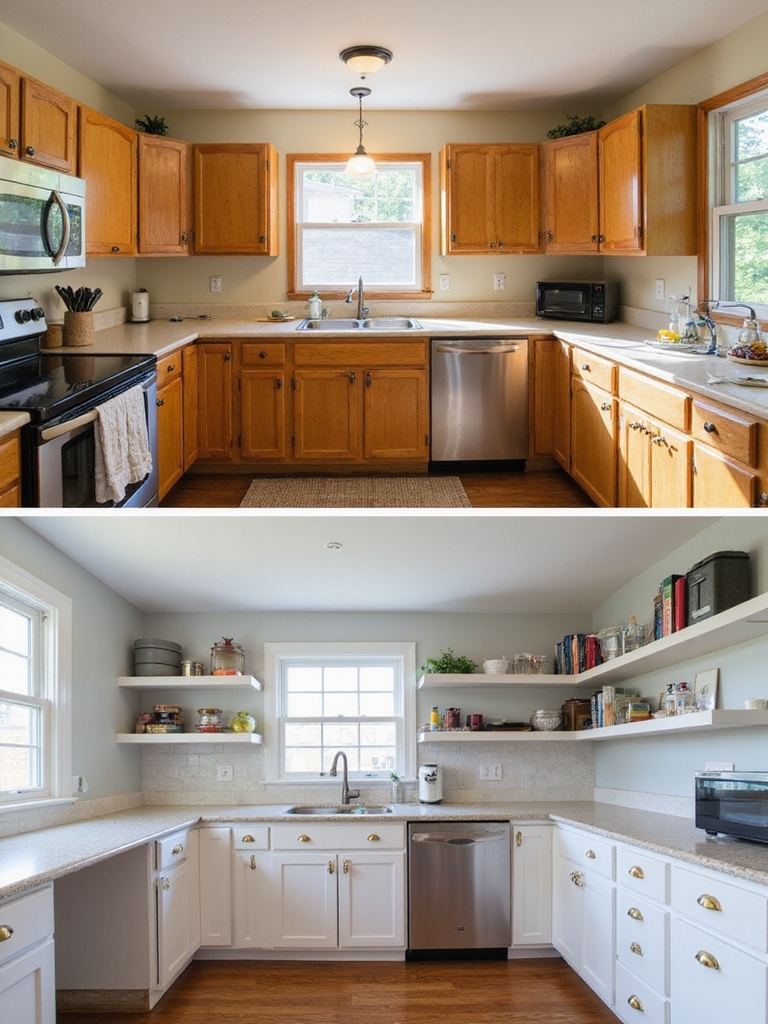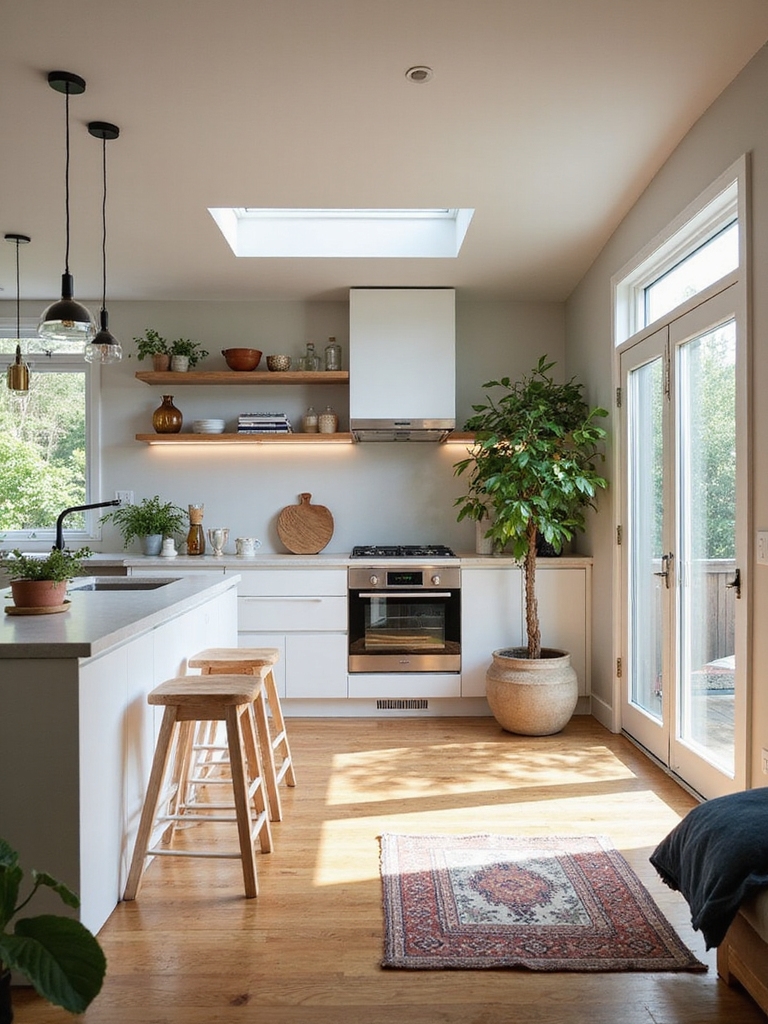


I love arranging open‑plan kitchens for easy, sociable weekends—keep clear circulation, cluster prep and service near an island or peninsula, and place a farmhouse table within sightlines so guests and cooks can chat.
Layer rugs and pendants to anchor zones, add mixed seating and a bench with storage, and tuck a coffee or drink station by the sink. Use timber panels or a bookshelf to soften sound. Stick around and I’ll show practical layouts, appliance tips and a quick prep checklist.
Open‑Plan Entertaining: 5 Quick Layout Rules
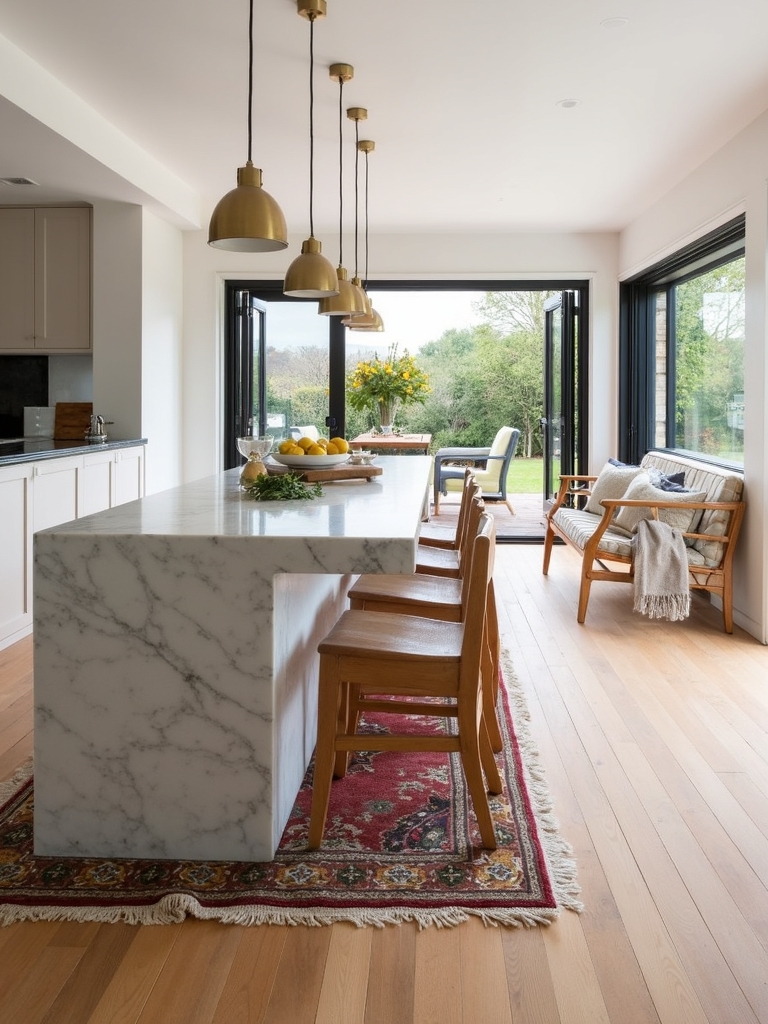
Let’s jump right in: when I plan an open‑plan kitchen and dining space for entertaining, I aim for layouts that keep people moving, talking, and reaching for snacks without stepping on each other’s toes.
I prioritize clear circulation paths, clustered prep and service zones, comfortable seating gaps, visible sightlines, and easy access to trash and extras.
It feels cozy, practical, and inviting. Stunning open kitchen makeovers reveal how much impact simple changes can have on flow and functionality.
Choose the Best Open‑Plan Layout: Island, Peninsula, or Galley?
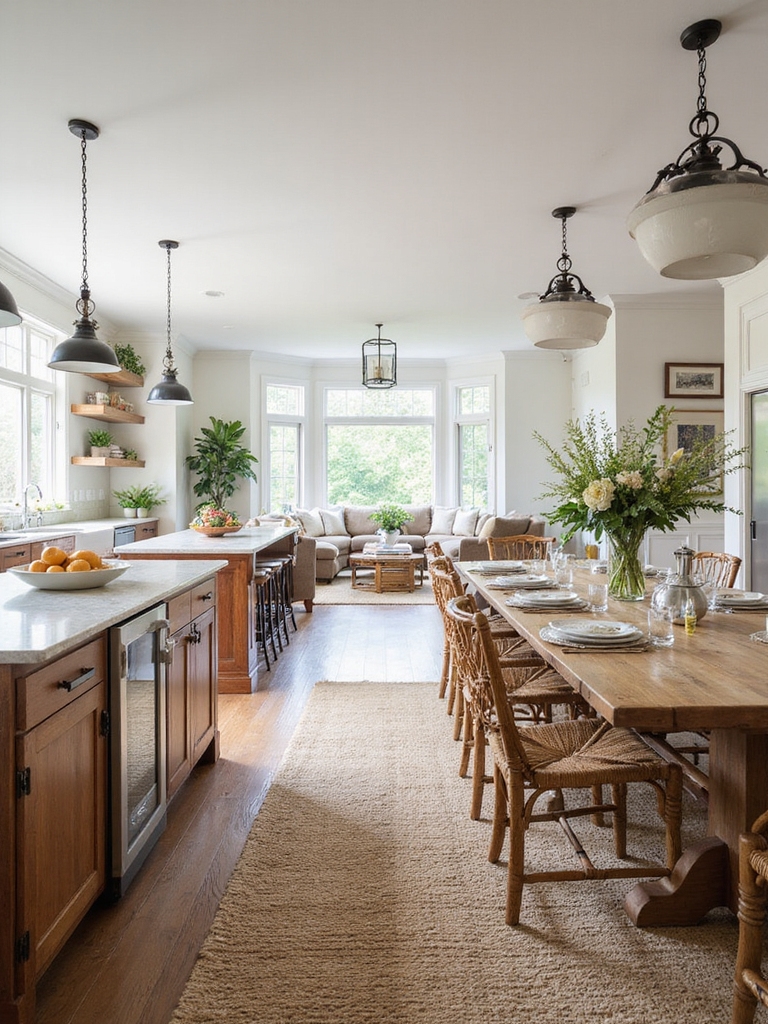
Which layout fits your life — island, peninsula, or galley — depends on how you cook, host, and move through the space, and I’ll walk you through the tradeoffs so you can pick the right one.
I favor islands for sociable cooking and prep, peninsulas for cozy separation and extra counter seating, and galley kitchens for efficient, compact workflows when space is tight.
Open island kitchens often turn cooking into social time, encouraging conversation between the cook and guests and creating a central gathering spot social cooking.
How to Zone Kitchen and Dining Without Walls
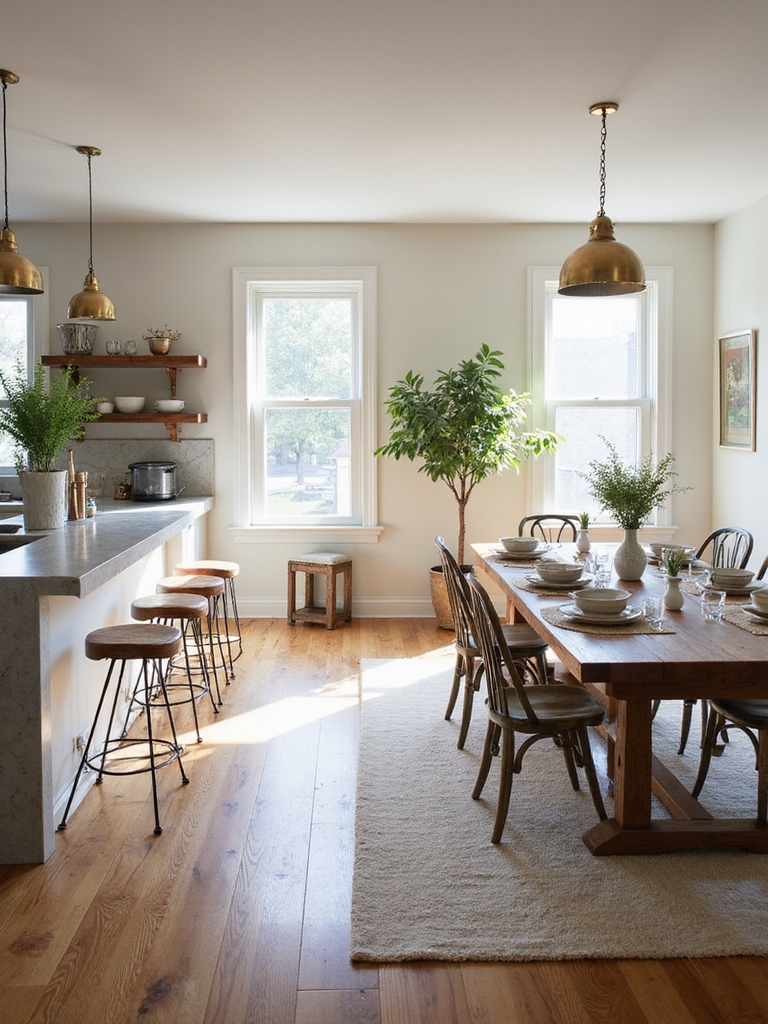
I’ll show you how to carve out distinct kitchen and dining zones without building a single wall, using furniture, lighting, rugs, and sightlines to guide movement and mood.
I place a farmhouse table under a pendant cluster, float a sofa to separate cook space, use layered rugs, and add task and ambient lamps.
It feels cozy, practical, and intentionally arranged.
Small spaces benefit from clever open-concept ideas like using multifunctional furniture and strategic layouts to maximize flow and storage while keeping the area inviting; try a farmhouse table as a focal point to anchor the dining zone.
Keep Sightlines and Traffic Flowing So Guests Can Mingle
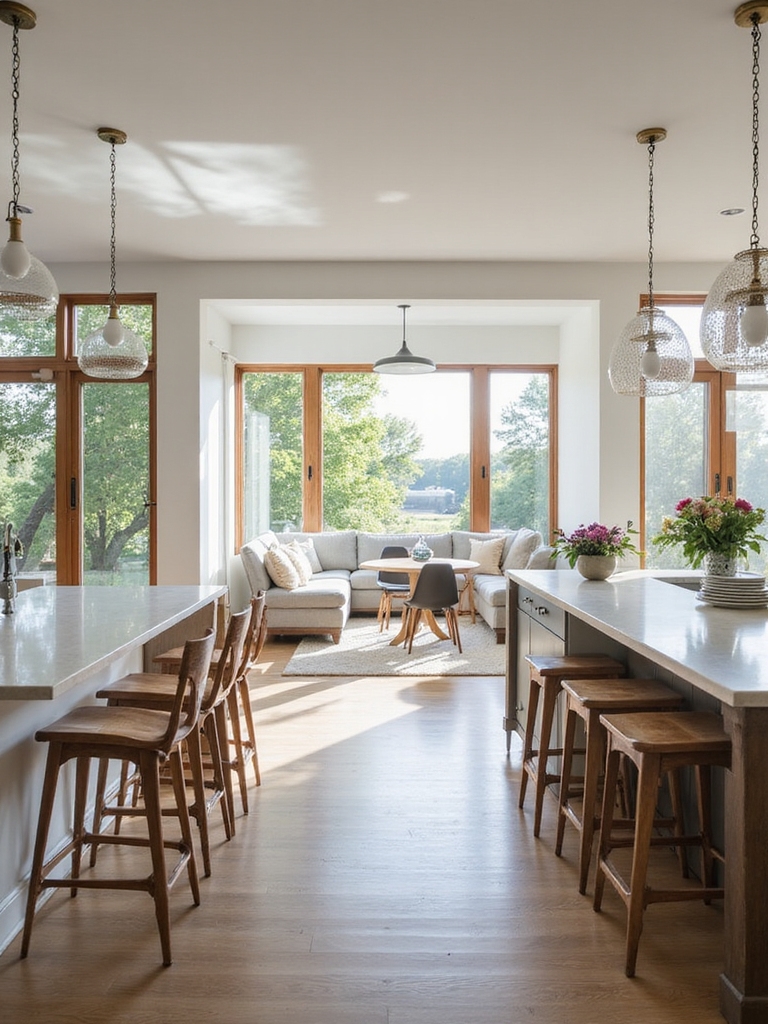
How do you keep the room feeling open while still carving cozy spots? I nudge furniture to create clear walkways, angle chairs so conversations face into the room, and choose low-backed seating to preserve sightlines.
Rugs and lighting define zones without blocking flow. I leave generous gaps near doors and counters so guests drift and mingle naturally, feeling invited rather than corralled.
Open-plan layouts benefit from defined zones that help balance social and functional areas.
Use Kitchen Islands as Social Hubs
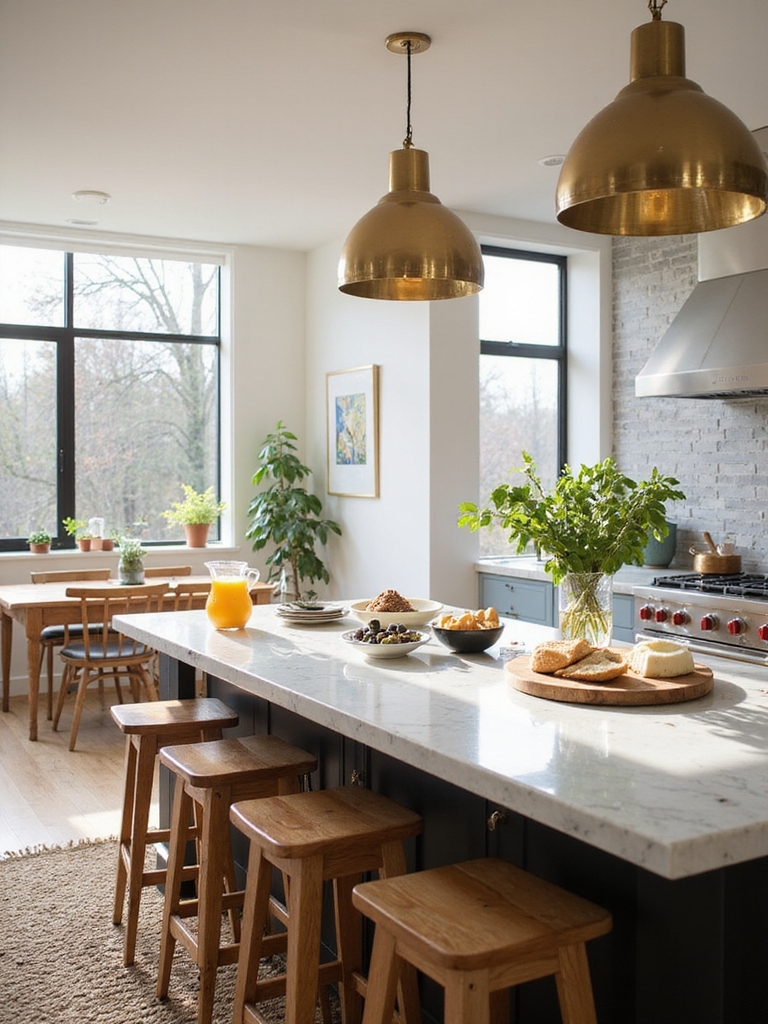
Keeping sightlines open makes it easier to gather, but an island really becomes the heart of the room when you arrange it for people to hang out.
I pull up stools, leave a clear prep zone, and add a wooden tray for drinks and snacks.
Soft pendant lights and a bowl of seasonal fruit make it welcoming—practical, cozy, and ready for conversation.
Open kitchen islands often serve as multifunctional social hubs that encourage lingering and interaction.
Choose a Dining Table That Fits Your Hosting Needs
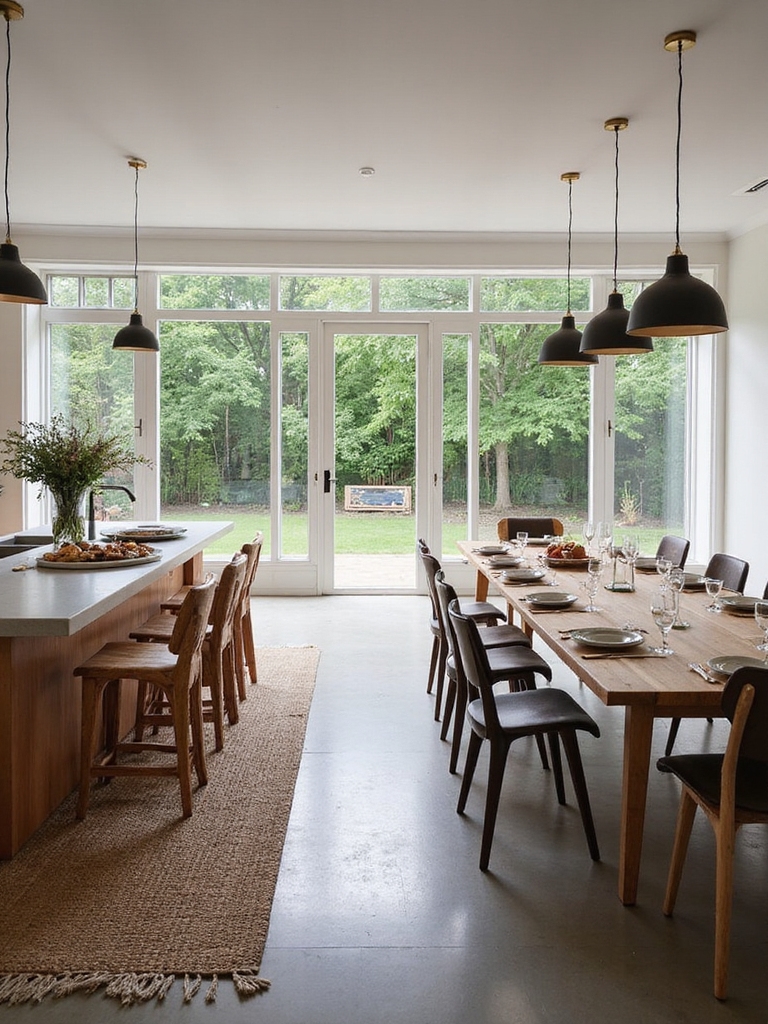
A good dining table does more than fill a floor plan — it sets the mood for every meal and gathering I host.
I pick sturdy wood with character, the right size for my space and guest list, and a shape that encourages conversation.
Practical finishes resist spills, and a simple runner or candles makes it feel lived in and welcoming.
Round tables can improve traffic and conversation flow by eliminating sharp corners and creating a more inclusive seating arrangement with improved flow.
Flexible Seating for Open‑Plan Entertaining
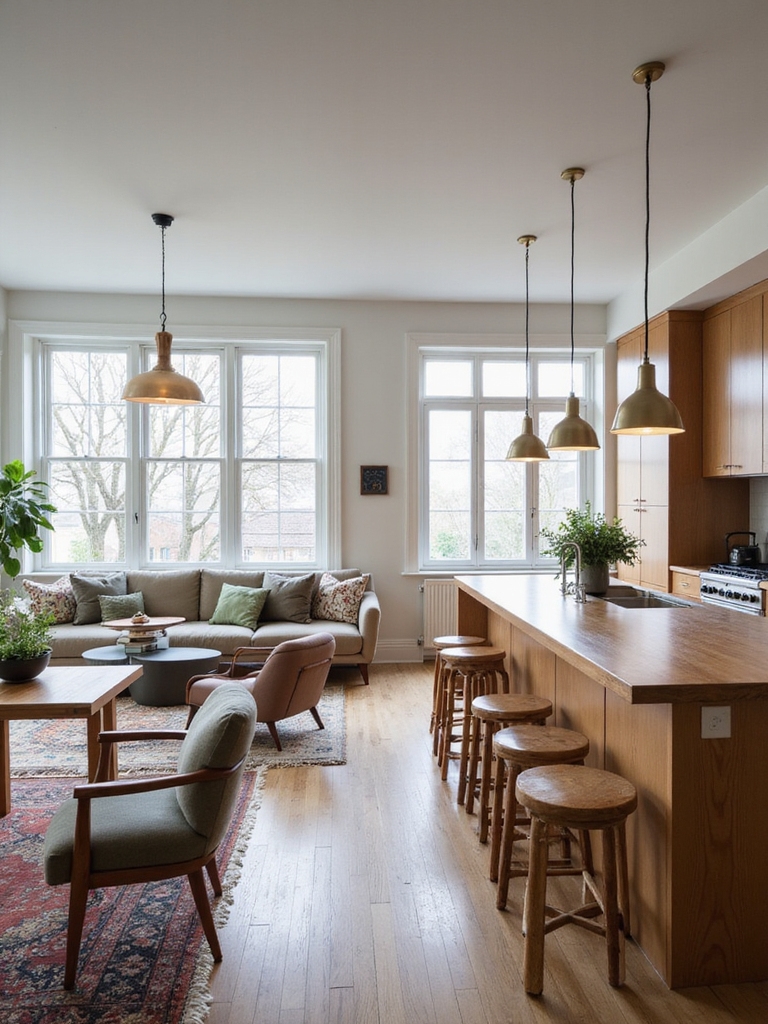
Once the table’s set and guests are arriving, seating becomes the real art — I like arrangements that bend with the evening rather than force it.
I keep a mix: a long bench, a couple of mismatched chairs, and stackable stools. They tuck away, pull close, or scatter to the garden.
That flexibility keeps conversation flowing and the mood relaxed. I also favour incorporating casual bar seating for a chic, social kitchen feel.
Light for Mood and Kitchen Workflow
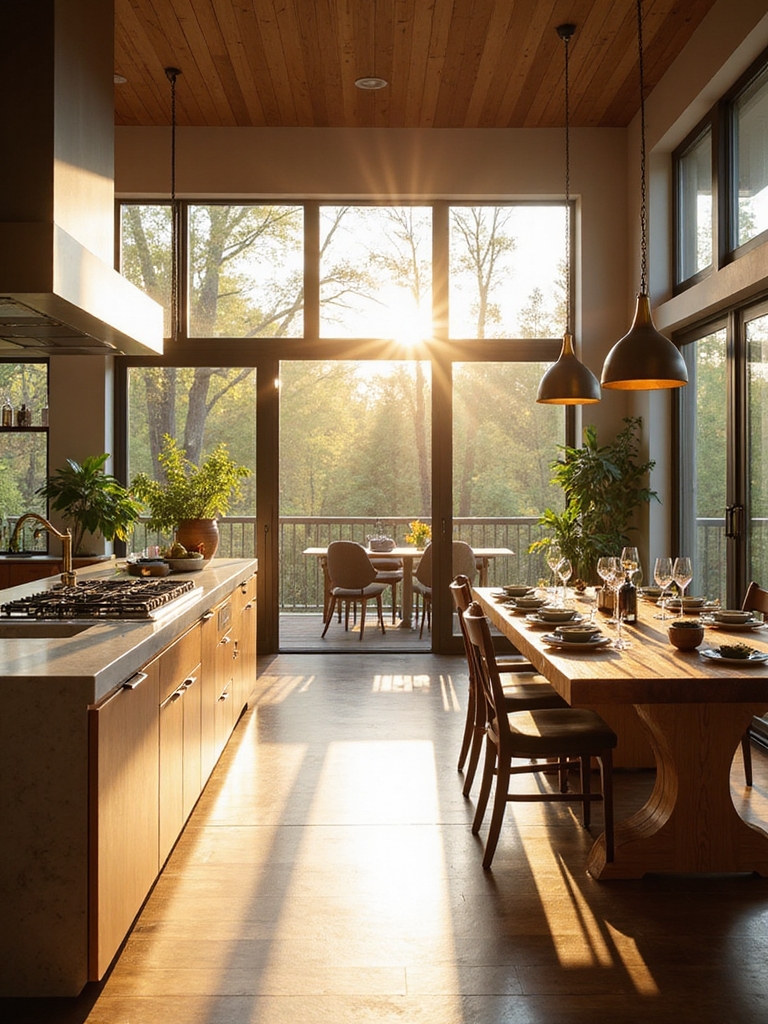
I like to think of lighting in an open plan kitchen as a few layers that each have a job, from bright task lights over the stove and prep areas to softer wash lighting for the dining nook.
Good task-focused fixtures keep cooking safe and efficient, while dimmer-controlled ambience lets the room shift from bustling meal prep to relaxed evening meals.
Let me show you how zoned lighting makes the space both practical and welcoming.
Layered lighting combines task, ambient, and accent fixtures to create depth and flexibility in the room.
Layered Lighting Zones
Because light changes how a room feels and how we move through it, I like to break an open-plan kitchen into layered lighting zones that serve both mood and workflow.
I zone ambient, accent, and low-level dining lights so guests feel cozy while cooks stay efficient.
Dimmers, warm bulbs, and directional accents let me shift scenes effortlessly from bright prep to soft supper.
Task-Focused Fixtures
When I’m cooking, I want light that does more than look pretty—it has to guide my hands and keep sharp edges visible.
I choose focused pendant lamps over the island and under-cabinet strips near prep zones.
They cut shadows, warm the wood, and let me chop confidently while chatting with guests. Practical, cozy illumination keeps workflow smooth without stealing the room’s rustic charm.
Dimmer-Controlled Ambience
Often I ease the lights down as evening settles, because dimmers let me shift the kitchen from efficient workspace to cozy gathering spot without changing a bulb.
I tweak brightness for chopping, simmering, or lingering over wine, blending task clarity with soft mood.
A single slider or smart scene keeps flow natural, inviting guests to stay, chat, and savor the rustic warmth.
Flooring & Rugs That Define Zones
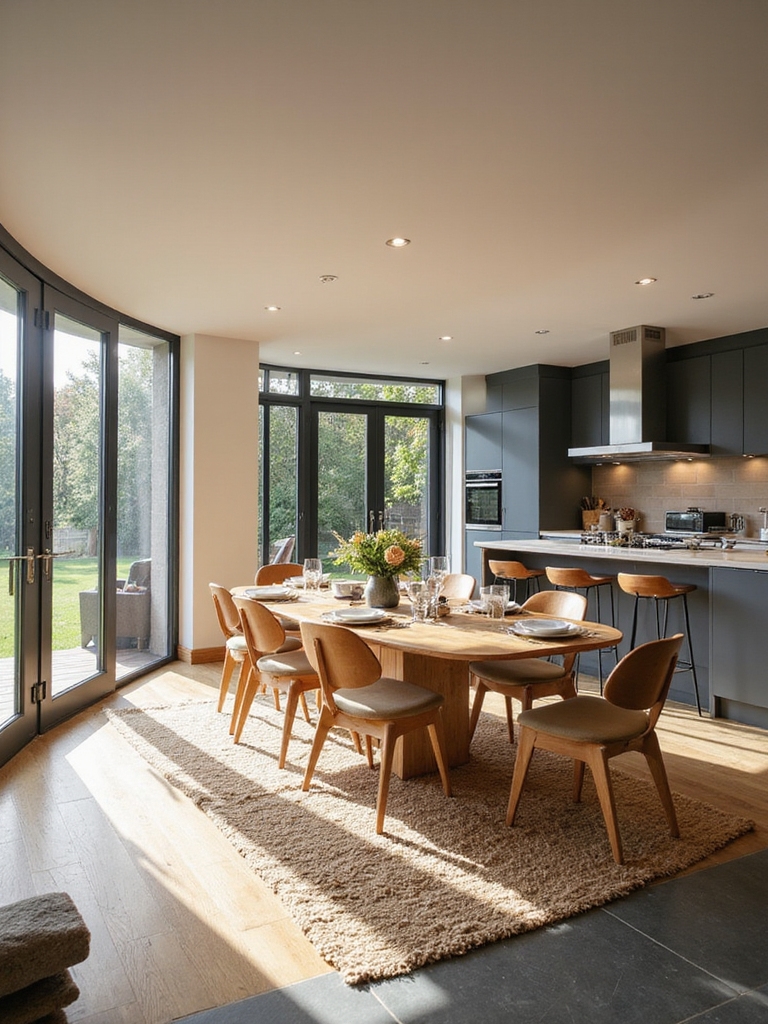
I like to start zoning an open-plan kitchen-dining area underfoot, using a change in flooring or a well-chosen rug to anchor each function while keeping the space feeling connected.
I pick durable, warm timber near the stove and a low-pile, patterned rug under the table to define dining.
Layer textures, keep colours earthy, and make sure rugs are easy to clean for relaxed, welcoming weekends.
Storage Tactics: Quick‑Access Zones, Hidden Stowage, Bar Stations
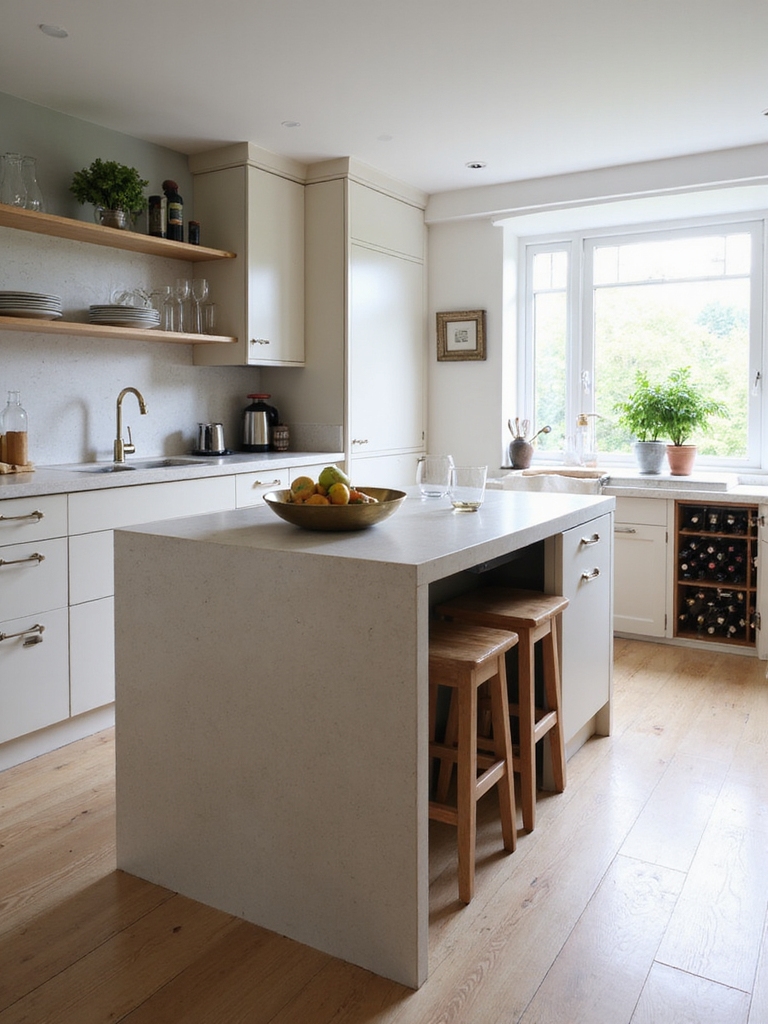
Having anchored the zones underfoot, I turn storage into the next layer that keeps the kitchen-dining area working and welcoming.
I create quick‑access nooks for utensils and napkins, tuck bulky gadgets in concealed cupboards, and carve a cozy bar station with glass racks and spirit shelves.
These simple, rustic solutions keep clutter out of sight and convivial items within easy reach.
Sound Control Tips for Lively Gatherings
Because open-plan rooms bounce voices and clatter around, I tune the space so conversations don’t have to shout over each other — think rugs, soft pendants, and timber panels that soak up sound instead of reflecting it.
I use small, practical fixes that keep energy lively without chaos:
- Layer rugs for absorption
- Hang fabric pendants
- Add upholstered seating
- Install wooden slats
- Use bookshelves as buffers
Appliances & Prep Zones for Faster Home Hosting
Start by zoning your workstations so cooking, plating, and clearing each have their own pockets of counter space—I like a prep island for chopping, a dedicated warming zone near the oven, and a simple coffee station tucked by the sink.
I prefer sturdy, quiet appliances: an efficient induction hob, a roomy convection oven, and a dishwasher with quick cycles so hosting stays smooth and relaxed.
Small‑Space Hacks for Apartment Open‑Plan Layouts
I’d carry the same idea of zoned workstations into small, open‑plan apartments, but I’ll shrink and nest those zones so everything feels purposeful instead of cluttered.
I’ll favor multifunctional pieces and natural textures to keep things cozy. Try these simple hacks:
- Foldaway table that doubles as counter
- Slim shelving as partial divider
- Rolling cart for prep and bar
- Bench with storage
- Warm wood accents for cohesion
Budget‑Friendly Updates That Make a Big Impact
I’ve found that a couple of simple swaps can totally refresh an open kitchen-dining space without draining your wallet.
Swapping in warm, layered lighting and changing out cabinet knobs and drawer pulls gives the room instant character and better function.
Let me show you how smart lighting swaps and a few statement hardware updates can lift the whole space.
Smart Lighting Swaps
I often find the smallest lighting swaps make the biggest difference in an open plan kitchen dining area, so I like to focus on a few budget-friendly changes that transform both mood and function.
I recommend:
- Swap bulbs for warm, dimmable LEDs
- Add undercabinet strip lights
- Use plug-in pendant lights for character
- Install a simple dimmer switch
- Layer with tabletop lanterns for evenings
Statement Hardware Updates
After swapping bulbs and adding mood lighting, a quick hardware update can give your kitchen-dining area an instant facelift without blowing your budget.
I swapped knobs and pulls for matte black and aged brass, swapped hinges for soft-close, and added a rustic drawer cup by the pantry.
Small changes anchor the room, feel intentional, and make weekend hosting feel effortlessly pulled together.
Troubleshooting & Checklist: Prep Your Space for the Weekend
When I’m prepping the kitchen-dining space for a busy weekend, I start with a simple walkthrough so I can spot trouble before it starts; this helps me decide what needs a quick fix and what can wait until Monday.
I tidy, test, and set the mood. My checklist:
- Sweep and clear surfaces
- Test lights and outlets
- Sharpen knives, stock towels
- Arrange seating flow
- Prep a simple drink station
I always think of my first weekend dinner here: guests clustered around the island like bees to a hive, plates moving, laughter circling.
Studies show open layouts boost mingling by 30%, and that’s exactly what I want for you—spaces that invite movement, not barriers. Keep sightlines clear, zones flexible, and your island ready.
Do that, and your kitchen will be the warm, rustic heart where every weekend starts and stories keep flowing.