
I’ll keep it simple: leave at least 36 inches from the table edge to walls or big furniture so chairs and people can move freely, then pick a diameter that fits—36″ for 2–3, 42″ for 3–4, 48″ for 4.
Float the table to open sightlines or tuck it for tight spaces, use low centerpieces and warm pendant lighting, add under‑seat or wall storage, and favor slim, armless chairs; follow these basics and you’ll find practical styling tips next.
Quick Clearance Rule for a Round Table
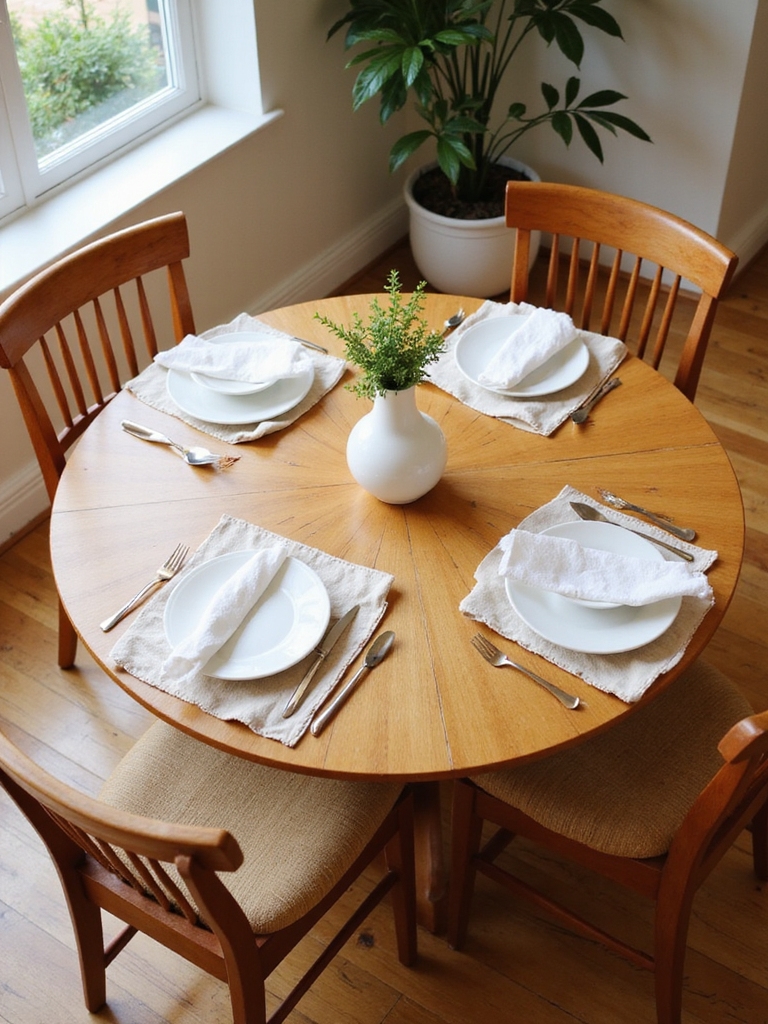
When I’m arranging a round table, I always follow a simple quick-clearance rule: leave at least 36 inches from the table’s edge to any wall or large furniture so chairs slide out comfortably and people can move around without bumping hips or elbows.
I measure, tweak, and visualize traffic paths, then choose chairs and rugs that respect that space so meals feel relaxed and uncramped.
I also focus on creating a seamless flow between kitchen and dining spaces so movement feels natural and unobstructed.
Pick the Right Round Table Diameter

After I’ve mapped out that 36-inch clearance, the next step is to pick the right table diameter so the room feels balanced and meals are cozy.
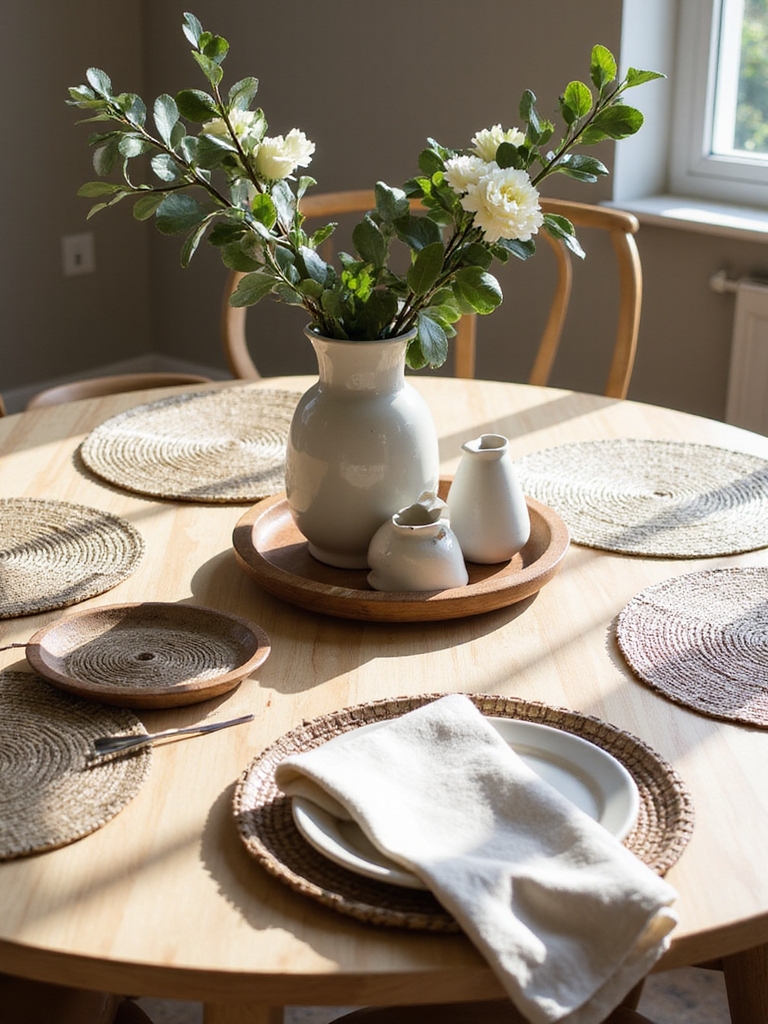
I favor a modest size that leaves walking space and lets light hit the center. Think practical: match scale to your nook, keep sightlines open, and choose a warm wood tone to invite lingering breakfasts without crowding the kitchen.
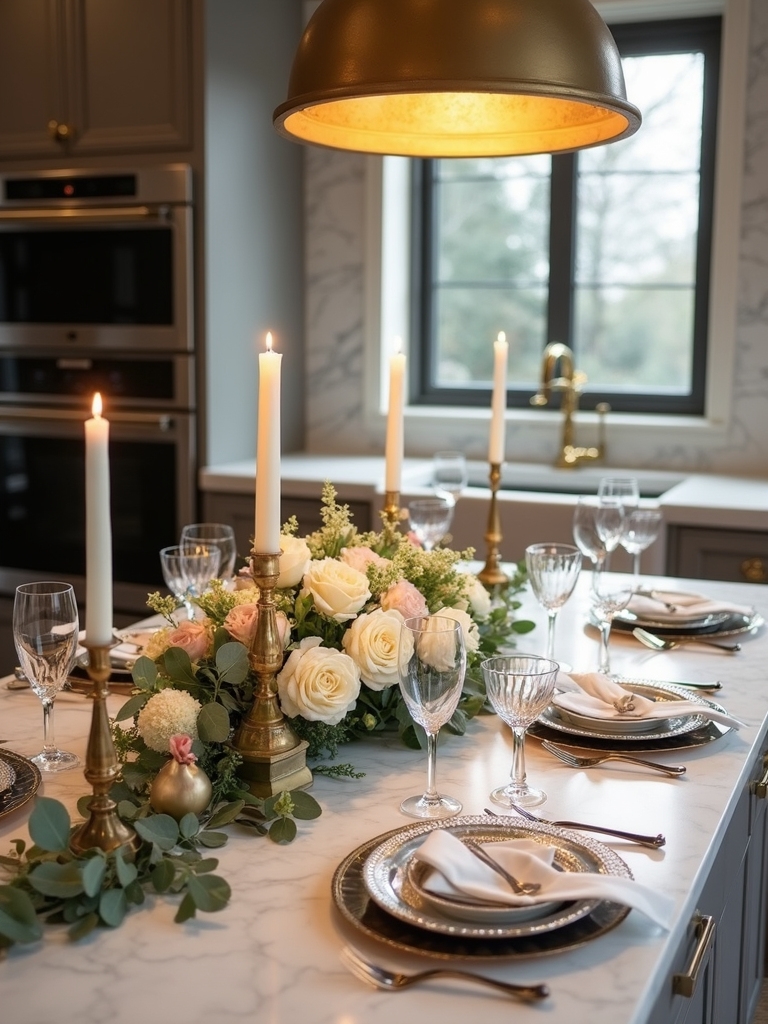
Professional stagers often use simple centerpiece groupings to anchor the space and enhance flow with the kitchen island layout.
How Many Chairs Fit Each Diameter?

Let’s figure out seating so your round table feels neither crowded nor sparse; I usually think with respect to diameters and chair widths.
For 36” I seat 2–3, 42″ fits 3–4, 48″ comfortably holds 4, and 54″ lets 4–6 mingle. Measure chair widths (18–20″) and allow 24–30” per person for elbow room.
Consider an expandable table to adapt seating for guests without sacrificing daily space.
Center the Table for Smooth Traffic
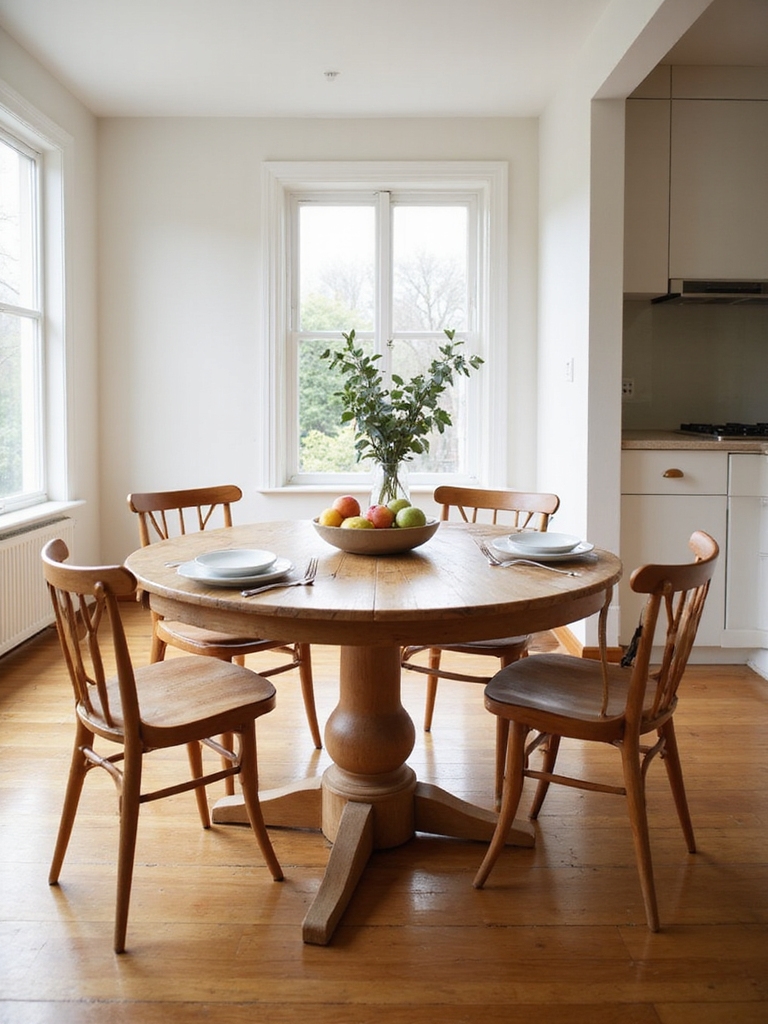
If you want people to move around the kitchen without bumping knees or juggling chairs, I always center the table in relation to the room’s main paths and focal points. It grounds the space and keeps traffic natural.
I check sightlines, walkway widths, appliance access, and cozy lighting.
- Sightlines
- Walkway widths
- Appliance access
- Cozy lighting
An integrated dining zone can also help maximize kitchen square footage by combining seating and circulation with efficient layout to reduce clutter and wasted space.
Float It or Tuck It? Placement Pros and Cons

I like to think about whether to float a round table for an open, airy feel or tuck it against a wall to keep traffic smooth.
Floating creates a cozy focal point and room to move around, while tucking frees up walkways and fits tighter kitchens.
Sometimes a mixed placement—angling the table or pulling it out when guests arrive—gives the best of both.
Many of these choices help you create a boutique cafe feel in your cozy breakfast nook at home.
Float It For Openness
With the table floated away from the walls, I get a sense of breath and movement in the room that a tucked-in layout just can’t match. I love the easy circulation and cozy centerpiece feel.
Try these simple touches:
- Worn wooden centerpiece
- Layered rugs for zoning
- Pendant light hung low
- Slim console nearby for dishes and charm
High-end islands often borrow these same styling rules to balance function and form, especially when creating designer-focused accents that anchor the space.
Tuck It For Traffic
Tuck the round table against a wall and you’ll open up a clear path for foot traffic, especially in narrow kitchens or busy households where every inch counts.
I like that cozy, anchored feeling — it lets people move freely while keeping seating handy.
Add a bench, a simple runner, and a pendant lamp to create a rustic, welcoming nook without blocking circulation.
A fresh, seasonal update like light paint or airy textiles can brighten the space and emphasize spring decor for a lively kitchen refresh.
Mixed Placement Compromise
Although floating a round table gives you room to circulate and tucking it saves space, I often aim for a middle ground that blends the best of both—what I call the mixed placement compromise. I nudge the table toward traffic but leave a gap for chairs and flow.
- keeps sightlines open
- preserves walking space
- allows cozy seating
- adapts to guests
I also prioritize space-saving small kitchen solutions to maintain a luxurious, uncluttered feel.
Define Walkways With Simple Zoning
When I walk into a round kitchen, I like to map out clear paths so people move easily around the table and work zones.
I mark circulation with rugs, a narrow runner, or contrasting floorboards, keeping prep, dining, and transit areas distinct.
Low visual dividers—a plant, basket, or bench—guide steps without closing the room, keeping movement natural and cozy.
Choose Chairs for a Round Table That Aid Circulation
I pick chairs that actually make moving around a round table feel effortless, because tight circulation turns cozy into cramped fast.
I choose slim profiles and slight tapering, so people glide past.
I prefer lighter materials and low backs to keep sightlines open.
Simple padding keeps comfort without bulk.
- slim frames
- armless options
- tapered legs
- lightweight wood
Use Banquettes and Benches With a Round Table
Because a round table naturally invites closeness, I like pairing it with a built-in banquette or a simple bench to boost seating while keeping the space cozy and uncluttered.
I tuck baskets underneath for storage, layer worn linen cushions, and lean a few throw pillows against the wall.
This keeps traffic clear, feels homely, and lets me squeeze in extra guests without clutter.
Rug Size and Placement to Avoid Trips
Since the bench and banquette keep traffic flowing, you’ll want the rug to do the same—siting it poorly can make legs catch and shoes slip.
I choose low‑pile, natural fibers and anchor the rug to keep edges flat.
Consider:
- Rug extends beyond chair legs
- Non‑skid pad beneath
- Rounded edge near walkways
- Easy‑clean material for spills
Lighting That Centers a Round Table and Opens Sightlines
Hang a fixture that feels like the table’s companion, not its opponent—I like a pendant that drops low enough to define the circle without blocking sightlines or elbow room.
I choose warm, dimmable bulbs and layered lighting so the pendant anchors the table while wall sconces or undercabinet lights keep the room open.
A simple, textured shade keeps things cozy and uncluttered.
Keep Tabletops Functional for Everyday Use
Lighting sets the mood, but your table still has to live—so I keep surfaces ready for daily use.
I favor simple, durable pieces and clear space for living.
I do things like:
- A small wooden tray for salt, pepper, oil
- A mason jar with fresh herbs
- Cloth napkins folded nearby
- A single candle for evenings
Storage Ideas to Reduce Clutter Around the Table
I’ve found that smart storage keeps a round table feeling open and welcoming, so I often suggest built-in under-seat compartments for linens and games.
A couple of wall-mounted shelving units nearby can hold cookbooks, jars, and decorative baskets without crowding the tabletop.
Together they make the space tidy and cozy while keeping essentials within easy reach.
Built-In Under-Seat Storage
I often recommend built-in under-seat storage for round kitchen tables because it keeps things out of sight without stealing the room’s cozy vibe.
I love how it balances form and function; you’ll tuck away clutter while keeping a warm, rustic feel.
- Baskets for linens
- Drawer bins for placemats
- Hidden toy nook
- Seasonal decor rotation
Wall-Mounted Shelving Units
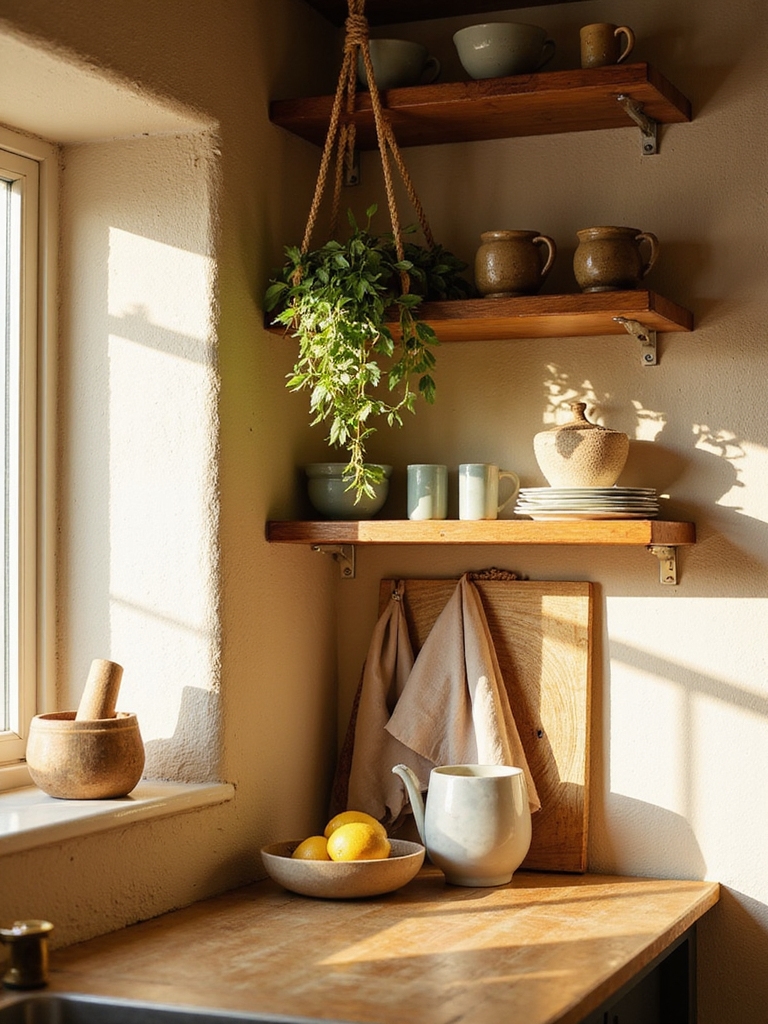
When I want to keep the area around a round kitchen table feeling open and intentional, I turn to wall-mounted shelving units because they lift storage off the floor and make everything within easy reach.
I hang reclaimed wood shelves for cups, bowls, and a few cookbooks, mixing baskets for mail and napkins. It feels cozy, tidy, and perfectly rustic without crowding the table.
Kid‑ and Pet‑Friendly Setups That Keep Flow
Although kids and pets bring life to a home, they don’t have to turn your round kitchen table into a hazard zone; I’ll show you practical tweaks that keep circulation smooth and surfaces safe.
I favor simple, sturdy choices:
- Rounded-edge chairs and non-slip placemats
- Easy-clean linen or vinyl seat covers
- Low, stable centerpieces
- Clear traffic lanes for highchair or pet access
Small‑Kitchen Table Options: Folding, Nesting, Extendable
When space is tight, I love a simple foldable wall-mounted table that tucks away like a secret pantry shelf and still offers a cozy spot for morning coffee.
Pair it with nesting stool sets that slide under the table when you don’t need them, and you’ve got extra seating without the clutter.
These two pieces keep the room airy and give you versatile options for everyday meals or impromptu guests.
Foldable Wall‑Mounted Tables
I’ve hung foldable wall‑mounted tables in two tiny kitchens and they’re the kind of clever fix that frees up floor space without giving up a proper place to eat or work.
I love their simple, rustic charm and how they anchor a cozy nook.
Consider:
- reclaimed wood top
- sturdy metal brackets
- easy latch mechanism
- wall hooks for stools
Nesting Stool Sets
Nesting-stool sets are one of my favorite tiny-kitchen tricks because they give you full seating without swallowing floor space; pull them out for meals, then tuck them cleanly under a round table or into a corner.
I prefer wood with visible grain and soft worn paint — they feel homey, stack neatly, and add texture. Use cushions for comfort and a simple tie to keep them together.
Common Layout Mistakes and Quick Fixes
Although a round table naturally invites conversation, I’ve seen layouts that stifle flow and make the space feel cluttered or awkward. I fix them simply, keeping things warm and rustic.
- Too many chairs → pare down seating for movement
- Oversized centerpiece → swap for low bowl or single vase
- Poor lighting → add a pendant or dimmer
- Blocked paths → reposition for clear circulation
You’ve got plenty of ways to make a round table feel cozy and keep traffic flowing—little clearances, the right diameter, smart placement, and tidy storage all help.
Want your kitchen to feel welcoming and work for kids, pets, and everyday life? Try a folding or extendable option, float it when space allows, or tuck it close when you need room. With a few simple swaps, your round table can become the heart of a rustic, practical kitchen.