
I outfit kitchens the way I cook: practical, durable, and joyful. I prioritize a powerful range (gas, dual‑fuel, or induction), a convection/steam oven, strong ventilation, a counter‑depth fridge, and a top‑tier dishwasher, plus a stand mixer, food processor, immersion circulator, and accurate thermometers.
I choose repairable models with solid warranties and local service networks, confirm circuits and hood routing, and focus budget on things that truly change results—keep going and I’ll show you how to prioritize each choice.
How to Prioritize Premium Kitchen Appliances

When I shop for premium kitchen appliances, I start by thinking about what I actually cook every week and which tools will make those meals easier and more joyful.
I list dishes I make most, set a realistic budget, and prioritize appliances that save time and improve results.
I choose durable, repairable models and make certain they fit my space and cooking habits.
High-tech kitchen gadgets can be worth the money when they meaningfully improve efficiency or results.
Essential Premium Appliances for Serious Home Chefs

If you’re serious about cooking at home, I’d start with a professional-grade range that gives you the power and control of a restaurant stove.
Pair it with a counter-depth refrigerator to keep ingredients fresh without ruining the kitchen’s flow.
And don’t forget commercial-style ventilation — good airflow makes all that heat and aroma work for you, not against you.
Statement range hoods can also anchor your kitchen and serve as a striking focal point.
Professional-Grade Range
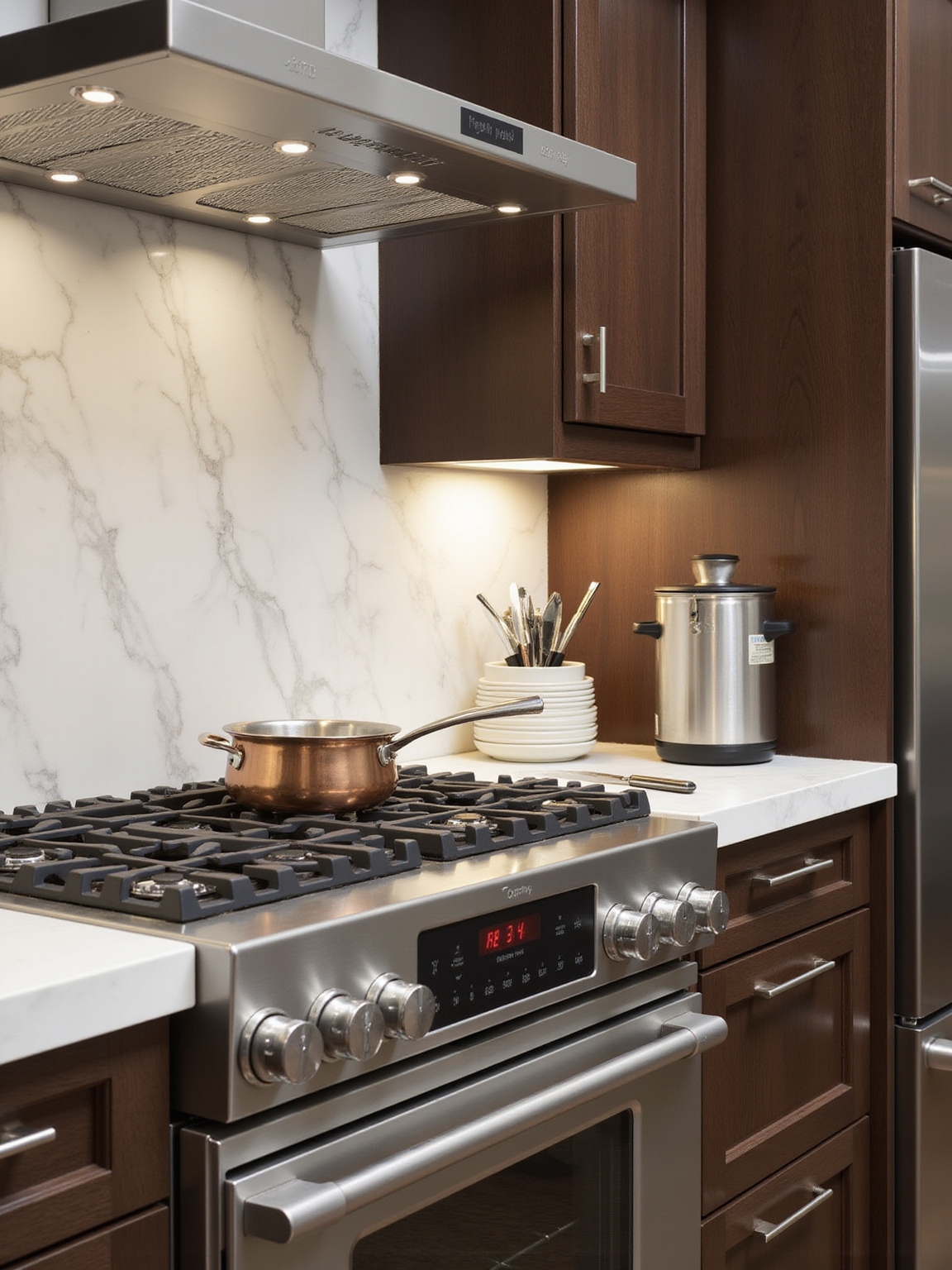
Because I love cooking for guests and family, I chose a professional-grade range to give my kitchen real muscle — powerful burners, precise oven temps, and a tough build that survives daily use.
- Even heat for roasting
- High-BTU burners for searing
- Convection for reliable baking
- Durable grates, easy clean
- Simple, tactile controls that last
It feels like home, built to cook. I also paired it with a stylish heavy-duty sink to match the range’s durability and keep the kitchen looking sharp.
Counter-Depth Refrigerator
While I love the look of a big, showy fridge, I chose a counter-depth refrigerator so my kitchen feels open and intentional — it tucks neatly into the cabinetry, keeps sightlines clean, and still holds what I need for a weekend dinner party.
I appreciate its approachable scale, easy access to fresh ingredients, and thoughtful organization that suits a busy cook without overwhelming a cozy, farmhouse kitchen.
High-end kitchens often benefit from islands designed to complement a counter-depth refrigerator, especially those featuring unique island designs that enhance workflow and aesthetics.
Commercial-Style Ventilation
A tidy fridge keeps my countertops open, but when I start searing and simmering for a crowd, air movement becomes the next thing I care about — that’s where commercial-style ventilation earns its place in a home kitchen.
I choose robust hoods that perform quietly and look homey.
- powerful extraction
- quiet operation
- easy-clean filters
- farmhouse-friendly finishes
- professional airflow control
Stylish kitchen ventilation can make a statement by combining high performance with design-forward finishes.
Choose a Range: Gas, Dual-Fuel, or Induction

Curious which range will fit your kitchen and cooking style best? I favor practical choices: gas gives instant heat and that farmhouse flame feel, dual-fuel marries gas burners with an electric oven’s even bake, and induction offers safety and speedy, precise control.
Think about fuel availability, maintenance, and cooking habits—then pick the one that makes daily cooking feel effortless and joyful.
Modern luxury kitchens also emphasize clean, integrated appliances for a streamlined, high-end look.
Six-Burner Cooktops vs. Induction: Pros & Cons

Because I cook for a crowd and like my tools to match that pace, I’ve compared six-burner gas cooktops and induction side-by-side to see which fits different kitchens and cooking styles.
I’ll be frank: both shine for serious home cooks.
- Fast, powerful searing
- Precise, instant temperature control
- Simpler cleanup with induction
- Traditional flame for heavy pans
- Safety and energy efficiency tradeoffs
Modern kitchen gadgets can further elevate these platforms with next-gen tech like smart controls and integrated sensors.
How Built‑In Convection Ovens Improve Baking & Roasting

When I switched to a built‑in convection oven, my baking and roasting got more reliable and way faster; the fan-driven airflow browns evenly, shortens cook times, and reduces the need to rotate pans mid-bake.
I love how crusts crisp without drying, sheet trays roast uniformly, and multitasking becomes simple. It feels like bringing a professional, cozy kitchen into my home.
Professional kitchens often rely on organization systems to keep multiple tasks running smoothly, and a built‑in convection oven fits right into that workflow.
Ovens & Steam Combos: Features That Matter
If you want restaurant-quality results with a bit of homey ease, ovens with steam functions are worth a close look. I love how they crisp crusts and keep meats juicy.
Consider these features before buying:
- Combination steam/convection modes
- Precise humidity controls
- Easy-clean interior
- Multiple rack flexibility
- Reliable temperature calibration
They’re practical, cozy, and truly elevate home cooking.
Pick the Right Refrigerator for Freshness & Workflow
Steam ovens do wonders for baking and roasting, but keeping everything fresh afterward starts with the right refrigerator.
I choose models with crispers that control humidity, adjustable shelves for big roasts, and reliable temperature zones.
Look for quiet operation, easy-to-clean surfaces, and thoughtful door storage. That kind of practical, homey fridge keeps ingredients vibrant and my workflow smooth every day.
Commercial‑Style Vent Hoods: Size, CFM, and Placement
I always match the hood width to the cooktop so grease and steam don’t sneak past the edges.
I’ll walk you through how to calculate the CFM you really need based on burner output and kitchen layout.
Then we’ll talk about the best mounting height so the hood works efficiently without crowding your head.
Hood Width Matching Cooktop
A good vent hood should feel like the friendly backbone of your kitchen, so I always start by matching its width to the cooktop — that simple step keeps smoke, grease, and odors from escaping into the room.
- Match hood to cooktop width
- Center over burners
- Allow slight overhang for larger pans
- Consider cabinet symmetry
- Prioritize practical clearance and accessibility
Required CFM Calculation
Because a commercial‑style hood has to move a lot more air than a residential one, I always start by calculating the required CFM so the hood actually keeps smoke and grease out of the kitchen.
I measure cooktop BTUs, count burners, and factor hood capture efficiency; then I pick a unit that balances power, noise, and duct length to make certain clean, comfortable farmhouse cooking.
Optimal Mounting Height
When I’m setting a commercial‑style hood over my cooktop, the mounting height is one of the first things I nail down because it determines how well the hood captures steam, smoke, and grease without making the kitchen feel crowded.
I aim for practical comfort:
- 24–30 inches for gas ranges
- 20–28 inches for electric
- Allow headroom
- Match hood width
- Follow local codes
Why a Top‑Tier Dishwasher Saves Time and Repairs
I often tell friends that investing in a top-tier dishwasher has been one of the smartest time-savers in my kitchen, because it cuts down on hand-washing, shortens cleanup routines, and keeps minor issues from becoming big repairs.
Its reliable cycles, sturdy racks, and easy maintenance mean fewer service calls, less stress, and more time to cook, sip tea, and enjoy the farmhouse calm.
Which Countertop Appliances to Buy First (Blender, Food Processor, Mixer)
If you’re building a practical kitchen from the ground up, I recommend starting with a blender, a food processor, and a stand mixer—each fills a distinct role so you won’t end up doubling up on gadgets. I’ll keep it simple and friendly:
- Smoothies, soups, sauces: blender
- Chopping, shredding, dough prep: processor
- Baking, whipping, heavy mixing: stand mixer
- Space-saving tips
- Essential attachments
Sous‑Vide & Precision Temperature Gear: What to Buy
Curious about diving into sous‑vide without turning your kitchen into a lab? I recommend a reliable immersion circulator, a sturdy vacuum sealer, and a few reusable bags or jars.
Pick a model with simple controls and accurate temps—no gimmicks. A thermometer for spot checks and a sturdy container with a lid finish the set.
It’s practical, precise, and utterly rewarding.
Smart Kitchen Tech That Actually Helps Cooking
I love gadgets that actually make cooking simpler, so I look for smart tools with intuitive recipe integration that guide me step-by-step.
I also want precision temperature control so my roasts and custards turn out the same every time.
And when my hands are messy, hands-free voice commands keep things moving without me wiping flour everywhere.
Intuitive Recipe Integration
When I’m prepping a new recipe, I want my appliances to feel like helpers, not hurdles—so intuitive recipe integration matters.
I rely on gadgets that guide, scale, and sync with my rhythm, making cooking calm and confident.
- Auto-adjusting timers
- Step-by-step screen prompts
- Voice-activated cues
- Shopping list sync
- Smart conversions for servings
Precision Temperature Control
After my gadgets have walked me through a recipe, I want temperature to do the same work—precise and predictable so I can focus on flavor.
I rely on ovens and sous-vide that hold steady, probes that warn before overcook, and stovetops that sense pans.
That calm control turns rustic ingredients into consistent results, so every roast and batch of jam feels reliably homemade.
Hands-Free Voice Commands
Call out a command and your kitchen answers—hands-free voice tech has made cooking less of a juggling act and more of a companionable rhythm.
I use voice to keep my hands messy-free and my focus on flavor.
- Preheat ovens while I chop
- Set timers without wiping my hands
- Adjust oven temp mid-recipe
- Read recipes aloud
- Control lights and speakers for mood
Durability, Warranties & Service Networks to Check
Because I’m using these tools every day, I look for appliances built to last and backed by real support—so I don’t get stuck with a costly repair or a bench of broken bowls.
I prioritize solid warranties, easy-to-reach service networks, and local technicians who know their gear. A clear parts policy and responsive customer service keep my kitchen humming and my peace of mind intact.
Budget Guide: Where to Splurge and Where to Save
While I love a well-made range, I’ll happily skimp on some gadgets so my essentials get the investment they deserve. I tell you: spend on cooking tools that last, save on single-use extras.
Cozy, sensible choices keep the kitchen honest.
- Range or cooktop
- Quality refrigerator
- Heavy-duty cookware
- Skip novelty appliances
- Midrange small electrics
Layout, Ventilation, and Electrical Checklist Before Buying
Before you bring home new appliances, I like to check that the kitchen work triangle feels natural so cooking flows without extra steps.
I also make sure ventilation is adequate and that big appliances have dedicated power circuits so you won’t trip breakers mid-bake.
Let’s walk through those measurements and electrical needs together so everything fits and functions right.
Kitchen Work Triangle
If I’m going to recommend appliances that make cooking joyful, we’ve to start with the kitchen work triangle — the simple relationship between stove, sink, and refrigerator that drives how you move while you cook. I favor practical layouts that feel cozy and efficient.
- Keep distances short
- Make certain clear sightlines
- Allow prep space
- Prioritize ventilation
- Plan accessible outlets
Dedicated Power Circuits
Think of dedicated power circuits as the unsung backbone of a joyful kitchen — I always check layout, ventilation, and electrical needs before I buy any major appliance.
I verify amperage, outlet placement, and circuit capacity, plan vent routes for gas and electric ranges, and consult an electrician for permits.
Proper wiring prevents trips, fires, and frustration, keeping my kitchen safe and humming.
Deciding on premium appliances is like planting an heirloom garden: choose what feeds your cooking soul, invest in sturdy roots, and give them the right light and space to flourish.
I’ll tell you where to splurge and where to save, match the range to how you cook, and make sure your ventilation and wiring won’t leave you high and dry. With the right pieces, your kitchen becomes a warm, reliable heart for every meal.