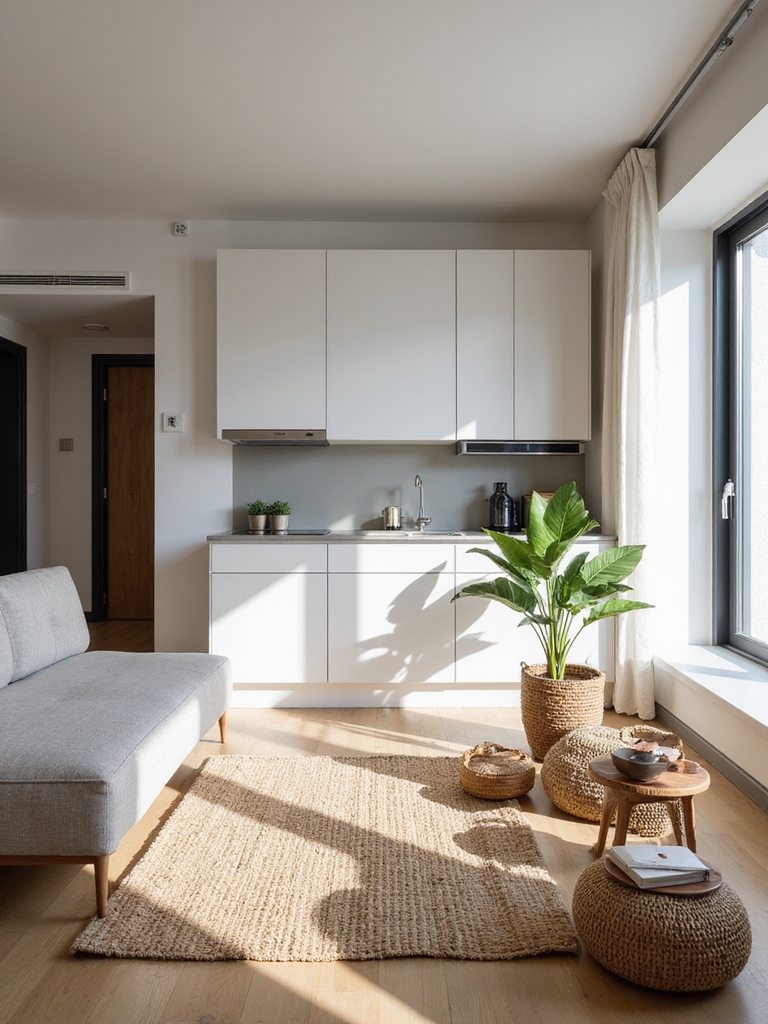


I’ve found the trick to a relaxed, social kitchen-dining combo is simple flow: arrange sink, stove and fridge in a tight work triangle, keep clear 36–48 inch walkways, and place prep near storage and seating so cooks and guests mingle without bumping into each other.
I favor an island that doubles as a prep hub and casual table, layered lighting, durable counters, and comfy mixed seating. Stick with those basics and you’ll want to explore layout and material choices next.
Start Here: Pick the Right Open Kitchen–Dining Layout
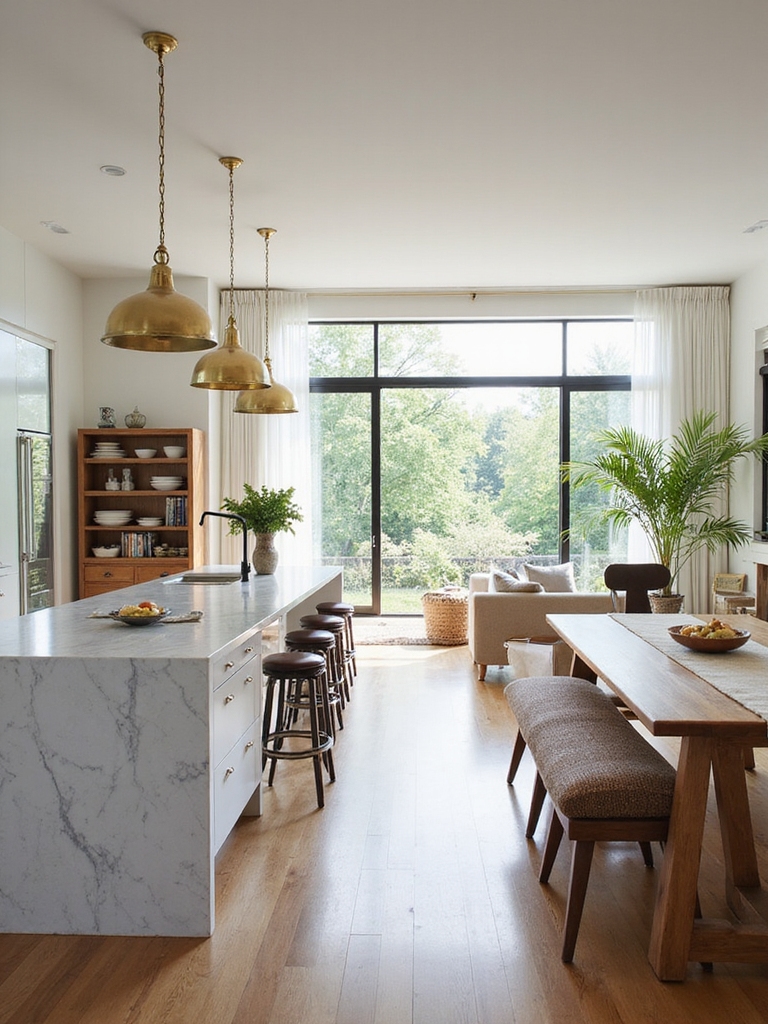
When I’m planning an open kitchen and dining space, I start by thinking about how we actually move through the room—where we cook, sit, serve, and linger—because those paths should feel natural, not forced.
I ask about light, sightlines, and where conversation gathers. I choose a layout that keeps prep near storage, seating reachable, and traffic clear, so evenings feel effortless and homey.
I also make sure the overall design supports a seamless flow between kitchen, dining, and living areas so the space functions as one cohesive whole.
How Open Kitchen–Dining Plans Improve Daily Flow
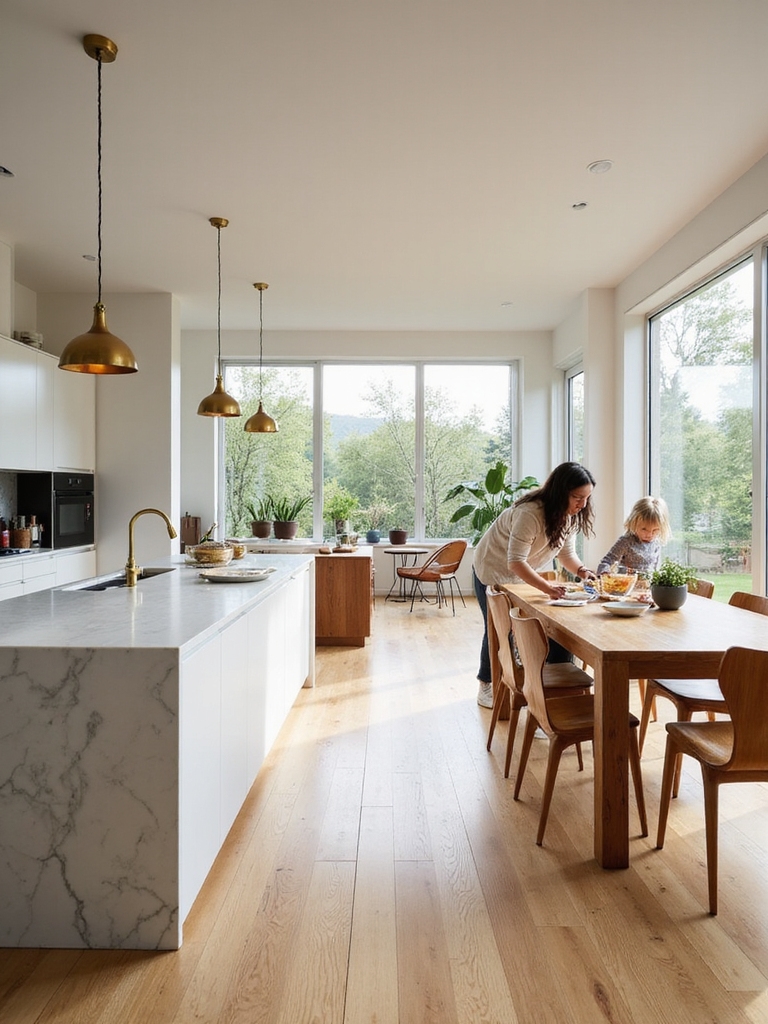
Once I’ve settled on a layout that keeps prep near storage and seating within easy reach, the real benefit shows up in how the day moves: chores, meals, and conversation flow without us thinking about logistics.
I love how openness lets me supervise, chat, and serve with ease.
- Faster prep
- Easier cleanup
- Natural gathering spots
Open kitchens encourage natural interaction by removing barriers between cooking and living areas, so activities blend more smoothly throughout the day.
Measure Your Space and Define Functional Zones
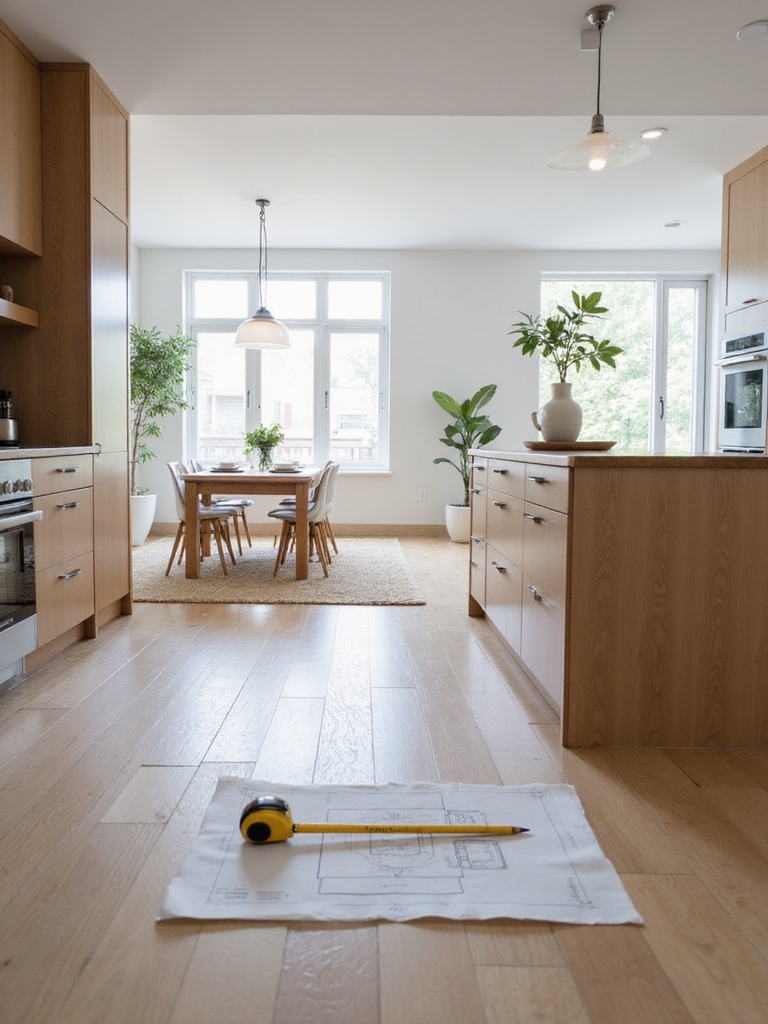
Before you swing a tape measure, I like to picture how each zone will feel — cooking, prep, storage, and seating — so I can measure with purpose.
I note clear pathways, appliance clearances, and cozy dining space.
I sketch rough zones to scale, marking work triangles, storage reach, and lighting needs, so the room flows naturally and feels comfortably lived‑in.
Consider open-plan strategies like using zoned layouts to maximize flow and visual space.
Choose the Right Layout: Galley, L‑Shape, Island, or Peninsula
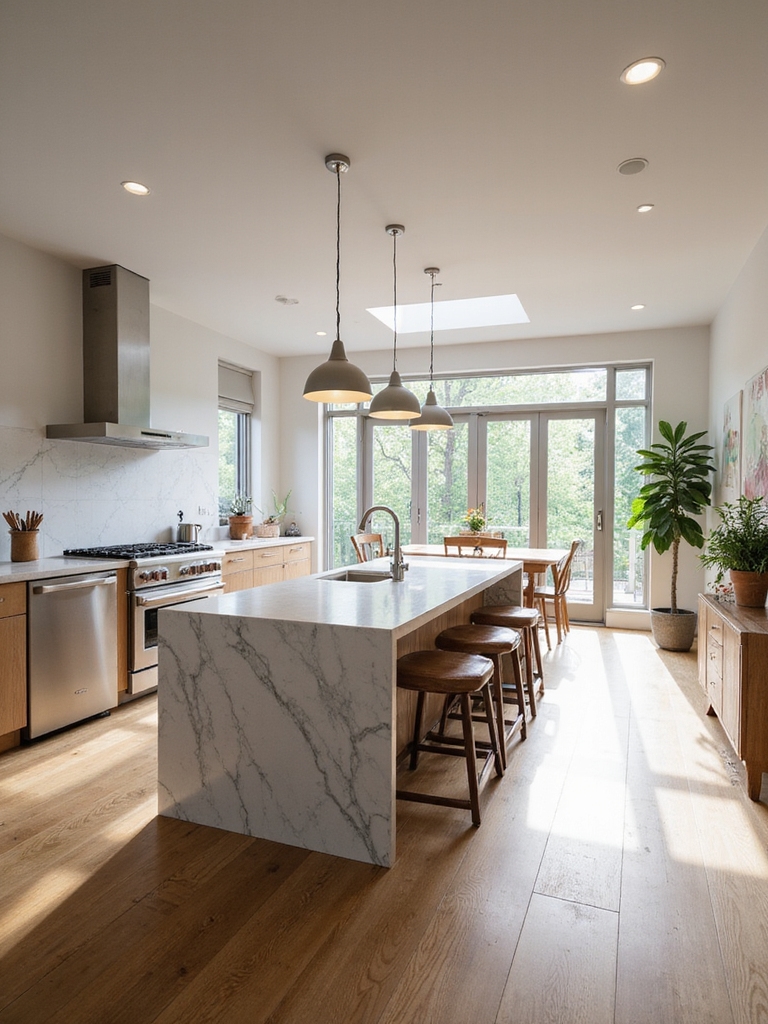
Now that you’ve mapped zones and clearances, it’s time to pick a layout that feels right for cooking and company.
I’ll guide you simply: choose flow over fashion, prioritize work triangle efficiency, and match seating needs.
Consider:
- Galley for tight efficiency.
- L‑shape for open corners.
- Peninsula for partial separation.
I’ll help you weigh pros and cons so the space feels lived‑in and welcoming. Many readers also love open plan island layouts because they create a central hub for cooking and socializing, highlighting island layouts as a popular choice.
Pick an Island or Table for Prep, Dining, and Work
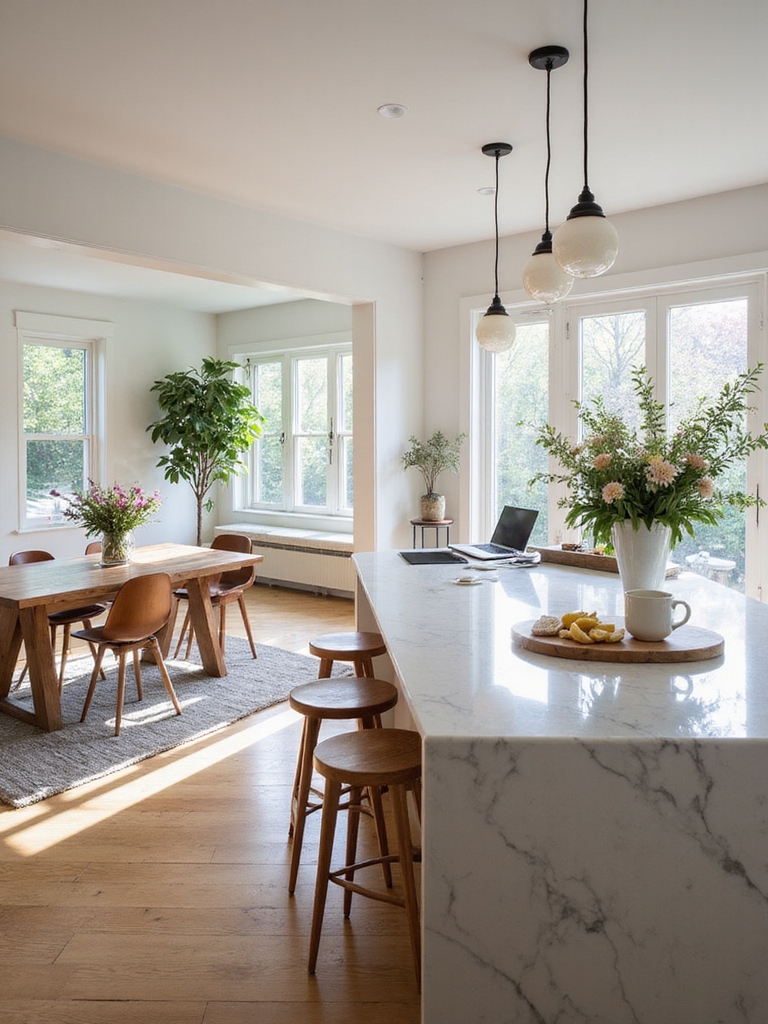
Think about whether you want an island that anchors the room or a table that feels more lived‑in — I tend to favor islands for prep and casual seating, and tables when I want flexible dining and a place for homework or board games.
I choose surfaces that suit tasks: durable stone for chopping, warm wood for lingering, with stools or benches that invite conversation and quick meals.
Open kitchen islands can become the focal point of a home and improve traffic flow, especially when designed with work zones and seating that supports multiple activities.
Plan Circulation to Prevent Bottlenecks
I plan the kitchen’s flow like laying out a map, keeping clear lanes between the sink, stove, fridge and any island or table so people don’t collide while I’m cooking.
I nudge furniture, set dedicated walkways, and remind guests to stand aside. Simple rules help:
- Keep primary lane 36–48 inches.
- Stagger work zones.
- Clear crossing paths quickly.
Open-plan layouts often combine kitchen and living areas to improve sightlines and sociability, and considering proven layout principles helps balance function and flow.
Create Sightlines for Cooking, Serving, & Socializing
Once the lanes are set and people can move without bumping elbows, I focus on sightlines so cooking, serving, and chatting all happen naturally.
I keep counters low, position prep zones toward the dining view, and orient stools so faces meet.
Simple pendant lighting and an open pass-through invite conversation, letting meals flow from stove to table while everyone stays connected and comfortable.
Open layouts also benefit from deliberate zoning strategies to define kitchen, dining, and living areas without closing them off.
Flooring & Rugs to Define Kitchen and Dining Zones
When I layer warm hardwood with a durable tile or tuck a braided rug beneath the table, the kitchen and dining areas find their own rhythm without walls.
I balance texture and wearability, choosing rugs that anchor dining while tiles handle spills.
Consider:
- Durability for kitchen paths
- Comfort where you sit
- Scale to unify sightlines and flow
Open layouts also benefit from maximizing natural light to keep both spaces feeling bright and connected.
Appliance Placement and the Efficient Work Triangle
Let’s talk about where to put the stove, sink, and fridge so your kitchen feels natural to work in and the distances between them stay practical.
I’ll walk you through simple appliance zoning and how to keep the main work triangle free from through-traffic so cooking stays efficient and pleasant.
With a few thoughtful tweaks we can make sure appliances serve both the kitchen and the adjoining dining area without bottlenecks.
Work Triangle Basics
Because I cook most evenings, I’ve learned that thoughtful appliance placement makes the kitchen hum — not just look good.
I keep the sink, stove, and fridge close enough for easy flow but with clear counter space between.
I aim for simple paths and no cross-traffic.
- Sink near prep
- Stove central
- Fridge accessible
Appliance Zone Placement
While I lean on the work triangle as my kitchen’s backbone, I also think in zones — prep, cooking, cleaning, and storage — and place appliances so each zone feels natural and uncluttered.
I tuck the fridge near pantry storage, position range and oven centrally for cooking flow, keep dishwasher close to the sink, and reserve clear counters for prep, so tasks move simply and warmly.
Traffic Flow Considerations
When I think about traffic flow, I picture people moving through the kitchen as if they’re passing through a well-worn farmhouse doorway — steady, purposeful, and never bumping into each other. I place appliances to honor the work triangle and keep paths clear.
Key points I follow:
- Keep cook, sink, fridge distances efficient.
- Allow 36–48″ walkways.
- Minimize cross-traffic.
Storage Solutions for Seamless Cooking‑to‑Dining Flow
I like to keep things within reach so cooking flows straight into serving without a hiccup.
I stash plates, napkins, and serving spoons in low drawers near the island, keep everyday glassware on open shelves, and use labeled baskets for placemats and condiments.
Rustic hooks hold aprons and pans; a slim pantry keeps staples handy.
It’s practical, cozy, and calm.
Lighting Layers: Task, Ambient, and Mood
Now that the pantry and drawers keep everything within reach, lighting becomes the thread that ties cooking and serving together.
I layer light to guide tasks, shape space, and set mood—simple, practical, welcoming.
I focus on:
- Bright task lights over worktops.
- Soft ambient fixtures for overall warmth.
- Dimmable accents to turn dinner into a cozy ritual.
Seating Options: Benches, Chairs, and Counter Stools
Pull up a seat and let’s talk about how benches, chairs, and counter stools shape both comfort and conversation in an open kitchen-dining space.
I favor a mix: a long bench for family spillover, sturdy chairs for everyday meals, and a couple of stools at the counter for quick chats while I cook.
Each choice invites different rhythms and cozy gatherings.
Materials & Finishes That Stand Up to Dining and Cooking
I want to talk about choosing materials that actually stand up to everyday cooking and meals—think tough countertops, upholstery that resists stains, and floors that forgive spills.
I’ll share practical options for durable stone or engineered tops, fabrics and leathers that hide life’s messes, and protective floor finishes that take traffic and moisture.
Together we’ll pick finishes that feel warm and lived-in without sacrificing practicality.
Durable Countertop Surfaces
I’ve learned that the right countertop does more than look good — it’s the workhorse of an open kitchen where cooking and dining meet.
I favor surfaces that endure daily life: stone, engineered quartz, and butcher block. They balance heat, scratches, and spills. Consider:
- Soapstone — ages gracefully
- Quartz — low maintenance
- Maple butcher block — warm, repairable
Stain-Resistant Upholstery Choices
Let’s talk about upholstery that won’t panic when your table gets lively — I prefer fabrics and finishes that shrug off spills and scrub back to life.
I reach for performance linens, waxed cottons, and tightly woven synthetic blends with stain repellents.
Leather or treated hides age beautifully and wipe clean.
Choose warm, earthy tones and removable cushion covers for easy, practical charm.
Protective Floor Finishes
Think about the floor as your kitchen’s workhorse — I pick finishes that take spills, dropped pans, and heavy chairs without drama. I favor durable, repairable surfaces with warm character.
Consider these reliable options:
- Oiled hardwood — ages beautifully, simple spot repairs.
- Porcelain tile — tough, varied textures for grip.
- Waterproof vinyl plank — forgiving, easy maintenance, cozy underfoot.
Controlling Sound and Odors in Open Plans
When cooking and entertaining in an open kitchen, I focus on practical ways to keep noise and smells from taking over the living area.
I use heavy curtains, woven rugs, and upholstered chairs to soften sound, and a good vent hood plus simmering vinegar or citrus to neutralize odors.
Planting herbs near the cooktop adds fragrance and a homey, rustic touch.
Small‑Space and Budget‑Friendly Design Tweaks
I often look for small, inexpensive shifts that make an open kitchen feel larger and more lived‑in without breaking the bank.
I favor warm woods, thrifted textiles, and clever storage. Try these quick tweaks:
- Open shelving and baskets for visual calm.
- Light paint and mirrors to expand sightlines.
- Multiuse furniture to save space and add charm.
I’ve walked you through the shapes, surfaces and seating that make an open kitchen–dining plan sing, but there’s one final thing I haven’t said outright—yet it matters most.
Imagine the quiet pulse of morning coffee, the clink of plates at dinner, the soft spill of light across a well-worn table; that feeling is what you’re designing for.
Trust the flow, pick what feels right, and let the room reveal the rituals you didn’t know you needed.