


I love styling open kitchen shelves so they look lived-in but tidy; I keep everyday dishes front and center, rotate seasonal pieces, and stash mismatches out of sight. I measure shelf depths, group items by use, and stick to two main tones with one accent for calm cohesion.
I mix wood, glass, and matte ceramics, add a small plant or woven basket, and use warm under-shelf lighting. Keep things practical and you’ll want to see how to refine each shelf.
How to Style Open Kitchen Shelves: Quick Starter Steps
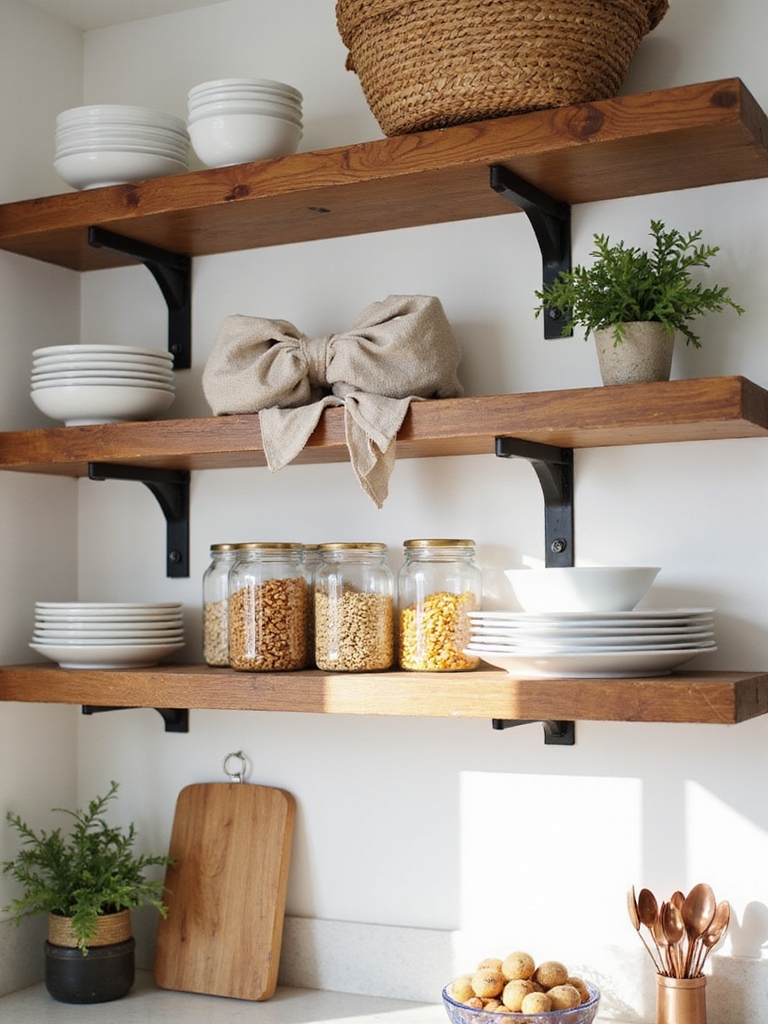
Let’s roll up our sleeves and get your open kitchen shelves looking inviting without overthinking it—I’ll show you simple, practical steps that make a big impact.
I start by editing: remove excess, keep everyday dishes.
Group items by function, mix textures—wood, ceramic, glass—and stagger heights.
Add a plant, a stack of bowls, and leave some breathing room for an effortless, homey look.
Open shelving can instantly create an effortlessly chic look in the kitchen while keeping items accessible.
What Open Shelving Should Solve in Your Kitchen
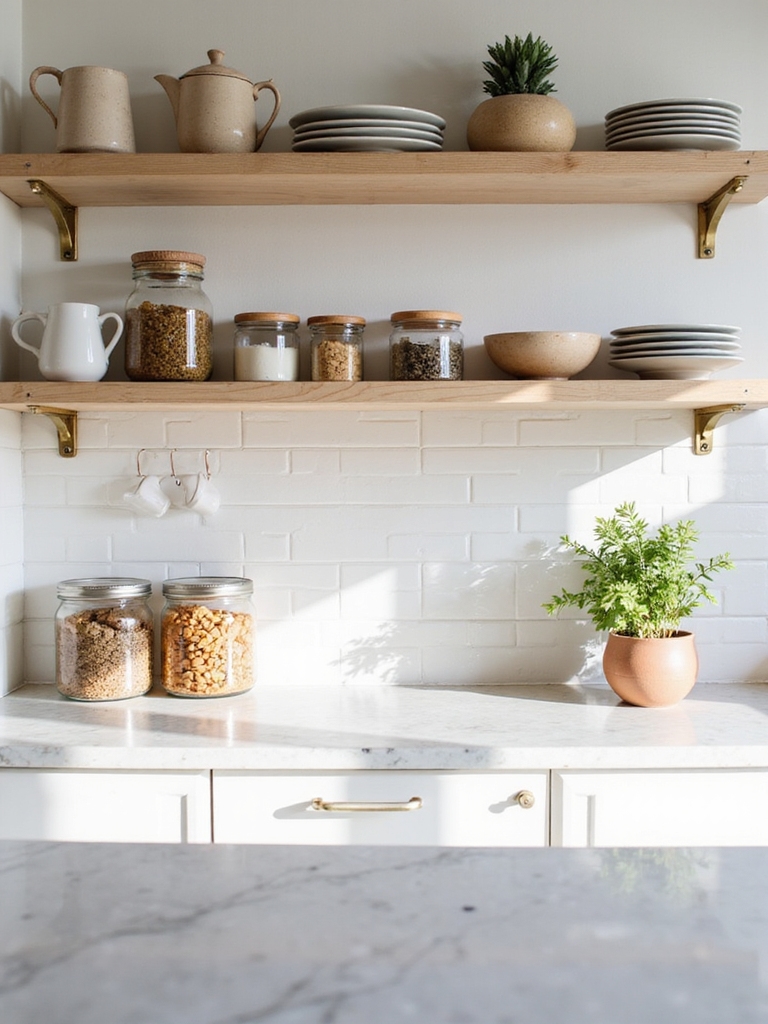
I want open shelving to make the things I use every day easy to see and grab, so the shelves should maximize visible storage without feeling messy.
That means grouping like items and keeping a simple palette so your eye can rest. With a few well-chosen pieces and regular editing, open shelves cut visual clutter and make the kitchen feel lived-in, not chaotic.
Open shelving also creates a chance to showcase dishware and make beautiful collections part of your kitchen’s design.
Maximize Visible Storage
Think of open shelving as the place where your everyday kitchen life is put on display — I use it to corral the things I reach for most while keeping everything easy to find.
I maximize visible storage by grouping, stacking, and labeling with rustic charm:
- Plates by size
- Glasses by frequency
- Bowls nested
- Jars labeled and lined up
Open shelving also allows you to create stylish open shelf arrangements that keep things tidy yet decorative, showcasing frequently used items while maintaining order.
Reduce Visual Clutter
Open shelving should quiet the visual noise in your kitchen, not add to it; I aim to make those open surfaces feel calm and intentional by editing what’s on display.
I choose a few well-loved dishes, uniform jars, and textured baskets, then rotate seasonal pieces. Limiting color, grouping like items, and hiding mismatches keeps the shelves rustic, useful, and peacefully tidy.
I look to effortless open kitchen shelves for inspiration and simple layouts that feel composed and lived-in, especially when incorporating open kitchen shelves into the rest of the décor.
Measure and Plan Your Shelf Layout
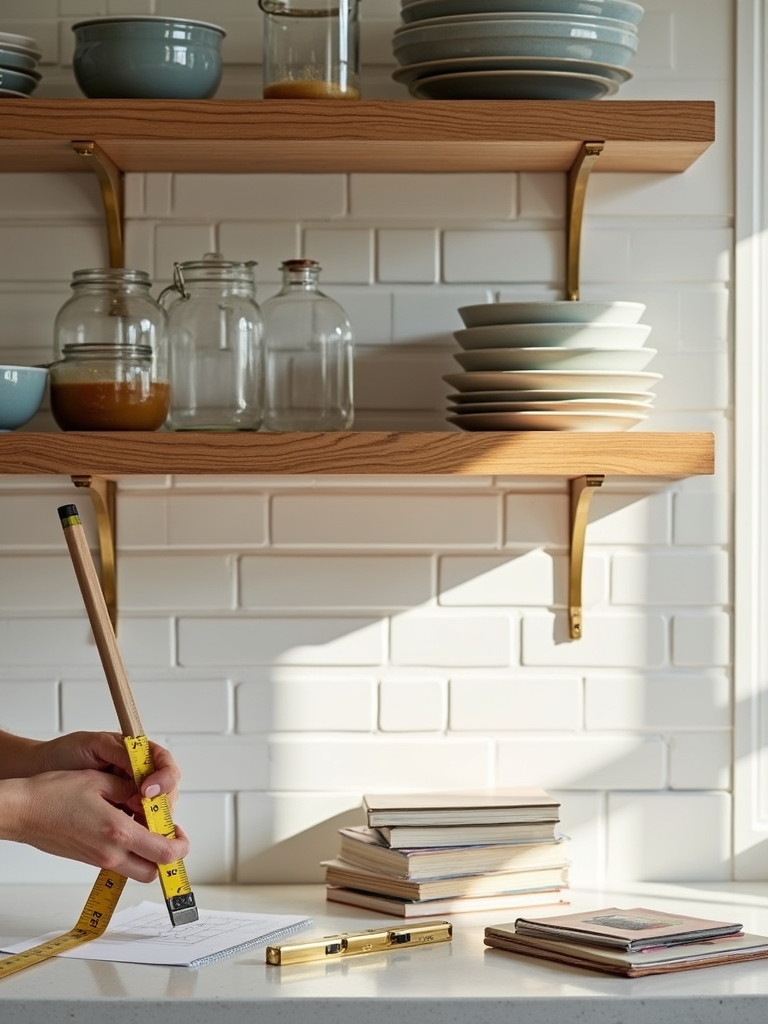
Before I start drilling, I measure everything twice and sketch a simple plan so the shelves look intentional and work for how we use the kitchen.
I map zones for dishes, pantry, display, and everyday tools, then adjust heights for mugs and pitchers.
- Measure widths and depths
- Note appliance clearances
- Allow open spacing for plates
- Mark visual anchors
Open shelving can be arranged from budget-friendly to luxe to fit both style and storage needs.
Choose a Color Palette for Open Shelves
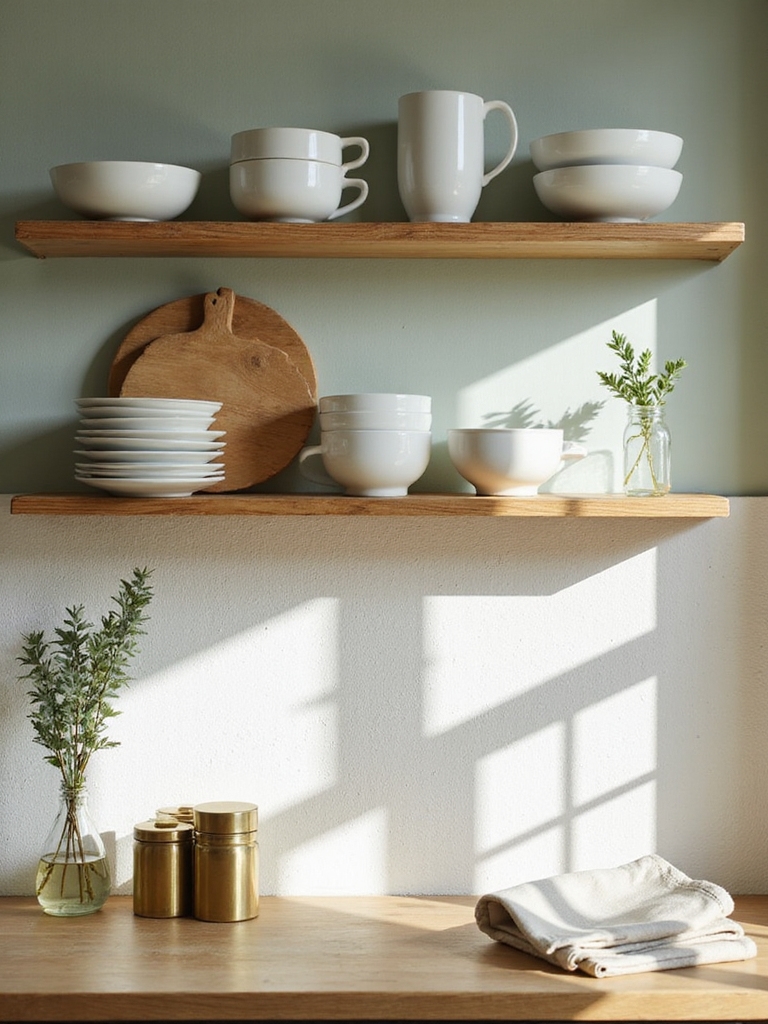
When I style open shelves I stick to two main tones so the display feels calm and cohesive.
Then I pick a single accent color—maybe a faded blue or a warm terracotta—to give the shelves a little soul.
That restrained palette keeps things rustic and collected without looking cluttered.
Open shelving often draws on styles like Boho and Scandinavian, which both favor minimal, natural materials to keep the look airy and functional.
Limit To Two Tones
Since cluttered shelves always catch my eye, I stick to just two tones so everything feels calm and intentional.
I pick a warm neutral and a complementary shade, then arrange pieces by shape and texture.
Simple rules:
- Choose base tone for larger items.
- Use second tone for accents.
- Repeat colors evenly.
- Leave breathing space for balance.
Keeping open shelving organized also depends on shelf arrangement principles like grouping similar items and varying heights to avoid visual chaos.
Add One Accent Color
I like to punch up my two-tone base with one accent color that ties everything together and gives the shelves a defined personality.
I pick a color—deep mustard, forest green, or soft navy—and repeat it sparingly: bowls, a vase, a cloth.
That single pop brings cohesion, warmth, and rustic charm without overwhelming the airy openness of open shelving.
Playful color choices can help make your kitchen truly yours, with Vibrant Color Concepts adding personality and flair.
Mix Materials and Textures for Depth
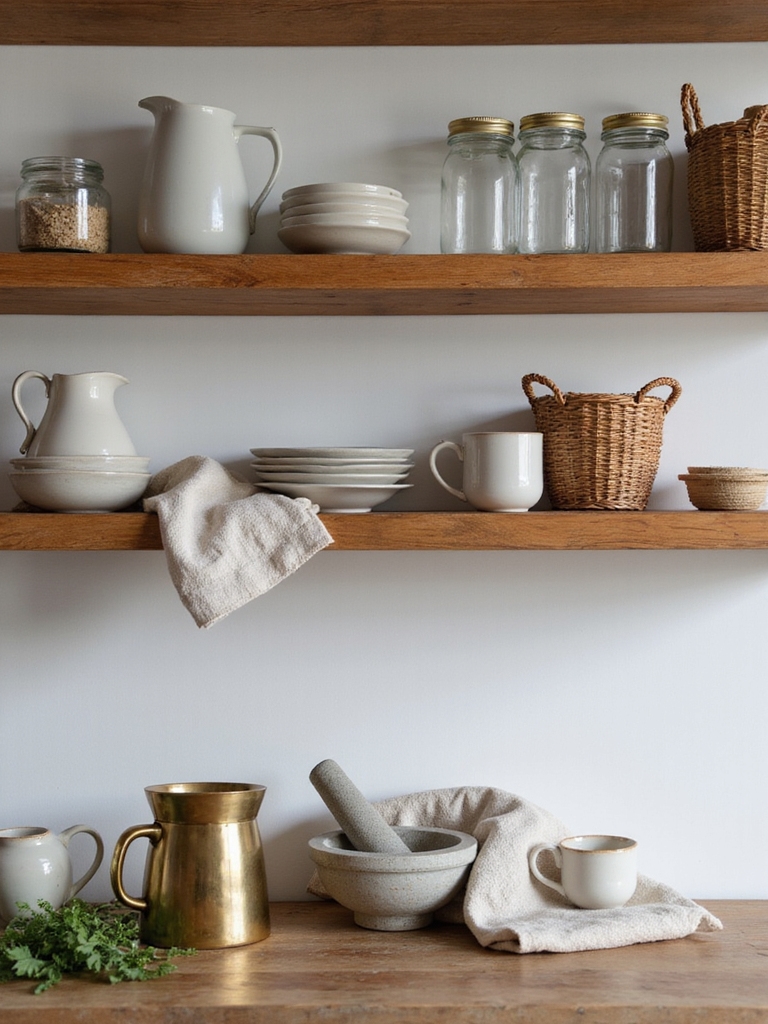
Although your shelves can look charming with matched pieces, I like to layer unexpected materials—think reclaimed wood, matte ceramics, and a hint of metal—to give the space real depth and warmth.
I mix textures to welcome the eye and hand:
- Wood grain
- Soft linens
- Rough stoneware
- Brushed metal
It feels cozy, lived-in, and intentional.
Assign Items by Use and Visual Weight
When I style open shelves, I group items by how I use them and how they look together, so the arrangement feels both practical and pleasing.
I keep everyday dishes within reach, decorative pieces higher, and heavy items low.
Balancing chunky pottery with lighter glass creates visual weight harmony. It’s about sensible placement and a cozy, lived-in rhythm that invites use.
Use Rule-of-Three Groupings and Varied Heights
I like arranging things in threes because it feels balanced and natural on a shelf.
I’ll mix tall and short pieces—think a vintage jar, a stack of bowls, and a tapered bottle—to keep the eye moving.
Then I’ll blend textures and colors, pairing glass, wood, and stone in warm tones for a cozy, lived-in look.
Group Items In Threes
Three’s my go-to trick for open shelves — I find groupings of three read as natural and relaxed, while mixing tall, medium, and short pieces keeps the eye moving.
I pair rustic bowls, herbs, and ceramics for cozy balance.
- Anchor
- Contrast
- Texture
- Repeat
Mix Tall And Short
You’ll notice the same balance that makes groupings of three work also makes varied heights feel intentional — I like to pair a tall vase or bottle with shorter bowls and a mid-height canister to create a friendly skyline on the shelf.
I tuck a few practical items between sculptural pieces, letting height shifts guide the eye and keep the display relaxed, useful, and homey.
Vary Textures And Colors
Play with contrast: I mix rough earthenware with glossy glass, woven baskets with smooth enamel, and let color pops—herbal greens, terracotta oranges, deep navy—punctuate neutral stacks of plates and bowls.
I use rule-of-three groupings and varied heights to keep things lively:
- Trio of mugs
- Stack, vase, bowl
- Tall bottle, short jar
- Basket, cutting board, cup
Decide What to Display vs. Store Out of Sight
When I decide what to show on my open shelves, I think about function first and charm second—items I reach for daily earn a spot where they’re easy to grab, while mismatched pieces and bulky appliances get tucked away.
I favor pretty plates, jars of staples, and a few heirloom mugs for character, keeping clutter minimal so the space feels lived-in, tidy, and welcoming.
Pick Baskets and Containers for Hidden Storage
When I pick baskets and containers for hidden storage, I look for sturdy, natural materials like wicker, metal, or canvas that hold up to kitchen life.
I also match sizes to what I actually store—shallow trays for tea tins, tall lidded baskets for towels—so nothing looks crowded or wasted.
With the right mix, your shelves stay tidy and still feel warm and lived-in.
Choose Durable Materials
I reach for woven baskets and sturdy glass jars first, because they hide clutter without hiding charm; choosing durable materials for hidden storage keeps your open shelves tidy while still feeling warm and lived-in.
- Wicker for texture
- Glass for visibility
- Metal tins for longevity
- Canvas bins for flexibility
These choices age gracefully and tolerate kitchen life.
Match Sizes To Needs
Because every shelf has its own job, I pick baskets and containers by measuring what I actually store—tall jars for pasta, shallow bins for tea sachets, and wider baskets for linens—so nothing looks half-full or crammed.
I favor woven baskets and labeled boxes that tuck away clutter, preserve a cozy farmhouse feel, and give each shelf a calm, purposeful rhythm.
Style Everyday Dishes & Glassware for Easy Access
Pull a mug from the front row and you’ll see how effortless everyday dishes can be when they’re styled for easy reach;
I arrange plates, bowls, and glasses so the items I use most sit at eye level and within arm’s length, while prettier or seasonal pieces live on higher shelves.
- Group by use
- Stack neatly
- Keep glassware front
- Reserve top shelf for decor
Style Cookbooks and Art Without the Clutter
Bring out a few favorite cookbooks and leaning prints to make the shelves feel lived-in without tipping into clutter; I keep only what I reach for or truly love, tucking the rest away.
I group books by color or theme, lean one framed print against the wall, and leave breathing space.
Simple stacks and a single small prop make the display cozy, intentional, and useful.
Add Plants and Small Decor to Soften Shelves
I often tuck a few small plants and a handful of simple objects among my cookbooks to soften the shelves and make the space feel lived-in.
I pick items that age well and are easy to care for.
- Small succulents
- Olive oil bottle
- Woven coaster
- Vintage mug
These touches add warmth without clutter.
Lighting & Hardware That Flatter Open Shelves
While soft light can make open shelves feel cozy, the right fixtures and hardware actually set the mood and finish the look, so I choose pieces that balance function with rustic charm.
I add under-shelf warm LED strips, a couple of small pendant lights, and oil-rubbed bronze brackets.
They highlight pottery, hide wiring, and lend a lived-in, welcoming kitchen personality without shouting.
Shelf Maintenance: Daily and Monthly Habits
Regularly tending my open shelves keeps them looking lived-in rather than neglected, so I do a few simple things every day and a couple deeper tasks each month.
I wipe spills, rotate herbs, and re-center bowls.
Monthly I inspect finishes and rearrange for balance.
- Quick wipe
- Re-center items
- Rotate perishable jars
- Check for wear
Fixing Clutter, Dust, and Safety Issues
When clutter starts collecting and dust settles into corners, I tackle the shelves like I’d tidy a well-loved farmhouse table: methodically and with purpose.
I sort items—keep, relocate, donate—wipe surfaces, and vacuum crevices.
I secure heavy pieces, anchor brackets, and store breakables low.
Routine checks catch spills, pests, and loose fittings, so the shelves stay safe, neat, and inviting.
I love how open shelves solve real kitchen chaos and, by pure coincidence, make my favorite mug suddenly part of the decor.
If you measure, choose a palette, mix textures, tuck in a plant, and add soft lighting, the shelves feel lived-in, not staged.
Keep a quick daily tidy and a monthly dusting, and safety checks—then your kitchen will be both useful and beautiful, like home welcoming you every morning.


