I’ve spent years fitting full kitchens into skinny galley layouts, and I’ll tell you my best tricks: measure and map every wall, ruthlessly clear counters to essentials, and group zones for cooking, prep, clean, and pantry so you move less.
Use slim pull-outs, door racks, hanging rails and uniform labeled jars to make everything visible, plus undercabinet lights and pale paint to open the space. Stick with my simple routines and tools and you’ll reclaim calm—and there’s more practical detail ahead.
Measure & Map Your Galley Kitchen

Before I rearrange a single spice jar, I measure everything—walls, counters, cabinet depths, and the clear walkways between them—so I know exactly what I’m working with.
I sketch a simple floorplan, note door swings, appliance clearances, and awkward nooks.
Then I label zones for prep, storage, and cleaning.
That map becomes my action plan for efficient, cozy galley living.
Architects also focus on maximizing kitchen flow by arranging work zones to reduce steps and improve movement.
Quick Wins: Clear Counters and Reclaim Space

I’ll start by clearing off counter essentials—coffee maker, knife block, and the few appliances you use every day—to give your narrow kitchen instant breathing room.
Then I’ll show how a few simple hooks, a slim shelf, and magnetic racks can quickly reclaim vertical space without crowding the walkway.
Finally, we’ll streamline daily-use items so everything you reach for has a home and your counters stay uncluttered.
Adding a few proven storage hacks can make maintaining that tidy state effortless.
Clear Counter Essentials
I usually start by stripping the counters to the essentials and asking myself what I actually use every day; that simple habit immediately opens up visual space and makes the whole kitchen feel calmer.
I keep only a coffee maker, a wooden cutting board, and a jar of frequently used utensils.
Everything else goes to drawers or a small basket to stay tidy and reachable.
Innovative storage ideas like smart storage can help eliminate clutter and maximize every inch.
Quickly Reclaim Vertical Space
Start thinking upward: when counters are clear, vertical space becomes your next quick win.
I love fitting things snugly without clutter. Try these simple moves:
- Hang a peg rail for mugs and ladles
- Install a slim shelf above the sink
- Add magnetic knife strips
- Use stackable wire baskets inside cabinets
- Mount a spice rack on the cupboard side
Small changes feel cozy and practical.
Streamline Daily Use Items
Often I keep only what I reach for daily on the counter, because clearing that real estate makes the whole kitchen feel larger and calmer.
I stash extras—toasters, mixers, bulk jars—in labeled cupboards or a rolling cart.
Hook a hand towel, corral spices on a slim tray, and reclaim that surface for morning coffee and breathability.
Simple swaps free surprising space.
Keeping a few consistent daily habits and the right tools makes maintaining that order much easier.
Ruthless Declutter Rules for Small Kitchens

When you’re cramped for counter and cabinet space, I get ruthless about what stays and what goes; every plate, gadget, and spice jar needs to earn its place.
- Keep daily-use items nearby
- Donate duplicates and seldom-used tools
- Toss chipped, stained, broken pieces
- Limit speciality gadgets to true favorites
- Store seasonal extras elsewhere
I guide you gently, but firmly, toward a cozier, clearer kitchen. I also follow simple minimalist rules to maintain that clutter-free counter over time.
Prioritize Zones: Cooking, Prep, Clean, Pantry

I’ll start by carving the kitchen into clear zones so the stove, knives, and frequently used pots live together in a tight cooking area.
Then I’ll set up a prep zone with an easy-to-wipe surface, cutting boards, and tools within arm’s reach to keep the workflow smooth.
Once those two are nailed, it’s simple to slot cleaning supplies and pantry items where they belong so nothing gets in the way.
For a peninsula layout, I’ll also organize the workflow to take advantage of the work triangle so movement between sink, stove, and refrigerator is efficient.
Cooking Zone Essentials
How do you arrange a cooking zone so every pot, pan, and spice feels within reach? I keep things simple and cozy, placing essentials where I cook, so motion is minimal.
- Hanging rack for my favorite pans
- Magnetic strip for knives
- Tiered spice shelf by the stove
- Pull-out tray for oils and vinegars
- Small tray for spoons and tongs
Professionals often recommend designing zones and using dedicated storage systems to maximize efficiency in narrow kitchens.
Prep Zone Workflow
Set up your prep zone so it feels like an extension of your hands — chopping board centered, knives within reach, and frequently used bowls stacked nearby — because that little choreography cuts steps and keeps the flow steady.
I arrange tools by task: mise en place baskets, a towel rack, and a small trash bowl.
This tidy rhythm saves time and keeps narrow counters usable.
Good task lighting makes a big difference, so position focused lights directly over the prep area to reduce shadows and improve visibility for chopping and measuring, especially in narrow spaces with limited natural light — consider task lighting placement when planning.
Appliance Strategy for Narrow Kitchens

Let’s make every inch count by choosing appliances that fit the rhythm of a narrow kitchen—I lean toward slim, multi-function pieces that tuck into corners or stack vertically so we don’t lose workspace.
- Choose compact fridge models with deep shelves
- Favor combo ovens or microwave-oven units
- Use thin-profile dishwashers
- Pick narrow, tall coffee stations
- Store small appliances on high hooks to free counters
Slim Storage That Fits: Roll-Outs & Narrow Pull-Outs
After choosing slim appliances, I look to storage that slips into the narrow gaps—roll-outs and skinny pull-outs make those tight spaces useful instead of wasted.
I fit spice racks, cutting boards, and baking sheets into vertical slides, keeping everything accessible.
Soft-close guides feel homey, and natural wood tones warm the kitchen. These narrow solutions tame clutter without sacrificing style or function.
Door-Mounted Organizers for Narrow Kitchens
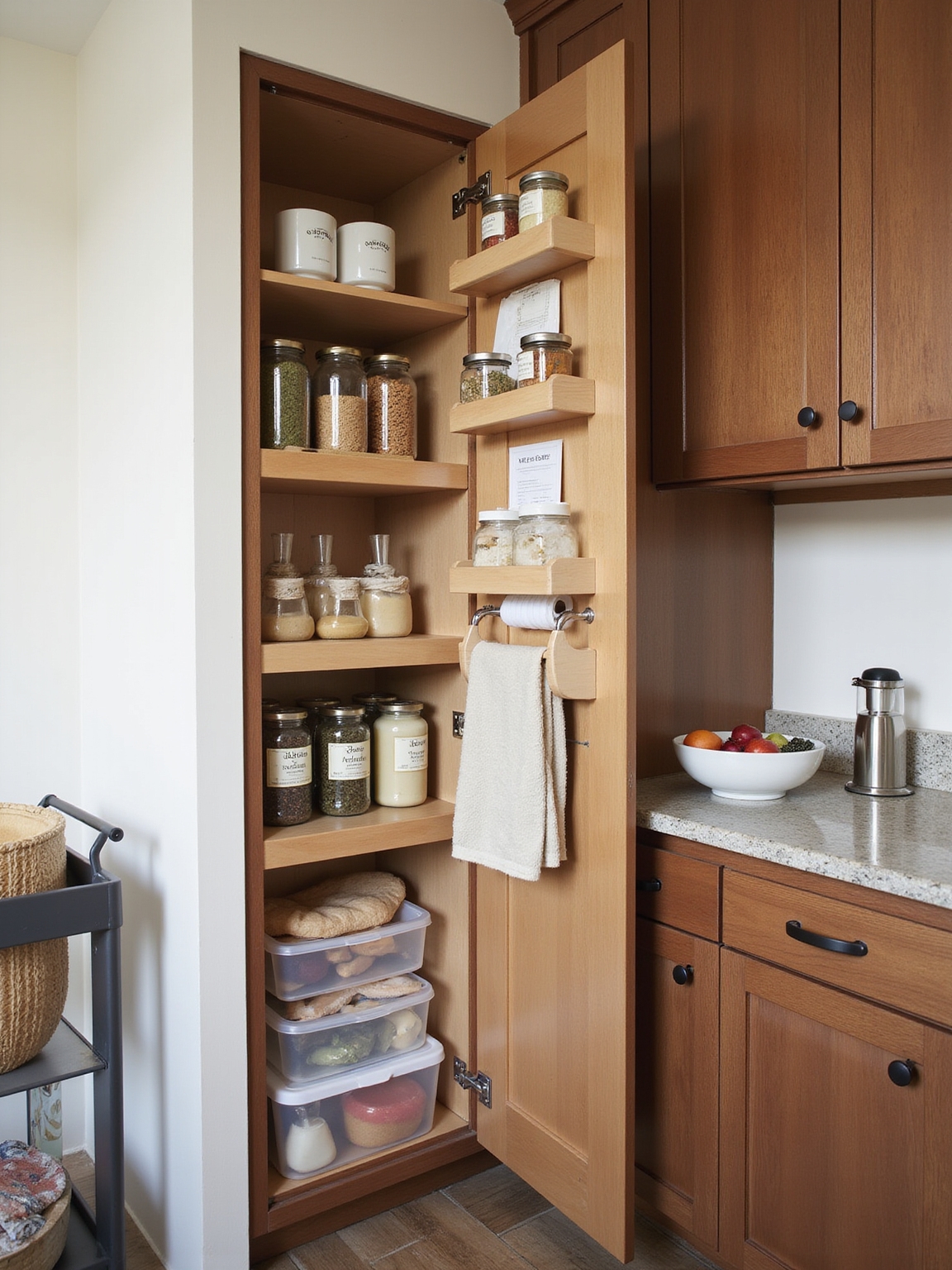
I tuck slim, door-mounted organizers into every cupboard I can—behind cabinet doors, the backs of pantry doors, even inside narrow utility closets—because they make tight kitchens feel much larger and more organized.
- Spice jars within reach
- Cutting boards stored upright
- Cleaning supplies neat and hidden
- Baking sheets separated
- Snack pouches visible
They’re simple, rustic solutions that save space and soothe clutter.
Use Vertical Space: Racks, Pegboards, and Rails
I’ve learned to look up before I look around—vertical space is the secret ingredient in a narrow kitchen.
I hang a simple rail for utensils, add a pegboard for mugs and pans, and stack slim shelves where jars live like little wooden soldiers.
It frees counters, keeps tools visible, and gives my small kitchen a cozy, practical charm that feels handcrafted.
Corner Storage Solved: Blind Pull-Outs & Lazy Susans
Corner cabinets used to hide everything I needed until I discovered blind pull-outs and Lazy Susans; they’ve turned that awkward dead space into easy-to-reach storage.
- Pull-outs bring pots forward
- Lazy Susans spin spices and jars
- Soft-close prevents clatter
- Tiered trays save vertical inches
- Retrofit kits fit older cabinets
I love how simple swaps make daily cooking calmer and cozier.
Over-Sink & Over-Range Hacks to Free Counters
Those clever corner fixes freed up a surprising amount of room, so I started looking up — over the sink and over the range — for even more usable space.
I hung a simple wood shelf for soap, plants, and a drying rack above the sink, and installed a narrow rail over the range for utensils and spice clips. It cleared counters and felt cozy.
Multi-Use Furniture for Tiny Galley Kitchens
Up against the narrow walls of my galley, I’ve learned to think of furniture as tools rather than decor:
A slim island that folds into the wall becomes prep space and a breakfast bar, a bench with lift-up storage tucks away bulkier pans, and a rolling cart doubles as a movable pantry and extra counter when guests arrive.
- Folding island
- Lift-seat bench
- Rolling cart
- Slim baker’s rack
- Wall-mounted drop leaf
Store Smart: Uniform Containers, Labels, Risers
I use the same tool-oriented mindset for storage: uniform containers, clear labels, and risers make everything feel calmer and work harder in a skinny kitchen.
I stack jars, match lids, and label in plain script so I grab what I need fast. Risers let me see back rows, while uniformity saves space and keeps the rustic nook tidy and cheerful.
Lighting & Color to Make Narrow Kitchens Feel Bigger
Usually I reach for light and color first when I’m trying to widen a skinny kitchen, because they change how the space feels instantly.
I pick warm whites, reflective surfaces, and gentle contrasts to open sightlines.
Try these simple moves:
- pale walls for airy depth
- undercabinet lights to lift shadows
- matte finishes to soften glare
- brass accents for warmth
- translucent curtains for diffused light
Daily Staging Habits and Low-Effort Maintenance Routines
Often I start each morning with a five-minute tidy that keeps a narrow kitchen from feeling cluttered. I clear counters, return utensils, wipe crumbs, and stage a simple bowl of fruit.
Little rituals—labeling jars, rotating a nightly dish into the dishwasher, and keeping a catch-all tray—make maintenance effortless. These small acts preserve flow and calm without fuss.
Best Buys Under $100: High-Impact Organizers and Where to Shop
I’ve found a few under-$100 wins that transform narrow spaces: slim pull-out drawers for tucked-away pantry bits, tiered shelf risers to double visible storage, and magnetic spice racks that free up counter and cabinet real estate.
I’ll tell you where I buy each one and what to look for so you don’t waste money on flimsy versions.
Stick with simple, sturdy materials and a trusted retailer and you’ll see big payoff for little cost.
Slim Pull-Out Drawers
Slide slim pull-out drawers into a tight gap and you’ll suddenly have a secret pantry for spices, oils, and baking sheets that never felt like wasted space before.
I love how they hide clutter and add charm. Consider these touches:
- Narrow spice racks
- Metal slide rails
- Soft-close hinges
- Non-slip liners
- Easy-install kits
They cost under $100 and feel utterly practical.
Tiered Shelf Risers
I usually reach for tiered shelf risers when I want to turn jumble into order without rebuilding a cabinet; they lift cans, mugs, and baking staples into view so nothing gets buried in the back.
I pick simple wooden or matte metal risers under $100, mix heights for depth, and slide them into narrow shelves. They’re sturdy, tidy, and instantly calming.
Magnetic Spice Racks
You’ll find magnetic spice racks clear up counter clutter quicker than most gadgets—I’ve stuck jars to the side of my fridge and turned wasted vertical space into a tidy, visible spice row.
- Easy install
- Clear jar labels
- Saves counter space
- Under $100 finds
- Shops: Etsy, Target, Amazon
I love the rustic, clever charm they bring to narrow kitchens.
I’ve measured, minimized, and made a map of your narrow kitchen so you can move more, mess less, and make meals with more meaning.
Keep counters clear, corral clutter, and choose compact containers that create calm. Prioritize prep, pan, and plates, place practical lighting, and practice a painless nightly pick-up.
Little, lovely labors lead to lasting order—start small, stay steady, and savor the simple satisfaction of a smart, soulful space.