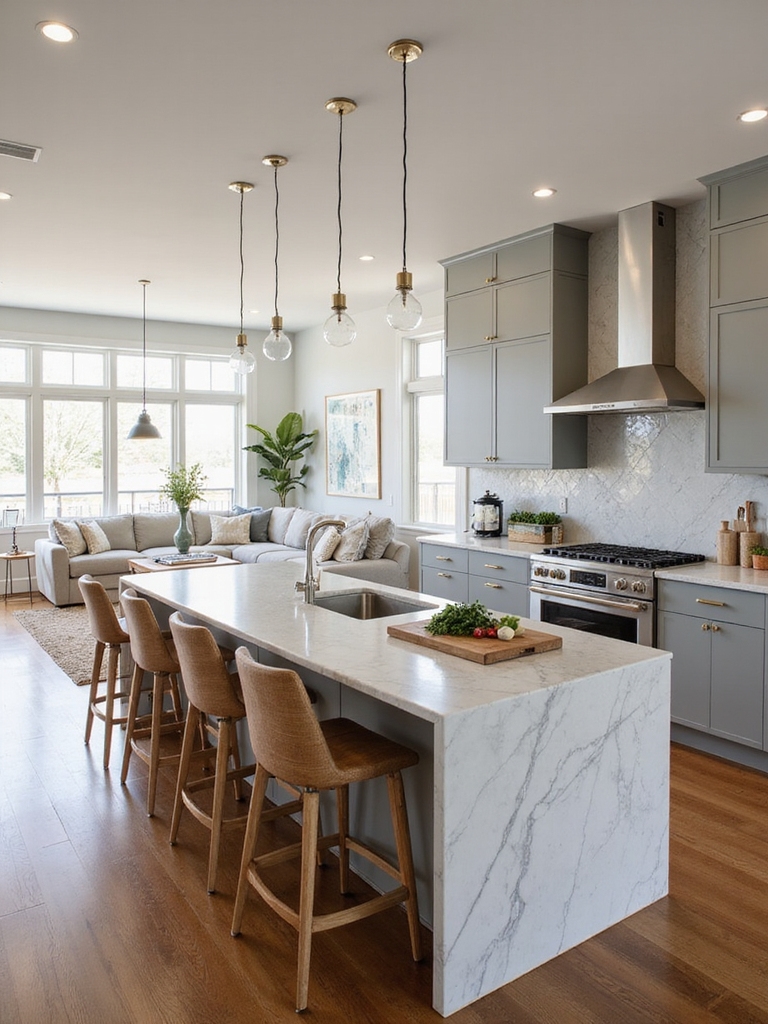
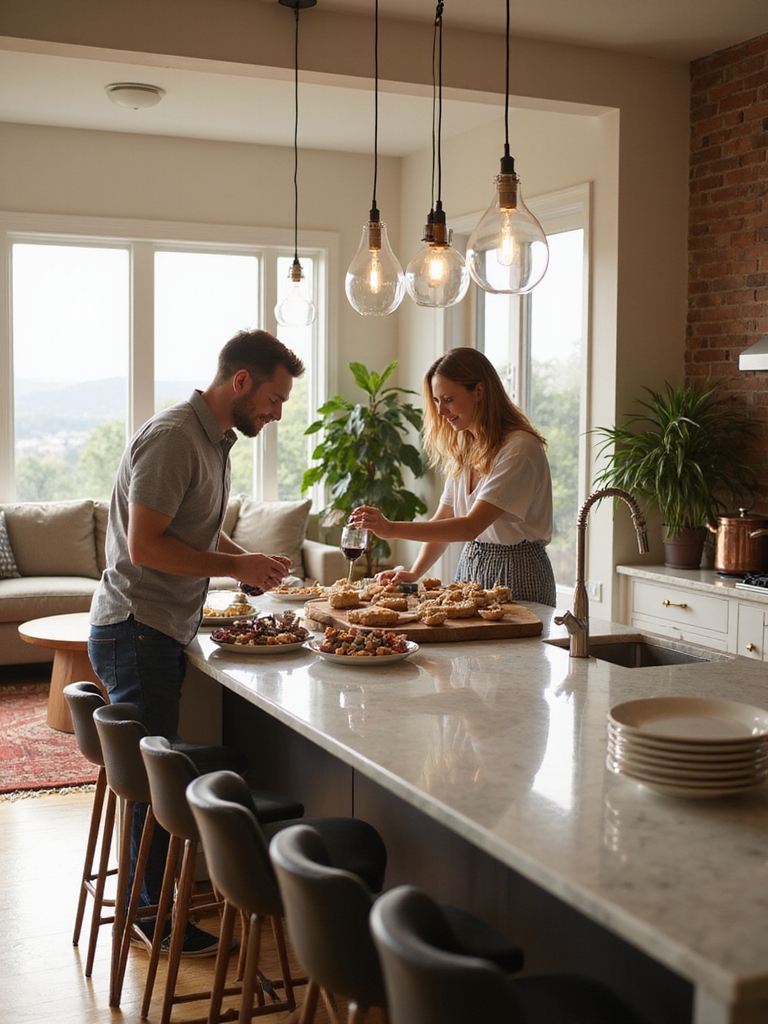
I love how a tiny open plan can feel generous with a few simple moves: clear clutter into woven baskets, float low-profile seating to keep sightlines, and anchor zones with a rug and soft pendant over the table.
Use a slim island or drop-leaf for casual meals, keep 30–36″ clear paths, and pick warm neutrals with weathered wood and one accent color for cohesion. Keep going and I’ll show practical layouts, storage tricks, and budget swaps.
Top Small Open-Plan Problems and Quick Fixes

When I walk into a small open-plan living room and kitchen, the problems jump out fast—cluttered sightlines, competing zones, and poor flow—but a few smart fixes usually do the trick.
I clear visual clutter, pick multiuse furniture, and define zones with rugs and lighting. I keep walkways open, use warm textures, and embrace simple storage so the space feels tidy and lived-in.
I also prioritize maximizing every inch by choosing scalable storage and flexible layouts to make the most of tight footprints.
Quick Layout Rules to Make an Open-Plan Feel Bigger

Clearing clutter and choosing multiuse pieces sets the stage, but layout is what really opens up a compact open-plan.
I’ll keep things practical and cozy: arrange pathways, zone with rugs, and float furniture to let light pass.
Try these quick rules I use:
- Keep main walkways 30–36″ clear.
- Use low-backed seating to preserve sightlines.
- Anchor zones with rugs, not walls.
Also consider using open plan principles like combined kitchen-living layouts to maximize usable space.
Room-by-Room Layout Recipes: Studio, 1BR, Townhouse

If you’ve got a tiny studio, a one-bedroom, or a narrow townhouse, I’ll walk you through layouts that make each feel purposeful and cozy without wasting space.
I’ll suggest zoned corners in studios, convertible furniture and sightline-saving storage for one-bedrooms, and stacked, layered rooms in townhouses—think entry landing, compact kitchen, snug living nook—so every square foot earns its keep.
Open-plan designs often center around an island to anchor the space and facilitate flow, especially in open plan kitchen living room layouts.
Traffic-Flow Patterns That Prevent Bottlenecks
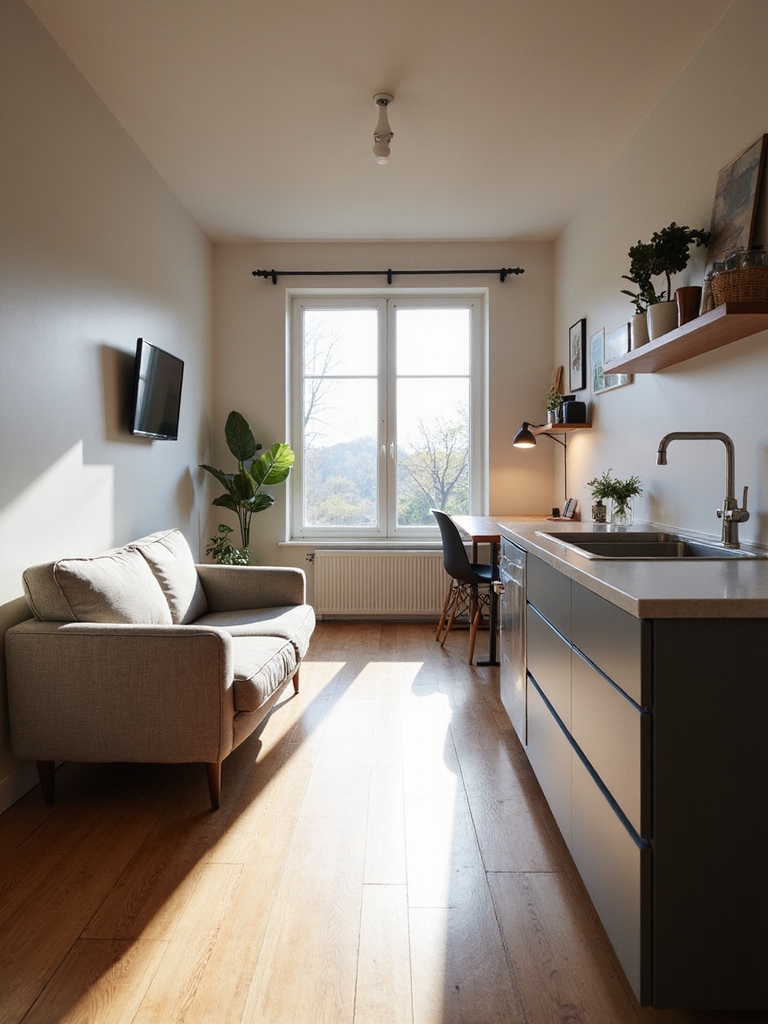
I like to start by mapping clear circulation paths so people can move through the living room and kitchen without bumping into chairs or counters.
Then I zone activity areas—cooking, lounging, and dining—so each function has its own tidy footprint.
Finally, I keep entryways and walkways unobstructed to prevent choke points and make the space feel calm and usable.
Renters especially appreciate layouts that create small open kitchen flow while keeping furniture flexible for different uses.
Clear Circulation Paths
When I plan a small open-space living room and kitchen, I focus first on carving out clear walkways so people can move naturally without bumping into chairs or opening cabinets into one another.
I keep sightlines open, leave 36–42 inches for main paths, and arrange furniture to guide movement.
- Keep routes direct
- Allow appliance clearance
- Use low-profile seating
Open-plan layouts often benefit from designated zones that define cooking, dining, and lounging areas with traffic-flow patterns to prevent congestion.
Zoned Activity Areas
Having clear walkways makes it easier to carve the room into purposeful zones, so I map out activity areas that keep people moving instead of gathering in the same spot.
I place seating where conversation flows, a cozy reading nook away from kitchen prep, and a small work corner tucked near light.
This deliberate zoning prevents bottlenecks and feels comfortably rustic.
Architects often use smart layout strategies to maximize kitchen flow and minimize traffic conflicts.
Unobstructed Entryways
Because clear paths make a home feel larger, I keep entryways free of furniture and clutter so people can move through without stumbling or pausing, which preserves the room’s easy, lived-in rhythm.
I welcome guests with simple hooks, not a crowded console.
- Keep a slim runner
- Use wall hooks
- Store shoes nearby
This gentle order keeps traffic smooth.
Open-plan layouts are increasingly popular in India and work well here, especially when you maintain unobstructed sightlines to blend the kitchen and living areas.
Zoning Tricks to Define Living vs Kitchen Without Walls
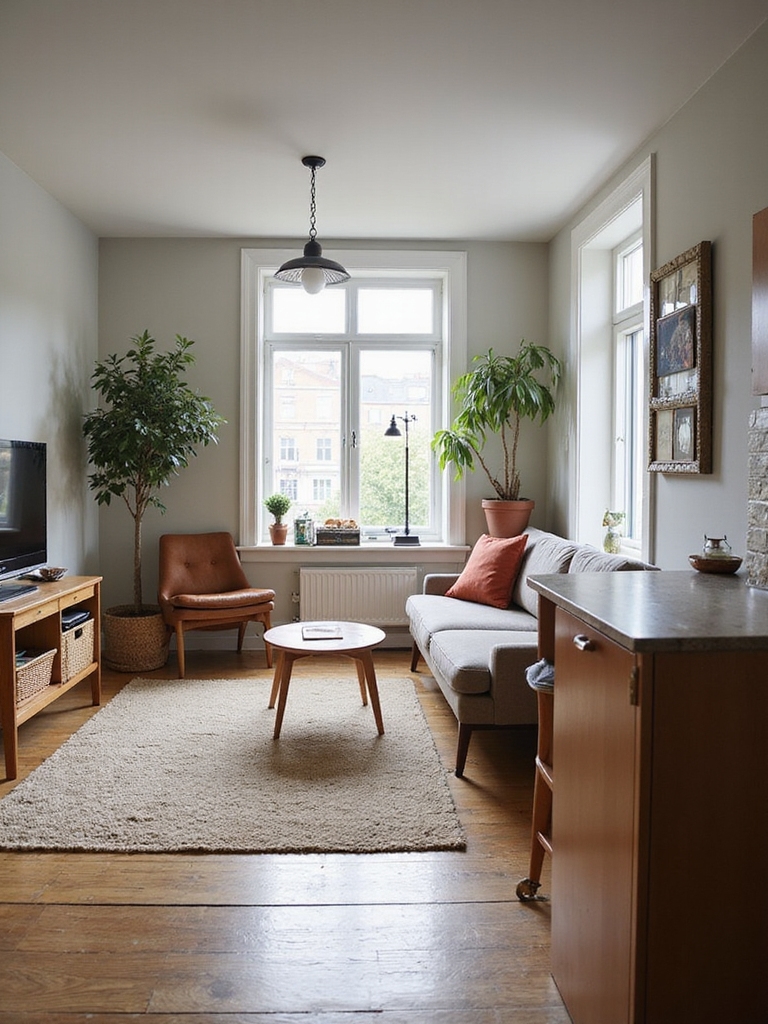
I like to tease apart an open living-kitchen area into clear zones so the space feels intentional without adding walls.
I use rugs, lighting layers, and furniture orientation to anchor each spot—a worn wool rug for the sofa, a pendant over the dining nook, a comfy armchair turned toward conversation.
Natural textures and a consistent palette tie everything together quietly.
Open layouts often revolve around an island flow that balances kitchen work with living-room interaction.
Kitchen Islands and Counters for Separation + Storage
I like using a dual-purpose island that acts as prep space, casual dining, and a little room divider to keep the living area feeling separate.
A raised bar counter adds height and a visual break while giving guests a perch so the cook isn’t isolated.
For tight spots, slimline storage solutions tuck spices, trays, and chargers into the side so everything stays handy without crowding the room.
Dual-Purpose Island Design
When I’m short on square footage, a dual-purpose island becomes my favorite trick for carving out function without closing off the room; it acts as a subtle divider, extra prep surface, and hidden storage all at once.
I love how a chunky wood top feels lived-in and practical. Try these simple choices:
- Drawers for dishes
- Open shelving for baskets
- Counter overhang for stools
Raised Bar Counter
Pull up a stool and picture a raised bar counter marking the line between kitchen and living space while still keeping conversation flowing.
I love how its wood grain and worn edges create a cozy, rustic pause between zones.
It hides prep mess, offers casual dining, and adds vertical interest without closing the room.
You get charm, function, and easy socializing in one.
Slimline Storage Solutions
Think of a slimline island as a quiet teammate that tucks in just enough to define the kitchen without stealing the living room’s air.
I love how narrow counters add warmth and hide clutter, giving flow and function.
Consider practical features:
- Pull-out drawers for trays and linens
- Open shelving for pottery and cookbooks
- Fold-down prep surface for extra elbow room
Best Furniture Shapes and Sizes for Tight Open Plans
I’ll start by saying the right shapes and sizes can make a tiny open plan feel intentional instead of cramped;
I favor slim-profile sofas, armless chairs, and narrow dining tables because they keep traffic flowing and sightlines open.
I choose rounded edges, low backs, and tapered legs to suggest airiness, and I size pieces to leave a clear path—cozy, lived-in, yet uncluttered.
Multifunctional Furniture That Doubles Usable Space
I love finding pieces that pull double duty, like convertible sofas that become guest beds or benches with hidden storage.
A foldaway dining station can tuck away after meals and free the floor for morning yoga or kids’ play.
Let me show you simple, sturdy options that stretch every inch without feeling fussy.
Convertible Seating Solutions
I’ve learned to lean on furniture that works overtime, turning a tiny living area into something surprisingly roomy and useful.
I rely on convertible seating to host, nap, and store without fuss.
- A storage bench that doubles as extra seating and blanket chest
- A sleeper ottoman for guests and footrest
- A loveseat with flip-up table and hidden compartments
Foldaway Dining Stations
Since my convertible seating already handles guests, naps, and storage, I look to foldaway dining stations to make meals feel intentional without stealing floor space.
I mount a drop-leaf table or wall table near the kitchen, pull out stools that tuck under, and enjoy a cozy, woodsy nook. It’s practical, charming, and keeps traffic clear when not in use.
Appliances & Fixtures for Small Open-Plan Kitchens
I’ll walk you through the appliances and fixtures that make a small open-plan kitchen feel both cosy and clever.
I favour compact, multi-function pieces and warm finishes that blend with the living area. Think efficient, quiet, and charming.
- Slimline dishwasher for practical days
- Induction hob with downdraft extractor
- Under-cabinet LED strip lighting for ambience and task light
Smart Storage Solutions for Kitchen and Living
Let’s get tucked into smart storage that keeps a small open-plan kitchen and living room feeling airy and lived-in.
I favor woven baskets, hidden drawers under benches, and open shelving with curated ceramics to keep clutter charming.
Vertical pegboards, slim cabinets by the stove, and a cozy console with baskets beneath serve both form and function, making every inch useful without feeling boxed in.
Lighting Strategies to Make the Whole Space Feel Bigger
I lean on light to open a small open-plan living room and kitchen, layering it so shadows retreat and the space breathes; a mix of bright task lights over work surfaces, softer ambient fixtures for lounging, and a few well-placed accent lights will make corners vanish and sightlines feel longer.
I add warmth, rustic charm, and practical glow.
- Under-cabinet task lights for prep
- Soft pendant over the table
- Small uplights to lift ceilings
Colors, Textures, and Patterns That Unify Living + Kitchen
Harmony matters most when you’re stitching a living room and kitchen together in a small open plan, and I lean on a restrained palette, repeated textures, and a few consistent patterns to make the two feel like one room.
I favor warm neutrals, weathered wood, woven linens, and subtle checks or stripes to echo rhythm—then let one accent color weave through for cohesion and calm.
Entertaining in a Small Open Plan: Setups That Feel Generous
When I host in a small open plan, I lean on flexible seating zones that let people drift and chat without bumping into each other.
I pick flow-friendly furniture—lightweight chairs, a slim sofa, and a movable console—so pathways stay clear and the room breathes.
That way guests feel spread out, not packed, and the space reads generous even when it’s cozy.
Flexible Seating Zones
Although the space is modest, I’ve learned how to create flexible seating zones that make entertaining feel generous and relaxed.
I shift spots, layer textures, and keep things approachable so guests mingle easily.
- Bench seating that tucks under a console for extra guests
- A couple of stools that double as side tables
- Foldable armchairs stored nearby, ready for company
Flow-Friendly Furniture
With an eye for movement, I arrange furniture so people can circulate without feeling crowded, letting conversations ripple from the kitchen to the living area.
I choose low-profile sofas, slim tables, and cozy stools that tuck away. Pathways stay clear, sightlines open, and multifunction pieces pull double duty. Guests linger easily; the space breathes and feels generous.
Budget Swaps That Deliver Big Visual Impact
I’ll show you simple, budget-friendly swaps that punch way above their weight in small open living rooms and kitchens.
I love rustic touches that feel lived-in, so I’ll recommend practical swaps that refresh without splurging:
- Swap bulky sofas for a cozy, scaled-down loveseat with textured linen.
- Replace harsh overhead lights with warm pendant or floor lamps.
- Add an affordable woven rug to define zones.
Common Layout Mistakes and How to Fix Them
When rooms feel crowded or disjointed, it’s usually because the layout’s working against you rather than for you — and that’s fixable.
I’ll point out common slips: blocking traffic paths, oversized furniture, and muddled zones.
I suggest shifting pieces, choosing scale-appropriate sofas, and defining areas with rugs or lighting.
Small tweaks restore flow, warmth, and function without major expense or fuss.
I hope these ideas spark a little magic in your space — like sunlight slipping through a kitchen window and warming every corner.
Think of your small open plan as a well-loved recipe: a pinch of good flow, a spoonful of zoning, and a dash of cohesive color creates a room that feels roomy and welcoming.
Tweak, taste, and trust your instincts — your home will sing, cozy and confident, in its own rustic way.