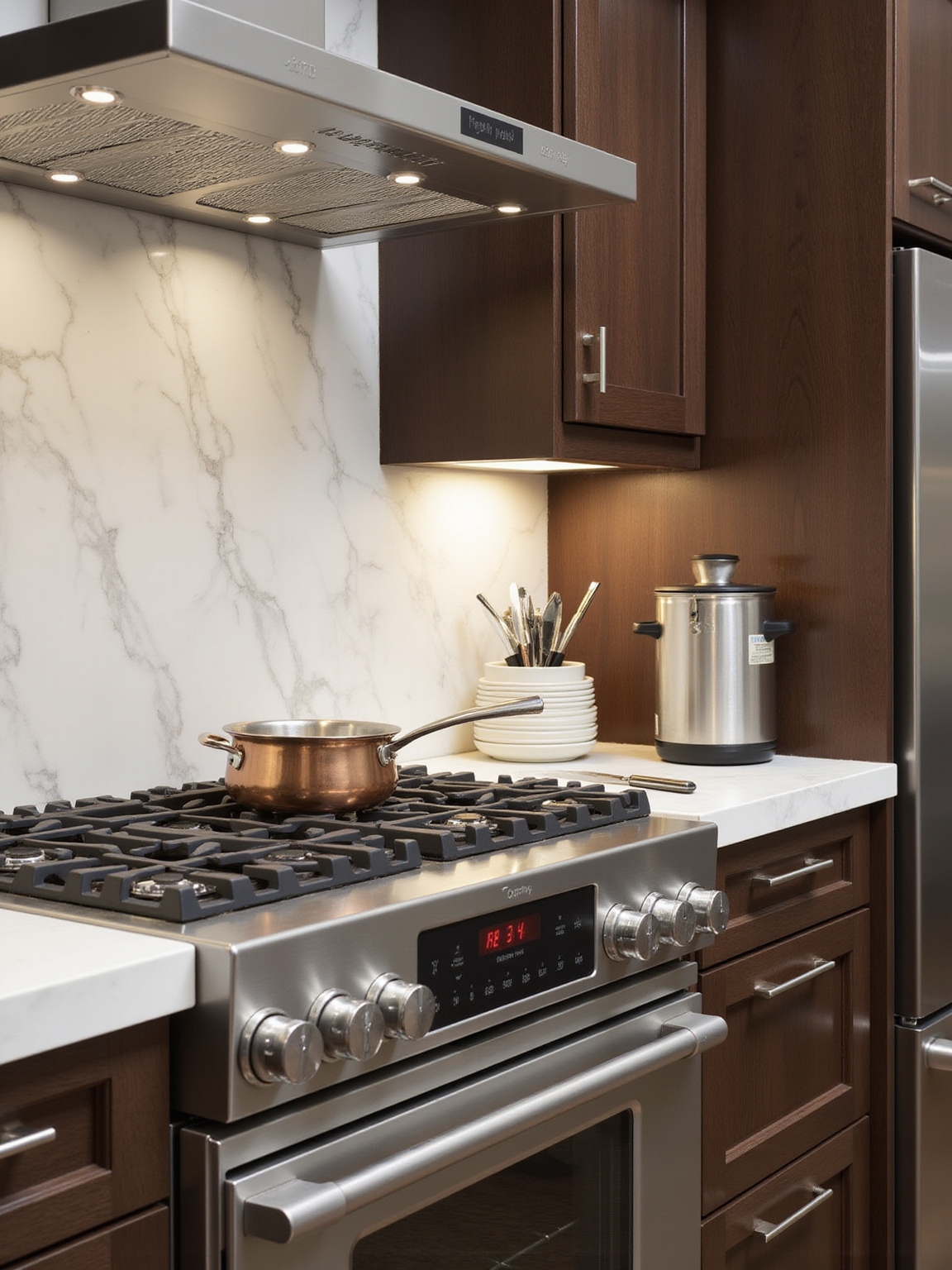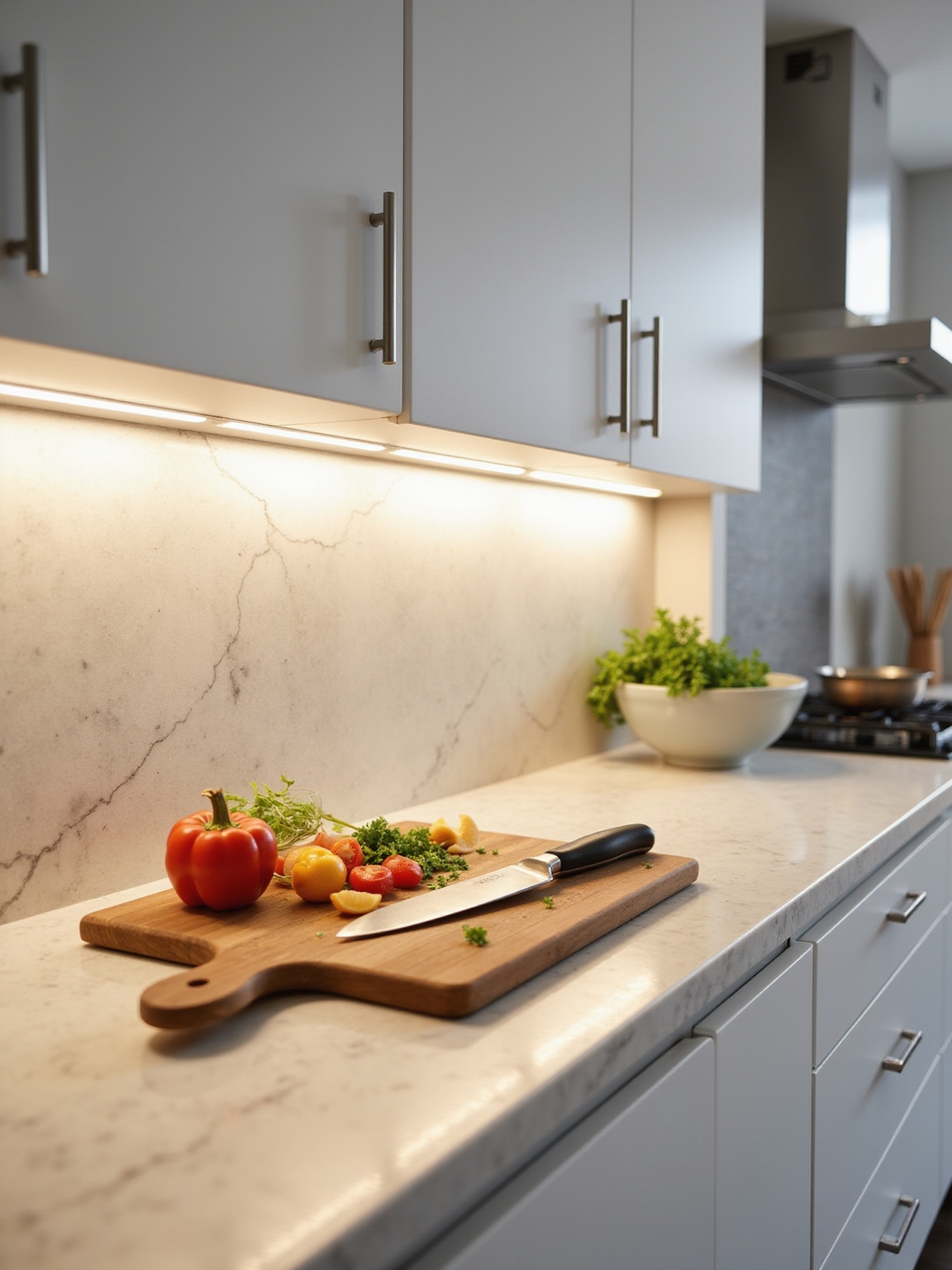


I love moody kitchens because they feel cozy, tactile, and a little secretive — think charcoal cabinets, warm wood accents, honed stone counters and aged brass pulls. Keep layers of light for tasks and atmosphere, mix matte and textured surfaces so everything reads rich not flat, and tuck appliances behind panels to keep the mood intact.
Small spaces breathe with reflective backsplashes and warm bulbs. Stick with those ideas below and you’ll find practical ways to get the look.
What Is a Moody Kitchen?
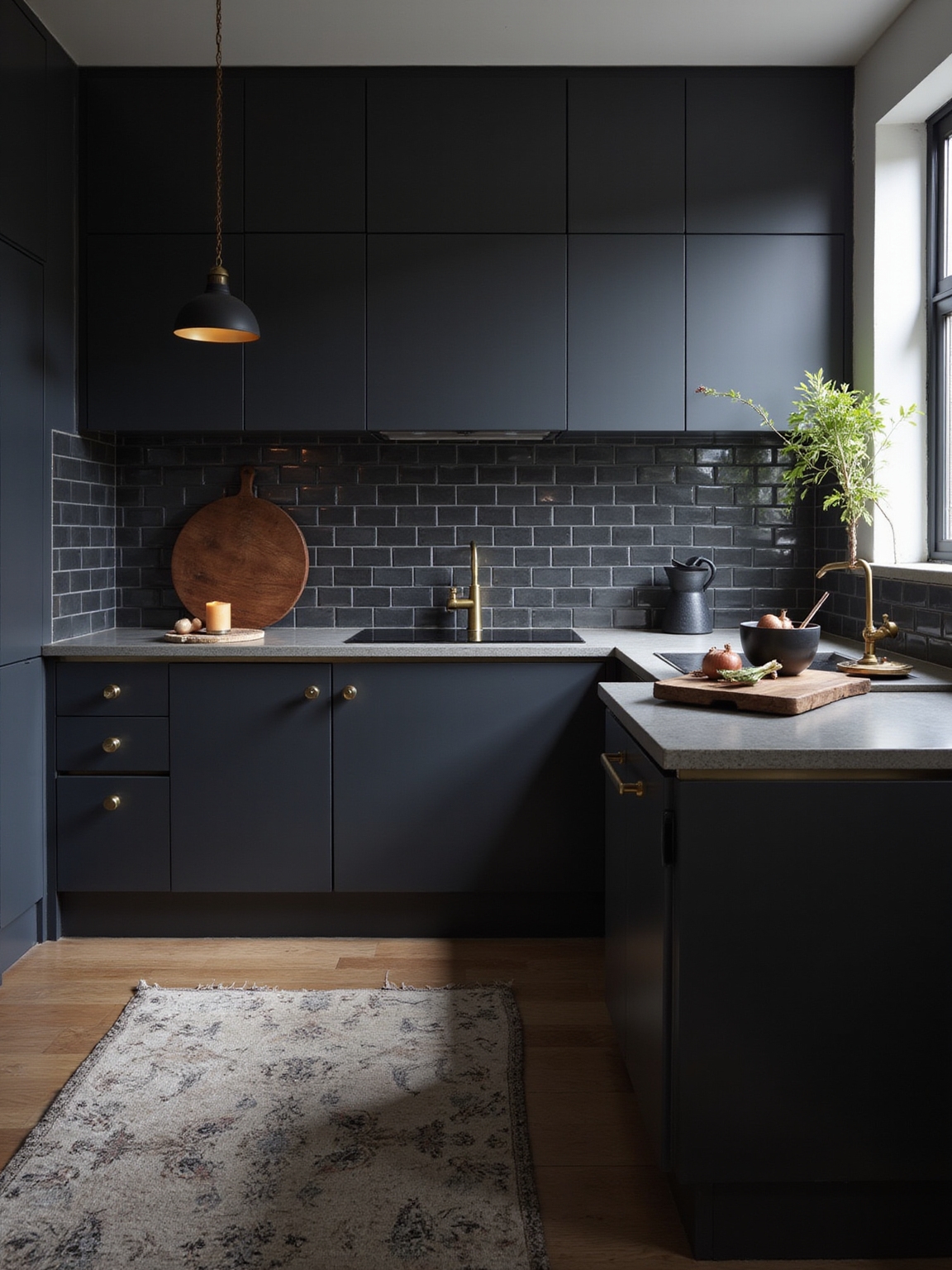
When I say “moody kitchen,” I mean a cooking space that leans into deep colors, layered textures, and intentional lighting to create a cozy, dramatic atmosphere—think charcoal cabinets, warm wood tones, and soft pools of light rather than bright, uniform glare.
I picture vintage hardware, matte surfaces, and tactile textiles that invite lingering, where each element feels chosen for mood and comfort.
These designs often echo the aesthetic of dramatic black kitchens with luxe, high-end finishes that emphasize depth and sophistication.
Is a Moody Kitchen Right for You?

Deciding whether a moody kitchen fits you comes down to how you want to feel in the room—I know I reach for darker finishes when I want a space that feels intimate and lived-in.
Think about light, maintenance, and how you use the kitchen: do you crave cozy evenings, bold contrast, and character? If so, a moody palette may suit your daily rhythms and style.
Consider incorporating warm grey tones and natural textures to create an inviting atmosphere with depth and softness, especially if you want to avoid a cold industrial look and emphasize cozy warm grey finishes.
Planning Checklist for a Moody Kitchen

Because a moody kitchen asks you to balance drama with day-to-day practicality, I start every project with a short, focused checklist to keep decisions intentional.
I note lighting layers, durable finishes, storage flow, ventilation, and task zones. I consider natural light, contrast accents, and cozy textures.
I plan budget priorities, timelines, and maker contacts so the space feels lived-in, efficient, and soulful. I also map out layered lighting to create depth and control ambiance with lighting layers for different moods and tasks.
Choosing a Dark Palette: Black, Charcoal, and Deep Hues

Although dark palettes can feel bold, I choose them for the way they ground a kitchen — black, charcoal, and deep hues bring a cozy, lived-in calm that invites touch and lingering.
I favor warm, textured finishes, matte paints, and stained wood to keep things rustic. Small brass details and layered lighting add depth without brightening the mood too much.
Cabinet colors can instantly make a home feel more luxurious when chosen thoughtfully, especially with rich finishes and contrasting hardware like brass accents.
Balancing Dark Cabinets With Light Surfaces

When I pair dark cabinets with light surfaces, I aim for a rhythm that keeps the room feeling both grounded and airy.
I lean on warm wood accents, soft matte whites, and textured backsplashes to breathe life into shadowed cabinetry.
I balance sightlines with open shelving and brass pulls, keeping contrast intentional so the space feels cozy, lived-in, and quietly elegant.
I also make sure the palette follows principles of harmony by considering a cohesive color palette that unifies finishes and materials color relationships to reinforce balance throughout the space.
Countertop Choices for Moody Kitchens
Countertops set the mood as much as the cabinets do, and I pick materials that deepen those shadowed tones without making the room feel heavy. I favor honed stone, warm soapstone, and leathered granite for subtle texture.
Lighter veining adds contrast while matte finishes keep reflections low. Wood works too—oiled walnut brings warmth without sacrificing the moody vibe.
Top luxury countertops can balance durability and aesthetics, especially when you choose performance-rated materials that suit both daily use and design.
Flooring and Backsplash Ideas That Add Depth
I’m drawn to matte black porcelain tiles for floors because they anchor a moody kitchen without shouting.
Pairing textured slate accent walls with a patterned dark ceramic backsplash adds tactile contrast and keeps the palette interesting.
Let’s look at how each option layers depth and warmth so your space feels lived-in, not flat.
Beautiful 3D Textured Tiles add visual interest and sculptural shadow play to a white kitchen when used as a focal wall or backsplash near work areas, creating contrast with smooth cabinetry and reflecting light in subtle ways that enhance texture and depth; see examples of Beautiful 3D Textured Tiles.
Matte Black Porcelain Tiles
Picture matte black porcelain tiles grounding a kitchen the way a well-worn apron grounds a cook: quietly, reliably, with a hint of mystery.
I love how they absorb light, anchor wooden cabinets, and hide the day’s flour and coffee. Use them on floors or a backsplash for depth; keep grout warm-toned and add brass accents to soften the darkness without losing the mood.
Durable backsplash materials like porcelain can increase home value over time and require minimal maintenance.
Textured Slate Accent Walls
If matte black tiles feel like the quiet backdrop of a kitchen, textured slate walls bring the room to life with tactile drama—I often lean into slate when I want surfaces that age like good tools, picking up light and shadow in ways flat finishes can’t.
I pair slate with warm wood and soft metals, letting its irregular surface anchor the space without shouting for attention.
Patterned Dark Ceramic Backsplash
A handful of patterned dark ceramic tiles can change the whole mood of a kitchen, and I reach for them when I want depth without drama that feels forced.
They bring tactile charm against matte cabinetry, catching light in quiet ways. I pair warm wood and aged brass to keep things cozy, letting subtle motifs anchor the room without stealing the scene.
Lighting for Warmth and Function in Moody Kitchens
Because moody palettes can swallow light, I focus on layering fixtures to bring both warmth and purpose to the space.
I pick soft bulbs and dimmers, keep task lighting crisp, and add cozy accents.
My go-to plan:
- Pendant over island for focused prep.
- Under-cabinet LEDs for tasks.
- Warm recessed lights for ambiance.
- Table lamp for nooks and mood.
Fixtures and Hardware That Complement Dark Finishes
I pick fixtures and hardware that feel lived-in and purposeful, because the right metals and pulls make dark cabinetry sing instead of disappear.
I favor aged brass, oil-rubbed bronze, and matte black with tactile shapes — simple knobs, substantial cup pulls, a statement bridge faucet.
They add warmth, contrast, and usability, turning moody surfaces into approachable, well-loved spaces you want to use daily.
Textures and Layers: Wood, Stone, Textiles
I love mixing layered wood tones to give a moody kitchen warmth and depth, pairing walnut or smoked oak with lighter ash accents.
I also lean on contrasting stone surfaces—matte soapstone countertops against a honed marble backsplash—to add visual grit and polish.
Together with textiles like woven rugs and linen curtains, those elements make the space feel lived-in and balanced.
Layered Wood Tones
Run your hand across the counter and you’ll feel how layered wood tones bring a kitchen to life; I love mixing warm, aged oak with darker walnut accents and a driftwood island to create that lived-in, moody warmth.
- Mix grains for depth.
- Match hardware to wood tones.
- Use open shelving for contrast.
- Seal selectively to keep texture alive.
Contrasting Stone Surfaces
Think of stone as the cool counterpoint to wood’s warmth—I love pairing honed concrete or soapstone with veined marble and rough-hewn flagstone to set a layered, tactile stage.
I reach for honed, honed and matte finishes to soften light, contrast grain, and anchor dark cabinetry. Textured stone islands and splashbacks add depth, while subtle veining keeps the mood organic and lived-in.
Open Shelving, Glass Fronts, and Visual Balance
In the heart of a moody kitchen, I lean toward open shelving and glass-front cabinets because they let the room breathe while showing off your favorite pieces; they soften heavy cabinetry and introduce texture without sacrificing the brooding, atmospheric feel.
I balance openness with curated displays:
- Grouped ceramics
- Dark wood accents
- Glassware rhythm
- Negative space deliberately placed
Appliances: Styling and Placement for a Cohesive Look
Open shelving and glass fronts set the stage, but the appliances are the heartbeat — they should blend into the mood rather than shout over it.
I pick matte black or brushed steel for subtlety, tuck ovens and fridges behind paneled fronts, and keep countertop gadgets minimal.
Placement follows workflow: triangle-focused, balanced visually, with warm hardware tying appliances to cabinetry for a cozy, deliberate feel.
Making Small Kitchens Feel Larger With Dark Colors
Although dark hues can seem like they’d swallow a small kitchen, I use them to add depth and float the room’s edges so it feels larger than it is.
I’ll share practical touches that keep it cozy, not cramped:
- Glossy backsplashes to reflect light.
- Vertical stripes or tall cabinetry.
- Warm wood accents for contrast.
- Strategic task lighting to open sightlines.
Budget-Friendly Updates to Get the Moody Look Fast
I often recommend small, affordable swaps that give any kitchen a moody makeover without a full remodel: think paint, hardware, and a few well-chosen accents.
I swap drawer pulls to matte black or aged brass, paint lower cabinets deep charcoal, add woven rugs and warm wood cutting boards, swap bright bulbs for warmer tones, and hang a dark, textured curtain to anchor the space quickly.
Common Pitfalls to Avoid in a Moody Kitchen
After pointing out a few quick swaps that pack a moody punch, I want to warn you about common missteps that can turn the look heavy, cold, or cluttered. I’ll keep it simple:
- Overdo black—mix textures instead.
- Forget lighting—add warm layers.
- Ignore contrast—bring wood or brass.
- Skimp on storage—clutter kills mood.
If you’re still on the fence, know that 68% of homeowners say darker paint makes a space feel more intimate — that’s proof moody kitchens resonate.
I’ve loved how a charcoal island or black cabinets add depth without feeling cold when balanced with warm wood, open shelves, and plenty of task lighting.
Start small, trust contrast, and embrace texture; you’ll end up with a cozy, dramatic kitchen that feels intentionally lived-in and utterly you.