
I’ll help you pick a sleek ventilation system that looks like furniture and actually captures steam, smoke and grease. Think island or wall hoods in brushed steel, patinated copper or painted wood to suit your kitchen’s soul.
I’ll favor ducted or remote‑blower setups for real performance, or compact in‑ceiling units if you need clean sightlines. We’ll size CFM to your space, place the hood for best capture, and cover maintenance—keep going and I’ll show you how.
3-Step Guide: Choose Kitchen Ventilation for Your Layout and Cooking Style
When I’m helping homeowners pick a kitchen vent, I start by looking at how the room’s laid out and what they cook most—think quick stovetop eggs versus nightly stir-fries—because that shapes everything from hood size to CFM needs.
I ask about range placement, ceiling height, and cabinet proximity, then recommend styles—under‑cabinet, wall‑mount, island—that suit airflow, noise tolerance, and the home’s rustic character.
I also consider options that serve as sculptural pieces to combine high-performance ventilation with striking visual design.
How to Calculate the Extraction Power (CFM) You Need
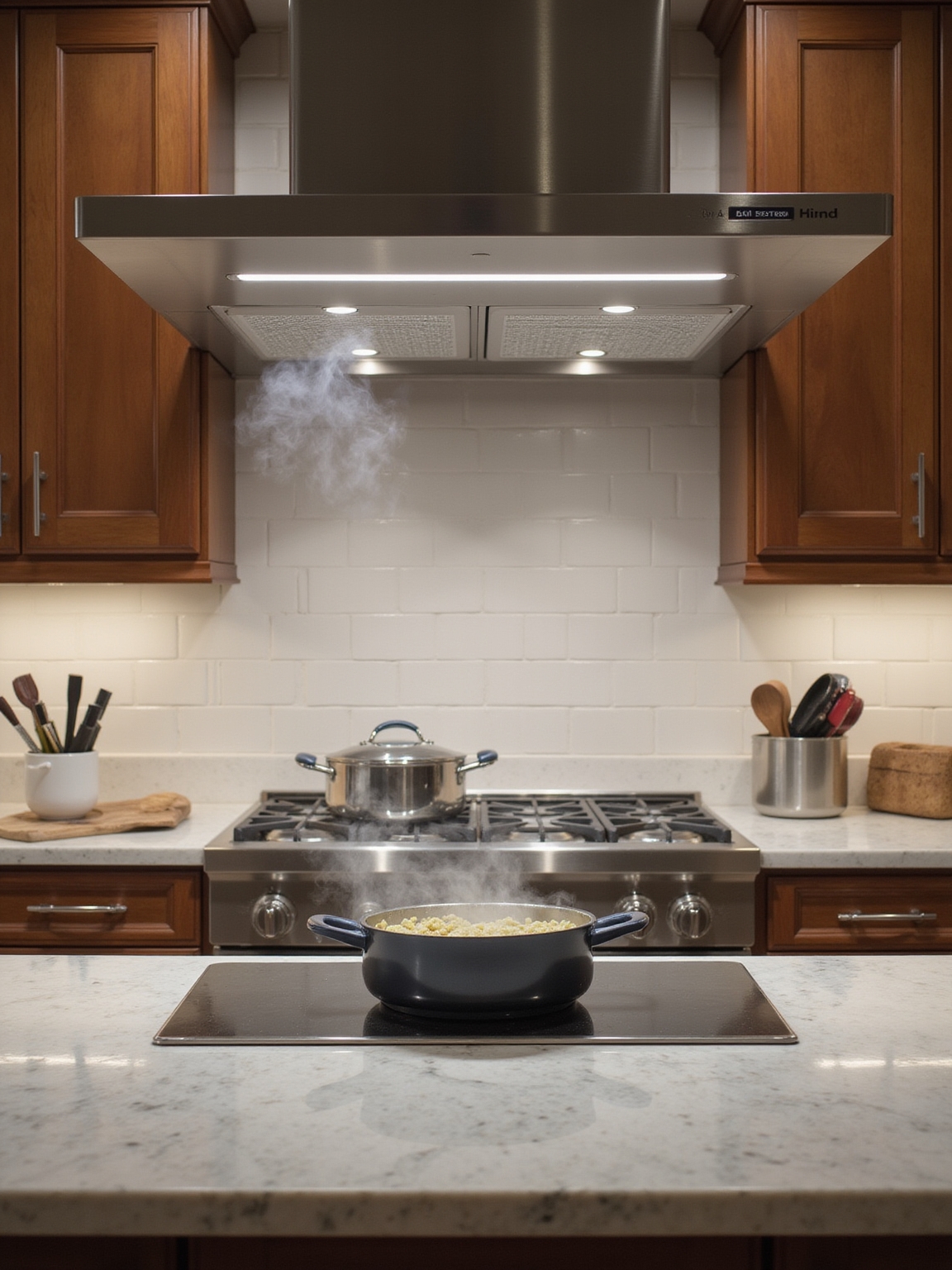
Because cooking habits and kitchen size change what you actually need, I start by figuring out how many cubic feet of air your space holds and how often you want it replaced per minute — that gives us the target CFM; simple math (length × width × height × desired air changes per hour ÷ 60) turns vague advice into a practical number you can shop with.
I then tweak for strong burners, frequent frying, and open plans, rounding up for real‑world efficiency and quieter operation.
Architects also consider kitchen flow when placing vents to ensure extraction complements traffic and work zones.
Ducted vs. Ductless Ventilation: Pros, Cons, Long‑Term Costs
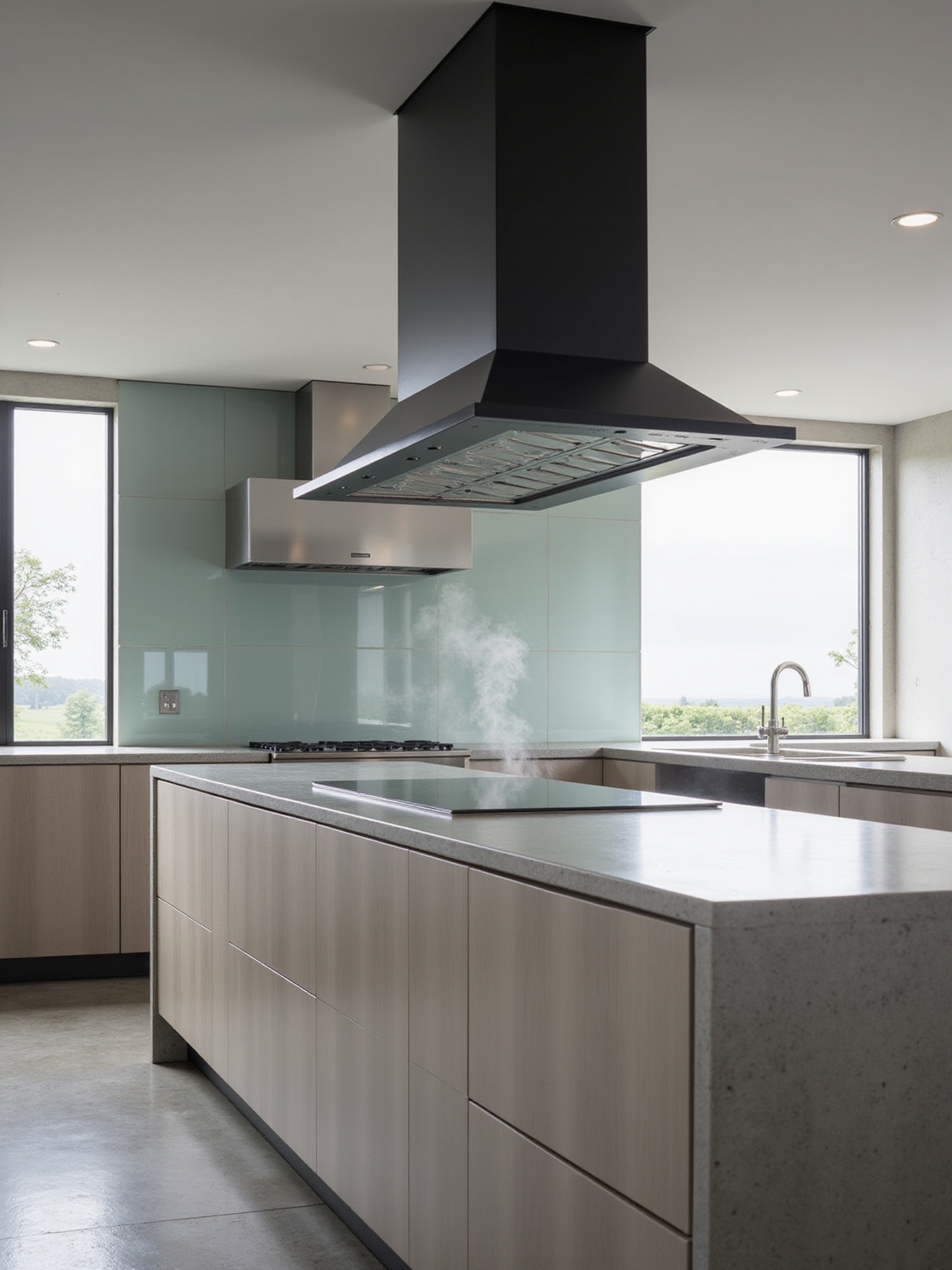
I’ve wrestled with the ducted-versus-ductless question in my own kitchen, and I want to walk you through the practical differences so you can pick what fits your home.
Ducted systems clear grease and moisture best and usually save money over decades, while ductless setups are easier to install but struggle with heavy cooking and need frequent filter changes.
Let’s compare their performance, maintenance needs, and lifetime costs so you know the tradeoffs. Statement range hoods can also be designed to anchor your kitchen and serve as a visual focal point while providing effective ventilation.
Ducted System Benefits
If you’ve ever stood in a kitchen and wished the air could clear out faster, a ducted ventilation system is often the quiet workhorse you’ll thank later; it pulls odors, moisture, and grease straight outside rather than recirculating them.
I love how it keeps indoor air fresher, reduces humidity-related wear, and often runs more efficiently long term, saving money and preserving finishes.
Heavy-duty sinks are a complementary upgrade for kitchens needing both durability and style, offering long-lasting performance and a professional look with stylish heavy-duty construction.
Ductless System Limitations
While a ducted system sends smells and moisture straight outside, ductless hoods work differently and bring some trade-offs you’ll want to take into account.
I love their simplicity, but I’ll be honest about limits: reduced odor removal, filter maintenance, and quieter suction. Consider these points:
- Odors linger more than with ducting.
- Filters need regular replacement.
- Less effective for heavy cooking.
Durable backsplash choices like long-lasting materials can complement ductless systems by enhancing kitchen longevity and resale appeal.
Lifetime Cost Comparison
Because money stretches differently over years than it does at purchase, I like to look at ventilation choices through a lifetime-cost lens:
I’ll compare initial installation, energy use, filter and maintenance expenses, and eventual replacement so you can see the real long‑term tradeoffs between ducted and ductless systems.
Ducted units cost more to install but run efficiently and last longer; ductless save upfront yet need frequent filter, fan replacements, and higher energy.
Clever pull-out solutions can also help maximize lower cabinet access and ventilation efficiency by reducing clutter and improving airflow to vents and filters cabinet pull-outs.
Inline and Remote Blowers for Whisper‑Quiet Performance
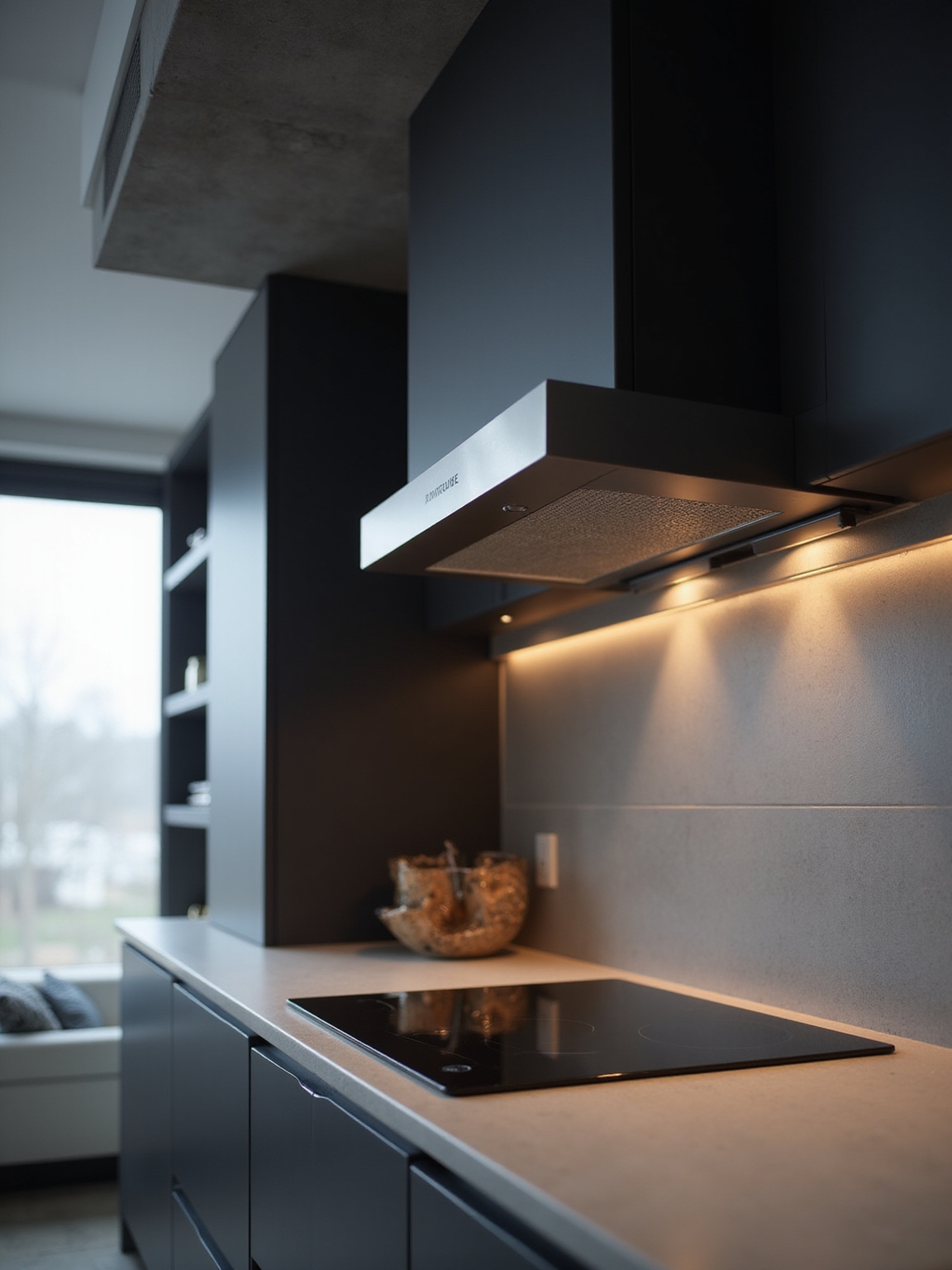
Though they sit out of sight, I’ve come to prefer inline and remote blowers for a truly whisper‑quiet kitchen because they move noise away from the cook area and let the hood focus on airflow, not sound.
I love how they feel invisible yet mighty. Consider these benefits:
- Lower in‑room noise.
- Stronger, steadier extraction.
- Flexible placement for rustic kitchens.
Professional installers also pair these systems with organized duct routes to maximize efficiency and minimize turbulence.
Wall‑Mounted Range Hoods: Slim Profiles and Style Options
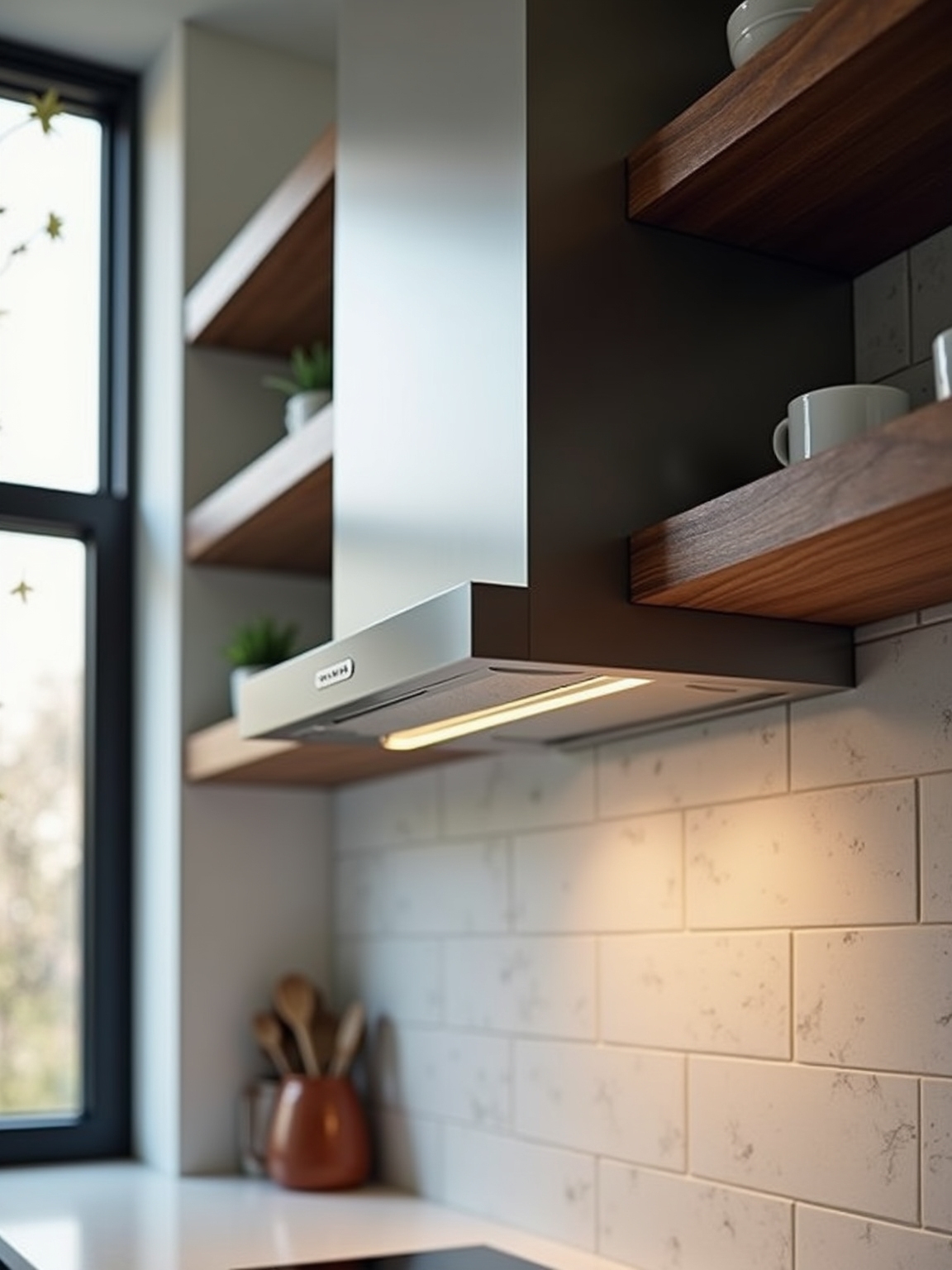
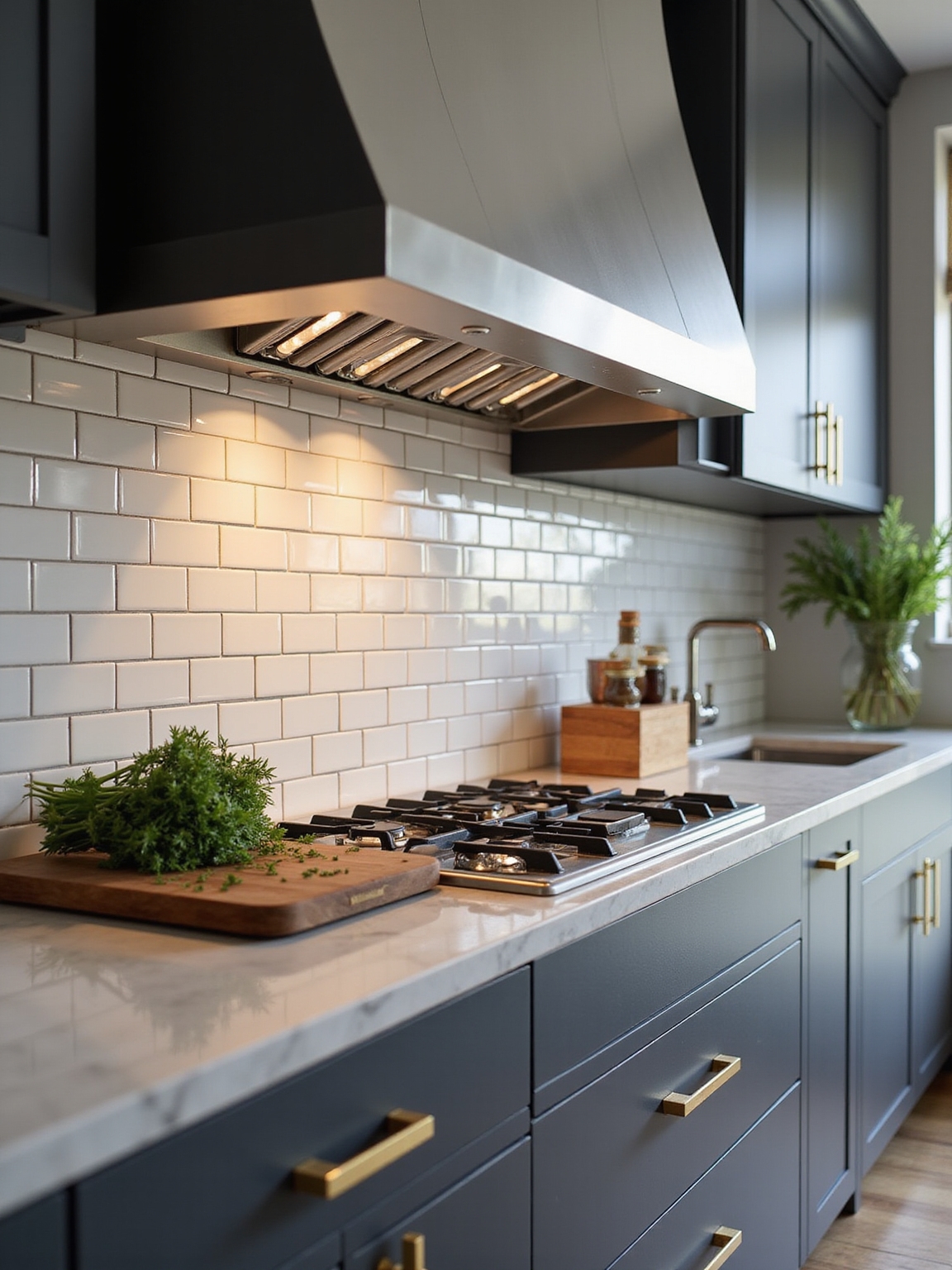
I’ve come to rely on wall‑mounted range hoods when I want a clean, vertical anchor over my stove that doesn’t hog visual space; their slim profiles slip into rustic kitchens without shouting.
I pick finishes like aged copper or matte black, favor simple chimney lines, and balance function with charm. They ventilate efficiently, stay unobtrusive, and let my hearth remain the room’s cozy focal point.
I also make sure to position task lighting directly over the prep area for optimal visibility and safety, following guidelines for task lighting placement to reduce shadows and glare.
Island Hoods: Sculptural Focal Points and Sizing Rules
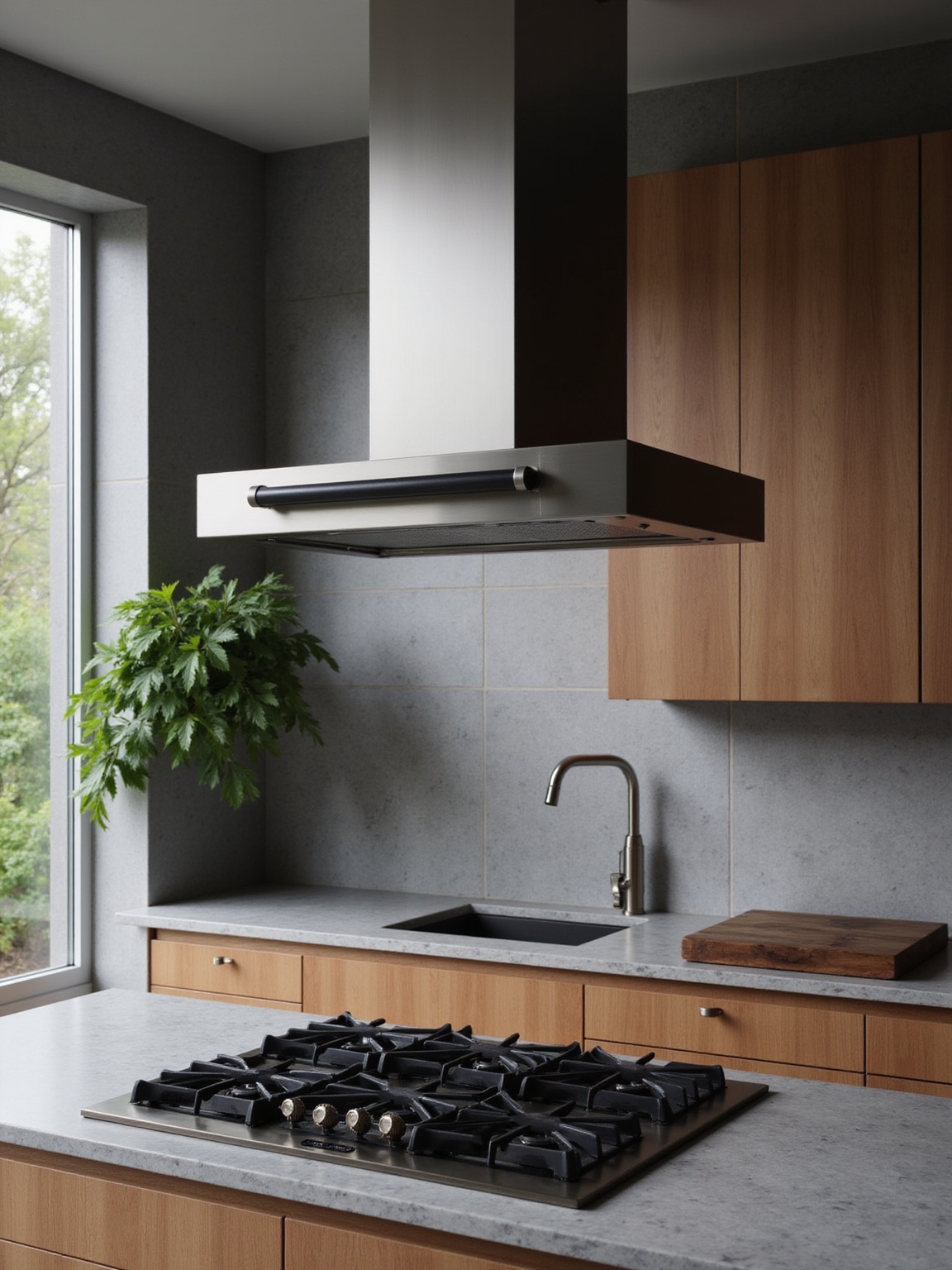
Island hoods really make a room — they hang like sculptures over your cooktop and demand attention without feeling flashy.
I love choosing finishes and scale that echo exposed beams and worn wood. Pick a hood slightly wider than the range, mount at comfortable height, and guarantee strong ventilation.
My quick tips:
- Width = range + 3–6 inches
- Mount 28–36″ above cooktop
- Match CFM to cooktop type
Under‑Cabinet & Integrated Hoods for Minimalist Kitchens
When you want the kitchen to breathe quietly and look uncluttered, I reach for under‑cabinet and integrated hoods — they tuck into the room so you notice the wood grain and light first, not the appliance.
I like that they handle steam and smells without shouting, fit snugly behind cabinet faces, and keep sightlines clean.
They feel honest, warm, and quietly efficient in a rustic minimalist kitchen.
Downdraft and Retractable Vents for Islands and Compact Plans
If you like the clean look of under‑cabinet hoods but have an island or a tight floor plan, I recommend downdraft and retractable vents — they sit out of sight until you need them and pull odors down where they won’t hang in the room.
I love their simple, practical charm.
- Space‑saving: unobtrusive when stowed
- Efficient: direct capture at source
- Rustic fit: pairs well with warm wood tones
Concealed Ceiling Hoods and Compact In‑Ceiling Options
Although tucked above your head, concealed ceiling hoods can feel like a natural part of a room rather than an appliance, and I often recommend them when you want clean sightlines without sacrificing ventilation.
I like compact in‑ceiling units for modest kitchens — they quietly pull steam and odors up, preserve cozy sightlines, and let you layer lighting and beams so the kitchen stays warm and lived‑in.
Range Hood Materials and Finishes That Define Your Aesthetic
While concealed ceiling hoods keep sightlines clean, the material and finish of a visible range hood will often set the room’s personality, and I pay close attention to how that surface plays with cabinets, counters, and lighting.
I favor textures that feel lived-in and warm. Consider these options:
- Brushed stainless for modern farmhouse ease.
- Patinated copper for rustic glow.
- Painted wood for cozy charm.
Smart Ventilation Features: Sensors, Variable Speeds, App Control
I’ve started using sensor-driven airflow in my kitchen and it’s been a quiet game-changer, kicking up ventilation only when smoke or steam spikes.
I like that I can fine-tune fan speeds from my phone so it’s brisk when I sear and gentle when I simmer.
Let’s look at how those sensors and app controls work together to keep the air fresh without fuss.
Sensor-Driven Airflow
If you’ve ever stood over a sizzling pan and wished the fan would just know what to do, sensor-driven airflow fixes that for you.
I love how it quietly senses smoke, heat, or humidity and adjusts instantly, keeping aromas and steam in check without fuss.
- Auto-adjusts fan speed
- Reduces kitchen odors
- Energy-saving, hands-free comfort
App-Controlled Fan Speeds
Tap into your phone and you’ve got the kitchen’s exhaust right where you need it: I like how app-controlled fan speeds put precise ventilation in my pocket, so I can boost airflow the moment a sauce starts to bubble or slow things down for a gentle simmer.
It feels homey and smart — fingertip control, timed boosts, and gentle reminders that keep aromas pleasant and surfaces clean.
Placement & Mounting Height: Airflow Patterns That Maximize Capture
When I’m positioning a hood, I think about how air moves as much as where it looks best — because correct placement and mounting height make the difference between capturing steam and letting it billow across your kitchen. I aim for practical, cozy setups that actually work.
- Mount 24–30″ above cooktop for gas.
- Center over burners.
- Angle for rising plumes.
Installation Checklist: Ducting, Electrical, and When to Hire a Pro
Because proper installation ties everything together, I walk through a simple checklist before cutting any holes: confirm the duct run and diameter, verify power availability and breaker sizing, pick the venting path that minimizes bends, and decide whether the job fits your DIY skillset or needs a pro.
I’ll double-check seals, choose rigid ducting where possible, and call an electrician for hardwired or complex runs.
Budget Guide: Price Ranges, Value Upgrades, and ROI
Once the installation checklist is squared away, I like to look at the money side of things so you know what to expect and where to spend for the best return.
I’ll keep it practical: mid-range hoods balance cost and performance, premium finishes add resale appeal, and smart controls give daily comfort.
- Mid-range value
- Finish upgrades
- Smart features
Filters and Maintenance: What to Clean, Replace, and When
I usually start by checking the filters myself—it’s the simplest thing that keeps a hood running well and the kitchen smelling fresh.
I scrub metal baffles monthly, replace charcoal cartridges every six to twelve months, and wipe ducts and fan blades seasonally.
I keep a small log so nothing slips; a clean filter saves noise, energy, and costly repairs down the road.
I’m thrilled you’ve stuck with me through this ventilation whirlwind — honestly, choosing the right hood can feel like picking the crown for your kitchen kingdom.
Picture effortless, whisper‑quiet extraction that banishes smoke and soggy stew memories forever; it’s not magic, it’s good planning.
Cozy, functional, and downright stylish, the right system transforms your cooking space into a warm, breathable haven. Let’s make your kitchen sing — and smell delightful.