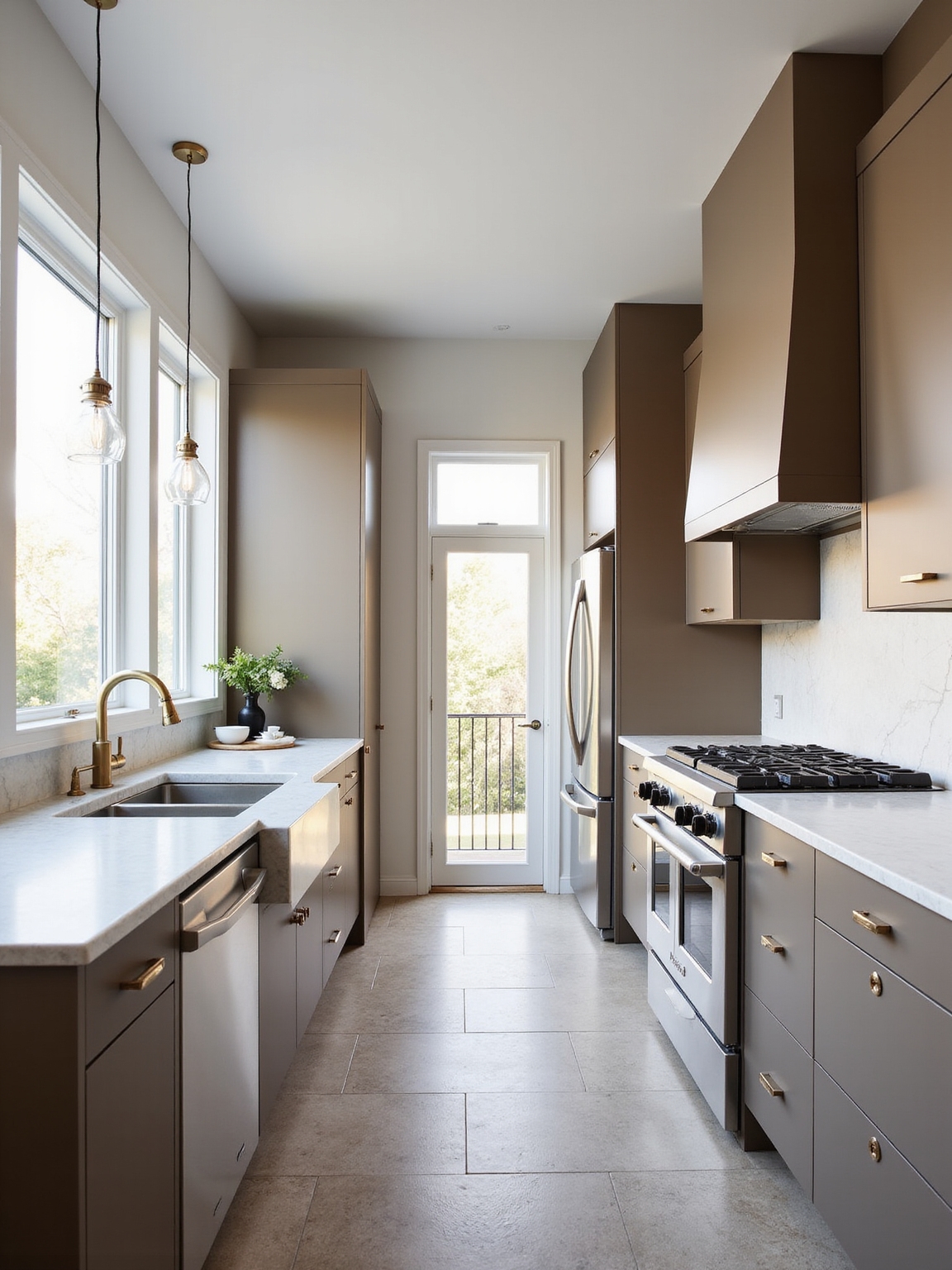


I’ll help you make a peninsula kitchen that hums: keep the sink, cooktop and fridge in a tight triangle and leave 36–42 inches of clear aisle so two cooks don’t bump.
Aim for a 36–48 inch prep span, tuck stools under a 12–15 inch overhang, and use durable Quartz or oiled wood tops with pull‑out drawers and toe‑kick storage. Add layered lighting and easy‑grip hardware for comfort—stick around and I’ll show practical layouts and tweaks.
Is a Peninsula Kitchen Right for Your Space?
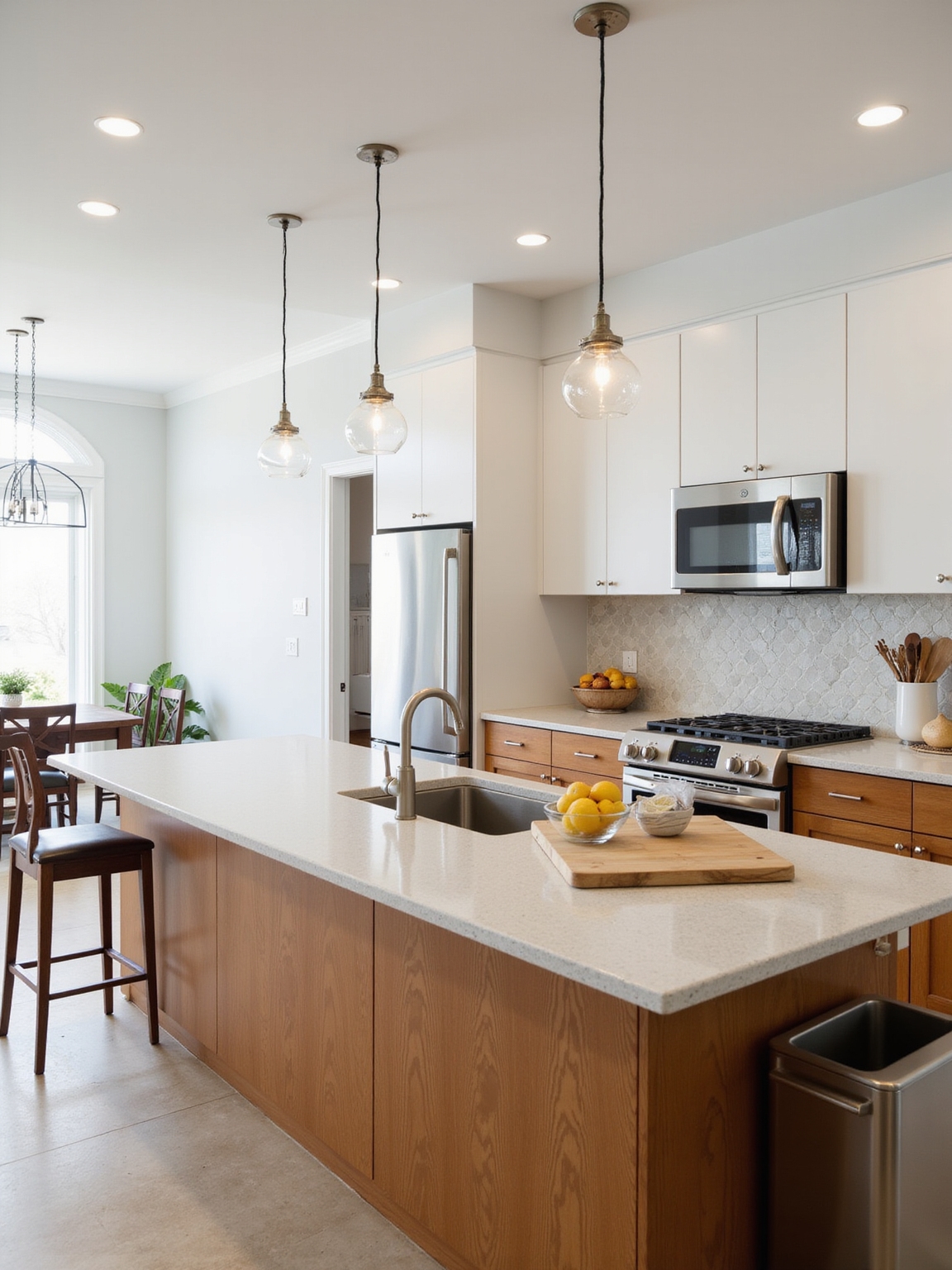
If you’re thinking about reworking your kitchen, I’d ask you to picture how you move while cooking and entertaining — a peninsula could be the sweet spot between an island and a wall of cabinets.
I’d look at traffic flow, sightlines, and seating needs.
In my experience, peninsulas save floor space, create cozy zones, and keep conversations flowing while I prep and serve.
Architects often use smart layout secrets to maximize kitchen flow and improve how people move through the space.
Define the Peninsula Work Triangle
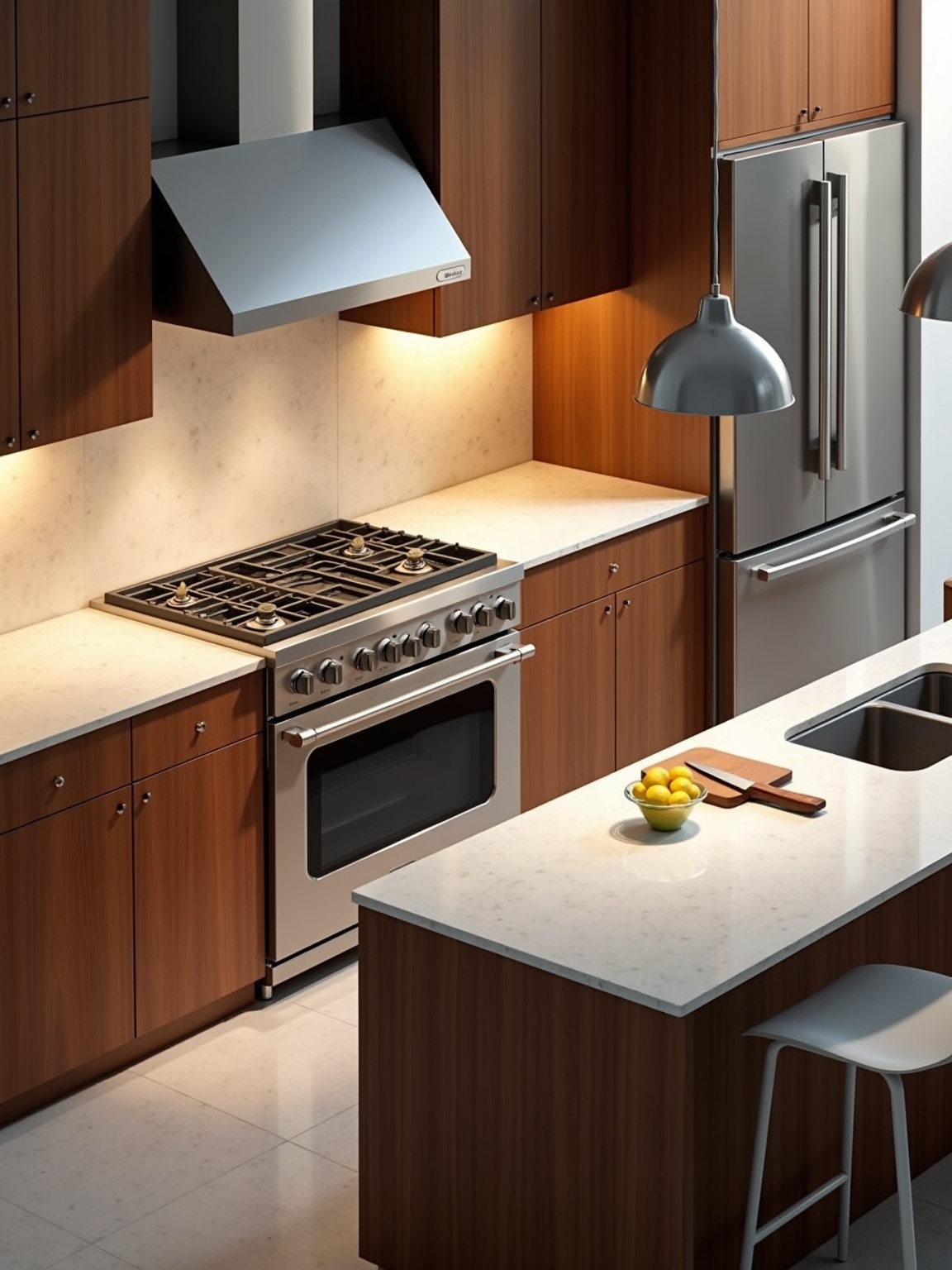
Think of the peninsula work triangle as the rhythm of your kitchen — I draw an invisible triangle between the stove, sink, and refrigerator to see how easily I can move while cooking.
I test sightlines, traffic flow, and how the peninsula anchors work zones. That quiet check helps me keep prep, cooking, and cleanup close, comfortable, and surprisingly cozy.
Avoid These Layout Mistakes Before Kitchen Demolition by checking for costly layout mistakes that can affect workflow and resale value.
Peninsula Length & Minimum Clearances (Measurements)
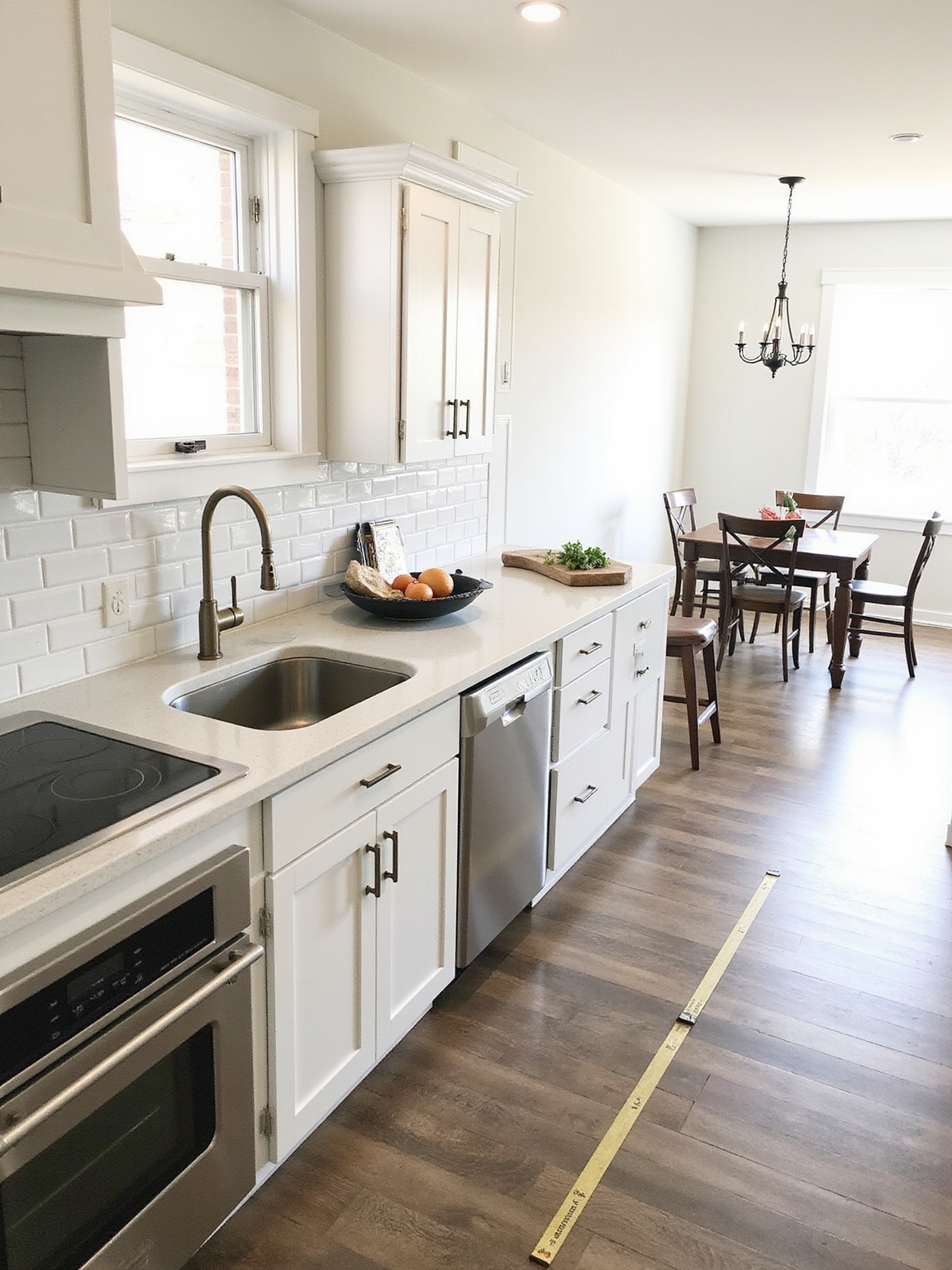
Because a peninsula becomes both a workspace and a pathway, I pay close attention to its length and the clearances around it to keep cooking comfortable and safe.
I aim for a usable peninsula length of 36–48 inches for prep, with a minimum 36-inch aisle to opposing cabinets and 42 inches for busy two-cook kitchens.
Overhangs for seating add 12–15 inches.
A seamless transition between the kitchen and dining area supports circulation and social interaction, improving the overall flow between spaces and making the layout more functional.
Position Sink, Cooktop & Fridge for Efficient Prep
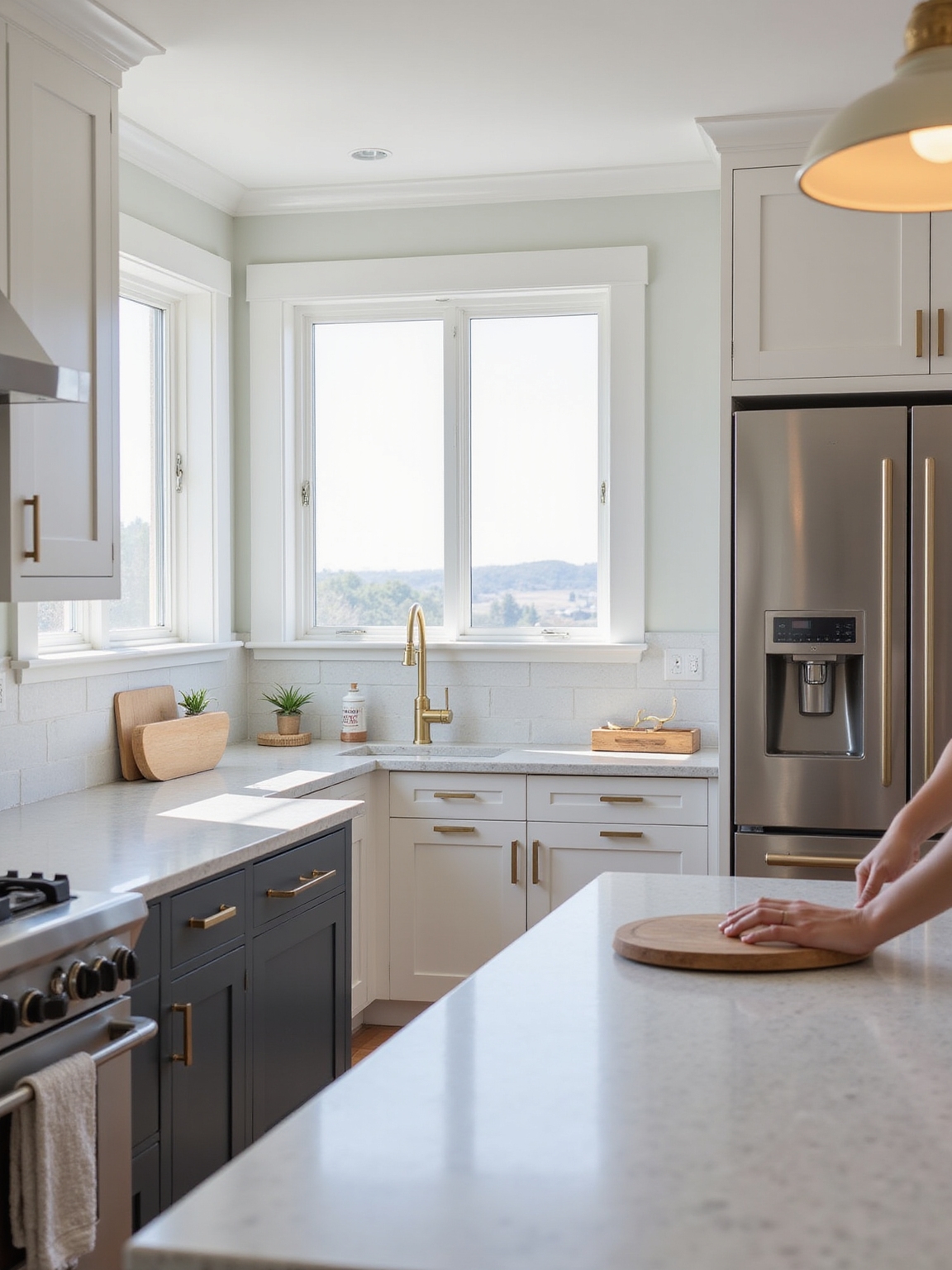
When I lay out a peninsula kitchen, I place the sink, cooktop, and fridge so they form an easy, natural work path—close enough to reach without crossing traffic, but spaced so one task doesn’t crowd the next.
I keep prep space between sink and cooktop, landing areas by the fridge, and clear walkways. That simple triangle keeps cooking calm, efficient, and inviting.
Proper height and positioning of surfaces also matter to reduce strain, following ergonomic kitchen platform principles for comfortable meal prep with work surface heights.
Dual-Sided Peninsula: Seating Plus Work Zones
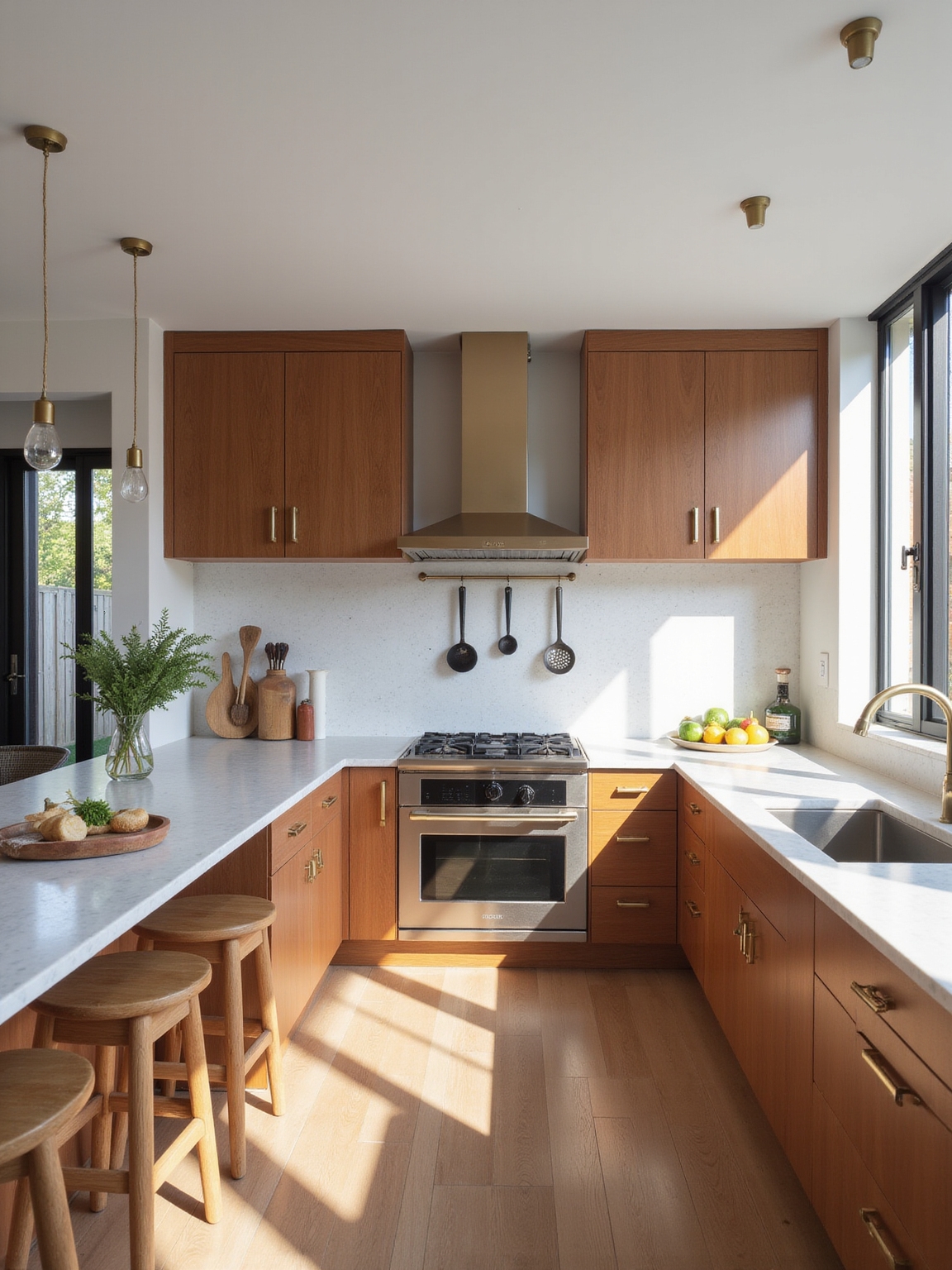
A dual-sided peninsula gives me the best of both worlds: a cozy, banquette-like seating side for lingering breakfasts and a focused work side for chopping, plating, and clearing.
I tuck stools into warm wood, hang a simple pendant, and keep one flat, durable surface clear for prep. It feels lived-in yet efficient, inviting company without compromising workflow.
A thoughtfully designed island can elevate both function and aesthetics, especially when it incorporates unique island elements that define high-end kitchens.
Avoid Traffic Bottlenecks Around the Peninsula
I keep traffic flowing around the peninsula by planning clear paths and keeping sightlines open, so people don’t circle or squeeze past each other.
I leave at least 42–48 inches between counters and seating, angle corners, and position the prep zone away from main walkways.
Soft lighting and a rug define lanes, guiding movement without feeling clinical or forced.
I also create Integrated Dining Zones that maximize kitchen square footage by incorporating seating and storage into the peninsula integrated dining zones to save space and improve flow.
Storage Zones That Use Peninsula Cabinetry
Now that traffic flows are sorted, I want to show how the peninsula can hide clever storage without shouting for attention.
Toe-kick drawers keep baking sheets and slim tools within reach, while corner carousel units make use of that awkward corner so nothing gets lost.
Let’s look at how these zones can be arranged for everyday cooking comfort.
Consider adding narrow pull-out trays for spices and oils to keep frequently used items organized and accessible in the peninsula pull-out solutions.
Toe-Kick Drawers
Think of toe-kick drawers as the secret pockets of a peninsula—they tuck under your cabinets and give you easy access to flat, rarely-used items without crowding drawers above.
I love using them for baking sheets, placemats, and seasonal linens. They keep counters clear and rhythms smooth, and they make use of otherwise wasted space.
Small pulls, soft-close slides, and thoughtful depth matter. Many professional organizers recommend using narrow storage strategies to maximize these slim spaces in tight kitchen layouts.
Corner Carousel Units
Corner carousel units pull together the awkward corner under a peninsula and turn it into a tidy, easy-to-reach storage zone.
I love how the rotating shelves glide, revealing pots, lids, or pantry staples without awkward reaching.
They keep things visible and organized, saving time when I cook.
Choosing sturdy hardware and warm wood finishes maintains that rustic charm while boosting everyday function.
Pull-Out & Vertical Organizers for Peninsula Kitchens
I lean into pull-out and vertical organizers because they make a peninsula kitchen feel purposeful, not crowded; when I slide out a slim spice rack or lift a vertical baking-sheet divider, every inch suddenly works for me.
I favor deep pull-out drawers for pans, a narrow tray organizer for lids, and tall vertical slots for cutting boards—simple solutions that keep the rustic peninsula tidy and handy.
Integrating Appliances Into the Peninsula Footprint
I tuck appliances into the peninsula so they feel like part of the room, not add-ons—microwaves slide into designated drawers, undercounter fridges hide behind wood panels, and a cooktop sits flush with a wooden counter for a seamless, lived-in look.
I balance form and function, place vents and outlets discreetly, and choose finishes that age gracefully so the whole space feels warm, useful, and hand-crafted.
Trash, Dishwasher & Recycling: Smart Placement
Let’s tuck the messy stuff out of sight but keep it close at hand: I place the trash, dishwasher, and recycling so they feel like part of the peninsula’s rhythm rather than an afterthought.
I tuck bins near prep zones, align the dishwasher by the sink, and use pull-out sorting for recyclables. These choices save steps, hide clutter, and keep the space warm and honest.
Light the Peninsula for Tasks and Ambiance
After hiding the gritty bits and lining up the dishwasher, I turn my attention to lighting the peninsula so it works as hard as it looks.
I choose layered light: focused task pendants for chopping, soft undercabinet strips for prep, and dimmable overheads to set mood.
Warm bulbs, aged-metal fixtures and simple shades keep things cozy while making the workspace clear and welcoming.
Durable Countertops & Cabinet Materials for Heavy Use
I’m thinking about what materials will stand up to daily life on a busy peninsula, so let’s talk about high-performance countertops like quartz and concrete that resist scratches and stains.
For cabinets, I favor heavy-duty options—solid hardwoods or plywood boxes with robust joinery—that won’t sag under frequent use.
And we’ll cover protective finishes and sealers that lock out moisture and wear so your work surfaces stay honest-looking for years.
High-Performance Countertop Surfaces
Because a peninsula kitchen gets constant traffic, I choose countertop and cabinet materials that stand up to spills, bangs, and daily life without fuss.
For countertops I favor quartz and honed granite — scratch-resistant, low-maintenance, and warm under a mug. I also use matte finishes and eased edges to hide wear. They feel lived-in, sturdy, and ready for real cooking.
Heavy-Duty Cabinet Materials
A few simple choices make a peninsula kitchen tough enough for daily life: I pick cabinet materials that shrug off dings, moisture, and the occasional hard shove when someone’s rushing past.
I favor solid hardwood or plywood cores with dense veneers, metal-reinforced drawer boxes, and hard-wearing edge banding.
They look warm and lived-in but stand up to meals, kids, and years of busy mornings.
Protective Finishes And Sealers
When you’re planning a peninsula that gets daily use, I seal and finish surfaces so they shrug off spills, knives, and small disasters without fuss.
I favor oil finishes on wood for warmth, matte polyurethane on active countertops, and penetrating sealers for stone.
These choices protect, deepen character, and make maintenance simple—wiping, occasional recoat, and keeping the kitchen working hard without looking worn.
Multiuse Peninsula Designs: Seating, Serving & Homework
I often design peninsulas to pull double duty—casual seating, buffet-style serving, and a homework spot for kids—so the space feels lived-in and useful all day long.
I choose durable wood tops, comfy stools tucked beneath, and a clear work zone with outlets for chargers. It’s welcoming, practical, and easy to tidy, keeping cooking, serving, and studying within reach.
Aging-in-Place Tweaks for an Accessible Peninsula Kitchen
Thinking about aging-in-place tweaks helps me design a peninsula that stays beautiful and genuinely useful as bodies change—lowering a section for seated prep, adding pull-out drawers instead of deep cabinets, and placing rocker switches and outlets within easy reach so you don’t have to stretch.
I favor easy-grip pulls, non-slip surfaces, knee clearance under sinks, and warm task lighting that keeps the space safe, cozy, and independent.
Budget Trade-Offs: DIY vs. Semi‑Custom vs. Pro
Although you can save a lot by tackling a peninsula yourself, I usually weigh that against time, skill, and stress before I pick a route.
I favor DIY for small fixes, semi‑custom when I want personality without full cost, and hire pros for structural or plumbing work.
Each choice balances budget, longevity, and my peace of mind — I plan accordingly.
Think of your peninsula kitchen as a well-loved farmhouse table: sturdy, welcoming, and working hard for everyone gathered around it.
I’ve shown how to shape its flow, choose durable surfaces, and balance seating with serious prep zones so it hums like a kitchen that’s seen generations.
Tweak clearances, pick materials that shrug off spills, and decide where to spend—then you’ll have a space that’s practical, cozy, and ready for life’s next recipe.