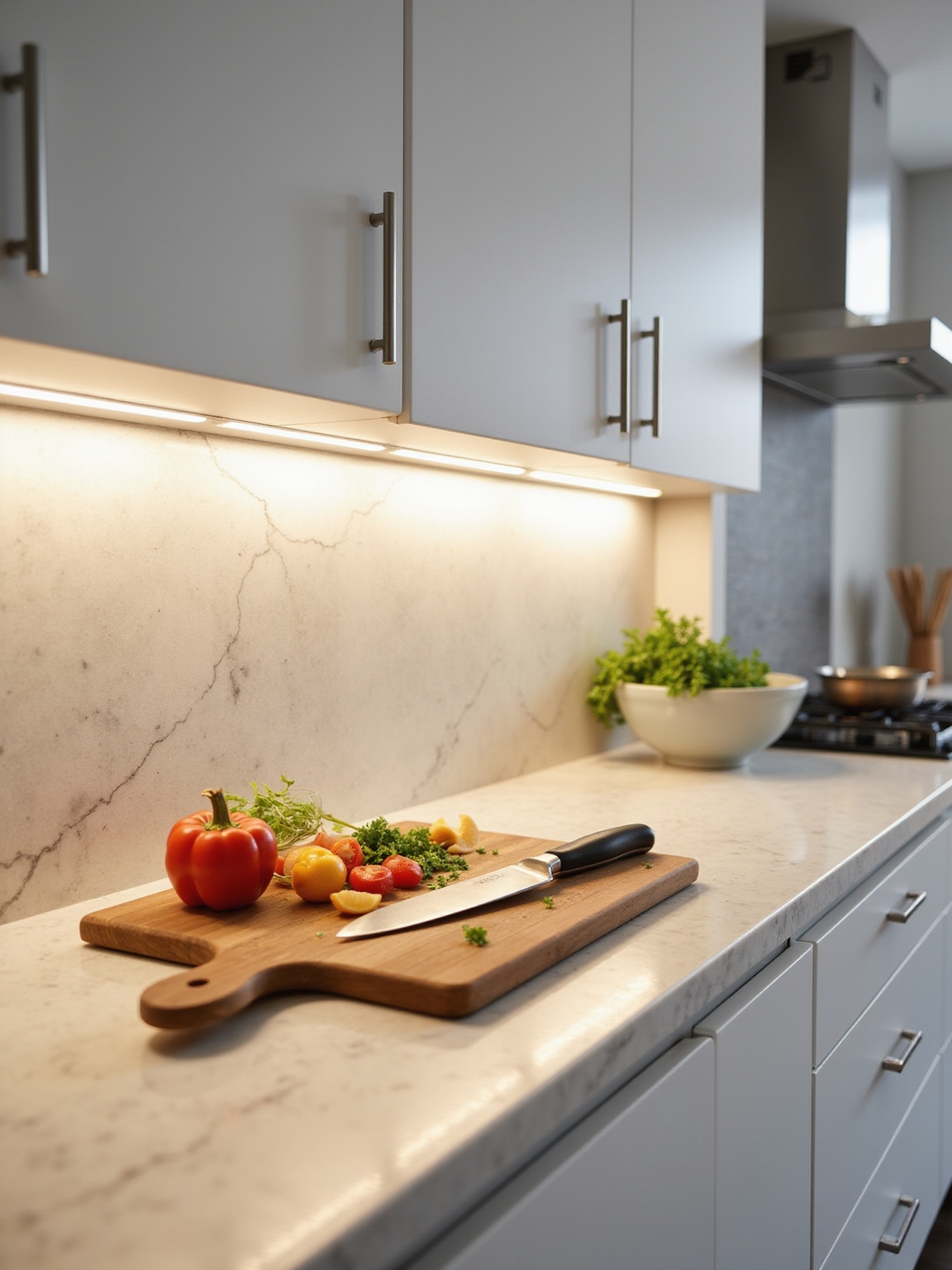
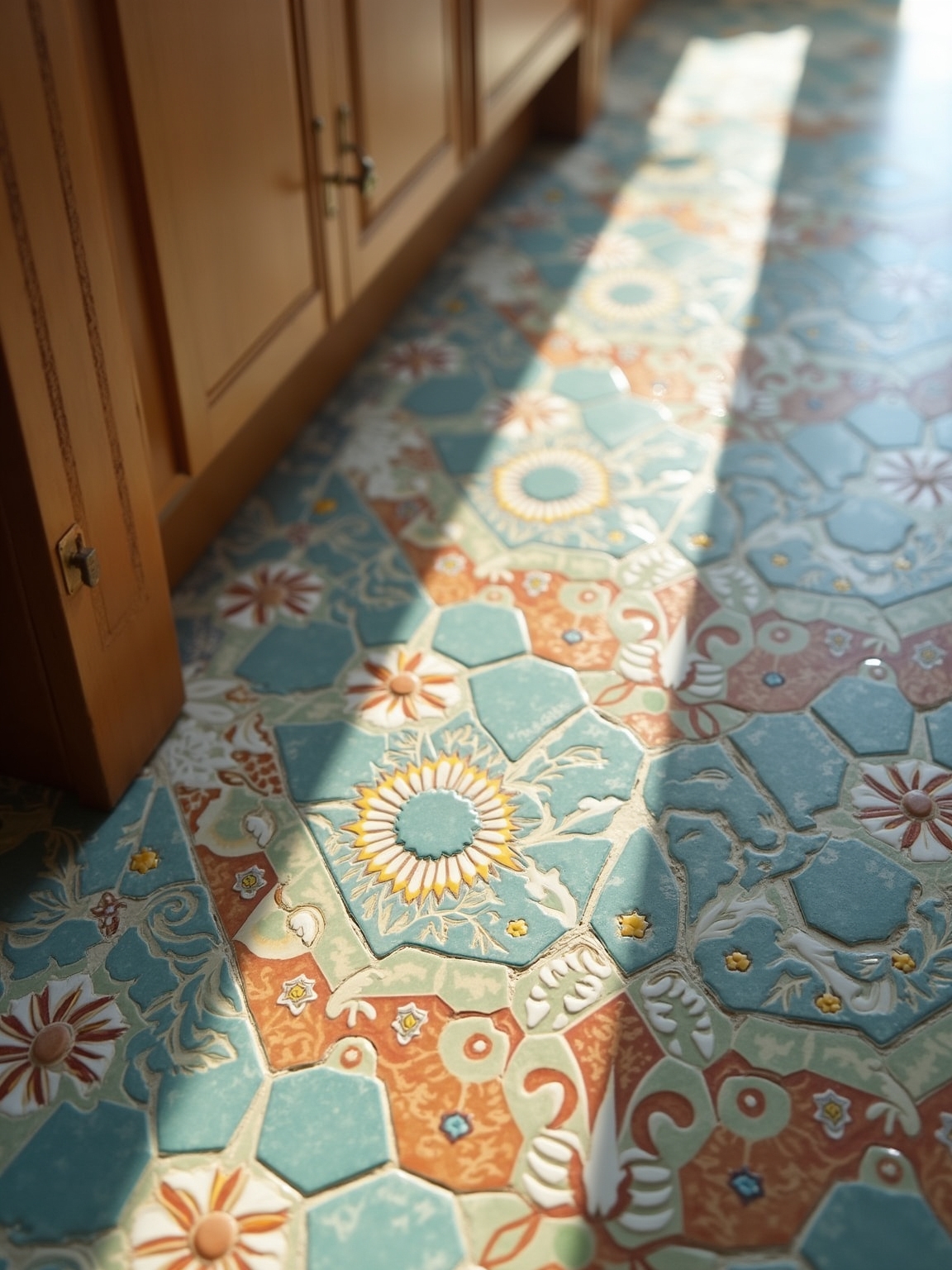
I’ve learned a few simple tricks to turn a kitchen into a warm, lived‑in hub: clear a coffee corner, add stools at the island, keep mugs and snacks in mason jars, and hang a chalkboard for notes and prompts. Set tiny, low‑pressure rituals—Sunday planning, a shared cooking night—and arrange seating so faces meet.
Use durable, easy‑clean surfaces and kid‑height storage to invite helpers. Do this, and you’ll start to notice longer conversations, pulled‑out chairs, and more moments together — there’s more practical guidance ahead.
Quick Wins: Make Your Kitchen Social This Week

Usually I start small and notice big changes, so this week I want you to try three easy swaps that invite people in: clear a corner of the counter for a communal coffee station, add a few stools at the island so conversations can happen while I chop, and hang a simple chalkboard for notes and quick menus.
Then I wipe surfaces, arrange fresh mugs, set out a jar of utensils, and welcome lingering. A dedicated coffee corner supports a morning coffee station as a welcoming focal point for family connection.
Define Your Goal: What a Social Kitchen Actually Does

Because a social kitchen isn’t just about layout or pretty jars, I want us to be clear about what it actually does: it invites people in, supports easy conversation, and makes everyday tasks feel shared rather than rushed.
I aim to create a warm hub where chopping becomes chatting, meals feel collaborative, and family moments grow from small, regular rituals rather than rare, staged events.
Designing for a seamless transition between kitchen and dining spaces encourages movement and connection, creating a true seamless flow that supports those everyday interactions.
Choose a Layout That Invites Togetherness

I like to start by picturing an open-plan layout where the seating flows into the cooking space so everyone can chat without shouting.
A central island becomes our hub — a spot for snacks, homework, and leaning in to talk while I cook.
Let’s look at how arranging seats and that island can make togetherness easy and natural.
Many high-end kitchens now feature islands with integrated multiple seating zones to support different activities and social patterns.
Open Plan Seating
I often find that an open-plan seating layout pulls everyone into the same conversation without trying—so I arrange chairs and benches to face one another, leave clear sightlines to the kitchen workspaces, and create small clusters where people can chat while I cook.
I add mismatched cushions, a worn rug, and a low table so conversations feel cozy, rooted, and easy to join.
This approach also integrates a dining zone to maximize kitchen space and make the most of the available square footage.
Central Gathering Island
A central gathering island becomes our kitchen’s heart—I pull stools close, leave a wide work surface for chopping and chatting, and set a mason jar of utensils within reach so people naturally drift in to help or linger.
I choose durable wood, under-counter shelves for baskets, and soft pendant lighting. It invites casual meals, homework sessions, and hands-on cooking together every day.
A casual layout with bar seating encourages lingering and conversation.
Arrange Seating to Encourage Social, Face‑to‑Face Interaction

I like to pull chairs up around the island so everyone ends up facing each other and conversation flows naturally.
When space allows, I choose a round table for meals because it removes corners and makes eye contact easy.
These simple choices keep the kitchen feeling cozy and connected.
Multifunctional islands can add storage and seating to maximize usability with compact cooking solutions.
Centralize Seating Around Island
With the island as our gathering point, I pull chairs close so we can look at one another while we cook, eat, and talk; that face‑to‑face setup turns chores into conversation and meals into moments.
I center seating to keep everyone within reach, adding stools of varying heights and a worn runner rug to anchor the space—simple choices that invite lingering, storytelling, and shared work.
A peninsula layout can boost workflow by keeping cooking, prep, and cleanup zones compact and connected, encouraging ease of movement and interaction with work zones.
Opt For Circular Tables
Round tables pull people in the same way an open hearth does, so I choose a circular table whenever I want conversation to flow as easily as the stew on the stove.
It removes hierarchy, lets faces meet naturally, and keeps everyone within reach.
I add simple wooden chairs, soft linens, and a candle to invite lingered stories, shared plates, and the easy hum of family life.
When I need more seating for larger gatherings, I find ways of stretching the table to accommodate extra guests, like stretching your kitchen table with leaves or add-on sections.
Create Activity Zones for Cooking, Prepping, and Hanging Out
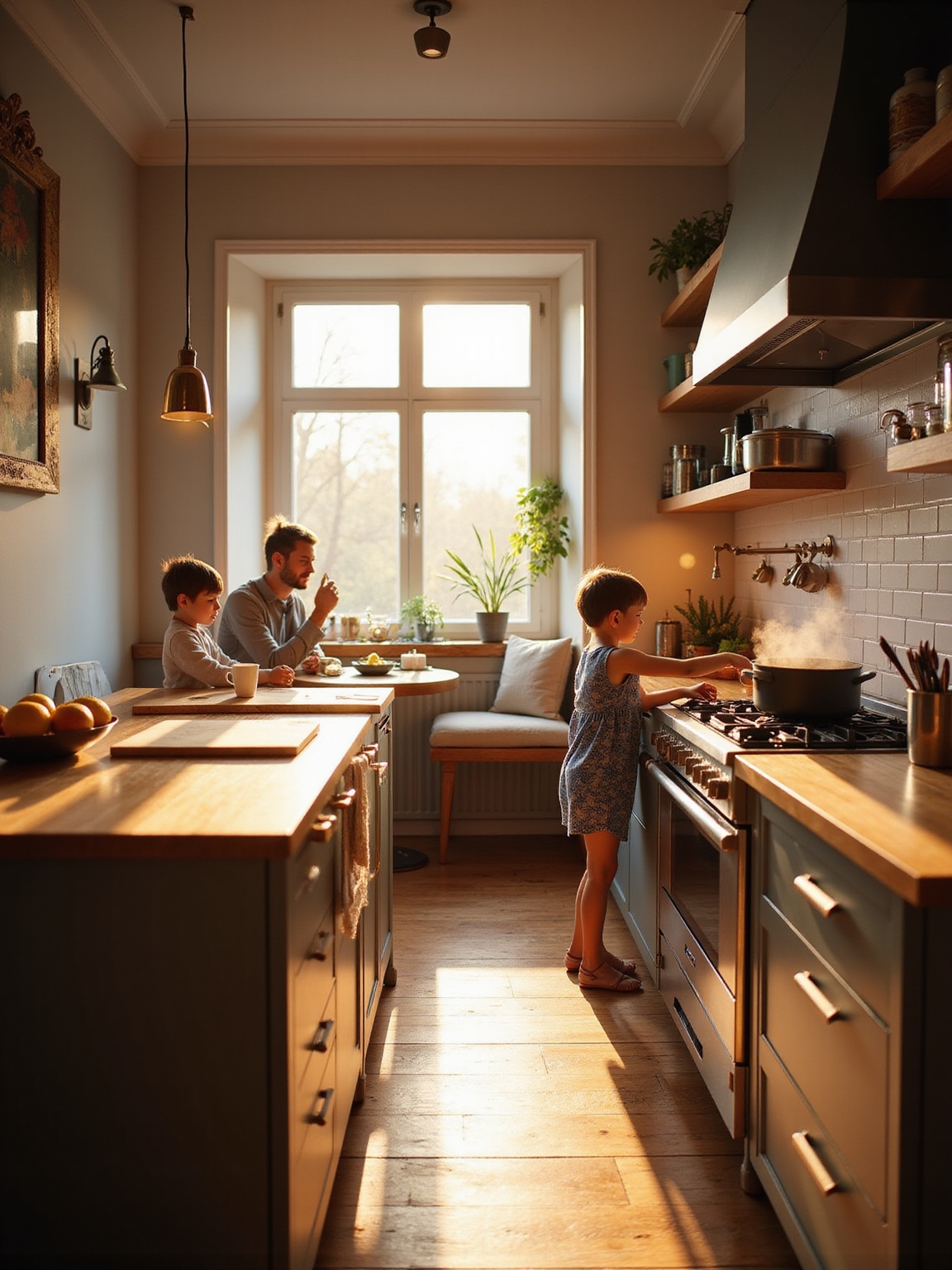
Because different moments in the kitchen call for different energies, I like to set up distinct zones for cooking, prepping, and hanging out so everyone knows where to be and what to do.
- Stove area: focused, hot, chef’s domain.
- Prep island: chopping, assembly, kids’ helper spot.
- Coffee nook: slow conversations, warm mugs.
- Casual bench: linger, chat, wipe hands, share stories.
Choose Durable, Family‑Friendly Surfaces and Tools
I like to pick surfaces and tools that stand up to sticky hands and muddy shoes without making me sweat.
Choosing easy-clean countertops, kid-proof cookware, and long-lasting flooring keeps the kitchen welcoming and practical for whatever family life throws at it.
I’ll walk you through durable options that look homey but work hard.
Easy-Clean Countertop Materials
Think about how often spills, crumbs, and sticky hands meet your counters each week—I want surfaces that stand up to that real-life mess without fuss.
I choose materials that clean quickly, feel warm, and age gracefully. Consider:
- Quartz — nonporous, low maintenance.
- Butcher block — sand and oil when needed.
- Laminate — budget-friendly, wipeable.
- Concrete — sealed, rustic charm.
Kid-Proof Cookware Choices
After picking countertops that wipe clean and age with a little love, I turn to cookware that can take the same everyday wear—and keep kids safe while they help.
I pick heavy‑bottomed pots, nonstick pans with intact coating, silicone tools, and wooden spoons.
Rounded handles, oven‑safe bakeware, and stackable lids make cooking together easier, safer, and more joyful for little hands.
Long‑Lasting Flooring Options
Usually I pick floors that can take the daily chaos of family life without looking like a battlefield by dinner; I want surfaces that feel warm underfoot, stand up to spills and scooters, and still look good years from now.
- Engineered hardwood — cozy, repairs well.
- Luxury vinyl plank — waterproof, durable.
- Porcelain tile — tough, rustic options.
- Cork — forgiving, warm, eco-friendly.
Use Lighting and Color to Set a Warm, Linger‑Friendly Mood
I often find that the right light and color can coax people to linger longer at the table, so I favor warm, layered lighting and a muted palette that feels lived‑in and welcoming.
I use soft amber bulbs, dimmers, and shaded fixtures to create cozy pockets. Earthy wall tones and natural textiles soften edges, invite conversation, and make meals feel relaxed and unhurried.
Design Storage for Shared Access and Faster Cleanup
Think about how your kitchen hums when everyone can reach what they need—I’ve found open shelving, low drawers, and labeled baskets keep things moving and make cleanup a shared habit. I arrange storage to invite help:
- Plates and mugs at child height
- Drawer dividers for tools
- Baskets for snacks
- Hooks for towels
It feels cozy and practical, like home.
Establish Simple Weekly Rituals Everyone Can Join
Often we gather on Sunday evenings for a simple ritual—clearing the table together, lighting a small candle, and choosing one meal to cook as a team for the week—because routines like this turn chores into connection.
I invite everyone to pick one tiny role, share a story while we plan, and keep it low-pressure.
Those steady, cozy rituals stitch our week together.
Turn Meal Prep Into Shared Tasks With Age‑Appropriate Roles
I like to hand out kitchen jobs that fit each person’s age and skill so everyone can pitch in without frustration.
We’ll rotate roles—chopping, stirring, setting the table—so nobody’s stuck with the same task and kids get to try new things.
It keeps meals moving, teaches responsibility, and makes dinner a true group effort.
Assign Age-Appropriate Tasks
When I set out ingredients on the counter, I do it knowing each person can grab a role that fits their age and skills—little hands get veggie rinsing and stirring, older kids chop with supervision, and teens handle seasoning or oven tasks.
- Hand veggies to toddlers.
- Let school-age measure.
- Supervise basic knife work.
- Trust teens with heat.
Rotate Roles Regularly
Regularly rotating roles keeps meal prep lively and teaches everyone new skills, so I make a point to switch tasks each week—today the toddler hands out napkins, next week they help tear lettuce; the 8-year-old moves from measuring to seasoning, and the teen trades oven duty for plating.
I cheer small wins, adjust expectations, and savor the messy, steady rhythm of shared work.
Create Micro‑Moments: Snack Stations, Homework Nooks, Prompts
Around the kitchen island, I set up little stations that spark quick, meaningful interactions—snack trays on low shelves, a cozy homework nook with a chalkboard, and a jar of conversation prompts by the coffee pot.
- Ready snacks
- Homework nook
- Prompt jar
- Cozy seating
These micro‑moments invite brief check‑ins, shared smiles, and tiny rituals that stitch our day together.
Pick Appliances and Gadgets Built for Group Cooking
If we want cooking to be a shared, lived experience instead of a solo chore, I choose appliances and gadgets that invite group work—big, sturdy cutting boards, a low-slung mixer you can crowd around, and a multi-burner range that lets two pans sizzle at once.
I pick durable prep bowls, a long-handled spatula, warming trays, and a roomy prep sink so everyone has a place to help.
Handle Conflicts and Chore Fairness With Clear Routines
When tensions flare over who washes the pans or who chops the onions, I rely on clear routines to keep the kitchen feeling like a shared home instead of a battleground.
I tell readers simple rules and rotate tasks so everyone pitches in:
- Weekly chore wheel
- Set prep/clean times
- Swap tasks monthly
- Quick debrief after meals
It keeps things fair and cozy.
Budget‑Friendly Changes That Boost Togetherness
I roll up small changes that don’t cost much but bring us closer — swapping a boxed mix for a shared baking afternoon, adding a chalkboard for notes and meal ideas, or buying inexpensive mason jars for communal snacks — because those little shifts invite conversation and teamwork without breaking the budget.
I hang string lights, label drawers, and set a simple weekly potluck to keep hands busy and hearts connected.
Measure Success: Small Signals Your Kitchen Is Becoming the Hub
Those little, budget-friendly changes are the kind of things that start to show up in quiet ways — a jar of biscotti mysteriously half-empty, a chalkboard filled with someone else’s doodle, or the soft glow of string lights staying on long after dinner.
I watch for signs:
- Foot traffic lingering.
- Cooked smells drawing people in.
- Notes stuck on the fridge.
- Chairs pulled out, ready.
I’ve built this guide to help you turn your kitchen into a lived‑in heart where conversation simmers and hands meet.
Start small — a shared prep bowl, a comfy stool, a simple routine — and watch warmth spread like good soup.
When clatters and laughter replace silence, you’ll know you’ve won. Come back to these ideas, adapt them, and let your kitchen keep drawing people in, one plate and story at a time.